
A Practical Guide to White Gold Plated Jewelry
White gold plated jewelry features a base metal core—typically sterling silver—coated with a thin layer of genuine white gold. This process achieves the premium look of solid white gold at a more accessible price.
The Essence of White Gold Plated Jewelry
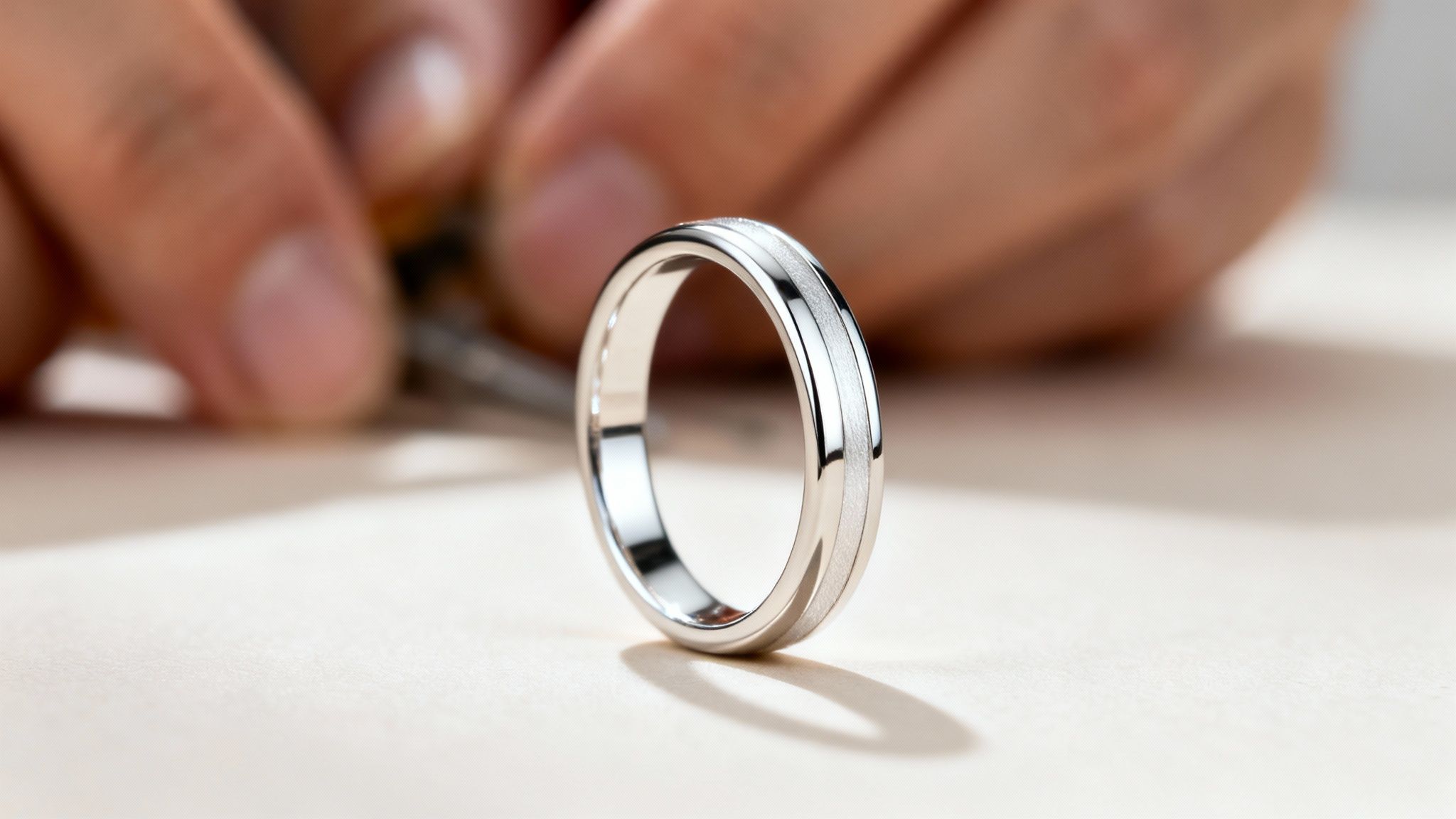
The construction begins with a valuable foundation. At Taton.shop, we use S925 sterling silver for structure and inherent worth. This silver core is then enveloped in a layer of white gold, creating the desired aesthetic without the cost of a solid gold item.
The final product balances quality and cost, offering the minimalist, high-end appearance of solid white gold for daily wear. This technique is a staple in modern jewelry.
White Gold Plating at a Glance
This table breaks down the components of a finished white gold plated piece.
| Component | Description | Purpose |
|---|---|---|
| Base Metal | The core material, typically S925 sterling silver. | Provides structure, durability, and intrinsic value. |
| White Gold Layer | A micro-thin layer of a white gold alloy applied over the base. | Creates the signature color and precious metal character. |
| Rhodium Finish | A final, ultra-thin coating of rhodium. | Adds a brilliant, mirror-like shine and protective barrier. |
Each layer is crucial for the final look, feel, and durability of the jewelry.
What is White Gold Actually Made Of?
White gold is not a naturally occurring metal; it is an alloy. Pure 24 karat gold is a rich yellow and too soft for durable jewelry. To create white gold, pure gold is mixed with white metals to add strength and bleach its yellow color, resulting in a subtle, off-white hue.
Common alloying metals include:
- Palladium: A premium, hypoallergenic choice that gives a soft, grayish-white hue.
- Nickel: Effective for whiteness, but a known allergen for some.
- Silver and Zinc: Used in combination to produce a paler gold alloy.
This alloy forms the plating layer, but it lacks the bright, silvery sheen commonly associated with white gold. For deeper comparisons on plating, explore our guide on the differences between gold plated and vermeil.
The Rhodium Finish: The Secret to Brilliance
White gold achieves its signature bright, cool-toned luster through a final coating of rhodium. Rhodium is a rare, durable, and brilliantly white precious metal from the platinum group. Nearly all white gold jewelry, solid or plated, receives this finish.
Rhodium plating delivers a stunning, mirror-like finish and acts as a tough protective barrier. This final layer boosts scratch resistance and prevents skin contact with any potential nickel in the underlying alloy.
The combination of a sterling silver core, a white gold layer, and a rhodium finish creates a piece visually indistinguishable from solid white gold. This layered approach is a commercial success, with the global precious metal plating market valued at USD 240.90 million in 2024. Understanding this is key for buyers and those in content creation for jewelry.
The Science Behind The Shine
The brilliant finish of white gold plated jewelry results from electroplating, a precise process that blends chemistry and craftsmanship. This technique transforms a quality base metal into a piece that looks and feels like solid white gold.
The Foundation: It All Starts with a Flawless Base
The process begins with a perfect foundation. For high-quality jewelry, the base metal is S925 sterling silver, which serves as the ideal canvas.
The silver is meticulously cleaned and polished. Any trace of dust or oil can compromise the plating, causing it to bubble, flake, or fail to adhere. This preparation is as critical as the plating itself, ensuring a seamless bond between layers.
A perfectly prepared surface is the hallmark of craftsmanship and ensures a smooth, durable finish.
The Electroplating Process: A Magnetic Attraction
The prepped jewelry is submerged in an electroplating bath, a solution containing positively charged white gold ions. An electric current is passed through the bath, giving the jewelry a negative charge.
Opposite charges attract. The positive gold ions are drawn to the negatively charged jewelry, bonding to its surface in an incredibly thin, even layer.
This process allows for astonishing precision, depositing a layer of white gold often measured in microns (thousandths of a millimeter). The thickness is controlled by adjusting the current's intensity and duration, guaranteeing a consistent and resilient finish.
To learn more about gold purity itself, learn more about 14k gold and what it means for your collection.
The Final Touch: Rhodium’s Brilliant Barrier
After the white gold layer is applied, a final step is required. The natural color of the white gold alloy is a soft, grayish-white. To achieve the ultra-bright, cool-toned shine, a finishing touch is needed.
The piece undergoes a final electroplating bath with rhodium ions. This adds an ultra-thin topcoat of one of the planet's rarest and most reflective precious metals.
This rhodium finish provides two key benefits:
- Aesthetic Brilliance: It delivers the signature bright white, mirror-like finish that rivals platinum.
- Protective Shield: Rhodium is extremely tough and resists corrosion. This layer acts as a durable shield, boosting scratch resistance and protecting the metals underneath.
Rhodium is also hypoallergenic. Because some white gold alloys contain nickel, this rhodium barrier ensures the jewelry is safe for sensitive skin.
Plated Versus Solid Gold: A Practical Comparison
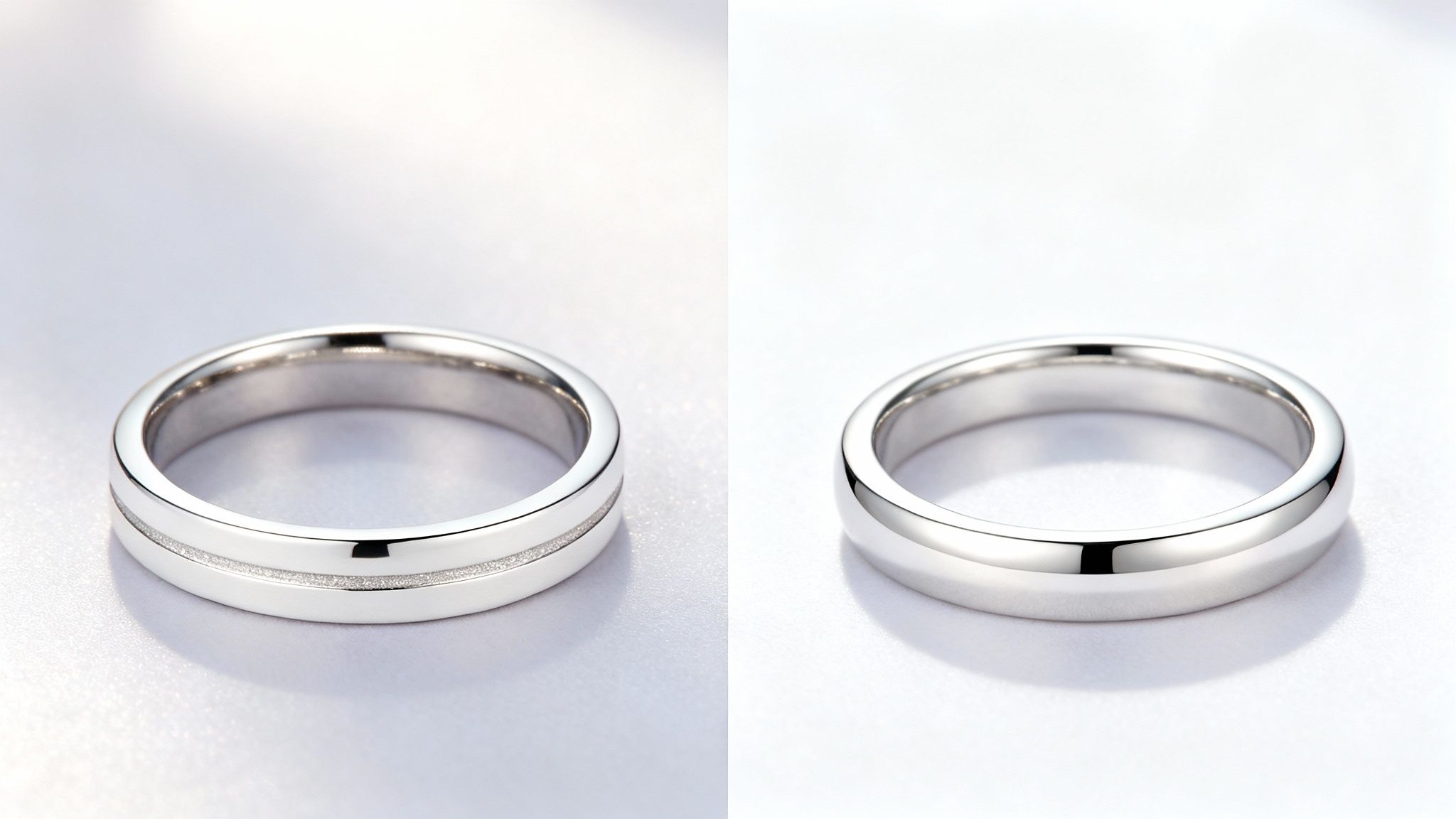
Choosing between white gold options requires looking beyond sparkle to consider budget and lifestyle. The key is understanding the differences between white gold plated jewelry, solid white gold, and rhodium-plated sterling silver.
This isn't about finding the "best" option—it's about finding the best option for you. We will break down the crucial factors: cost, durability, appearance, and care.
Cost: The Smart Financial Choice
The most immediate difference is price. White gold plated jewelry offers a high-end look without the high cost. The core is a more affordable precious metal, like S925 sterling silver, covered with a thin layer of white gold.
In contrast, a solid white gold piece is priced by its gold content (e.g., 14K or 18K), making it a significant investment. Rhodium-plated sterling silver is another budget-friendly choice that provides a similar premium finish without gold.
This affordability allows for building a versatile collection or exploring trends without a large financial commitment.
Durability: A Question Of Wear And Tear
Solid white gold is a workhorse. As a uniform alloy, it has no surface layer to chip or wear away. It can be scratched, but its fundamental color and structure are permanent, making it ideal for heirloom pieces like engagement rings.
White gold plated jewelry has a finite lifespan for its outer layer. Friction and chemical exposure will cause the thin plating to fade, especially on high-contact items like rings.
The S925 sterling silver base remains, but the brilliant white finish will disappear. The piece must be replated to restore its original look. Rhodium-plated silver faces the same challenge.
Appearance: An Identical First Impression
When new, telling the difference between a white gold plated piece and a solid one by sight is often impossible. Most modern white gold jewelry—both solid and plated—is finished with a rhodium coating.
Rhodium provides the dazzling, mirror-like shine and cool, silvery-white hue. The difference emerges only when the rhodium layer thins. A solid white gold piece will reveal a warmer, off-white alloy, while a plated piece will show the sterling silver beneath.
Maintenance And Long-Term Care
Solid white gold is low-maintenance, requiring only occasional cleaning. After many years, its rhodium finish may wear down and can be replated to restore its original brilliance.
Plated jewelry needs more delicate care. To maximize its lifespan, keep it away from harsh chemicals, remove it before swimming or exercising, and clean it gently. Eventual replating is necessary to maintain its beauty.
Comparison: White Gold Plated vs Solid White Gold vs S925 Silver
This table offers a detailed breakdown to help you choose the right jewelry for your needs.
| Attribute | White Gold Plated | Solid White Gold | Rhodium-Plated S925 Silver |
|---|---|---|---|
| Cost | Very affordable, accessible price point. | High investment, priced by gold content. | Affordable, priced slightly above plain silver. |
| Durability | Plating wears off over time, requires care. | Highly durable, lasts a lifetime. | Plating wears off, silver base is softer. |
| Appearance | Identical to solid gold when new (rhodium finish). | Bright, mirror-like shine (rhodium finish). | Identical to white gold when new. |
| Maintenance | Requires careful handling and eventual replating. | Low maintenance, occasional polishing. | Needs gentle care and eventual replating. |
The right choice depends on your priorities, whether timeless durability or accessible elegance.
Preserving Your Jewelry's Luster and Lifpan
Maintaining the beauty of your white gold plated jewelry is essential. Unlike solid gold, its brilliant finish is a thin, delicate layer. Proper care is crucial to preserve its shine.
The longevity of the plating depends on its thickness, frequency of wear, and daily contact. A ring, for example, will show wear much faster than earrings or a pendant.
Mindful care significantly extends the life of the finish. The goal is to reduce friction and avoid chemicals that can erode the top layers.
Simple Steps for Effective Cleaning
Cleaning your pieces is simple and requires no harsh chemicals. A gentle touch is necessary to protect the delicate plating.
For a routine clean, soak the jewelry for a few minutes in a bowl of warm water with a few drops of mild, phosphate-free dish soap. This loosens oils and grime without scrubbing.
After soaking, gently pat the piece dry with a soft, lint-free cloth. Do not rub aggressively, as friction can wear down the finish. A microfiber cloth is ideal.
Crucial Tip: Avoid anything abrasive. This includes paper towels and old toothbrushes, which are too harsh for a plated surface. Stick to the softest cloth available.
The principles of caring for plated items are universal. Techniques for how to clean silver plate silverware offer insight into preserving any delicate, coated surface.
Daily Wear Do's and Don'ts
Daily habits have the greatest impact on your jewelry's lifespan. These simple practices will protect the white gold plated finish from premature wear.
Do's for Lasting Shine:
- Store Properly: Keep pieces in a soft pouch or lined box, separated to prevent scratches.
- Put on Last: Apply lotions, perfumes, and makeup before putting on jewelry to avoid chemical contact.
- Clean Gently: After wearing, clean pieces with mild soap and water to remove skin oils.
Don'ts to Protect the Plating:
- Avoid Water Exposure: Remove jewelry before showering, swimming, or using a hot tub. Chlorine and salt are corrosive.
- Skip the Gym: Remove accessories before working out. Sweat is acidic and can degrade the plating.
- Steer Clear of Harsh Chemicals: Avoid contact with cleaning products and hand sanitizers.
- Say No to Ultrasonic Cleaners: The intense vibrations can damage or strip the thin plating.
Following these steps puts you in control of your jewelry's longevity.
Read also: a guide on how to clean gold plated jewelry
How to Spot Quality Plating
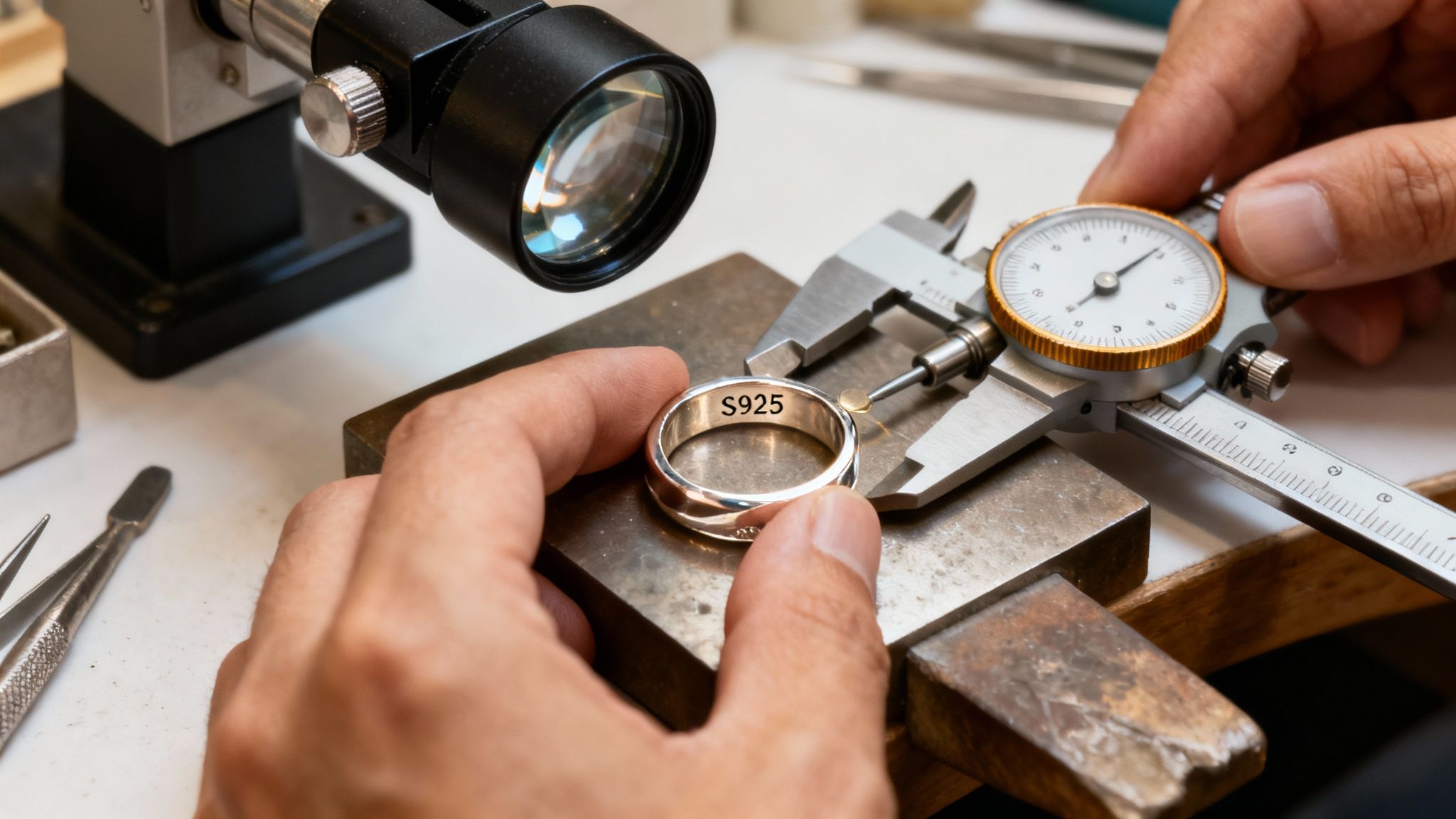
Distinguishing well-crafted white gold plated jewelry from mass-produced items is straightforward. Quality starts with the base metal and extends to the smallest details.
The most important element is the base metal. A quality piece will have a core of S925 sterling silver. This provides value, a pleasing weight, and a hypoallergenic foundation.
Cheaper alternatives often use brass or copper. These metals can tarnish, bend easily, and cause skin irritation once the plating wears off. Sterling silver is the superior choice.
Plating Thickness Really Matters
The thickness of the plating, measured in microns, determines its durability. A thicker coat of white gold and rhodium withstands daily friction better than a thin "flash-plating," which can wear away in months.
For frequently worn items like rings and bracelets, look for a thickness of 1.0 to 2.5 microns. For earrings and pendants, a slightly thinner layer is sufficient.
A reputable brand will be transparent about these specifications. A lack of information on plating thickness or the base metal is often a red flag for cut corners.
The demand for quality is rising. The global jewelry market reached USD 365.9 billion in 2024, with the luxury segment projected to hit USD 97.8 billion by 2032. As you explore findings on the jewelry market, it’s clear that consumers are demanding better quality from plated jewelry.
Reading Between the Lines on Product Pages
The product description is your best tool for judging quality. A brand confident in its products provides clear, specific details.
When shopping online, look for this specific language to make an informed purchase.
What to Look For:
- A Clear Base Metal: The description should state "S925 Sterling Silver" or ".925 Sterling Silver," not vague terms like "metal alloy."
- Specific Plating Info: Look for phrases like "18K White Gold Plating" or "14K White Gold Plating," indicating the gold purity used.
- Mention of a Rhodium Finish: A rhodium topcoat is a hallmark of quality, providing shine, durability, and hypoallergenic properties.
Recognizing these details allows you to shop with confidence, selecting white gold plated jewelry built for a minimalist, high-quality aesthetic.
Common Questions About White Gold Plated Jewelry
Practical questions often arise when considering white gold plated jewelry for daily life. Here are direct answers to help you choose with confidence.
Is White Gold Plated Jewelry Good For Daily Wear?
For pieces that see little physical contact, like earrings or pendants, yes. Their finish can last a long time with daily wear.
Rings and bracelets are different. Constant friction from activities like typing and washing hands will wear down the plating. For a ring intended for 24/7 wear over many years, solid gold is a better investment.
Will The Silver Base Tarnish If The Plating Wears Off?
Yes. Once the protective gold and rhodium layers are gone, the exposed S925 sterling silver will react with the air and tarnish.
Tarnish can be cleaned off, but the piece will no longer look like white gold. It will have the warmer, softer tone of silver.
Key Takeaway: The plating wears gradually. You will likely notice the warmer base metal showing through on high-contact spots before significant tarnishing occurs.
How Much Cheaper Is Plated Than Solid White Gold?
A white gold plated piece typically costs 80-95% less than its solid white gold counterpart. This significant difference makes the look accessible to a much wider audience.
The price gap is due to raw material costs.
- Plated Jewelry: The cost is primarily the sterling silver base and labor. The amount of gold is minimal.
- Solid Gold Jewelry: The price is dictated by the weight of the gold alloy, a much more expensive metal than silver.
This price point is ideal for building a versatile collection or experimenting with trends.
Is Plating A Good Choice For Rings?
Plating is a fine choice for a ring, provided you have realistic expectations. Rings endure more wear than any other jewelry type.
Due to constant friction, the plating on a daily-wear ring may show wear in one to two years, starting on the band's bottom and edges. Solid gold remains the standard for lifetime pieces like wedding bands.
However, if you love a design and accept the need for future replating, a white gold plated ring is a brilliant and affordable option. The hypoallergenic rhodium topcoat also makes them suitable for many with metal sensitivities. You can learn more in our guide on hypoallergenic earrings for sensitive ears.
At Taton.shop, we combine high-quality craftsmanship, modern style, and smart pricing. Our S925 silver collections, finished with durable rhodium or rich 18K gold plating, are designed for self-expression without compromise.
