
Hypoallergenic Earrings for Sensitive Ears: A Guide to Safe Style
Finding earrings you love should be a pleasure, not a risk that ends in irritation. Hypoallergenic earrings for sensitive ears are the solution. They represent an upgrade to thoughtfully crafted pieces from high-quality, skin-friendly materials, allowing you to express your style without compromise.

Your Guide to Irritation-Free Style
Red, swollen, or tender earlobes after wearing new earrings are a common frustration. This guide cuts through the noise to provide a clear solution: a world of stylish, comfortable earrings that prioritize your well-being.
This is a significant issue. Research shows that nearly 17% of women and 3% of men experience allergic reactions to jewelry. The primary cause is often nickel, a metal frequently used in mass-produced accessories. This has led to a growing demand for safer, superior alternatives.
Understanding Hypoallergenic Jewelry
To understand the solution, we must first define the term. What hypoallergenic jewelry is is simple: "hypoallergenic" means less likely to cause an allergic reaction. In jewelry, this translates to pieces made from pure, biocompatible metals that do not react with your skin.
The principle is similar to choosing skincare for sensitive skin. You avoid harsh chemicals in favor of gentle, pure ingredients. The same logic applies to your earrings. The right metal is the foundation of all-day comfort.
At its core, choosing hypoallergenic jewelry is about prioritizing both aesthetics and health. It’s a conscious decision to invest in pieces that feel as good as they look, eliminating the risk of discomfort for a truly effortless style.
This guide provides the knowledge to identify the best skin-friendly metals, such as S925 Sterling Silver, solid gold, and titanium. Once you understand their properties, you can easily recognize high-quality pieces, like those at Taton.shop, designed for both beauty and comfort.
Our goal is to empower you to build a jewelry collection you love, without compromise. Informed choices are the first step to leaving discomfort behind permanently.
The Science Behind Earring Allergies
An allergic reaction to earrings is your body’s own defense system at work. For some individuals, the immune system mistakenly identifies certain metallic particles as a threat, triggering an inflammatory response.
This reaction is known as allergic contact dermatitis. It often develops after repeated contact, sensitizing your body until even minimal exposure can cause a significant flare-up.
The Main Culprit: Nickel
The most common allergen in jewelry is nickel. Research indicates that up to 17% of women and 3% of men have a sensitivity to this metal, making it a widespread issue.
Nickel is prevalent because it is inexpensive, strong, and adds a bright finish to alloys. It is often mixed into fashion jewelry to harden softer metals or used as a base layer for plating.
The problem begins when nickel ions leach from the jewelry, a process accelerated by moisture like sweat. When these ions penetrate the skin, they trigger the immune system, causing irritation.
The core issue isn't the earring itself, but the metallic ions it releases. A truly hypoallergenic earring is made from a stable material that does not shed these irritating particles, ensuring it remains inert and safe against your skin.
Understanding Your Body’s Reaction
When nickel ions enter the skin, immune cells known as T-cells identify them as foreign. These T-cells release inflammatory chemicals, signaling other immune cells to the area.
This immune response causes the classic symptoms: increased blood flow leads to redness and warmth, while histamines cause itching and swelling. For new piercings, proper jewelry is critical. Learn more in our guide to piercing jewelry.
Understanding the biology clarifies why choosing the right hypoallergenic earrings for sensitive ears is essential. The objective is to select materials your body will ignore, allowing you to wear your style without conflict.
Common Allergy Triggers in Earrings
This table identifies the most common metal allergens to help you assess your jewelry collection.
| Metal Allergen | Common Use in Jewelry | Typical Reaction Signs |
|---|---|---|
| Nickel | Alloy in fashion jewelry, base for plating | Redness, intense itching, swelling, blistering |
| Cobalt | Often an impurity in nickel alloys | Similar to nickel; dry patches, rash |
| Chromium | Plating for shine and corrosion resistance | Itching, redness, and sometimes skin ulcers |
Keep these triggers in mind when shopping. Knowing what to avoid is the first step toward building a comfortable, wearable collection.
The Best Materials for Hypoallergenic Earrings
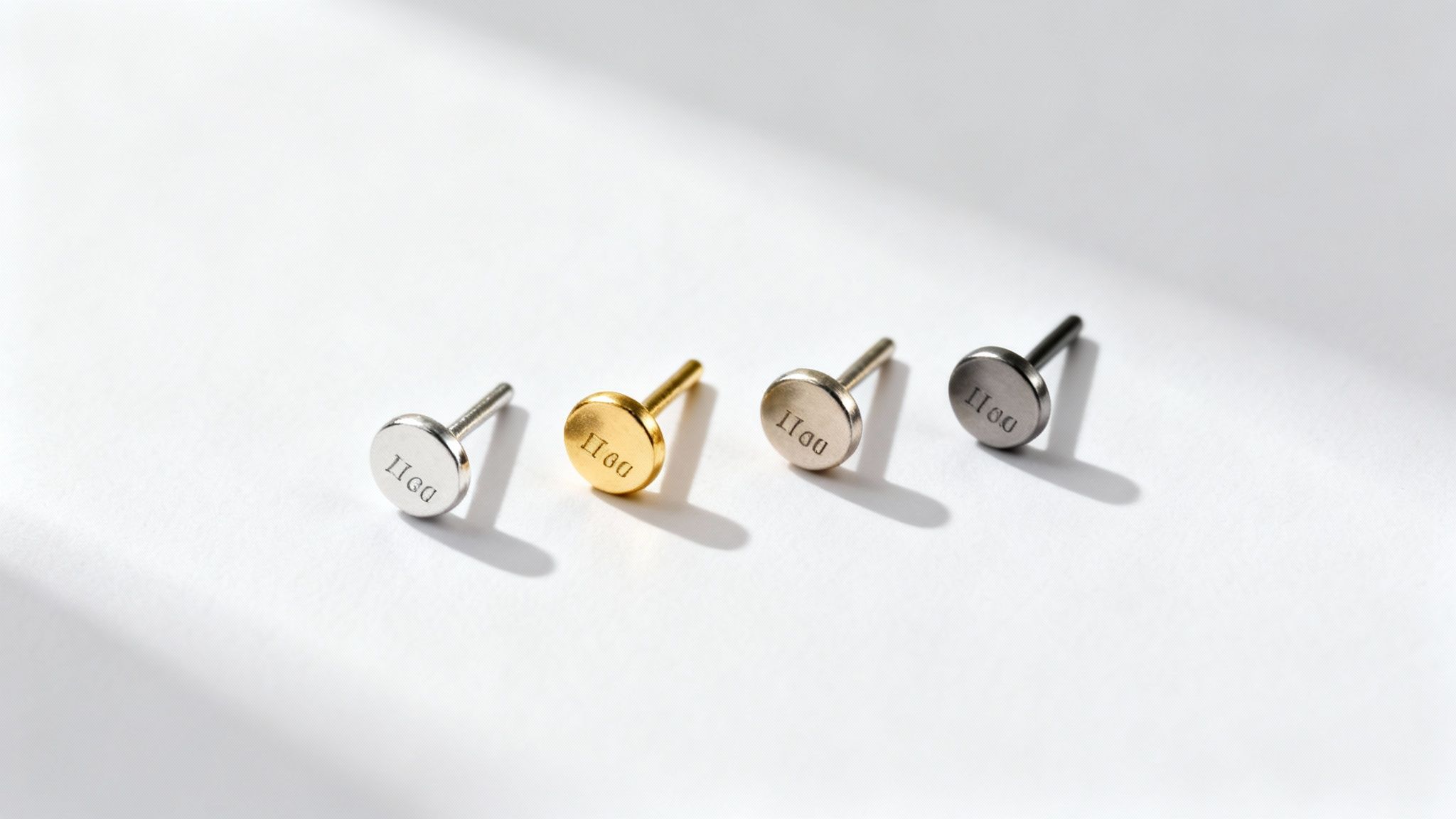
Selecting earrings for sensitive ears is about choosing the right metal. The best hypoallergenic metals are stable and do not leach irritating ions that can provoke an allergic reaction.
Familiarizing yourself with these materials is the first step toward curating a jewelry collection you can wear with confidence. Each metal offers a unique aesthetic, feel, and price point, allowing you to find a perfect match for your style and skin.
S925 Sterling Silver
S925 Sterling Silver is a classic choice for high-quality, hypoallergenic jewelry. The "925" stamp guarantees the piece is 92.5% pure silver. The remaining 7.5% is an alloy—typically copper—added for strength, as pure silver is too soft for durable wear.
For sensitive ears, it is crucial that this 7.5% alloy is nickel-free. Reputable jewelers understand this and use safe alloys, making S925 pieces a reliable option. Our comprehensive guide to S925 silver jewelry offers more detail.
At Taton.shop, our collections are built on this principle. Our S925 silver earrings feature a trusted, nickel-free base, providing brilliant shine without the risk of irritation.
High-Karat Gold
Gold is an excellent option, but its purity—measured in karats (k)—is what matters. Pure 24k gold is inert but too soft for most jewelry. It is therefore alloyed with other metals to create stronger 14k and 18k options.
- 18k Gold: Composed of 75% pure gold, it has a rich, warm color. Its high gold content leaves minimal room for potential irritants, making it an excellent hypoallergenic choice.
- 14k Gold: At 58.3% pure gold, 14k provides a balance of purity, durability, and value. It is a popular and dependable choice for everyday hypoallergenic earrings for sensitive ears.
When choosing gold, select 14k or higher and confirm the alloys are nickel-free. This is particularly important for white gold; high-quality pieces now use palladium instead of nickel for color.
The secret to hypoallergenic gold-plated jewelry lies beneath the surface. A piece with a thick 18k gold plating over a safe S925 sterling silver base, like those offered at Taton.shop, delivers the luxurious look of gold while ensuring the entire earring is gentle on sensitive skin.
Titanium and Niobium
For extremely sensitive skin, titanium and niobium are the safest choices. These metals are biocompatible, meaning they are so non-reactive they are used in medical implants like pacemakers.
Titanium is lightweight, strong, and corrosion-resistant. Niobium shares these properties and can be anodized to create a spectrum of colors without plating or dyes. While they offer a more modern aesthetic, their safety is unparalleled.
Surgical Steel
Surgical steel is a popular, durable, and budget-friendly biocompatible material. However, not all stainless steel is equal. The specific grade is critical for sensitive ears.
Look for 316L or 316LVM surgical-grade stainless steel. This grade contains a minimal amount of nickel that is chemically bonded within the metal, making it extremely unlikely to be released and cause a reaction.
How to Choose Your Perfect Hypoallergenic Earrings
You know the materials. Now it's time to apply that knowledge to select pieces you will cherish. Choosing the right hypoallergenic earrings is about becoming a discerning shopper who can identify quality and avoid potential irritants.
This selective approach is transforming the jewelry industry. The era of disposable, fast-fashion earrings is declining as consumers demand better. This shift reflects a broader trend: 60% of global consumers now prioritize ethically sourced products for luxury goods.
This is about empowerment, not limitation. Knowing what to look for is an investment in your comfort and a more thoughtful approach to style.
Verify the Base Metal
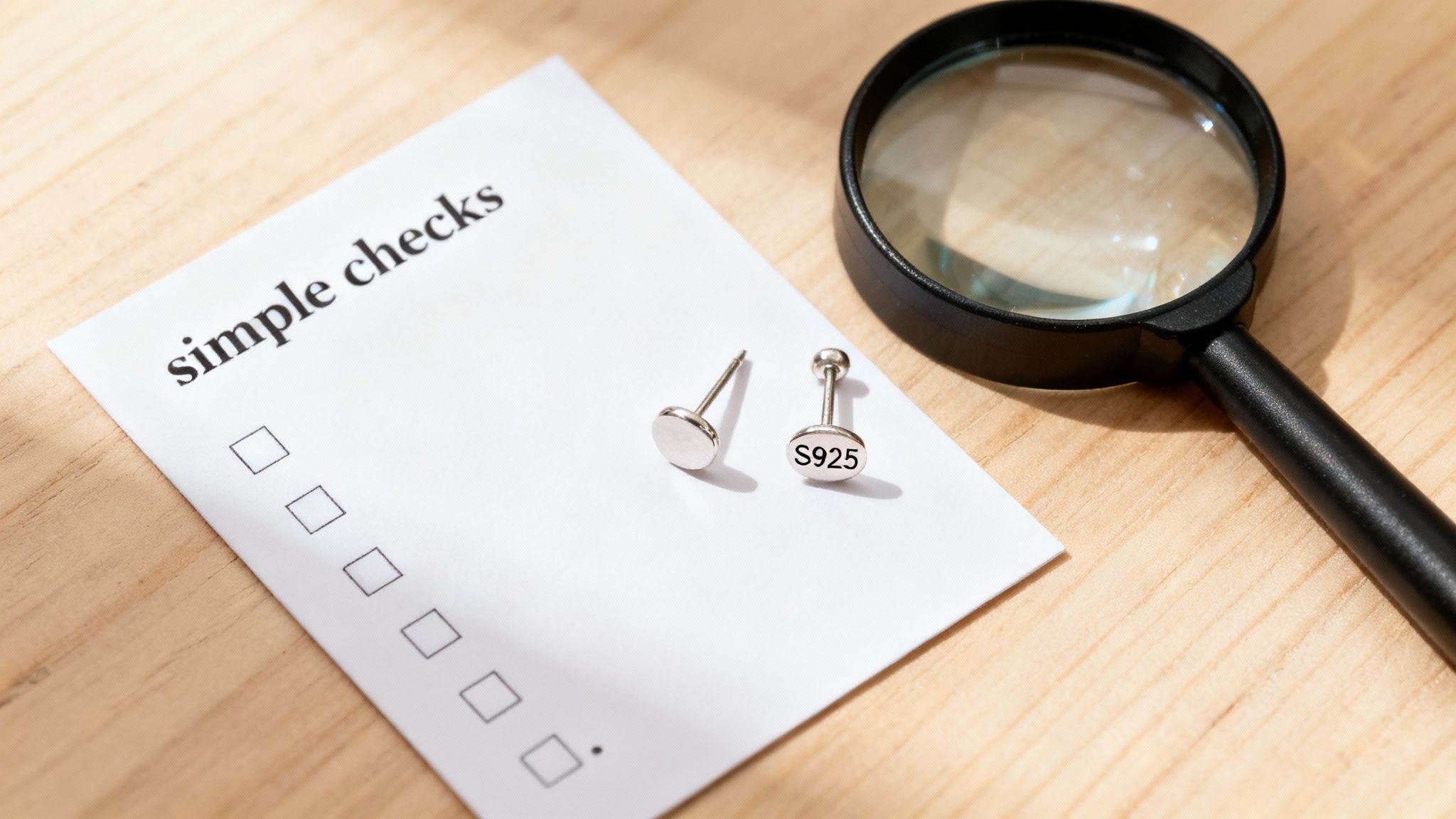
The foundation of any quality earring is its core metal. Reputable jewelers mark their work with stamps of quality.
- For sterling silver, look for a small "S925," "925," or "Sterling" stamp. This guarantees 92.5% purity.
- For gold, the karat is marked, such as "14K" (58.3% gold) or "18K" (75% gold).
- Titanium is often marked with "Ti" or "Titanium."
The absence of a stamp is a warning sign. It suggests the piece may be made from an unknown metal blend that could contain nickel.
Assess the Plating Quality
Many hypoallergenic earrings are plated. The thickness and quality of this outer layer are crucial for both appearance and comfort.
Think of it like painting a house. A cheap, single coat of paint will start to peel and chip in no time, showing the old color underneath. But a few thick, well-applied coats create a durable, protective barrier that stands up to the elements.
This is why the 18K gold plating over an S925 silver base found at Taton.shop is so effective. It creates a robust, lasting barrier. In contrast, "flash-plated" jewelry can wear off quickly, exposing skin to the underlying metal. Our guide on gold hoop earrings provides more detail.
Prioritize Brand Transparency
A trustworthy brand is transparent about its materials. They will be upfront about the composition of the earring, post, and backing.
Look for clear, specific product descriptions, such as "nickel-free S925 sterling silver" or "18K gold plating over sterling silver." Vague language like "metal alloy" is a red flag.
Choosing brands that are open about their materials provides more than an accessory; it provides confidence. For more tips, see this comprehensive guide to jewelry for sensitive skin.
Caring for Your Earrings and Your Ears
Choosing the right hypoallergenic earrings is the first step. A consistent care routine is the secret to maintaining both your jewelry and your piercings' health. This simple habit prevents the buildup of oils and bacteria that can cause irritation, even with safe metals.
A clean earring and a clean piercing are all it takes to enjoy your favorite styles comfortably, day after day.
Maintaining Your Hypoallergenic Earrings
Different metals require different care. For the S925 Sterling Silver and 18K gold-plated pieces at Taton.shop, a gentle approach is essential. Avoid harsh chemicals or abrasive materials that can scratch the finish or wear down the plating.
A simple, effective cleaning method:
- Prepare a Gentle Solution: Mix a few drops of mild, phosphate-free dish soap into a bowl of lukewarm water.
- Soak Briefly: Let your earrings rest in the solution for about 10 minutes to loosen any buildup.
- Wipe Gently: Use a soft, lint-free cloth to clean them. For intricate designs, a very soft baby toothbrush can be used with minimal pressure.
- Rinse and Dry Thoroughly: Rinse each piece under cool water and pat completely dry with a soft cloth. Moisture causes tarnish, so ensuring they are fully dry before storage is critical.
For more on silver care, see our guide on how to clean silver at home.
Hypoallergenic Earring Care Cheat Sheet
This table provides a quick reference for cleaning and storing your earrings based on their material.
| Material Type | Cleaning Method | Storage Tip |
|---|---|---|
| S925 Silver (Plated) | Mild soap & water, soft cloth. | Store in an airtight bag or jewelry box to prevent tarnish. |
| Titanium / Niobium | Mild soap & water, can be sterilized with alcohol. | Durable enough for open storage, but a soft pouch is best. |
| 14K / 18K Gold | Mild soap & water, soft cloth. | Store separately to avoid scratches from other jewelry. |
| Surgical Steel | Mild soap & water, can be sterilized with alcohol. | Highly durable, but best stored dry to maintain shine. |
Following these tips will ensure your jewelry remains in pristine condition, always ready to wear.
Best Practices for Healthy Piercings
Your piercings require as much care as your jewelry. This is the other half of wearing hypoallergenic earrings for sensitive ears successfully.
The most overlooked step in ear care is cleaning the earring post itself. A quick wipe with a sterile alcohol pad before you put them in is an incredibly effective habit. It removes unseen bacteria and dramatically cuts the risk of introducing irritants into the piercing.
Beyond this, listen to your body. A few essential tips for healthy piercings:
- Introduce New Jewelry Slowly: Wear a new pair for only a few hours the first day to monitor your skin's reaction.
- Give Your Ears a Rest: Remove your earrings before sleeping, especially larger styles, to allow your piercings to breathe.
- Address Irritation Immediately: If you notice any itching or redness, remove the earrings. Clean the area with a saline solution and let it calm down. Never "push through" discomfort.
Styling Your Hypoallergenic Earrings
Choosing hypoallergenic earrings is the start of curating a stylish, thoughtful jewelry collection. It is an opportunity to select high-quality pieces that feel as good as they look and elevate your entire wardrobe.
Think of it as an investment in versatile pieces. A pair of minimalist S925 silver studs from Taton.shop is sharp and professional for the office, yet serves as an elegant anchor for a more dramatic evening look.
From Daytime Polish to Evening Grace
Effortless style comes from pieces that are versatile. High-quality hypoallergenic materials like S925 silver and 18K gold plating offer a timeless foundation for any occasion.
- For a Professional Setting: Opt for clean lines and subtle designs. Small silver huggies or classic gold studs project confidence without being distracting.
- For Casual Weekends: A relaxed vibe calls for small, elegant hoops or simple geometric studs. They add polish to a t-shirt or sweater for an intentionally put-together look.
- For Evening Occasions: Transition your look by adding drama. Elegant 18K gold-plated hoops catch the light beautifully, while delicate drop earrings add sparkle.
The beauty of a well-curated hypoallergenic collection is how seamlessly the pieces work together. Each one is strong enough to be worn alone but also plays well with others, letting you build a signature look that is comfortable and completely your own.
The Art of the Curated Ear Stack
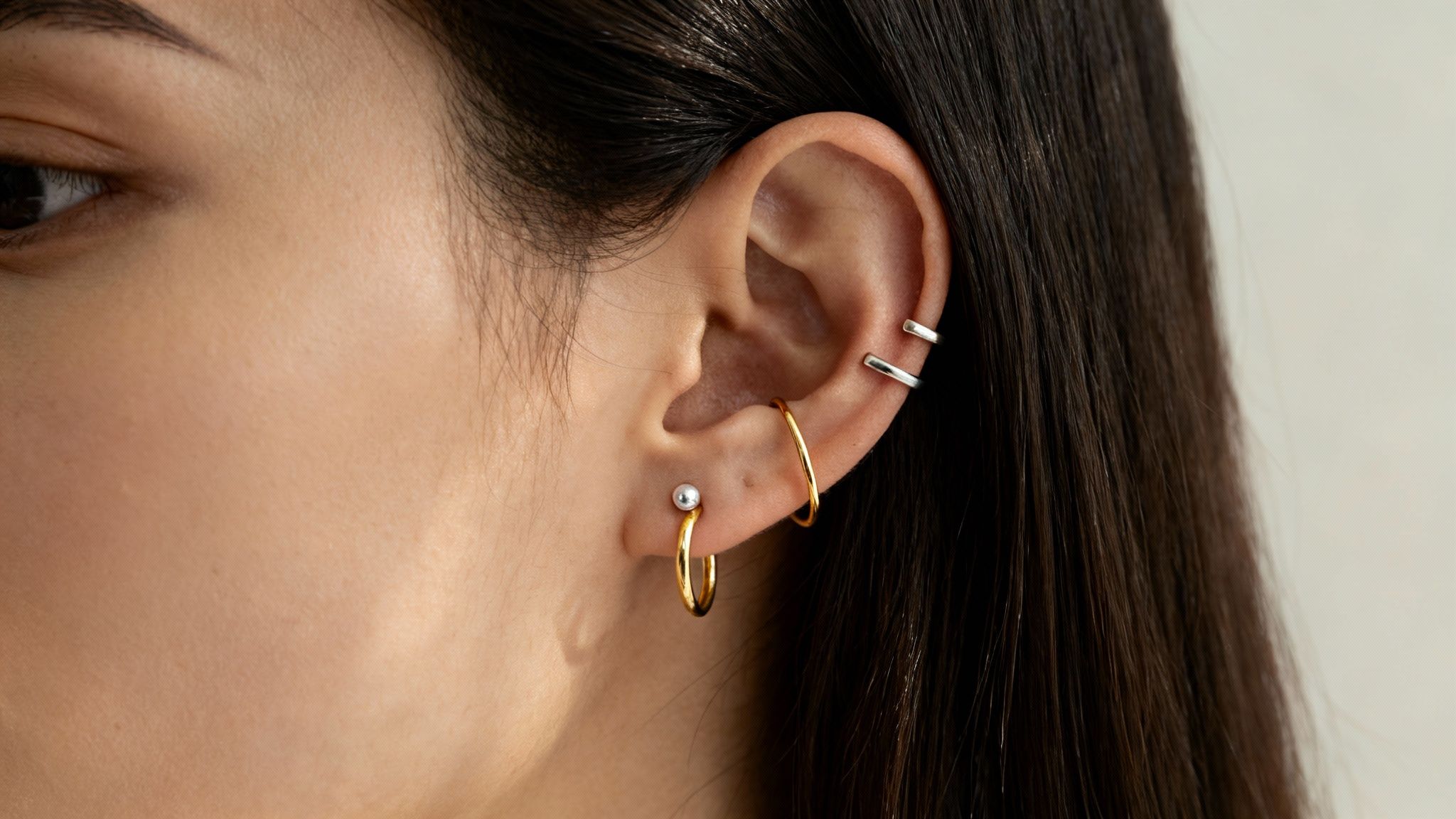
The "curated ear" is a popular way to showcase personal style with hypoallergenic earrings for sensitive ears. This trend involves layering multiple earrings of different sizes and textures across several piercings.
Start with an anchor piece, like a classic hoop in the first lobe. Build up the ear with smaller, complementary earrings, such as a tiny stud in a second piercing and a delicate cuff on the cartilage. Our guide on styling ear cuffs is a great resource.
The key is contrast. Mix smooth hoops with textured studs, or pair silver and gold tones for a modern, mixed-metal aesthetic. This approach turns your ears into a canvas for self-expression, with the assurance that every piece is safe for your skin.
Frequently Asked Questions
When searching for earrings for sensitive ears, a few questions consistently arise. Here are clear, direct answers to help you shop with confidence.
Are S925 Sterling Silver Earrings Completely Nickel-Free?
By definition, S925 Sterling Silver is 92.5% pure silver. The remaining 7.5% is an alloy added for strength. Pure silver is nickel-free, so the composition of the alloy is what matters.
At Taton.shop and other reputable jewelers, this alloy is typically copper, which is safe for most sensitive skin. Always choose trusted sellers, as low-quality "sterling silver" may contain nickel.
Can Gold-Plated Earrings Be Hypoallergenic?
Yes, provided the metal beneath the plating is also hypoallergenic. The plating is a coating; the base metal is what interacts with your skin if the plating wears. A thin layer of gold over a nickel-based core will eventually cause a reaction.
The secret to a truly hypoallergenic gold-plated earring is making sure every layer is safe. A piece that starts with a nickel-free S925 sterling silver core and then gets a thick, protective layer of 18K gold is safe from the inside out.
This is our standard at Taton.shop. By plating a pure S925 silver base with durable 18K gold, we provide the look of gold without the risk.
How Long Should I Wait to Change New Piercings?
Patience is essential. A new piercing is a wound that requires time to heal completely before changing jewelry. Doing so too early can cause irritation, infection, and prolonged healing.
General healing timeline:
- Earlobe Piercings: A minimum of 6 to 8 weeks.
- Cartilage Piercings: These are more sensitive and require 6 to 12 months to heal fully.
During healing, wear the implant-grade titanium or surgical steel stud provided by your piercer. Once fully healed, you can safely explore other styles.
Ready to discover earrings you can wear with confidence? Explore our curated collection of hypoallergenic earrings for sensitive ears at Taton.shop and experience the beauty of comfort. Find your next favorite pair at https://taton.shop.
