
How to Layer Jewelry: A Modern Guide to Styling
Layering jewelry is an art form. It's about creating a signature look that feels refined and minimalist, not just piled on. The most effective layered looks follow a few simple principles: start with a strong anchor piece, play with different textures, and always maintain balance.
This approach helps you build a versatile, modern jewelry wardrobe where every piece works in harmony.
The Art of Layering: A Modern Philosophy
Layering is a deliberate act of storytelling. The goal is to move beyond a chaotic, random look toward something curated and intentional.
Shift your mindset. Think of your collection as a versatile system, not a box of unrelated items. Each necklace, bracelet, or ring should contribute to a single, cohesive statement. When you nail this, you elevate your entire style.
- Be Intentional: Choose pieces that complement each other in material, visual weight, and style.
- Tell Your Story: Let your layers reflect your mood, the occasion, or a meaningful part of your life.
- Focus on Quality: Prioritize well-crafted items. Pieces like S925 sterling silver with 18K gold plating offer timeless appeal.
Building Your Foundation
Start by identifying the core pieces that will anchor your layered looks. This could be a simple, elegant chain or a meaningful pendant. It is your starting point.
From that anchor, build out with texture and contrast. For instance, pairing a sleek snake chain with a detailed link chain creates immediate visual interest without looking cluttered.
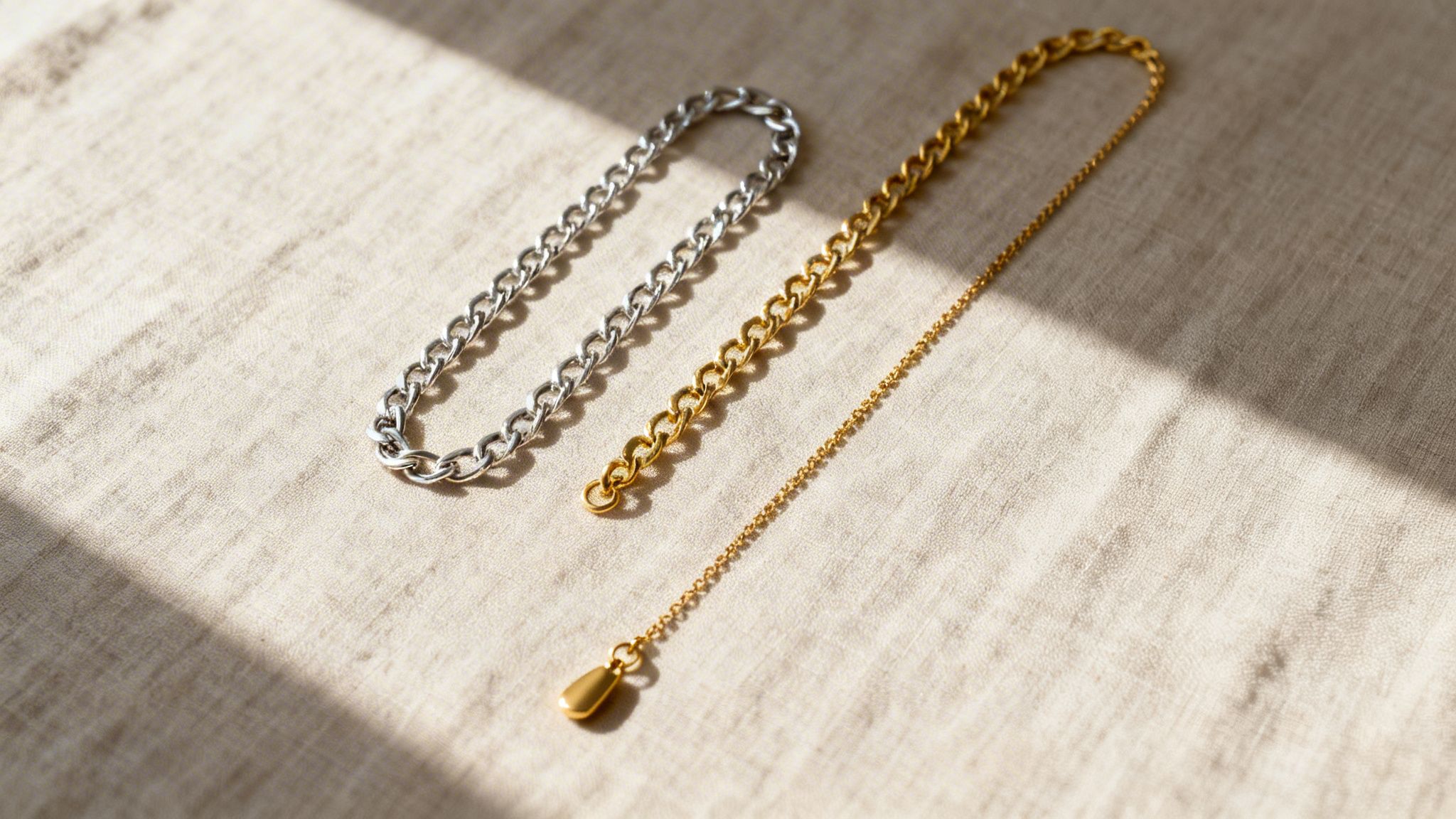
The layered necklace trend is now a fundamental part of modern style. The segment is projected to become a USD 52.32 billion market by 2025. The entire necklace category is expected to grow at a CAGR of 6.19% between 2026 and 2031, showing a fundamental shift in how we wear jewelry.
The Rules of Balance
Balance separates a curated stack from a tangled mess. For necklaces, vary the lengths so each piece has its own space. For bracelets and rings, distribute the visual weight.
Aim for harmony, not perfect symmetry. As you build your collection, you might want to explore various accessories to find new pieces that fit your evolving style.
Layering is an art of balance, not excess. A well-curated stack should feel like a natural extension of your personal style, adding quiet confidence to your look without shouting for attention.
This modern philosophy gives you the freedom to create unique combinations that are entirely you.
Mastering layering comes down to a few core principles, best broken down by jewelry type.
Core Principles of Jewelry Layering
| Jewelry Type | Anchor Piece | Texture & Contrast | Balance Rule |
|---|---|---|---|
| Necklaces | A meaningful pendant or foundational chain | Mix chain styles (e.g., snake, link, beaded) | Maintain 1-2 inches between each layer |
| Bracelets | A structured cuff or your primary watch | Combine delicate chains with bolder pieces | Create one focal point on the wrist |
| Rings | A statement ring or a core wedding band | Pair smooth bands with textured or stone-set rings | Distribute 3-5 rings across both hands |
These principles are a starting point. The magic happens when you experiment and find the combinations that feel most natural.
Creating the Perfect Necklace Stack
An intentional necklace stack begins with a single foundational piece. This anchor—often a simple choker or short pendant—sets the tone and establishes the highest point of your stack.
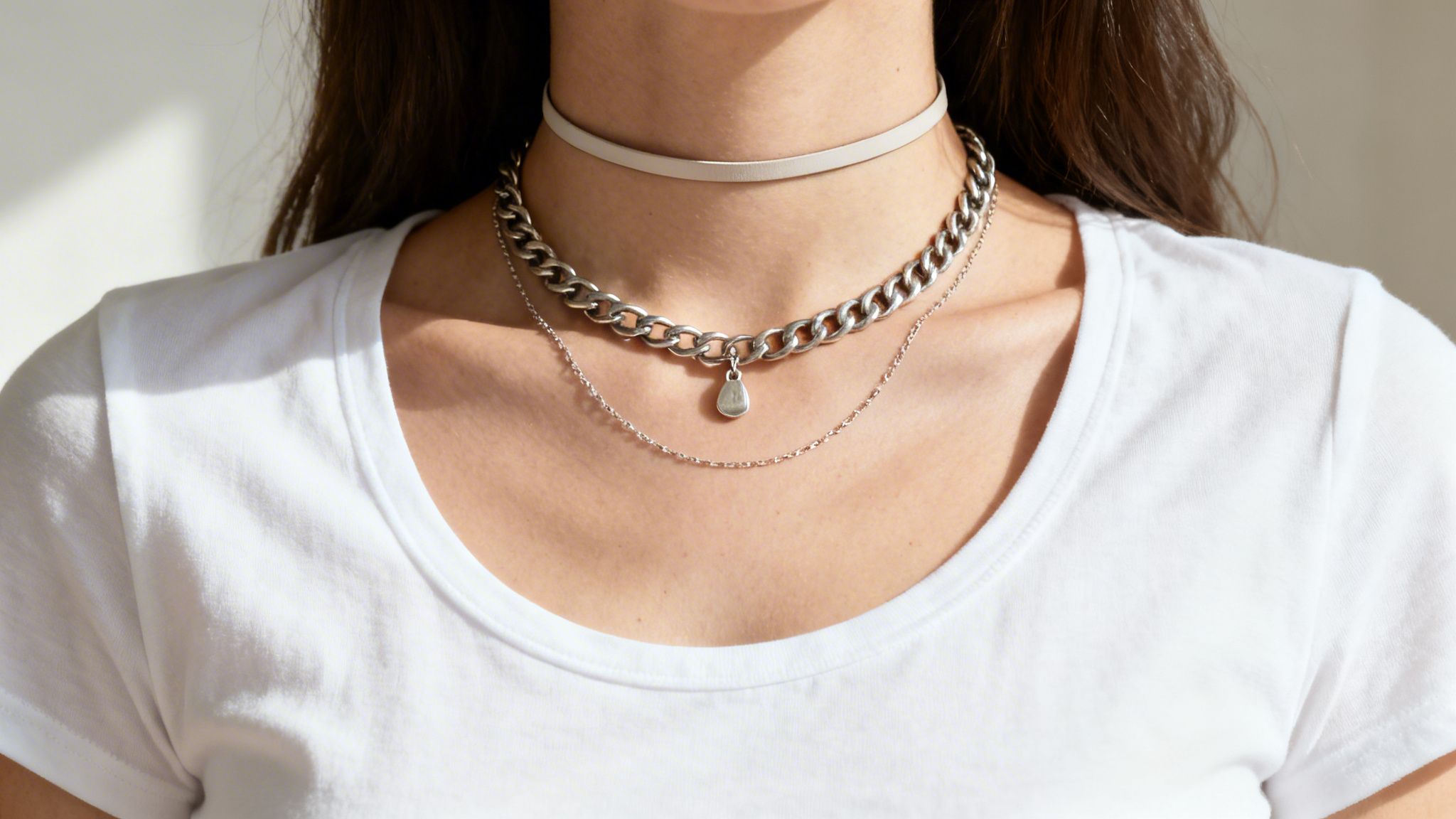
Once your anchor is in place, play with length and texture. Maintain one to two inches of space between each layer to avoid a tangled look.
For instance, if you start with a 16-inch choker, your next piece should be an 18-inch chain, followed by a 20 or 22-inch necklace. This methodical spacing makes each piece feel distinct yet part of a cohesive whole.
Introducing Texture and Depth
Mixing different chain styles takes your stack from layered to expertly curated. It adds a tactile dimension that makes the look more interesting.
Consider these contrasting pairings:
- Smooth & Intricate: A liquid-like snake chain next to a detailed link chain.
- Delicate & Bold: A fine, shimmering chain alongside a slightly chunkier paperclip style.
- Pendants & Chains: A necklace with a small charm among your simple chains adds a personal touch.
This deliberate mix of textures prevents a stack from looking flat and signals a thoughtful approach to styling.
A successful necklace stack has a clear hierarchy. It needs a focal point—one piece that grounds the entire combination and tells the eye where to look.
Defining Your Focal Point
Every great layered look has a hero piece. This focal point can be your shortest, longest, or middle necklace. It might be a necklace with a striking pendant or a chain that's noticeably thicker.
This main piece acts as a visual center of gravity, tying the other, more subtle layers together. The other necklaces become the supporting cast, adding depth and texture without competing for the spotlight. This balance is crucial for a refined, minimalist aesthetic.
Curating Your Bracelet and Ring Stacks
The principles of layering extend to your wrists and hands. It's about creating an intentional, balanced look.
For bracelets, start with a "hero" piece. This could be a bold cuff, your watch, or a thicker chain that naturally draws the eye. This piece anchors the entire look. Then, build around it with complementary pieces that bring in texture and dimension.
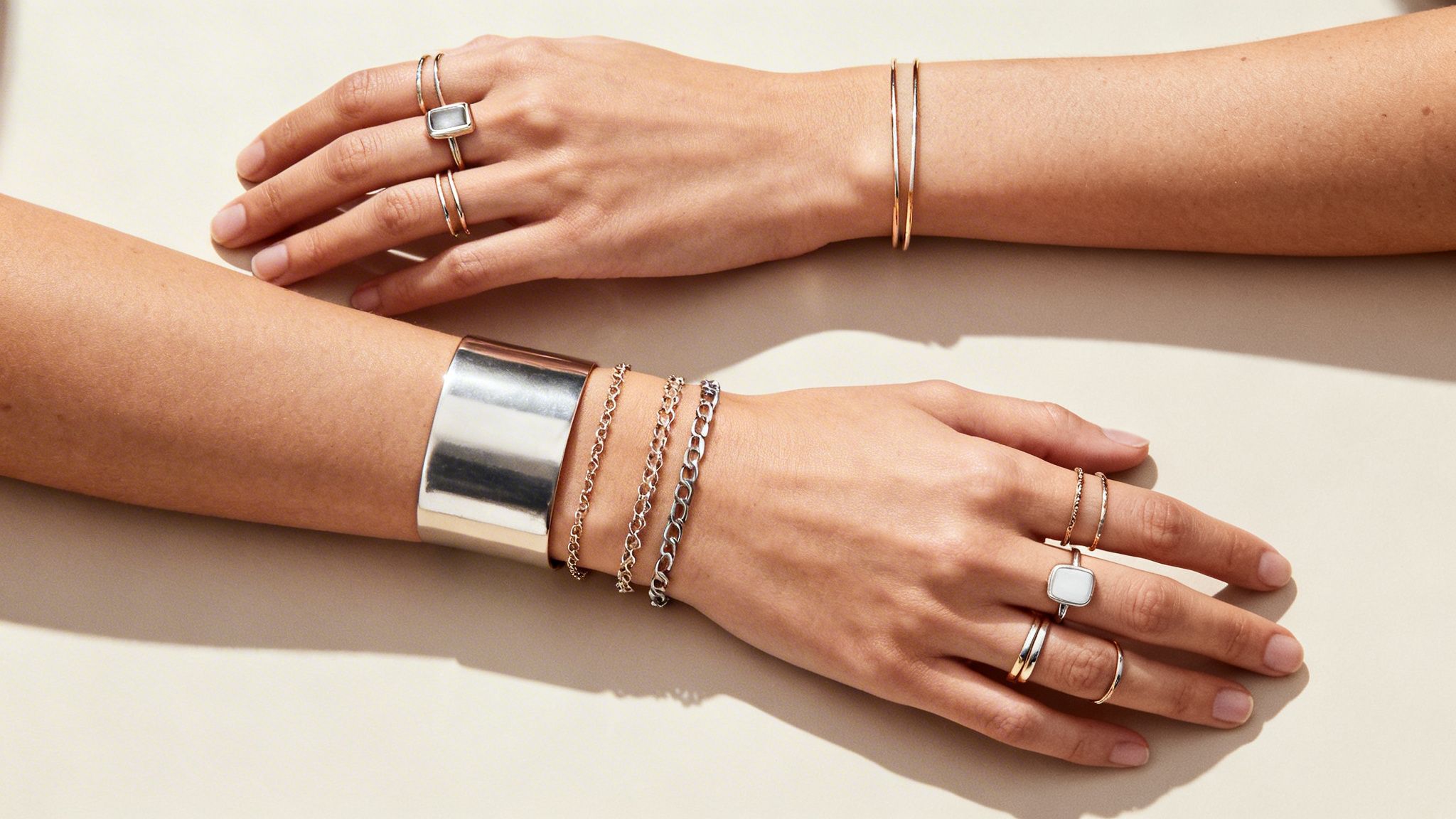
Introduce different textures. Pair the clean lines of a cuff with the soft movement of a delicate chain. Or, place a beaded bracelet next to a simple, polished bangle. This contrast makes a stack feel alive and sophisticated.
Achieving Balance with Your Rings
For rings, create a cohesive story that flows across both hands. A modern approach is to distribute your rings asymmetrically.
Follow these guidelines for a refined ring stack:
- Vary the Weight: Mix one or two statement rings with several delicate, minimalist bands.
- Mix the Textures: A smooth, polished band looks fantastic next to a hammered or twisted texture.
- Distribute Asymmetrically: Try three rings on one hand and two on the other. Experiment to find what feels natural.
This strategy ensures your rings look chic and purposeful, not cluttered.
An expertly curated stack—whether on your wrist or across your fingers—tells a story of texture, form, and balance. The thoughtful combination of pieces, not the quantity, creates a powerful statement.
The Modern Rules for Hand and Wrist Jewelry
The global jewelry market is projected to reach USD 566.86 billion by 2033. This growth reflects a major shift toward more personal and expressive styling, making layering more relevant than ever. You can explore these trends in the full jewelry market forecast.
Think about the conversation between your bracelets and rings. If you have a bold bracelet stack on your left wrist, keep the rings on that hand minimal. Balance it with bolder rings on your right hand. This conscious distribution of visual weight is the secret to a harmonious look.
Mixing Metals and Finishes Like a Pro
The old rule about not mixing gold and silver is dead. Combining metals gives your look a modern, confident edge. It shows you are styling your jewelry, not just wearing it.
The secret is to make it look intentional. A thoughtful mix looks chic and curated.
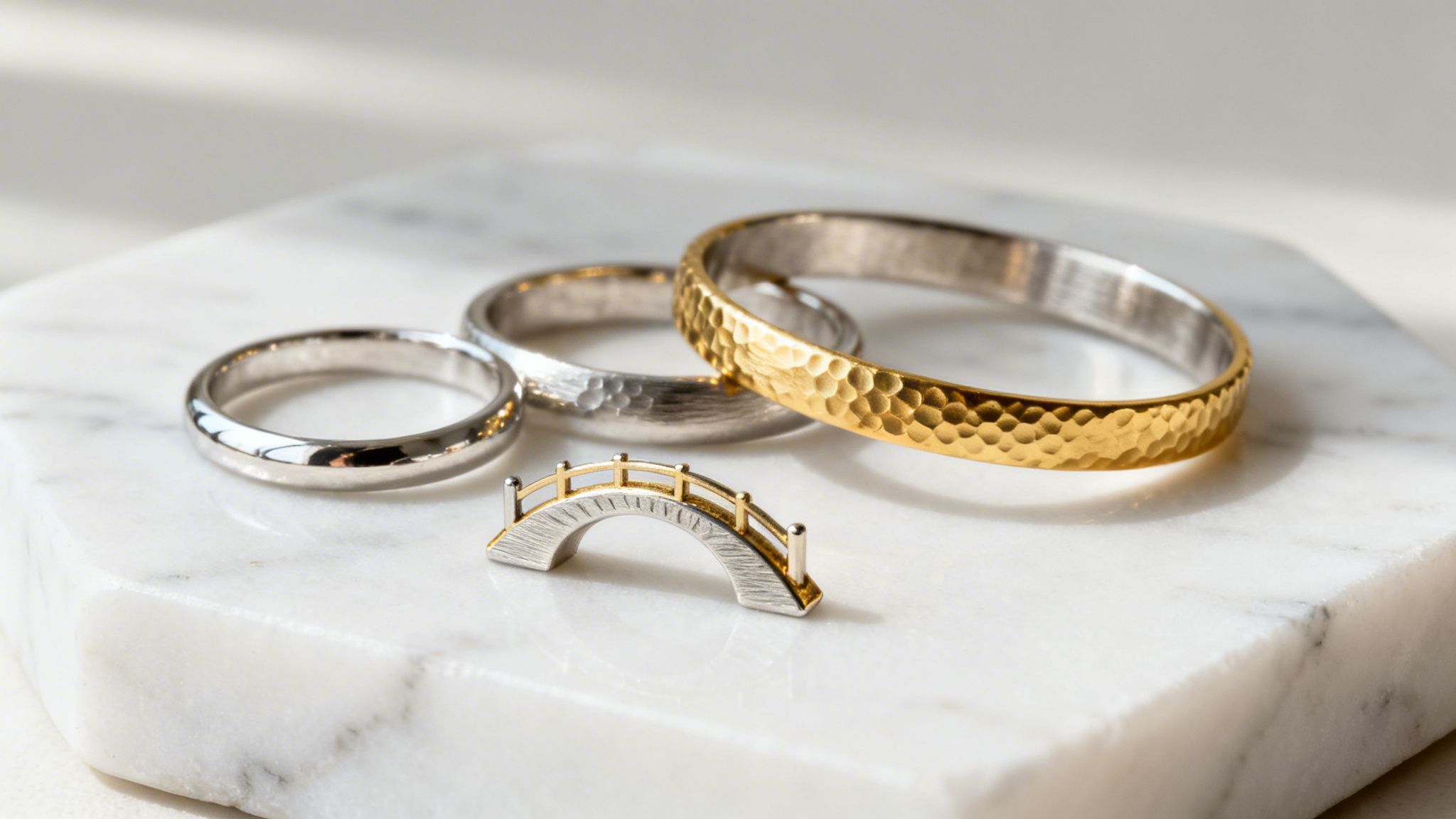
Use a "bridge" piece—a single item that already features both gold and silver tones. This acts as a connector, making the entire mix feel cohesive.
Another approach is to pick a dominant metal. Aim for a 70/30 ratio. For instance, start with three gold necklaces, then add one delicate silver chain. This lets one metal anchor the look while the other serves as a cool, unexpected accent.
Beyond Color: The Power of Texture
To elevate your layering, play with different finishes and textures. This adds a subtle complexity that feels incredibly refined. Pairing different finishes creates a beautiful interplay of light.
Try these textural pairings:
- Polished + Hammered: The sleek surface of a polished ring next to the light-catching texture of a hammered band.
- Brushed + Shiny: A brushed metal cuff with a delicate, high-shine chain bracelet for a sophisticated look.
- Smooth + Intricate: A simple, unadorned chain as a counterpoint to a piece with detailed engraving.
Focusing on texture is what separates a good stack from a great one. It shows you’re thinking beyond color to how form and finish contribute to the overall effect.
The art of mixing metals and finishes is about intentional contrast. Combining warm and cool tones or pairing smooth and textured surfaces creates a look that's visually rich and deeply personal.
Creating a Cohesive Story
The goal is to create a look that feels harmonious, even with its contrasting parts. Think about repetition and balance across your entire look.
If you’re mixing metals in your necklace stack, echo that combination on your wrist or with your rings. This repetition ties it all together, signaling that every choice was deliberate. It transforms a collection of individual pieces into a unified, stylish statement.
Styling Your Layers for Any Occasion
Knowing how to layer jewelry is about adaptability. Your core collection can work for any dress code, moving with you from the office to a relaxed weekend. It's about knowing how to style your favorite pieces with intention.
A delicate necklace stack perfect for work can be instantly dressed up for a night out. Just swap one fine chain for something bolder. This small change highlights the versatility of a well-chosen jewelry wardrobe.
For the Professional Setting
In a professional environment, jewelry should add polish without being a distraction. The goal is subtle refinement.
A simple two-necklace stack is effective. Start with a fine, short chain, then add a slightly longer pendant necklace. Combine that with a simple ring stack—perhaps two delicate bands on one finger. The look is complete, polished, and quietly confident.
For a Casual Weekend
Weekends are for personal style. This is your chance to play with bolder combinations and create more contrast.
Try a chunkier chain necklace over an oversized t-shirt. The juxtaposition between a strong accessory and soft clothing creates a stylish look with minimal effort. This is also a great time to build a more substantial bracelet stack, mixing textures and weights for a relaxed but put-together vibe.
The key to versatile layering is understanding context. A statement piece that feels bold on a casual Saturday can become the perfect focal point for a sophisticated evening look when styled with the right complementary items.
This adaptability is increasingly important. The layered necklaces market is growing at a 12% CAGR from 2025 to 2033, showing where fashion lovers are investing. You can learn more about the growth of the layered necklaces market and see how significant this trend has become.
For an Evening Out
For an evening out, your jewelry can be the star. Build more intricate combinations and create a clear focal point for your outfit.
Opt for an eye-catching necklace stack with three or four layers, playing with different textures and a standout pendant. Or, shift the focus to your ears by pairing a statement hoop with a delicate crawler or stud. The goal is a look that feels elevated and intentional.
Your Jewelry Layering Questions Answered
Layering jewelry brings up practical questions. It's one thing to see a perfect stack online; it's another to stop your necklaces from tangling. Here are the most common questions.
These are quick, practical answers to move you from theory to a confident, personal style.
How do I keep my layered necklaces from tangling?
Variety is the secret to avoiding tangles. Mix the weight, texture, and length of your necklaces. Start with a slightly heavier pendant or chain as your shortest or longest piece. It acts as an anchor.
Leave at least an inch of space between each necklace. It also helps to mix chain styles—a sleek snake chain and a chunkier link chain are less likely to catch on each other.
Pro Tip: Put your most delicate chain on last. It will sit on top of the others and is less likely to get caught. When you take them off, hang them separately or use a jewelry roll to save frustration.
How many pieces are too many when layering?
There is no magic number, but the goal is to be intentional. A curated stack looks purposeful, not chaotic. If your jewelry feels heavy, gets in the way, or feels distracting, you've gone one piece too far.
Guidelines for a balanced look:
- Necklaces: Three to four pieces create a full, interesting look without being overwhelming.
- Bracelets: A stack of three to five varied styles on one wrist often looks fantastic.
- Rings: Spread three to five rings across both hands to maintain overall balance.
Trust your gut. Your jewelry should elevate your outfit, not become the entire conversation.
Can I layer delicate jewelry with chunky pieces?
Absolutely. That contrast is what makes a layered look compelling. It creates a dynamic, interesting composition.
Let one piece be the hero. Pair a single chunky chain or statement pendant with two or three much finer chains. This lets the bolder piece be the focal point, while the delicate ones add depth without competing. Avoid layering multiple chunky pieces together, as it can quickly feel heavy. The same principle works for bracelets and rings.
Ready to find the perfect foundational pieces for your collection? At Taton.shop, we offer a curated selection of S925 silver and 18K gold-plated jewelry designed for the modern minimalist. Start building your signature look today.
Find your style at https://taton.shop.
