
How to Clean Tarnished Silver Jewelry and Restore Its Shine
When your favorite silver jewelry darkens, it's not a sign of poor quality. It’s proof of its authenticity. This natural process, called tarnishing, is a simple chemical reaction that is easily reversed. A time-tested home remedy uses baking soda and aluminum foil to restore your jewelry's original shine.
Why Silver Jewelry Tarnishes
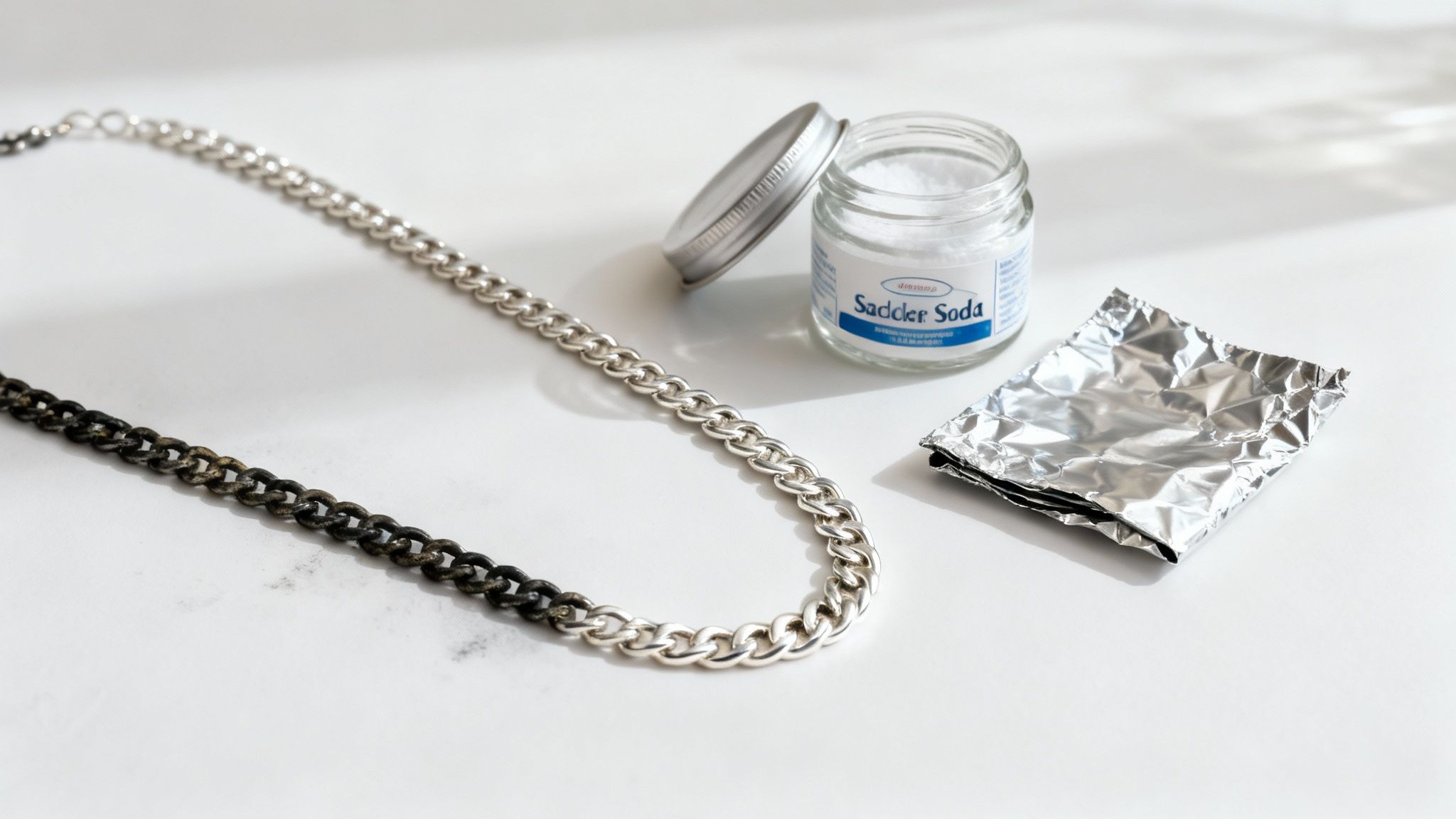
The subtle darkening on your silver is a normal characteristic of the material. It's a misconception that tarnish is dirt or a defect. This chemical process confirms your jewelry is genuine sterling silver, not a lesser imitation.
The Science of Discoloration
Tarnish is primarily silver sulfide, which forms when silver reacts with sulfur-containing gases in the air. Pure silver is too soft for durable jewelry, so it’s alloyed with other metals—usually copper—to create S925 sterling silver. This alloy is a precise blend: 92.5% pure silver and 7.5% other metals.
The copper in the alloy is what reacts with atmospheric sulfur, creating the dark layer. Silver may tarnish faster in humid or polluted environments, where sulfur compounds are more prevalent.
Key Takeaway: Tarnishing is a surface-level event. Unlike rust, which corrodes and damages metal, tarnish rests on the outer layer. It can be completely removed without harming the piece.
To appreciate why silver behaves this way, it helps to understand the material itself. You can explore the symbolism and history behind sterling silver for a deeper look.
Common Tarnish Triggers
While air is the primary cause, many everyday substances accelerate the tarnishing process. Awareness of these factors can keep your silver brilliant for longer.
- Cosmetics & Skincare: Lotions, perfumes, and hairsprays contain chemicals that react with silver. Make your jewelry the last thing you put on.
- Household Chemicals: Chlorine is a major cause of tarnish. Bleach and swimming pool water will cause discoloration almost instantly.
- Moisture & Humidity: Storing jewelry in a bathroom is not recommended. Constant moisture exposure accelerates the tarnishing reaction.
- Certain Foods: High-sulfur foods like eggs, onions, and mustard can tarnish silver upon contact.
Understanding the causes of tarnish is the first step toward removing and preventing it. Treating tarnish as a mark of authenticity transforms care from a chore into a practice of preserving quality.
At-Home Cleaning Methods For Sterling Silver
You don’t need harsh chemicals or a professional service to restore the shine to your S925 sterling silver. Effective methods often use simple kitchen ingredients. These techniques are tough on tarnish but gentle on your jewelry.
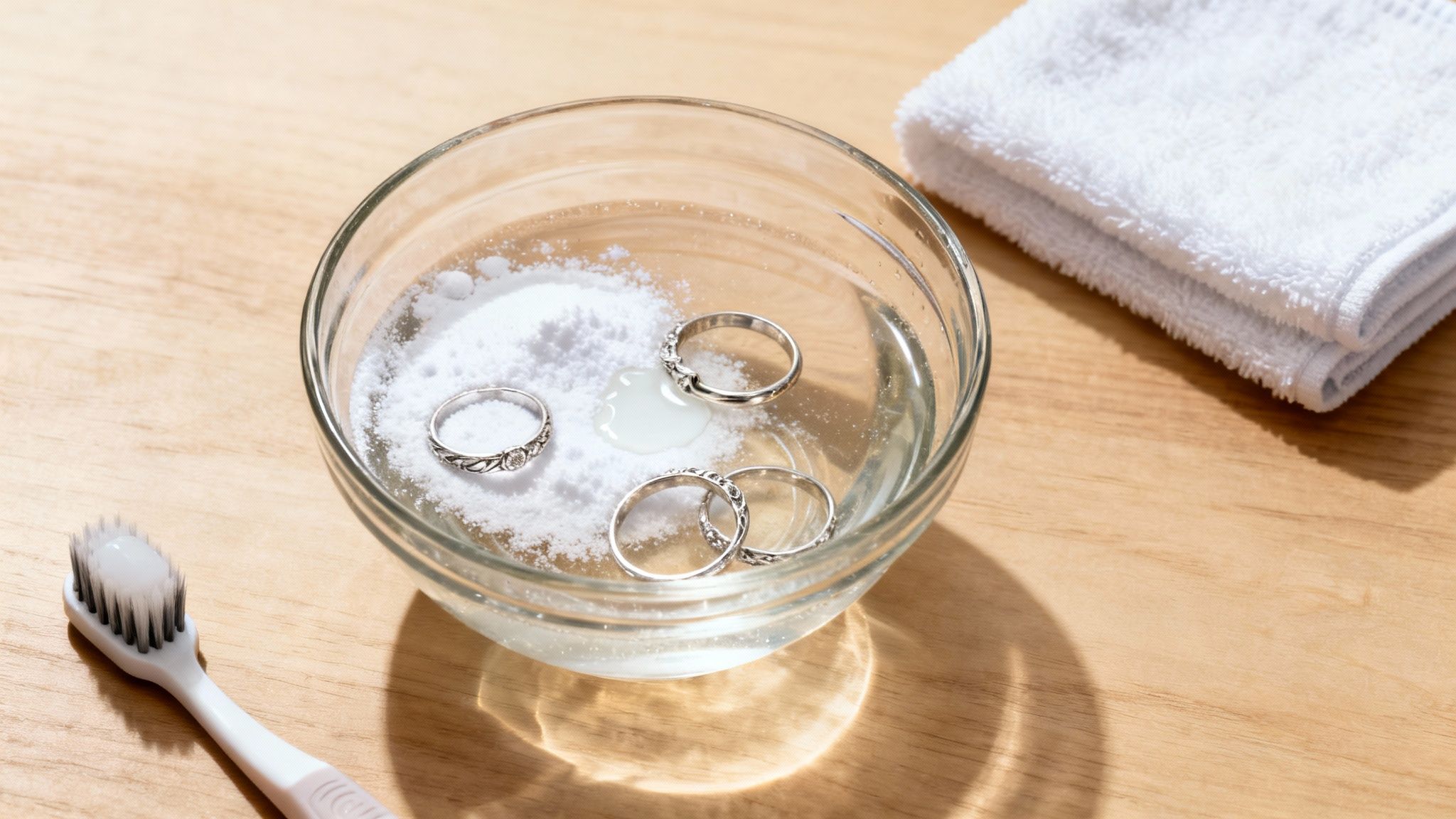
Before you begin, assess your piece. Light dullness requires a milder approach than heavy, dark tarnish. Always start with the gentlest method to protect the finish and integrity of your jewelry.
The Foil and Baking Soda Bath
This method uses a simple chemical reaction—an ion exchange—to transfer tarnish from your jewelry to aluminum foil. It is a highly effective, non-abrasive option for moderate to heavy tarnish. Avoid this method for pieces with porous gemstones like turquoise or pearls.
You will need:
- A bowl lined with aluminum foil, shiny side up
- Hot water
- 1-2 tablespoons of baking soda
- A soft, lint-free cloth
Place your silver jewelry directly onto the foil in the bowl. Cover the pieces with hot water, then add the baking soda. A gentle bubbling indicates the reaction is working. Let it soak for 5-10 minutes.
Carefully remove the jewelry, rinse it under cool running water, and pat it completely dry with a soft cloth. Proper drying is crucial to prevent new water spots.
The Baking Soda and Vinegar Fizz
For stubborn tarnish, this combination is very effective. The vinegar soak begins to break down the discoloration, while the baking soda provides a gentle lift to remove residue without scratching the silver.
Mix equal parts white vinegar and water, then soak your jewelry for 10 minutes. Afterwards, sprinkle baking soda directly onto the pieces. The resulting fizzing helps lift grime from small crevices. This is a go-to method for 80% of jewelers working with S925 pieces, reversing discoloration in under 15 minutes.
Pro Tip: For detailed pieces, use a very soft toothbrush to gently work the baking soda into hard-to-reach spots before the final rinse.
Simple Soap and Water Soak
For light tarnish or routine maintenance, a bath in soapy water is sufficient. This is the safest method for all sterling silver, especially pieces with delicate gemstones that cannot withstand more intensive cleaning. Using pH-neutral cleaners for sensitive surfaces prevents unintended damage.
You will need:
- A bowl of warm water
- A few drops of mild, phosphate-free dish soap
- A soft microfiber cloth
Mix the soap into the warm water. Let your jewelry soak for 5 minutes, then gently wipe away any buildup with your fingers or a soft cloth.
Rinse each piece thoroughly under cool, clean water and dry it carefully. Performing this every few weeks for frequently worn jewelry helps prevent significant tarnish from forming.
This quick comparison can help you choose the right at-home method.
DIY Silver Cleaning Method Comparison
| Method | Best For | Time Required | Materials Needed |
|---|---|---|---|
| Foil & Baking Soda | Moderate to heavy tarnish on solid silver pieces | 5-10 minutes | Aluminum foil, baking soda, hot water |
| Vinegar & Baking Soda | Stubborn tarnish and detailed pieces | 10-15 minutes | White vinegar, baking soda, water |
| Soap & Water | Light tarnish and regular maintenance | 5 minutes | Mild dish soap, warm water |
The right choice depends on the level of tarnish and the type of jewelry. Always begin with the gentlest option.
Special Care for Plated Jewelry
A common mistake is cleaning all silver-toned jewelry identically. While solid sterling silver is resilient, plated pieces require a much more careful approach.
Plated jewelry has a very thin layer of precious metal over a base metal. This delicate top layer is what gives the piece its appearance, but it is also easily damaged.
Methods suitable for S925 silver, like the baking soda and foil bath, are too harsh for plated items. Aggressive techniques can strip the thin plating, exposing the base metal and permanently ruining the piece. The same applies to abrasive polishes and chemical dips.
The Only Safe Way to Clean Plated Pieces
For silver-plated or 18K gold-plated jewelry, there is only one safe cleaning method. The goal is gentle maintenance to remove daily buildup of oils and dust that dull the shine.
Follow this process exclusively:
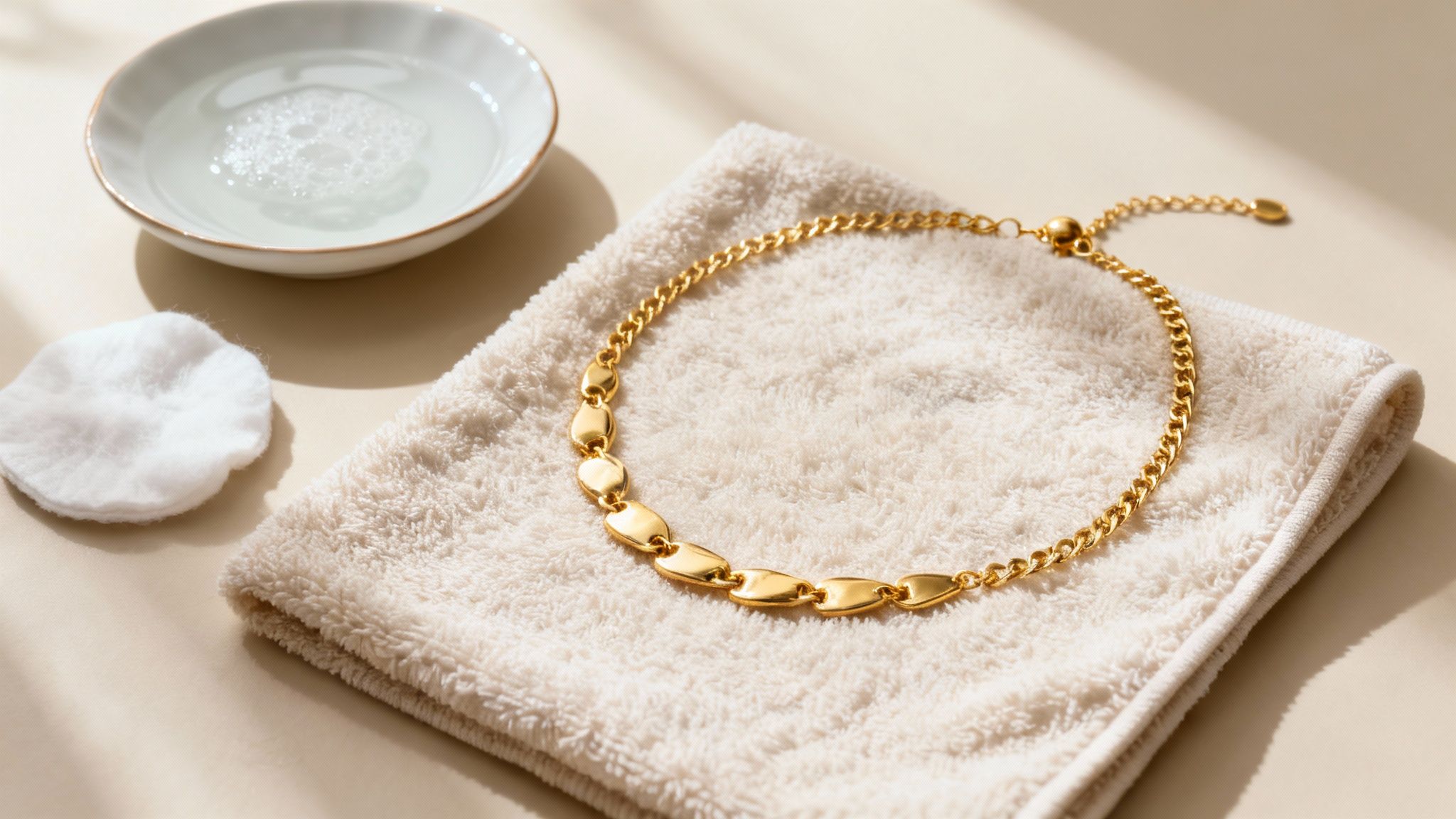
- The Solution: Use a bowl of lukewarm water with a few drops of mild, phosphate-free dish soap.
- The Tool: Use a clean, lint-free microfiber cloth. Avoid paper towels, as their wood fibers can leave fine scratches.
Dip a corner of the cloth into the soapy water and wring it out until it is damp, not soaking. Gently wipe the surface of the jewelry. No scrubbing is necessary; a light motion is sufficient. A cotton swab can be used for crevices.
Crucial Tip: Never soak plated jewelry. Submerging it can weaken the bond between the plating and the base metal, leading to flaking or peeling.
Drying and Polishing Plated Jewelry
Properly drying your pieces is as important as cleaning them. Use a separate, dry section of your microfiber cloth to gently pat the jewelry dry. Ensure every part is free of moisture before storage, as dampness promotes tarnish and corrosion.
For extra shine, use a fresh, dry part of the cloth to give the piece a final, gentle buff. This light polish restores luster without risking the plated surface. With plated jewelry, preservation is the goal. This minimalist cleaning routine will keep your Taton.shop pieces beautiful.
Using Commercial Silver Cleaners Safely
While home remedies are excellent for regular upkeep, some situations require a commercial silver cleaner. Understanding the different types available is key to achieving a brilliant shine without damaging your Taton.shop pieces.
There are generally three types of cleaners: dips, polishes, and cloths. Each serves a specific purpose, and the best choice depends on the level of tarnish and the jewelry's material.
Dips, Polishes, and Cloths
Silver Dips
These are strong chemical solutions for heavily tarnished solid S925 silver. They work quickly by chemically dissolving tarnish. Their potency makes them too aggressive for jewelry with delicate gemstones like pearls, turquoise, or opals. Never use a dip on plated items, as it can strip the plating.
Silver Polishes
Polishes are creams or pastes that contain fine abrasives to physically buff away tarnish. They are effective for restoring a deep luster but require a gentle touch. They are a good option for moderate tarnish.
Polishing Cloths
These are the ideal choice for daily maintenance. The soft cloths are treated with micro-abrasives and anti-tarnish agents. They are the gentlest option, perfect for a quick wipe-down after wearing or for a final buff after cleaning.
The market for these products is growing, projected to increase from $298.3 million in 2025 to $632.2 million by 2035. Convenience is a major driver, with 55% of consumers citing it as the main reason for purchase. You can see more on these trends at datainsightsmarket.com.
Safety First: Choose Ammonia-Free Formulas
Always prioritize ammonia-free formulas. Ammonia is a harsh chemical that can dull silver over time and is risky for pieces with antiqued finishes or fragile stones. Its fumes also require a well-ventilated space for safe use.
Read the product label to ensure it is approved for your type of jewelry. Reputable brands offer cleaners specifically formulated for pieces with gemstones or for plated metals.
Essential Safety Rules
- Do wear gloves to protect your skin.
- Don't use dips on jewelry with pearls, opals, or other porous stones.
- Do work in a well-ventilated area.
- Don't mix different cleaning products.
- Do rinse jewelry thoroughly with cool water afterward to remove chemical residue.
How to Prevent Tarnish and Keep Silver Bright
Knowing how to clean silver is useful, but preventing tarnish is more effective. Proactive care through proper storage and wearing habits can save significant effort. The key is to control your silver's environment.
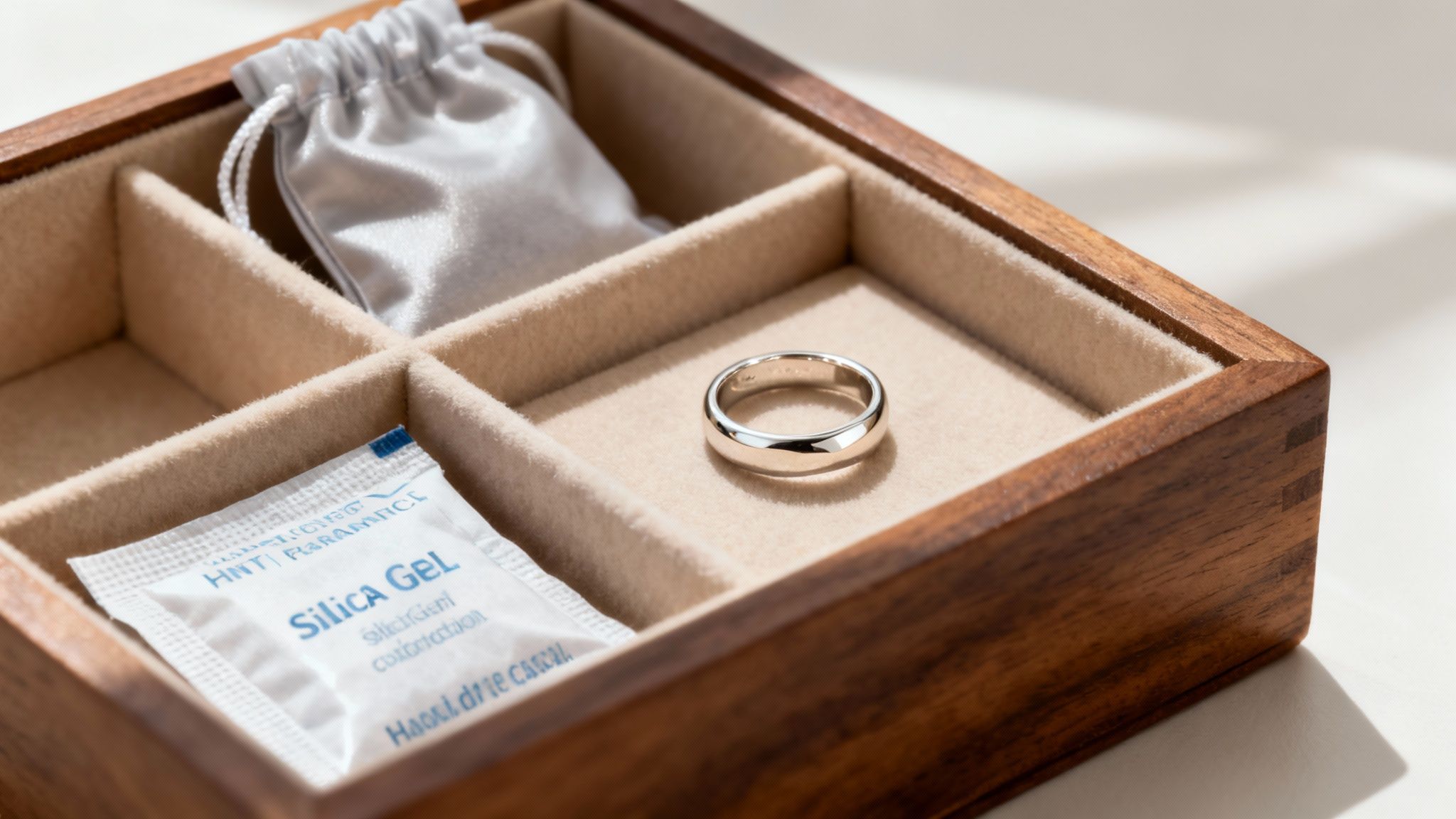
The primary enemy of sterling silver is humidity. Moisture in the air accelerates the tarnishing reaction with sulfur. Storing your jewelry in a dry, cool place is the most effective preventative measure.
Smart Storage Strategies
Proper storage is your first line of defense. Leaving silver on an open tray invites tarnish. The goal is to create a barrier between your jewelry and the open air.
Consider these effective storage methods:
- Airtight Containers: A jewelry box with a tight-fitting lid is ideal, especially one lined with a tarnish-resistant fabric.
- Anti-Tarnish Bags: These pouches absorb airborne pollutants that cause discoloration. Storing each piece in its own bag also prevents scratching.
- Silica Gel Packets: Placing a silica gel packet in your jewelry box is a simple way to absorb excess moisture.
A solid storage routine is crucial after cleaning. After restoring a piece, dry it immediately and thoroughly with a microfiber cloth, then place it in an anti-tarnish bag. This can extend its shine by 2-3 years.
The market for these protective products is growing at a 7.5% CAGR, projected to reach $632 million by 2035. This reflects a growing awareness of the value of prevention. Learn more about the growing anti-tarnish market at dataintelo.com.
Daily Habits for Lasting Shine
Your daily routine significantly impacts your jewelry. Many common products contain chemicals that accelerate tarnishing.
A simple rule: jewelry should be the last thing you put on and the first thing you take off.
Apply all lotions, perfumes, hairspray, and makeup before putting on your silver. At the end of the day, remove your jewelry before washing your face or showering. This habit minimizes contact with moisture and chemicals.
Finally, wipe your pieces with a soft, dry cloth after each wear. This removes skin oils and dust, making a massive difference in maintaining a brilliant shine.
Common Questions About Silver Jewelry Care
Even with a consistent routine, questions may arise. Here are answers to common concerns about silver care.
Can I Use Toothpaste to Clean My Silver Jewelry?
This is a common "hack," but it should be avoided. Most toothpastes contain abrasives that are too harsh for S925 sterling silver and can ruin plated pieces.
Using toothpaste creates microscopic scratches that build up over time, permanently dulling the finish. It is far better to use gentle, proven methods like a baking soda paste or mild soap and water.
How Often Should I Clean My Silver Pieces?
This depends on how often you wear your jewelry and your local environment.
For everyday pieces, a light cleaning every few weeks is a good practice. For items worn on special occasions, clean them at the first sign of dullness. Proactive care is key. Wiping jewelry down with a soft cloth after wearing dramatically reduces the need for deep cleaning.
This quick wipe-down removes oils and residues that speed up tarnishing. It's a two-second habit that effectively preserves your jewelry's shine.
Is It Safe to Clean Silver Jewelry That Has Gemstones?
Extreme care is needed here. Methods like the baking soda and foil bath are safe for hard, non-porous stones like diamonds or sapphires.
However, these same techniques can permanently damage soft, porous stones such as pearls, opals, turquoise, and amber. These gems are sensitive to chemicals and sudden temperature changes.
For pieces with delicate gems, use a soft, damp cloth with a tiny drop of mild soap. Gently clean the metal around the stone, avoiding submerging the gem itself. When in doubt, consult a professional jeweler.
Why Did My Silver Turn Black Immediately After Cleaning?
This frustrating issue is almost always caused by a rapid chemical reaction, usually with sulfur. If jewelry darkens instantly after cleaning, it has come into contact with a strong chemical agent.
Common culprits include:
- Chlorinated Water: From pools or some tap water.
- Household Cleaners: Products with bleach or ammonia.
- Certain Foods: High-sulfur foods like eggs, onions, or mustard.
To prevent this, rinse your jewelry thoroughly with cool, clean water after any cleaning method and dry it completely. The final rinse and dry step locks in the shine and removes any residual chemicals.
Preserve the minimalist elegance of your favorite pieces with proper care. Explore the curated collection of S925 silver and plated jewelry at Taton.shop and find your next timeless accessory.
