
What Does GSM Mean in Fabric?
GSM stands for Grams per Square Meter. It is a standard measurement of a fabric's density and weight.
Think of it as the fabric's fingerprint. This single number reveals how a garment will feel, perform, and last.
Decoding Fabric Weight
Ever compared two t-shirts, both 100% cotton, and wondered why one feels substantial while the other feels flimsy? The difference is almost always their GSM. It is a reliable indicator of quality, revealing the true substance of the material beyond brand names or price tags.
A higher GSM value means more yarn was used to create a square meter of fabric, resulting in a thicker, denser material. Conversely, a lower GSM indicates a lighter, more breathable fabric, ideal for summer or layering.
The Global Standard
The measurement is simple: a one-square-meter piece of fabric is weighed, and its mass in grams becomes its GSM. This universal method became the standard as the textile industry globalized, creating a common language for mills, designers, and brands.
This standardization reduced disagreements over fabric quality by over 30%. It is so effective that even markets using imperial units now convert to GSM.
Understanding GSM is insider knowledge. It empowers you to predict a garment's drape, warmth, and durability from a single number.
This is especially true in streetwear, where a high GSM creates a specific, structured silhouette. For example, the oversized T-shirts from Taton.shop use a 250 GSM fabric, giving them a premium, heavy feel that drapes correctly. In contrast, a promotional tee might be as low as 120 GSM, a clear difference in quality and intent.
The GSM Spectrum
GSM is not just a technical specification; it defines a fabric's character. The spectrum can be broken down into three main tiers, each corresponding to a different class of garment.
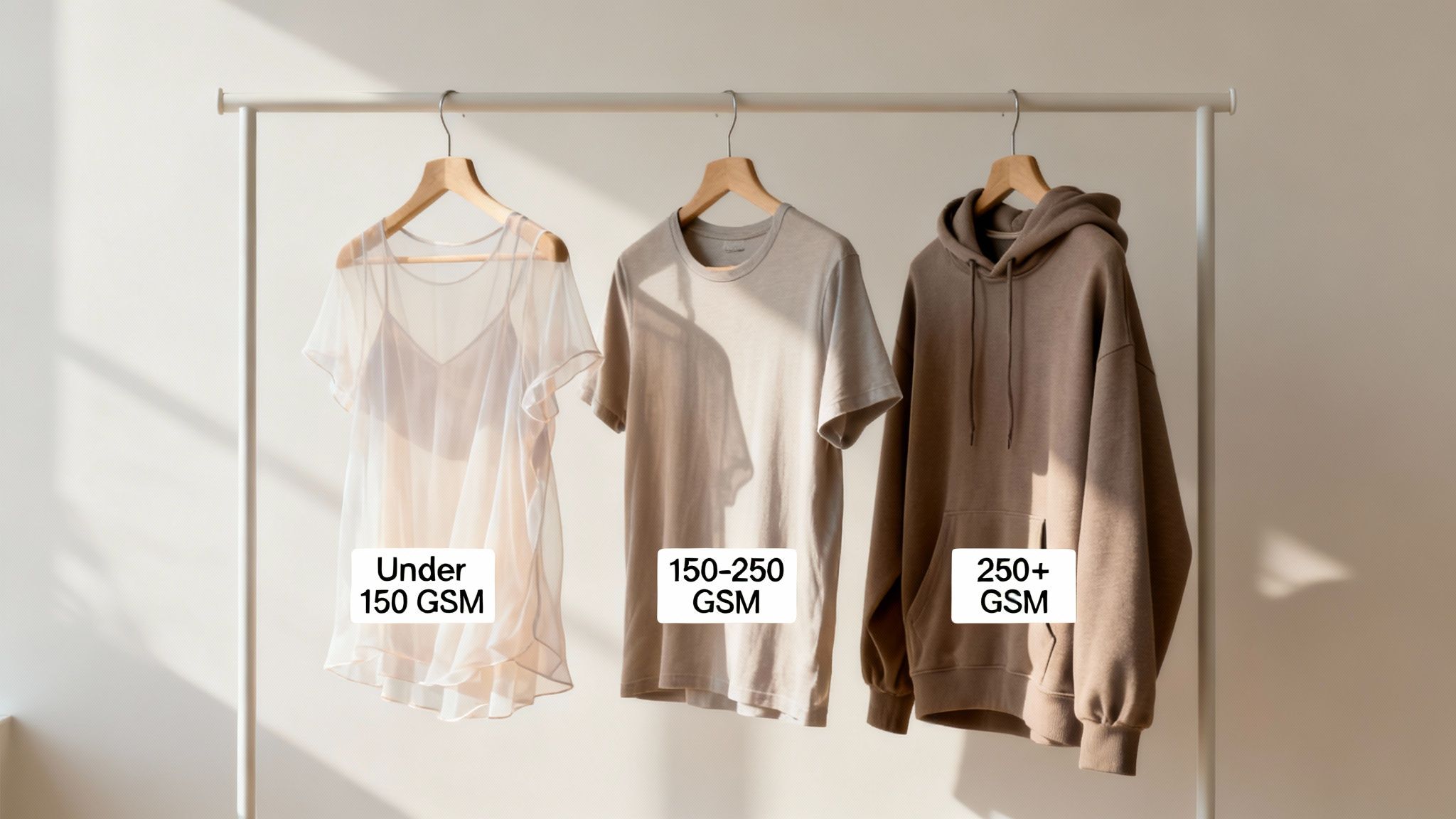
This framework helps visualize what GSM means in practice. A breezy summer scarf and a thick winter hoodie are at opposite ends of this scale, their GSM making them perfect for their respective uses.
Lightweight Fabrics: Under 150 g/m²
This is the realm of airy and delicate materials. A fabric with a GSM under 150 includes chiffon, organza, or a thin jersey knit. These fabrics prioritize breathability and a soft, flowing drape.
- Common Garments: Sheer blouses, summer scarves, layering tops, and dress linings.
- Key Characteristics: Excellent airflow, a fluid drape, and often a degree of sheerness.
These fabrics contour gently to the body, feeling almost weightless.
Midweight Fabrics: 150 to 250 g/m²
This is the versatile sweet spot for most everyday clothing, from t-shirts to light sweaters. Fabrics in the 150 to 250 g/m² range balance substance and comfort.
A standard t-shirt is typically 160–190 g/m². Premium or "heavyweight" tees push into the 200–250 g/m² zone. Streetwear brands often choose 240–250 g/m² fabrics for oversized fits to achieve a structured silhouette and better opacity. Learn more in our guide on how to style printed women's t-shirts.
Heavyweight Fabrics: Over 250 g/m²
When a garment needs to be substantial and durable, designers choose heavyweight fabrics. Anything over 250 g/m² falls into this category. This includes materials for quality sweatshirts, hoodies, denim, and high-end oversized tees.
A fabric's weight is a deliberate design choice. A 250 g/m² cotton for an oversized T-shirt is engineered to create a sharp, clean silhouette that won't cling or lose shape. This defines the difference between a basic garment and a foundational piece.
This heft gives clothing presence. It ensures the garment drapes with intention and signals that it was built for a specific aesthetic and designed to last.
How GSM Shapes a Garment
Understanding how GSM translates to the clothes you wear is key to becoming a discerning shopper. This single metric directly influences a fabric's durability, drape, warmth, and opacity.
This knowledge allows you to predict how a piece of clothing will look, feel, and perform before you buy.
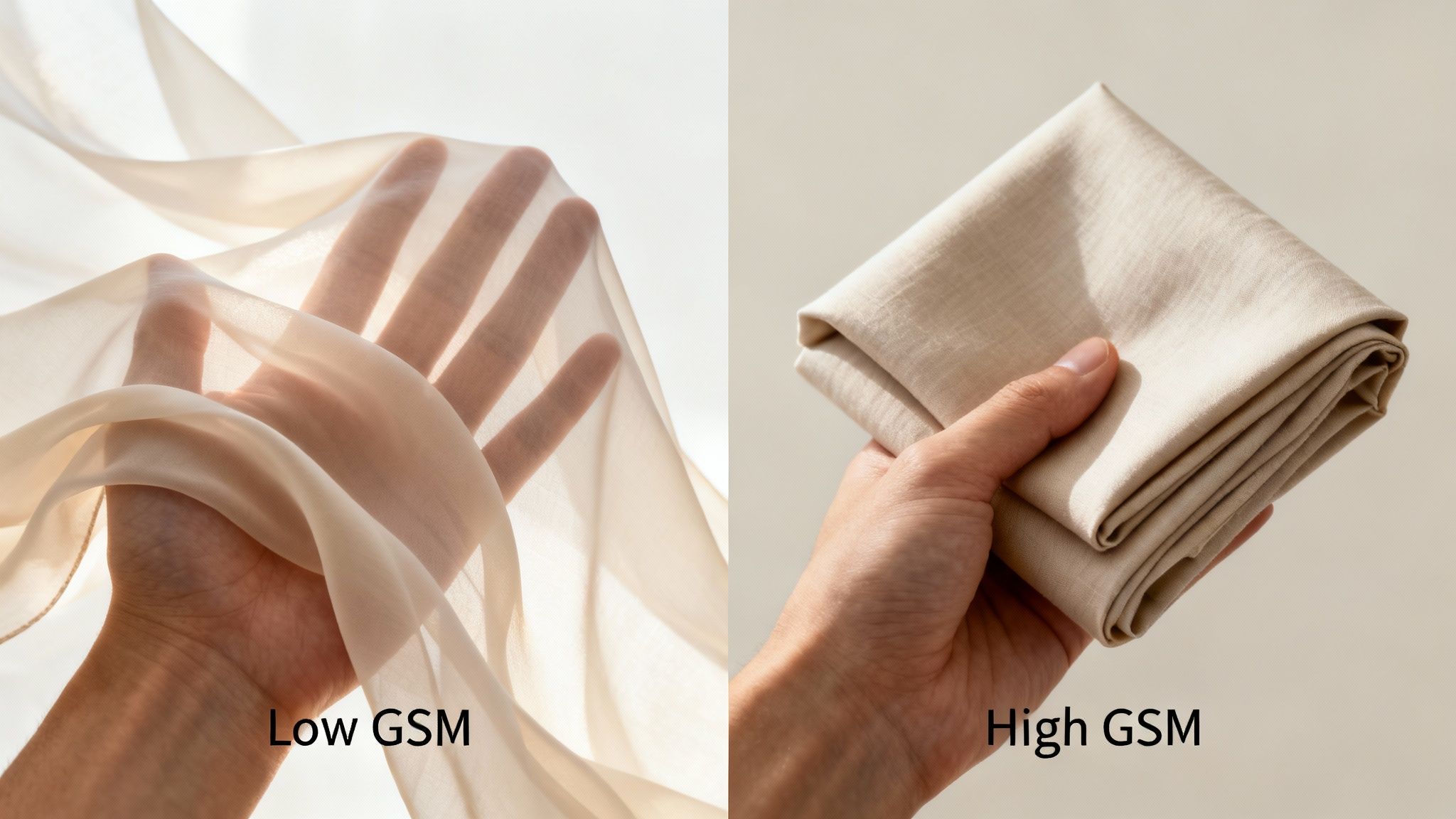
It's about understanding a garment's construction, which is how you build a wardrobe that not only looks good but is built to last.
Durability
The link between GSM and durability is direct. A higher GSM means a denser fabric, with more fibers packed into each square meter. This density makes the material tougher and more resilient to wear.
A high-GSM garment is better equipped to handle repeated washing, resist pilling, and avoid thinning over time. For a staple like a women's turtleneck, a substantial fabric weight is essential. Learn more about styling a women's turtleneck in our article.
Drape and Silhouette
"Drape" describes how a fabric hangs and moves, a quality dictated by its weight.
- Low-GSM Drape: Lightweight fabrics (under 150 g/m²) are fluid and soft. They follow the body's lines, creating a gentle, flowing silhouette.
- High-GSM Drape: Heavyweight fabrics (250 g/m² and up) are crisp and structured. They hold their own shape, creating clean, architectural lines. This is why a premium oversized t-shirt has a sharp, intentional structure.
The drape of a garment is a direct result of its GSM. Low weight yields softness and flow; high weight delivers structure and form.
Warmth
The denser the material, the better it traps air, which provides insulation. Therefore, a higher GSM almost always means a warmer garment.
A 140 g/m² t-shirt is ideal for a hot day because its looser weave allows air to circulate. A 350 g/m² sweatshirt is cozy because its dense knit forms a barrier against the cold. GSM is a reliable guide for seasonal comfort.
Opacity
GSM also indicates how transparent a fabric will be. This is critical for lighter-colored clothing. A low-GSM white t-shirt can be nearly transparent due to its loose weave.
For solid coverage, a higher GSM is necessary. A white tee made from 250 g/m² cotton will have a satisfying opacity, making it a reliable wardrobe staple.
Using GSM to Shop Smarter
Applying your knowledge of GSM can transform you from a passive consumer into a discerning shopper who recognizes quality beyond a brand or price.
Start by looking for the GSM number in product descriptions. Reputable brands that invest in quality materials often list it as a mark of transparency. Once you find it, you can make smarter comparisons.
Putting GSM into Practice
Imagine shopping for a new t-shirt. You find two that look similar, both 100% cotton. One is a standard tee at 160 g/m². The other is a premium, oversized tee at 250 g/m².
With your knowledge of GSM, you understand they serve different purposes.
- The 160 g/m² T-Shirt: This is a classic, versatile midweight tee. It's perfect for layering as its lighter build won’t add bulk. It's breathable and ideal for everyday wear.
- The 250 g/m² T-Shirt: This is a heavyweight, premium piece designed as a standalone statement. The dense fabric provides a structured silhouette that drapes, creating an intentional, high-end look.
GSM empowers you to shop with purpose. You are no longer just buying "a t-shirt," but choosing the right t-shirt for a specific look, feel, and function.
This logic applies to any garment. When comparing two hoodies, the one at 350 g/m² will be significantly warmer and more robust than one at 280 g/m². Understanding this is key to building a functional wardrobe.
GSM as a Deciding Factor
Consider two sweatshirts from different brands that look identical online. One brand states its fabric is 320 g/m². The other uses vague terms like "cozy" without providing a number.
The 320 g/m² option offers a concrete promise of substance and warmth. The other is a gamble. By choosing the garment with a specified GSM, you invest in a piece that will last, feel more premium, and be less likely to warp after washing. This is especially important for materials like cotton, where density dictates performance. You can also explore the best fabrics for sensitive skin if you have specific needs.
Beyond GSM: True Fabric Quality
While GSM is a vital starting point, it is not the sole determinant of fabric quality. True excellence is a combination of factors. Viewing GSM as the only measure can be misleading; it is one clue in a larger assessment.
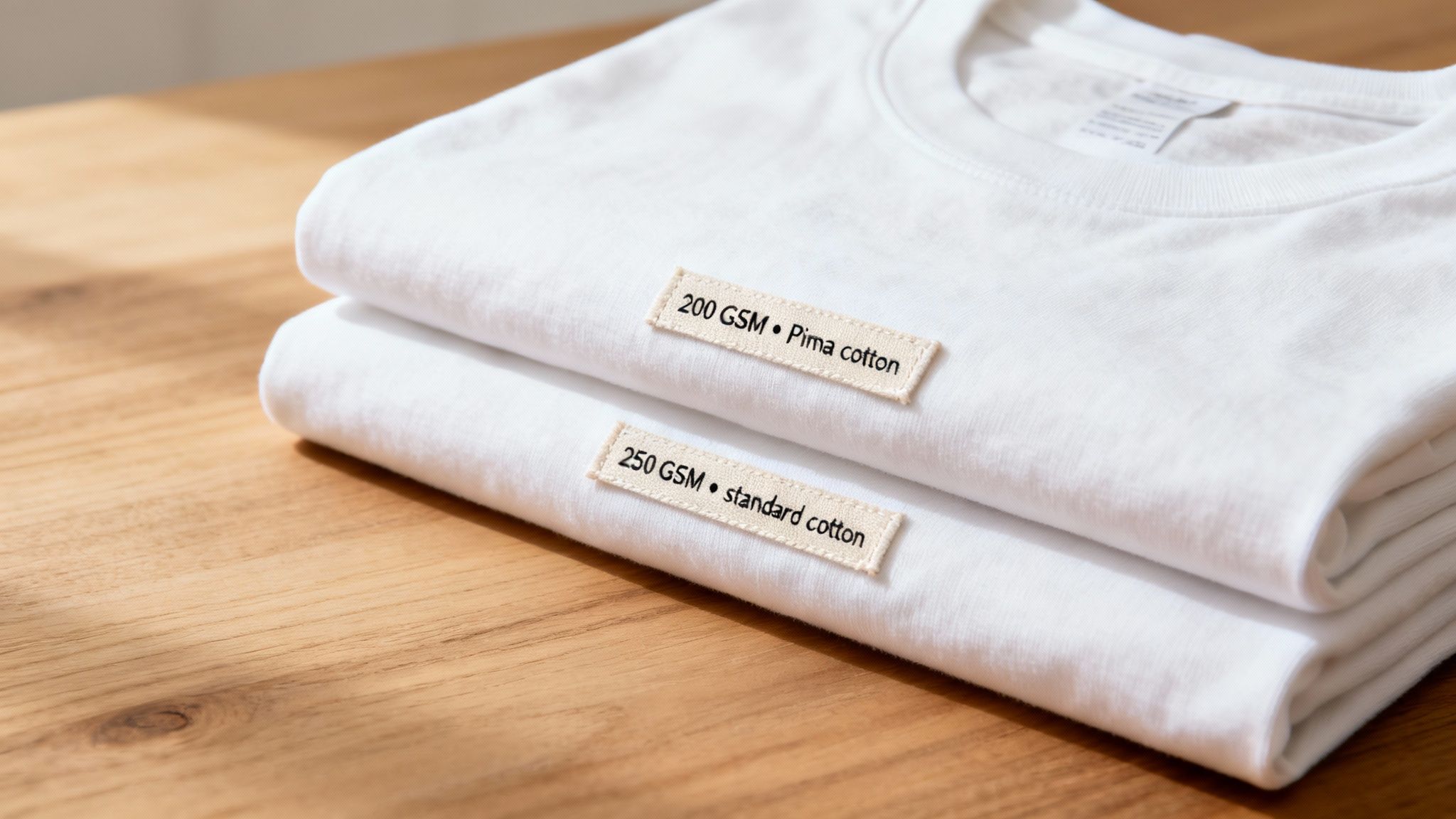
This holistic approach helps avoid the assumption that "higher is always better" and leads to a deeper understanding of what makes a garment exceptional.
Fiber Composition
The quality of the raw material is fundamental. The feel, durability, and performance of a garment are tied to its fibers.
Take cotton, for example. There is a significant difference between standard short-staple cotton and premium long-staple varieties like Pima or Egyptian cotton.
- Long-Staple Cotton: These fibers are longer, finer, and stronger. They create yarn that is smooth, soft, durable, and less prone to pilling.
- Short-Staple Cotton: Shorter fibers require more twists to form a yarn, resulting in a coarser, weaker thread that feels rougher and is less durable.
A 200 GSM t-shirt made from Pima cotton can feel superior and last much longer than a heavier 250 GSM tee made from generic, lower-grade cotton. The fiber itself elevates the product.
Weave and Yarn
The way yarn is spun and the fabric is constructed also determine quality. A yarn spun tightly from high-quality fibers will be sleek and strong. A yarn spun loosely from weaker fibers will feel fuzzy and fragile.
Quality is a system, not a single metric. A high GSM is only valuable when paired with superior fibers, refined yarn, and a precise weave. The synergy of these elements defines a premium garment.
The weave type is also crucial. A jersey knit behaves differently from a structured twill, impacting the fabric's drape, texture, and resilience. A well-constructed weave maximizes the fibers' strengths, resulting in a superior final product. This principle is evident in collections from many top Ukrainian clothing brands.
Common Questions About GSM
Here are answers to some common questions about GSM to help you apply this knowledge when you shop.
Is a Higher GSM Always Better Quality?
No. A higher GSM does not automatically mean "better." The best fabric is one that suits its purpose.
A thick, heavy fabric is unsuitable for a summer dress, where a low GSM is superior for breathability and drape. Conversely, that same low-GSM fabric would make a poor sweatshirt. For a cozy, structured sweatshirt, a high GSM is ideal.
The "best" GSM is always the one that's right for the job. It is about matching the fabric's weight to its intended function and desired look.
How Can I Determine GSM if It's Not Listed?
When a brand omits the GSM, look for descriptive keywords. "Heavyweight," "structured," or "substantial" suggest a higher GSM. "Lightweight," "sheer," or "airy" indicate a lower GSM.
If shopping in person, use your hands as a guide.
- Feel the Weight: A high-GSM fabric feels dense and has noticeable heft.
- Check Opacity: Hold the fabric to the light. The more opaque it is, the higher its likely GSM.
- Observe the Drape: A low-GSM material is soft and flowy; a high-GSM one is stiffer and holds its shape.
With practice, you can develop a feel for different fabric weights.
Does GSM Affect How I Wash My Clothes?
Yes. A fabric's weight should guide its care. Heavy, high-GSM fabrics absorb a lot of water, making them heavy in the wash and slow to dry.
To prevent a wet garment's weight from stretching it, dry it flat. This is especially important for heavy knit sweaters or thick hoodies.
Lighter, low-GSM fabrics are more delicate. Their looser construction can be prone to snagging. For these items, use a gentle cycle or hand wash. Always check the care label first.
What's a Good GSM for a Quality T-Shirt?
For a solid everyday t-shirt that balances softness, durability, and structure, aim for the 180-220 GSM range. This provides good opacity and comfort without being too heavy.
For a modern, premium oversized fit that holds its shape, many top brands use a higher GSM. A 250 g/m² fabric gives a t-shirt a distinctively structured, high-end look and feel not found in a standard tee.
At Taton.shop, we believe substance is style. Our signature oversized tees are made from a premium 250 g/m² cotton to deliver the perfect structure and substantial feel of a core wardrobe piece. Explore our collection and feel the difference for yourself.
