
Посібник із прикрас із 14-каратного золота
The term "14k gold" is a benchmark in fine jewelry. It represents the ideal balance between the pure luxury of gold and the practical durability required for everyday wear. This makes it the definitive choice for high-quality, lasting pieces.
What Is 14k Gold?
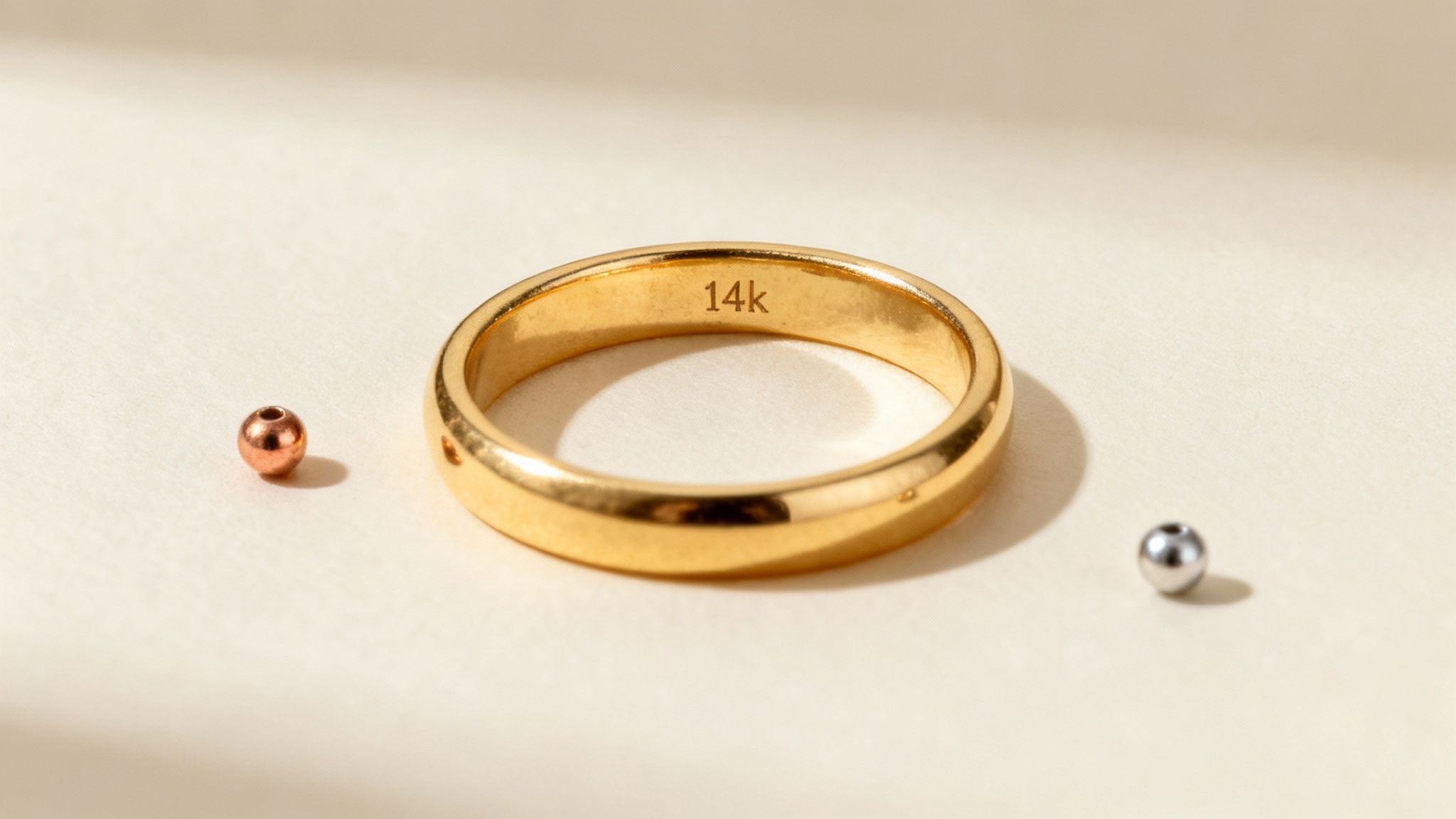
Pure gold, or 24k gold, is exceptionally soft. A ring made from it would bend easily, making it unsuitable for daily life. Jewelers solve this by blending pure gold with stronger metals to create a "gold alloy"—a material that is both beautiful and resilient.
The Composition of 14k Gold
The "14k" label signifies a specific ratio of gold purity. It means that out of 24 parts, 14 parts are pure gold, and the remaining 10 parts are other metals.
This composition is 58.3% pure gold. The other 41.7% consists of a blend of metals that provide strength and influence color. The most common additions are:
- Copper: Adds durability and a warm, reddish tone, essential for rose gold.
- Silver: Provides strength while creating a softer yellow color.
- Zinc: Improves durability and resists tarnish, particularly in white gold.
These alloys are not mere fillers; they are essential for transforming soft gold into a piece you can wear every day. This intelligent blend makes 14k gold the standard for everything from minimalist rings to timeless necklaces.
Fine jewelry is defined by its materials. Choosing 14k solid gold over plated alternatives ensures a piece will endure, retaining its value and beauty for a lifetime.
The Practical Choice for Modern Jewelry
Demand for quality jewelry is clear. The global gold jewelry market grew from USD 256.62 billion to USD 269.43 billion in a single year, highlighting an investment in lasting pieces. The popularity of 14k gold, perfect for daily wear, drives much of this growth. You can read more about recent jewelry market trends to understand these consumer choices.
14k gold offers the rich appearance of gold without the softness of higher-karat alloys or their premium cost. It delivers a metal strong enough to resist scratches and bending, making it the ideal choice for pieces you never take off. It is where luxury meets daily life.
Understanding The Gold Karat System
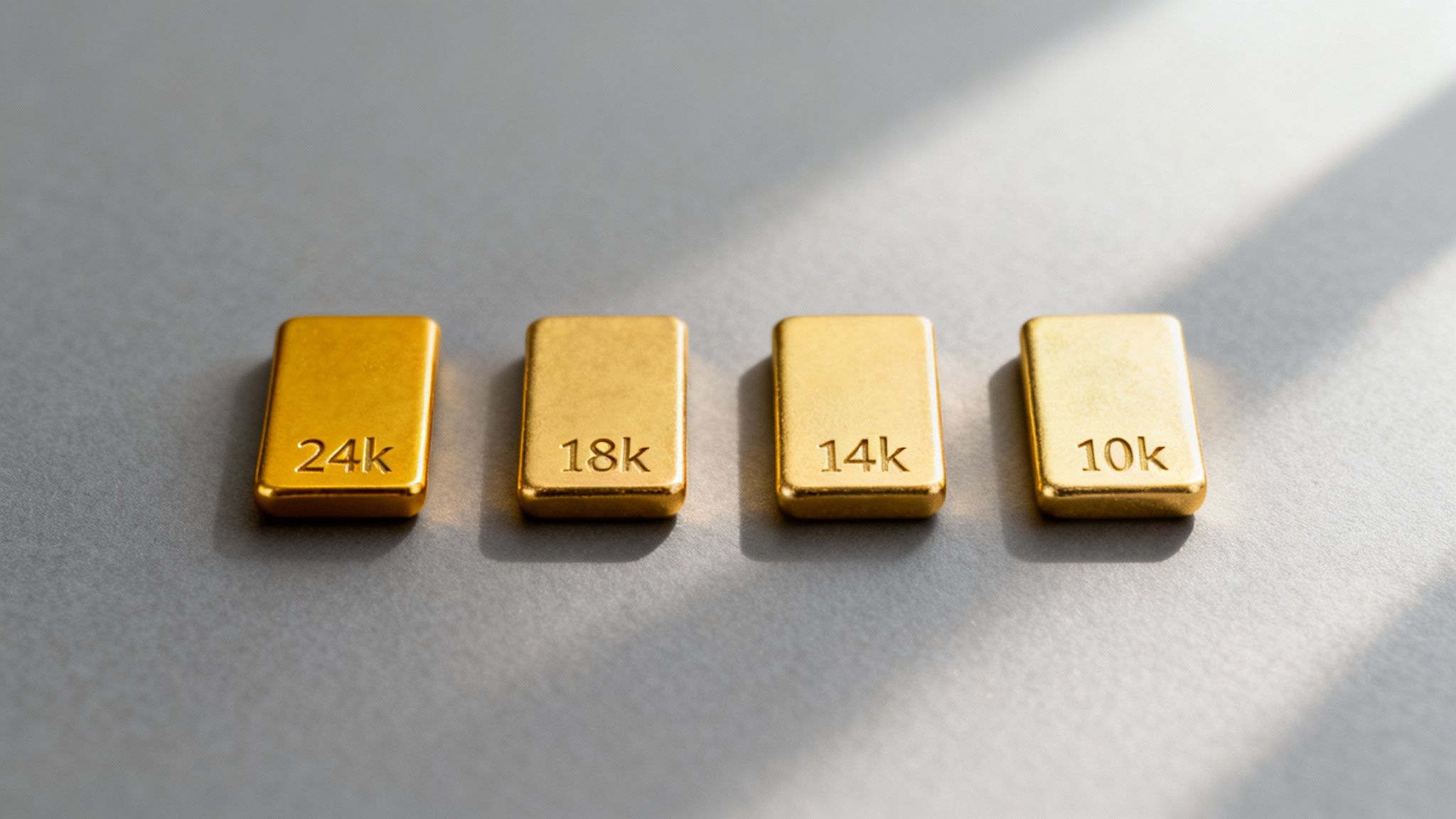
The term "karat" is a measure of gold's purity, not its weight or size. It is a universal standard based on a scale of 24 parts. The karat number indicates how many of those parts are pure gold.
At the top is 24k gold, which is 100% pure gold. While its brilliant color is beautiful, its softness makes it too delicate for most jewelry.
The Role of Alloys in Gold Jewelry
To create durable jewelry, pure gold is mixed with metals like silver, copper, and zinc. This mixture, called an alloy, adds strength and also influences the gold's final color.
This intentional blending creates the different karat levels, each with unique properties. By adjusting the gold-to-alloy ratio, jewelers craft a material that is both beautiful and practical. The karat system helps you balance the desire for purity with the need for durability.
Comparing 10k, 14k, 18k, and 24k Gold
Each karat level presents a unique balance of purity, durability, color, and cost. While jewelry 14k gold is the industry standard, it is useful to see how it compares to other options.
-
10k Gold (41.7% Pure Gold): The most durable and affordable option. Its lower gold content results in a paler yellow hue and a higher chance of irritating sensitive skin.
-
18k Gold (75% Pure Gold): With a higher gold content, 18k gold has a richer, more vibrant yellow color. It is a luxury choice but is softer and more prone to scratches, making it better for special occasions.
The best choice depends on your priorities—the intense color of a higher karat or the resilience of a lower one. For most, 14k gold offers the optimal balance.
The ideal karat is a personal choice, but 14k gold consistently provides the best combination of rich appearance and the durability needed for a lifetime of wear.
This quick reference guide illustrates how purity impacts strength, appearance, and suitability.
Gold Karat Comparison Guide
| Karat | Pure Gold Content | Durability | Color Richness | Best For |
|---|---|---|---|---|
| 10k | 41.7% | Highest | Pale Yellow | Extremely active lifestyles, budget-friendly choices |
| 14k | 58.3% | High | Rich Yellow | Everyday wear, engagement rings, versatile pieces |
| 18k | 75.0% | Medium | Deep, Vibrant Yellow | Fine jewelry, special occasion pieces |
| 24k | 99.9% | Very Low | Intense, Bright Yellow | Investment bullion, not practical for jewelry |
This comparison highlights why jewelry 14k gold is the industry standard. It delivers a luxurious look without compromising the strength needed for daily enjoyment. It is the intelligent choice for a lasting collection.
How 14k Gold Stacks Up Against Other Materials
Choosing a material for your jewelry affects its longevity, value, and comfort. When you compare solid 14k gold to alternatives like gold plating, vermeil, or sterling silver, its superior quality becomes evident.
Think of it as solid hardwood versus laminate flooring. Solid 14k gold is the genuine article—strong, valuable, and consistent throughout. Gold-plated jewelry is like laminate; it looks good initially, but the thin top layer eventually wears off, exposing a cheaper core material.
Solid Gold vs. Gold Plating
Gold plating involves bonding a thin layer of gold onto a base metal like brass or copper. This layer is often less than 0.5 microns thick, making it highly susceptible to scratching, chipping, and fading. When the plating wears away, the exposed base metal can tarnish or cause skin irritation.
Solid 14k gold is entirely different. Its warm, golden color is integral to the piece. It is not a coating, so it cannot rub off or fade. Its beauty is designed to last a lifetime, not just a season.
The core difference is permanence. A plated piece offers a temporary appearance, while a solid gold piece is a lasting treasure. For jewelry you intend to live in, 14k gold provides unmatched resilience.
What About Gold Vermeil?
Gold vermeil is superior to standard plating but is still a layered material. To be classified as "vermeil," a piece must meet specific criteria:
- Base Metal: It must be sterling silver (S925).
- Gold Purity: The plating must be at least 10k gold.
- Layer Thickness: The gold layer must be at least 2.5 microns thick.
While vermeil is more durable than standard plating, it remains a surface treatment. Friction and time will wear down the gold layer, particularly on high-contact items like rings. Solid 14k gold does not have this vulnerability. You can explore the difference between gold-plated and vermeil jewelry in our guide.
14k Gold and Sensitive Skin
For many, skin sensitivity is a primary concern. The most common cause of jewelry-related allergies is nickel, an alloy often used in the base metals of plated jewelry. When the gold coating wears away, direct skin contact with nickel can cause redness, itching, and irritation.
This is where solid 14k gold excels. High-quality 14k gold alloys, particularly from the US and Europe, are nearly always nickel-free. They are strengthened with skin-friendly metals like silver and copper, making 14k gold a superior hypoallergenic option.
Lasting Value: An Investment in Quality
The discussion ultimately returns to long-term worth. Gold-plated and vermeil pieces possess minimal intrinsic value, as their worth is tied to a temporary appearance. Once the plating is gone, they cannot be restored and have little resale value.
Solid 14k gold is different. Composed of 58.3% pure gold, it is a precious metal with intrinsic value tied to the gold market. It is a tangible asset that can be repaired, polished, and passed down through generations. This makes it an investment in timeless quality.
How to Identify Authentic 14k Gold
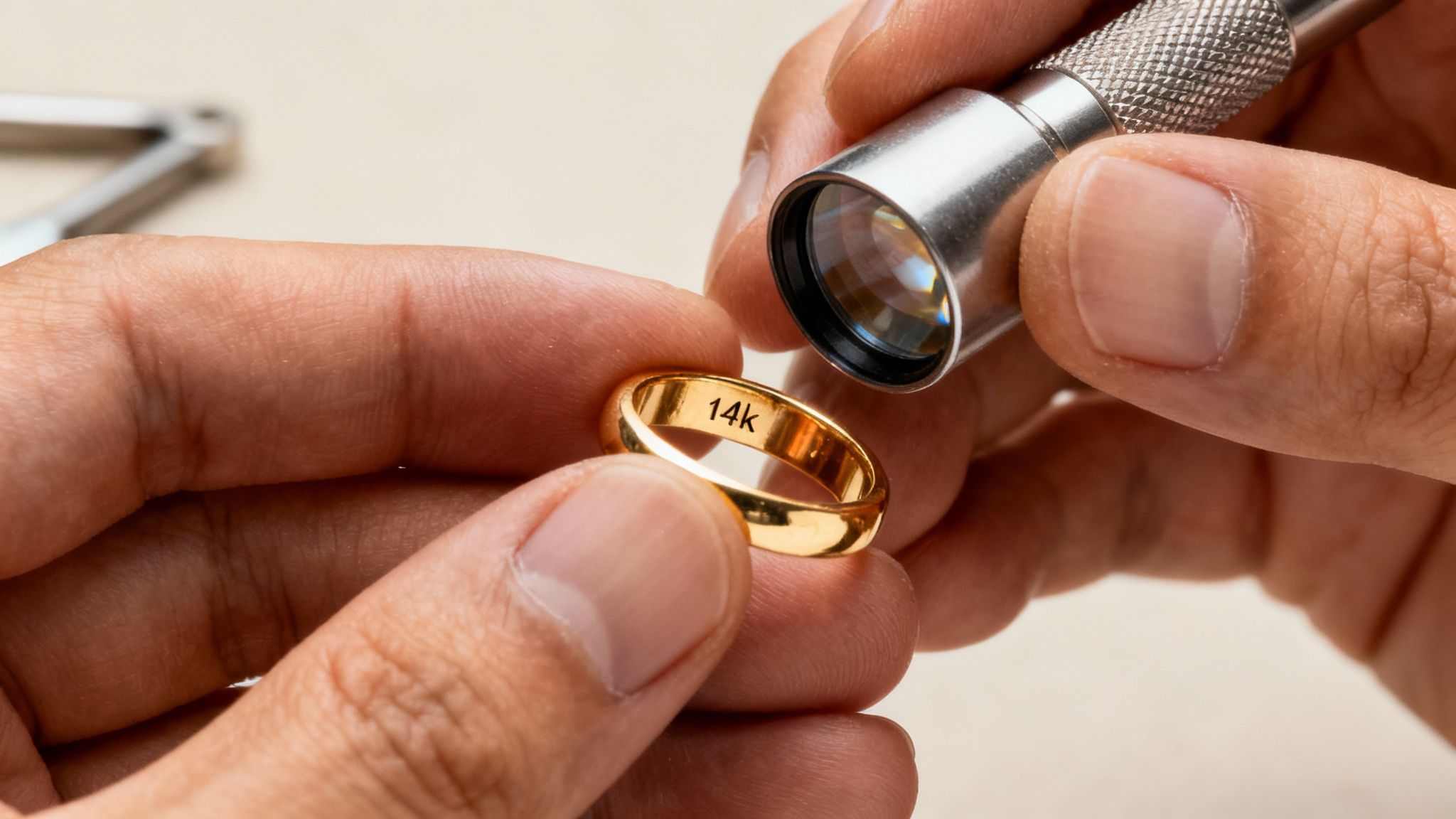
When you invest in jewelry 14k gold, you choose lasting quality and inherent value. Authentic 14k gold has several clear indicators that distinguish it from imitations, from official stamps to simple at-home tests.
The most reliable indicator is the hallmark—a small stamp on the metal that certifies its gold content. Learning to recognize it is the easiest way to confirm a piece's authenticity.
Decoding Gold Hallmarks
A hallmark verifies your jewelry's purity. For 14k gold, these stamps are standardized, though regional variations exist. Knowing what to look for provides immediate confidence.
Look for these common hallmarks on authentic jewelry 14k gold:
- 14k or 14K: The most common stamp in the United States, indicating 14-karat gold.
- 14kt: An alternative abbreviation for "karat," meaning the same as 14k.
- 585: The European standard, representing the percentage of pure gold (58.3%), often rounded up to 58.5% for the stamp.
These engravings are usually placed in discreet locations. On a ring, check the inner band. For necklaces, inspect the clasp. On earrings, the mark is often on the post or backing.
A genuine hallmark is a promise of purity. It confirms your piece contains 58.3% pure gold, distinguishing it from materials like vermeil, which is only gold on the surface. Learn more about what gold vermeil is and its composition.
Simple At-Home Verification Tests
While hallmarks are the gold standard, simple, non-damaging tests can offer additional verification. These methods are not as definitive as a professional appraisal but can quickly identify potential issues.
The magnet test is one of the most effective at-home checks. Gold is not magnetic, so your 14k gold jewelry should not react to a magnet.
Performing the Magnet Test
- Use a Strong Magnet: A standard refrigerator magnet may not be sufficient. A stronger magnet from a hardware store is recommended.
- Hold it Close: Bring the magnet directly up to your jewelry.
- Observe: If the piece is attracted to the magnet, it likely has a magnetic metal core and is gold-plated. Genuine 14k gold will show no attraction.
This test is excellent for spotting counterfeits, as many use magnetic metals like iron or nickel as a base.
When to Seek a Professional Opinion
At-home tests provide a good first assessment but are not foolproof. Some non-magnetic metals, like brass, are used in plated jewelry and will not be detected by a magnet. Additionally, the clasps on genuine gold pieces sometimes contain small steel springs, which are magnetic.
For absolute certainty, especially with a valuable or antique piece, consult a professional jeweler. They use advanced, non-destructive tools like acid tests or X-ray scans to confirm the exact composition. An appraisal provides definitive peace of mind.
The True Value of 14k Gold Jewelry
The value of jewelry 14k gold extends beyond its shine. It is both an accessible luxury and a solid asset. Unlike trend-driven costume jewelry, 14k gold retains its worth—a value you can wear and enjoy daily.
Understanding the factors behind its price reveals it as a lasting addition to your collection. The final cost reflects a blend of gold's intrinsic value and the artistry involved in its creation.
Breaking Down the Price Tag
The cost of a 14k gold piece is based on several key factors that determine its market value.
- Gold Spot Price: This is the live market rate for pure gold, which fluctuates daily based on global supply and demand. It is the foundation of any gold jewelry's price.
- Craftsmanship and Labor: Transforming gold alloy into a finished piece requires skill. Intricate designs, such as hand-setting stones or weaving a complex chain, involve more labor, which is reflected in the cost.
- Designer Branding: A piece from a renowned designer or luxury brand often carries a premium for its unique design, reputation, and legacy.
These factors explain why two 14k gold rings of the same weight can have vastly different prices. One may be a simple, mass-produced band, while the other is a handcrafted statement piece.
14k Gold as a Store of Value
While not traded like a gold bar, the precious metal in your jewelry 14k gold provides tangible value. As it is 58.3% pure gold, it serves as a reliable store of wealth, outperforming pieces made from non-precious metals.
Recent market trends support this. A 66% surge in the commodity price of gold was followed by a 7.5% increase in U.S. jewelry sales and an 11% rise in gold jewelry revenue. Consumers are choosing fewer, more meaningful pieces, and 14k gold offers the ideal blend of durability and value. You can explore these jewelry market dynamics at Tenoris.bi.
This resilience makes 14k gold a smart choice for a core collection. For significant pieces, particularly those with gemstones, protecting your investment is wise. Consider insuring valuable diamond rings to safeguard your most cherished assets.
Think of 14k gold jewelry as a wearable asset. Its value is anchored in its precious metal content, ensuring it remains a worthwhile possession long after its initial purchase.
The balance of affordability and genuine precious metal makes 14k gold compelling. Learn more about acquiring quality pieces within your budget in our guide to affordable luxury jewelry brands. It is the ideal foundation for a modern, curated collection.
Essential Care for Your 14k Gold Jewelry
The appeal of jewelry 14k gold lies in its blend of luxury and durability. However, even the most resilient pieces require care to maintain their luster. Daily exposure to lotions, oils, and dust can dull their shine over time.
A simple, consistent cleaning routine is all that is needed to restore your jewelry's brilliance and preserve its value for years to come.
A Simple At-Home Cleaning Routine
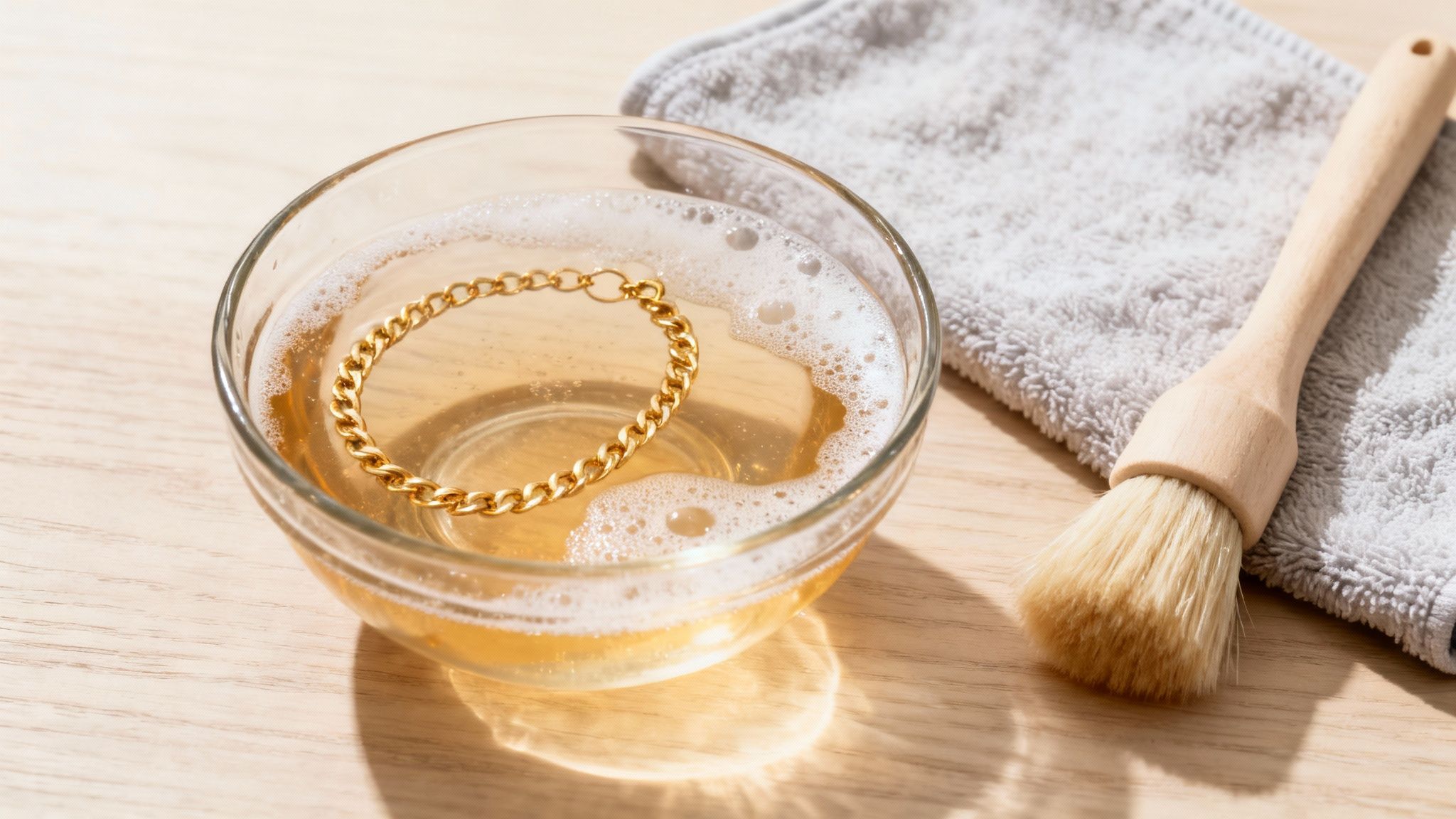
Harsh chemicals are unnecessary. The best method for cleaning 14k gold is a gentle soak.
- Mix a Gentle Solution: Fill a small bowl with warm water and a few drops of mild, phosphate-free dish soap.
- Soak the Jewelry: Place your gold pieces in the solution and let them soak for 15-20 minutes. This will loosen any buildup.
- Gently Scrub: Use a new, soft-bristled toothbrush to gently clean the jewelry, focusing on crevices and settings.
- Rinse and Dry: Rinse each piece thoroughly under lukewarm running water, then pat it dry with a soft, lint-free cloth to prevent water spots.
For more expert techniques, view this guide on how to clean gold jewelry at home.
Best Practices for Storage and Wear
Proper storage and wear are as crucial as cleaning. Smart habits are the first line of defense against scratches and damage.
Preserving your 14k gold is about prevention. Simple daily habits will protect your investment more effectively than any cleaning method.
Small adjustments to your daily routine can significantly extend the life and luster of your collection.
Smart Storage Solutions:
- Separate Pieces: Store each item individually in a soft pouch or a lined jewelry box to prevent scratching from harder metals or gemstones.
- Keep It Dry: Store your jewelry in a dry, low-humidity environment to protect the alloy metals.
Activities to Avoid While Wearing Gold:
- Swimming: Chlorine in pools and hot tubs can weaken gold alloys, leading to discoloration and damage.
- Handling Chemicals: Remove rings and bracelets before using household cleaners like bleach.
- Applying Cosmetics: Apply lotions, perfumes, and hairspray before putting on your jewelry to avoid residue buildup.
For more tips, see our guide on how to properly clean gold. These simple practices will ensure your jewelry 14k gold remains a treasured part of your style.
Frequently Asked Questions About 14k Gold
Here are answers to the most common questions about 14k gold, helping you feel confident in your choice. We cover everything from tarnish and skin sensitivity to long-term value.
Will 14k Gold Tarnish or Change Color Over Time?
High-quality 14k gold is highly resistant to tarnish. Pure gold does not react with oxygen, so it will not rust or corrode. The other metals in the alloy could react to harsh chemicals, but this is rare with proper care.
The color of solid 14k gold is consistent throughout. It is not a coating, so it will never fade or chip. If your jewelry appears dull from daily exposure, a simple cleaning will instantly restore its original shine.
Is 14k Gold a Good Choice for Sensitive Skin?
Yes, for most people, 14k gold is an excellent hypoallergenic option. Most jewelry-related skin reactions are caused by nickel, an allergen used in cheaper base metals.
Reputable jewelers, particularly in the US and Europe, create their 14k gold alloys without nickel, using skin-friendly metals like silver and copper instead. This makes jewelry 14k gold a safe and comfortable choice for sensitive skin. Our guide on hypoallergenic earrings for sensitive ears offers more information.
Investing in 14k gold is an investment in comfort. Its nickel-free formula allows for daily wear without irritation, making it the smart choice for a core jewelry collection.
Why Invest in 14k Gold Instead of Plated Jewelry?
Choosing solid 14k gold over a plated alternative is a decision for permanence and true value. Gold-plated jewelry features a thin layer of gold over a different base metal. This layer will inevitably wear away, revealing the metal underneath.
Solid 14k gold is a precious material from its surface to its core. It holds intrinsic value due to its 58.3% gold content. It can be worn daily without fading and can be professionally repaired, ensuring a lifetime of use. This longevity makes 14k gold a superior long-term investment.
The global jewelry market shows a clear trend toward quality. As consumers increasingly shop online, they are consciously choosing lasting pieces like 14k gold over temporary fashion jewelry.
At Taton.shop, we focus on the timeless elegance and practical luxury of fine jewelry. Explore our curated collection to find your next cherished piece.
