
A Guide to the Best Sustainable Fashion Brands
The term "best sustainable fashion brand" signifies more than a recycled t-shirt. It represents a deep commitment to ethical production, transparent supply chains, and durable design. True sustainability is a verifiable impact on people and the planet, not a marketing slogan.
What Defines a Sustainable Fashion Brand
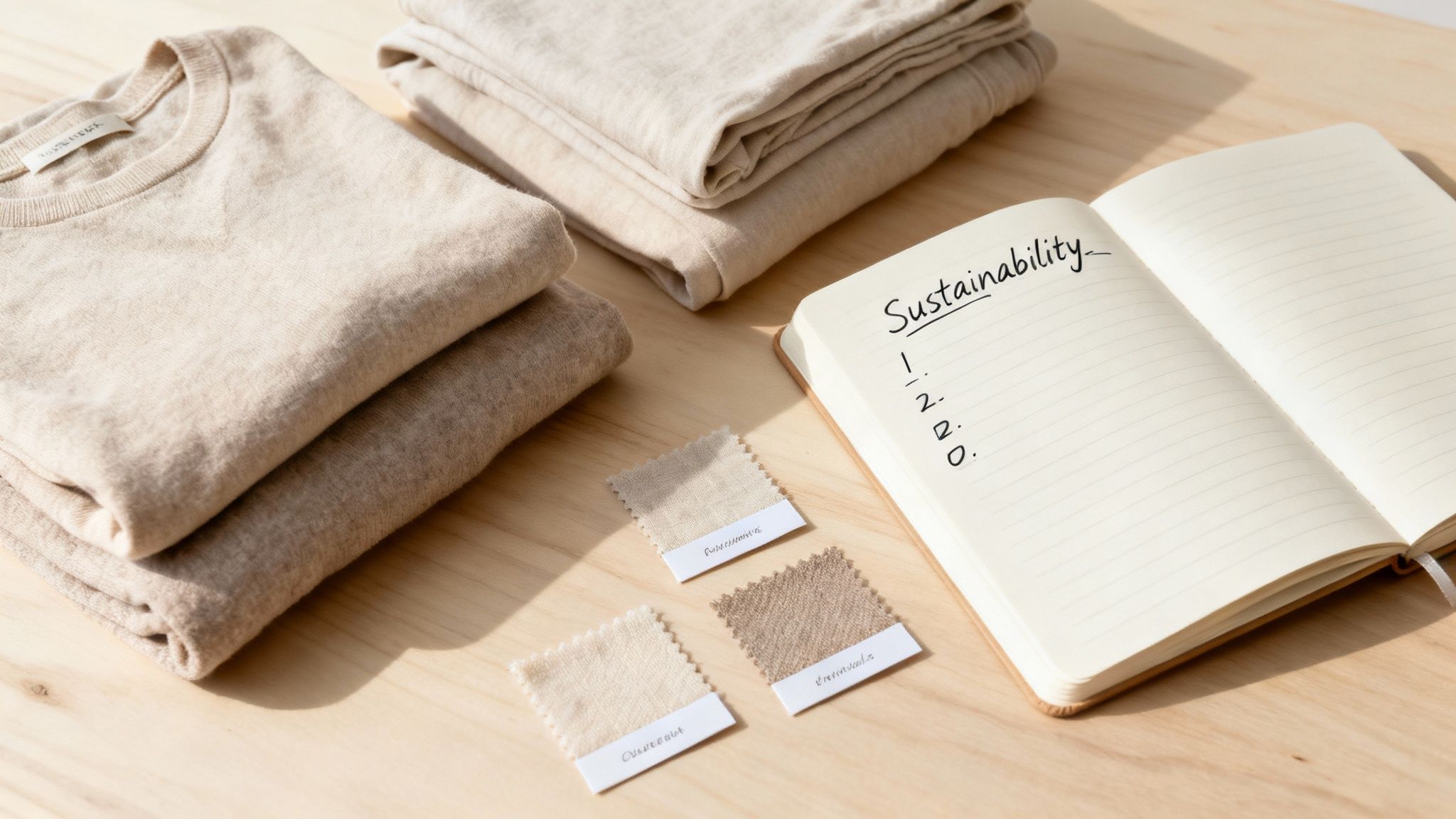
The phrase "sustainable fashion" is often diluted by vague claims. Genuine sustainability is built on tangible actions and transparent principles. It's a philosophy of design, production, and consumption—not a singular "eco-friendly" collection.
At its core, fashion sustainability balances three pillars: environmental impact, ethical production, and product longevity. A brand must consider everything from raw material sourcing to the well-being of its garment workers.
The Pillars of a Conscious Brand
To verify a brand's commitment, examine its practices across key areas. A truly sustainable company operates with transparency, providing evidence for its claims.
- Environmental Responsibility: This extends beyond using low-impact materials like organic cotton or recycled fibers. It includes minimizing water and energy use and reducing waste. The global fashion industry generates 92 million tonnes of textile waste annually, underscoring the importance of material choice.
- Ethical Production: Sustainability requires social fairness. Brands must ensure fair wages, safe working conditions, and respect for labor rights throughout their supply chain.
- Durability and Longevity: A well-made garment is inherently more sustainable. Products designed to last for years, not a single season, reduce waste and slow consumption patterns.
The most sustainable product is the one you already own. Investing in high-quality, durable pieces directly challenges the throwaway culture of fast fashion.
This quick-reference table summarizes these core pillars for vetting brands.
A Quick Guide to Sustainable Fashion Pillars
| Pillar | What to Look For | Red Flags |
|---|---|---|
| Environmental Responsibility | Organic, recycled, or low-impact materials; water-saving processes; waste reduction initiatives. | Vague claims like "eco-friendly" with no proof; focus on only one "green" material. |
| Ethical Production | Fair trade certifications; transparent supplier lists; living wage commitments. | No information on factory locations or worker conditions; rock-bottom prices. |
| Durability & Longevity | High-quality craftsmanship; repair programs; timeless designs that won't go out of style quickly. | Poor stitching; thin, cheap-feeling fabric; trendy, disposable styles. |
Use this framework to ask the right questions.
These pillars are interconnected with operational choices, including logistics and packaging. As you learn more about what is sustainable fashion, you'll see how brands are embracing sustainability in e-commerce to reduce their footprint. This guide helps you see past marketing and identify brands that align with these values.
Decoding Materials: From Cotton to TENCEL™
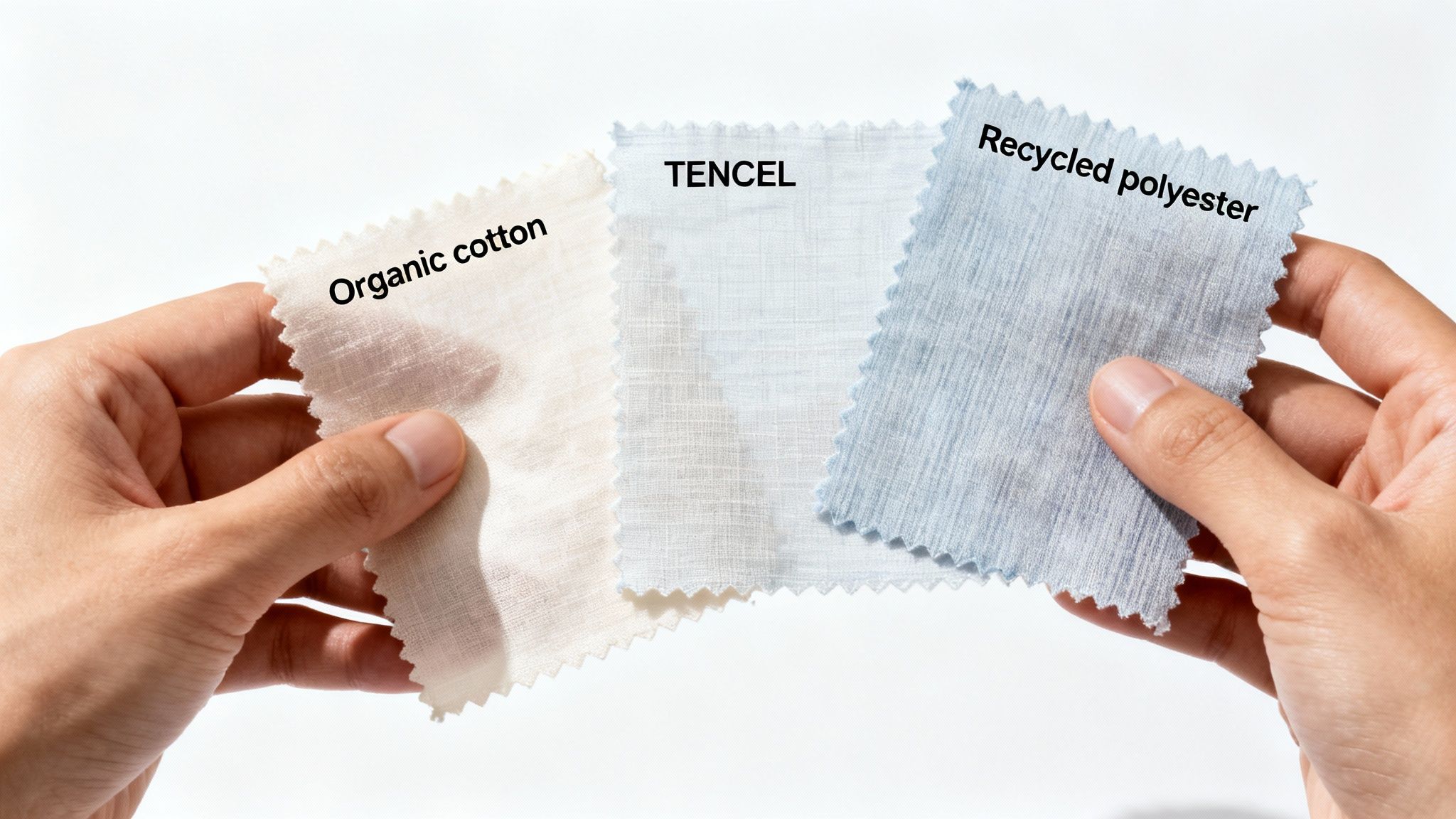
Understanding materials is the first step toward building a conscious wardrobe. A fabric's origin and environmental footprint reveal a brand's true commitment to sustainability.
Natural fibers like organic cotton and linen are benchmarks. Conventional cotton is a water- and pesticide-intensive crop. Organic cotton is grown without synthetic chemicals and uses significantly less water. Linen, derived from the hardy flax plant, requires minimal irrigation or pesticides.
Innovative textiles are also redefining responsible design.
The Rise of Advanced and Recycled Textiles
TENCEL™ Lyocell is a fiber derived from sustainably sourced wood pulp. It is manufactured in a closed-loop system that recycles over 99% of the water and solvents used. The result is a silky, breathable fabric that is gentle on the skin and the environment.
Recycled materials are essential to a circular economy. Recycled polyester (from plastic bottles) and recycled nylon (from fishing nets) give waste a second life. These materials reduce the need for virgin resources and lower energy consumption during production.
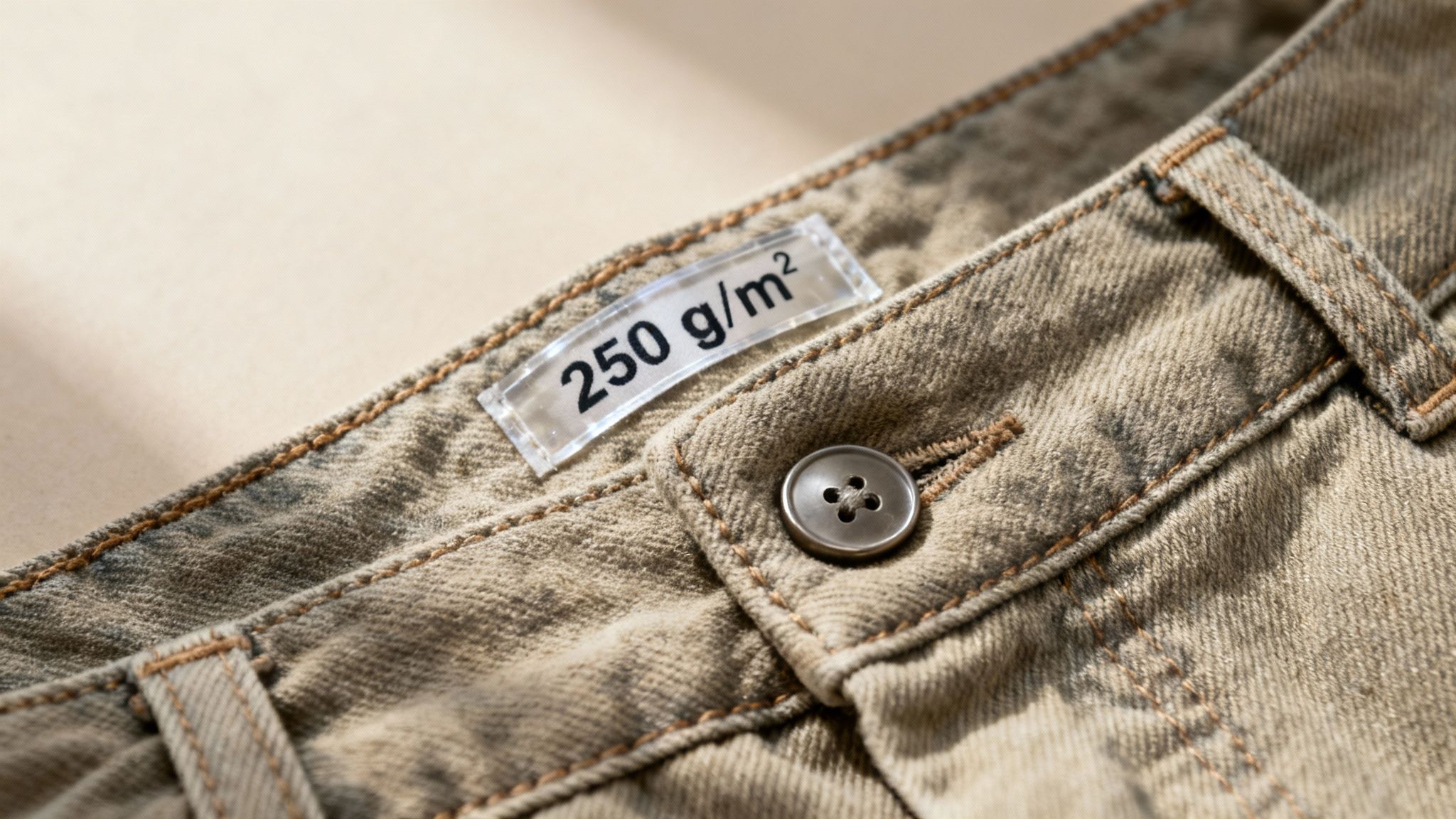
Fabric weight is as important as its origin. A T-shirt made from dense, 250 g/m² organic cotton is designed for longevity, countering the disposable nature of fast fashion.
Patagonia's transition to 100% organic cotton is a prime example. The decision reduced their water consumption by up to 91% and eliminated significant chemical runoff. This is the kind of measurable impact to look for.
Connecting Fabric to Function
The best sustainable brands match fabric to function, ensuring their clothing is both responsible and durable.
- Organic Cotton: Soft and breathable, ideal for staples like T-shirts and sweatshirts. Check the fabric weight (GSM); a higher GSM indicates a more durable piece.
- Linen: Lightweight and airy, perfect for warm weather. It becomes softer with each wash, aging gracefully.
- TENCEL™ Lyocell: Known for its elegant drape and moisture-wicking properties, it's used in everything from blouses to activewear.
- Recycled Polyester & Nylon: Durable and resilient, making them ideal for outerwear, swimwear, and performance gear.
Understanding these materials allows you to critically assess a brand's claims. When you know why a specific fabric was chosen for a garment, you can make choices that align with your values. Our guide on what GSM means in fabric offers more insight into how fabric weight impacts quality.
How to Verify a Brand's Ethical Claims
Healthy skepticism is necessary when a brand labels itself "sustainable." Greenwashing is common, making it difficult to distinguish genuine commitment from clever marketing. You must learn to look past the surface and verify claims yourself.
A good starting point is third-party certifications and eco-labels. These provide standardized, credible verification of a brand's environmental or social practices. Seeing these logos indicates a company has undergone a rigorous audit process to substantiate its claims.
Decoding Key Certifications
Not all labels hold the same weight. Familiarize yourself with the most credible certifications to quickly gauge a brand's integrity.
Key Sustainable Fashion Certifications
| Certification | What It Guarantees | Commonly Found On |
|---|---|---|
| GOTS (Global Organic Textile Standard) | The entire supply chain—from farm to factory—meets strict ecological and social standards for organic fibers. | Cotton t-shirts, linen trousers, baby clothes. |
| Fair Trade Certified | Workers receive fair wages, work in safe conditions, and can collectively bargain. It’s all about the people. | Apparel, coffee, chocolate, and other consumer goods. |
| B Corp Certification | The company is legally required to balance profit with purpose, considering its impact on workers, community, and the environment. | A wide range of brands, from Patagonia to Allbirds. |
Knowing these labels helps you understand what you are supporting with each purchase—be it organic farming, fair labor, or a holistic business approach.
A certification is more than a logo; it's a commitment. Brands investing in these processes demonstrate a transparency that goes beyond marketing slogans.
While certifications are a useful tool, they are only one part of the equation.
The Importance of Supply Chain Transparency
True transparency means a brand is open about its entire production process. Vague statements like "ethically made" are insufficient. Look for specifics: factory locations, worker conditions, and environmental footprint data.
A company serious about its impact will share this information freely.
Stella McCartney, a pioneer in luxury sustainable fashion since 2001, exemplifies this. The brand committed to using 100% traceable fibers since 2019, directly addressing its Scope 3 emissions—which constitute over 96% of most apparel brands' environmental footprints. This level of detail shows a deep understanding of its impact. Learn more about the growing global sustainable fashion market and its leaders.
Find this information on a brand's website, typically on an "About Us" or "Sustainability" page. If the information is difficult to find or missing, it is a red flag. Many Ukrainian clothing brands are also embracing this standard of openness.
Price, Quality, and Long-Term Value
Ethically made clothing often has a higher upfront cost. However, the true metric is cost-per-wear. This requires a shift in mindset from disposable consumption to thoughtful investment.
A single, well-made piece will outlast multiple cheap alternatives. Buying less but choosing better is the foundation of a sustainable wardrobe. Over time, this approach is better for the planet and your finances.
Identifying True Quality
Quality is tangible. True craftsmanship is evident in the details that signal a garment is built to last.
Train yourself to look for these markers:
- Fabric Density: A quality t-shirt made from 250 g/m² cotton has a substantial feel and structure that a flimsy top lacks. Density is a key indicator of durability.
- Reinforced Stitching: Examine the seams, especially at stress points like pockets and collars. Stitches should be clean, tight, and even. Quality brands often use double-stitching for reinforcement.
- Durable Hardware: Zippers, buttons, and snaps should feel solid. High-quality hardware from manufacturers like YKK signals that a brand is not cutting corners.
The most sustainable product is often the one you already own. By choosing items built for longevity, you actively resist the throwaway culture promoted by fast fashion.
This approach is about investing in pieces meant to be worn, loved, and repaired. It shows respect for materials and craftsmanship, which is especially crucial for functional items like outerwear. We explore this in our guide on how to choose a winter down jacket.
Extending a Garment's Lifespan
The best sustainable brands take responsibility for a product's entire lifecycle. They work to keep their creations in circulation for as long as possible.
Many now offer in-house repair programs, making it easy to fix a torn seam or replace a button. This service adds significant value and builds a stronger customer relationship.
Additionally, some brands are launching resale platforms. These marketplaces allow you to sell pre-loved pieces, giving them a second life and diverting them from landfills. This transforms you from a consumer into a participant in a circular system.
Building a Conscious Wardrobe That Lasts
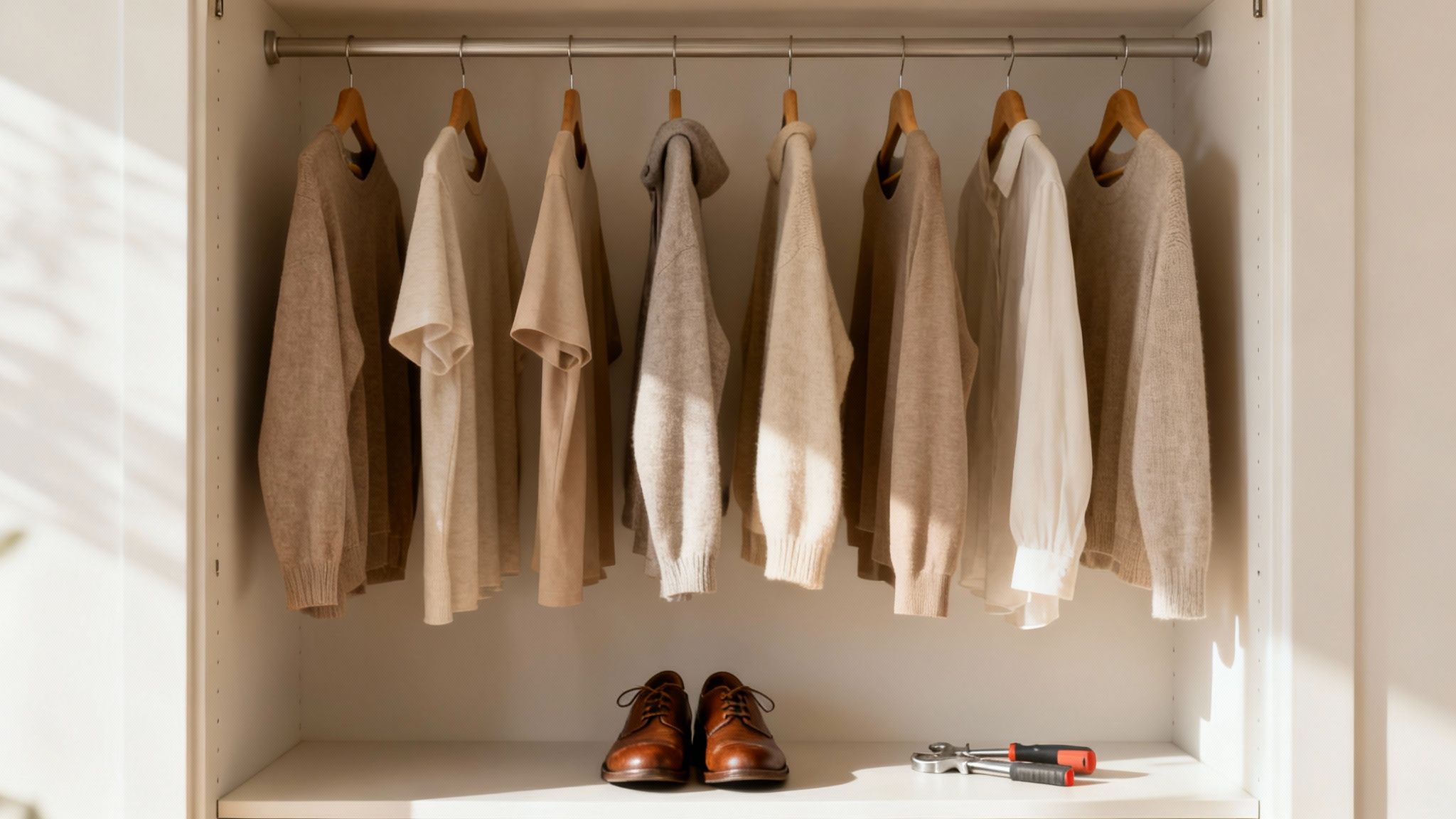
Transitioning to a sustainable wardrobe is a gradual process. It is about making mindful additions that create a collection of valued clothing over time.
The mindset shifts from chasing trends to curating a lasting personal style. You prioritize quality over quantity, seeking pieces that fit your life and values. Each new item becomes a considered investment, leading to a more cohesive and functional wardrobe.
A Practical Checklist For Your Next Purchase
Before adding anything new, use this mental checklist to ensure your purchases are intentional.
- Material and Craftsmanship: Is the fabric high-quality and built to last? Check for dense weaves, clean stitching, and solid hardware.
- Brand Transparency: Is the company open about its production processes? Vague claims are a red flag.
- Personal Style Alignment: Does this piece fit your existing wardrobe and daily life? Be honest with yourself.
- Versatility and Function: Can you style this piece in at least three different ways with items you already own? Versatility maximizes a garment's use.
Creating a lasting wardrobe is about intention, not restriction. It is the art of choosing pieces that reflect who you are and investing in quality that endures.
This strategic thinking is essential for creating a streamlined capsule wardrobe, a topic covered in our guide to building a minimalist wardrobe with essentials.
The Power of Local and Data-Driven Brands
Supporting local designers is a direct way to make an impact. Shorter supply chains mean fewer transportation emissions, and your money supports the local economy. Many innovative sustainable brands are smaller operations that value craftsmanship over mass production.
Larger brands are also using data to drive measurable change. Reformation, for example, built accountability into its business model. Its RefResale program has given new life to over 500,000 items, and its RefScale tool tracks the environmental footprint of every garment.
This data-driven transparency, which logs millions of data points on emissions and water usage, builds consumer trust and sets a new industry standard.
Ultimately, building a conscious wardrobe is empowering. It proves that thoughtful, well-made fashion can be both stylish and attainable.
Your Sustainable Fashion Questions, Answered
Navigating the world of sustainable fashion can be confusing. Here are straightforward answers to some of the most common questions.
How Can I Spot Greenwashing by Fashion Brands?
Greenwashing is the use of vague, feel-good language without proof. Look out for buzzwords like "eco," "conscious," or "green" that are not substantiated.
A truly sustainable brand is transparent with details. They will specify the percentage of recycled materials, the amount of water saved, or display GOTS or Fair Trade certifications on the product page. If you have to search for evidence, or if the claims feel unsupported, it's a red flag.
Is It Better to Buy Fewer New Items or Only Buy Secondhand?
The best approach is a combination of both. Buying secondhand is one of the most sustainable actions, as it keeps clothes out of landfills and uses no new resources.
When you do need something new, investing in a high-quality piece from a sustainable brand is an impactful choice. You support better materials and ethical labor with your purchase. A practical strategy is to prioritize secondhand finds and make thoughtful investments in new items you'll love for years.
A circular fashion system isn't just about recycling; it's a fundamental rethinking of the entire 'make, use, dispose' model. It prioritizes durability, repairability, and keeping materials in circulation for as long as possible.
Can Sustainable Fashion Be Affordable?
Yes, but it requires a shift in perspective. Focus on cost-per-wear instead of the initial price tag.
An €80 sweater that lasts five years is a better investment than a €20 fast-fashion version that needs to be replaced seasonally. Sustainable fashion is about mindful consumption, not luxury spending. Watch for sales from trusted brands and explore local designers, who often offer excellent quality at accessible prices.
What Is a Circular Fashion System?
A circular fashion system is the opposite of the linear "make, use, dispose" model. It is designed to eliminate waste entirely.
In this model, products are built to last from durable materials. They are designed for easy repair and, at the end of their life, can be broken down and remade into something new. It is a closed-loop system where brands may offer repair services or use recycled fibers. The goal is simple: nothing is wasted.
At Taton.shop, we curate collections from local Ukrainian brands built on these principles of quality and thoughtful design. These are pieces made to become staples in your wardrobe. Explore our collection.
