
What is sustainable fashion? An expert guide to building an eco-friendly wardrobe
Sustainable fashion is a movement towards creating clothing and accessories with respect for people and the planet. It is a shift from disposable, single-season items to timeless, quality pieces built to last.
This approach considers a garment's entire lifecycle, from material sourcing to its final day in your wardrobe.
Understanding Sustainable Fashion
At its heart, sustainable fashion is the antithesis of the "fast fashion" model, which relies on high-volume, low-quality production. It champions intentional design and longevity over fleeting trends.
This philosophy extends beyond using organic cotton. It is a holistic view that scrutinizes every step of an item's journey—from design and material sourcing to ethical production and end-of-life planning.
The movement is gaining momentum as awareness of conventional manufacturing's impact grows. The traditional fashion industry contributes to an estimated 10% of global carbon emissions and nearly 20% of the world's industrial wastewater. Sustainable fashion confronts this by designing with minimal harm, using lower-impact materials, paying fair wages, and reducing waste.
The Foundation of Quality and Purpose
A key element of sustainability is the focus on material integrity and craftsmanship. Garments are constructed for years of use, not just a few wears. This requires a deep understanding of fabrics and their performance.
This commitment to durability often means using high-quality, dense materials that hold their shape. Understanding fabric quality supports the "buy less, buy better" mindset. You can learn how fabric density is measured in our guide on what GSM means in fabric.
Sustainable fashion asks if we can create beautiful things without compromising our planet or its inhabitants. The answer is yes. It begins with conscious, informed choices.
Ultimately, sustainable fashion is a commitment to a modern wardrobe that is both stylish and mindful. It is about choosing pieces that reflect your personal style and your values—items made with care, integrity, and a vision for a better future.
The Pillars of a Conscious Wardrobe
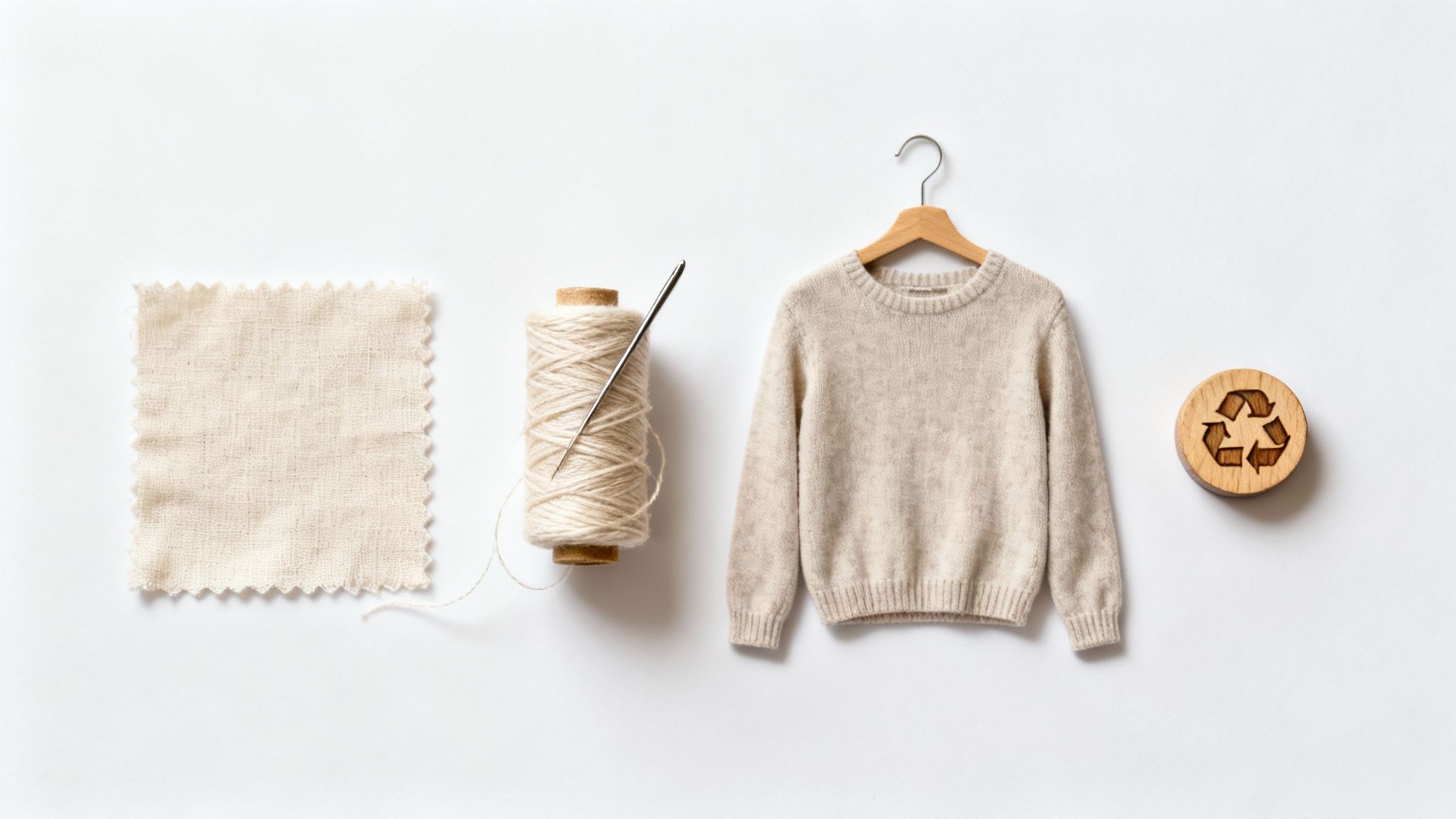
Understanding sustainable fashion requires looking beyond a simple definition to its core principles. It is a framework built on four interconnected pillars: environmental health, human dignity, and lasting quality.
These pillars provide a clear map for making and buying clothes with purpose. They guide every decision, from the fibres grown in a field to the garment's end-of-life.
Ethical Materials
A garment's story begins with its raw materials. This pillar focuses on choosing fibres and metals that place less strain on the planet. It is a deliberate move away from resource-intensive options like conventional cotton, which demands significant water and pesticides.
The focus is on renewable, biodegradable, or recycled materials. The goal is to reduce a garment's footprint before the first stitch.
Examples of ethical materials include:
- Organic Natural Fibres: Cotton or linen grown without synthetic pesticides, protecting soil health and water sources.
- Recycled Materials: Fibres spun from post-consumer waste like plastic bottles or old fabrics, reducing landfill waste and the need for new resources.
- Low-Impact Semi-Synthetics: Materials like Rayon, derived from renewable wood pulp, offer a gentler environmental impact than fully synthetic options.
Responsible Production
An item made from the finest organic linen is meaningless if its maker was not treated with respect. This pillar addresses the human side of fashion, ensuring every item is made in safe, fair, and just conditions. The price of clothing should not be a person's wellbeing.
Responsible production is about transparent supply chains where workers earn a living wage and their rights are protected. This ethical foundation is non-negotiable for any brand claiming to be sustainable.
True quality is not just in the material; it is woven into the ethics of its creation. A garment is not premium if it was made at the expense of human dignity.
Supporting local production is an effective way to uphold these standards. Backing local artisans and manufacturers enhances transparency and invests in local economies. Discover more about Ukrainian clothing brands making a difference in our dedicated feature.
Intentional Longevity
Fast fashion conditioned us to view clothes as disposable. Intentional longevity counters this by focusing on pieces designed for years of use, rooted in excellent craftsmanship and timeless design.
Craftsmanship is in the details: strong seams, durable fabrics, and quality finishes. It is the difference between a t-shirt that warps after three washes and one that remains a reliable favourite for a decade.
Timeless design complements durability. Sustainable fashion favours versatile, minimalist styles over fleeting micro-trends. A well-cut oversized shirt or classic silver earrings remain relevant year after year, reducing the impulse to constantly buy new.
End-of-Life Circularity
The final pillar addresses a crucial question: what happens to our clothes when we are done with them? A truly sustainable approach plans for a product’s entire journey. Circularity is the solution—a closed-loop system where waste is eliminated by design.
This means considering a garment's next life from the beginning. Can the material be recycled into new fabric? Can it be composted? Can its components be reused?
Circularity in practice:
- Designing for Recyclability: Using single-material fabrics (like 100% cotton) which are easier to recycle than complex blends.
- Take-Back Programs: Brands accepting old garments for proper recycling or upcycling.
- Repair Services: Encouraging repair over replacement to extend a garment's useful life.
These four pillars offer a thoughtful alternative to the broken model of fast fashion. It is a blueprint for a wardrobe that reflects modern values.
How to Read Labels and Spot Greenwashing
Knowing the theory of sustainable fashion is one thing; applying it while shopping is another. A garment's label is its story. Learning to read between the lines is key to distinguishing genuine commitment from clever marketing.
A truly sustainable piece is transparent. The label should offer clear details about its origin, composition, and care. Vague terms or missing information are often red flags.
Decoding Material Composition
The material list is the first stop. It reveals the garment’s environmental footprint, feel, and durability. Look for specifics, not broad categories.
Favour single-material fabrics or simple blends. A garment made from 100% cotton has a better chance at a second life than a complex blend of polyester, elastane, and viscose. When you see materials like cotton or Rayon, check if the brand provides sourcing details. Our guide on the best fabrics for sensitive skin covers many natural options.
The Problem of Greenwashing
Greenwashing is the practice of using misleading claims to make products seem more eco-friendly than they are. It is marketing that targets good intentions without the backing of real work.
The biggest culprits are vague words like "eco-friendly," "green," or "conscious." These terms have no legal definition and can mean anything—or nothing. A "conscious collection" might use a small percentage of recycled fabric while the factory conditions remain harmful. This is classic greenwashing.
Greenwashing capitalizes on good intentions. The best defense is to ask for proof. A brand's claim should be supported by transparent data, certifications, and a clear supply chain story.
Look for brands that provide details. Instead of "sustainably sourced," a transparent brand will state, "Made with GOTS-certified organic cotton from Turkey and produced in a Fair Trade certified facility in Portugal." Specificity signals honesty.
Identifying Trustworthy Certifications
Third-party certifications are your ally. They act as independent referees, verifying a brand's claims. While no single certification covers everything, their presence on a label is a strong signal of legitimacy.
Key certifications to look for:
- Global Organic Textile Standard (GOTS): The gold standard for organic fibres. It audits the entire supply chain, from harvesting to final stitches, ensuring strict ecological and social criteria are met.
- Fair Trade Certified: This focuses on people. The logo means workers earned fair wages, worked in safe conditions, and their communities benefited directly from production.
- OEKO-TEX Standard 100: This certifies that every component—from thread to buttons—has been tested for harmful substances, making it safe for your skin.
Learning to read a label critically transforms you from a passive shopper into an informed advocate. It is a skill that helps you build a wardrobe that reflects your values.
Building a Modern Sustainable Wardrobe
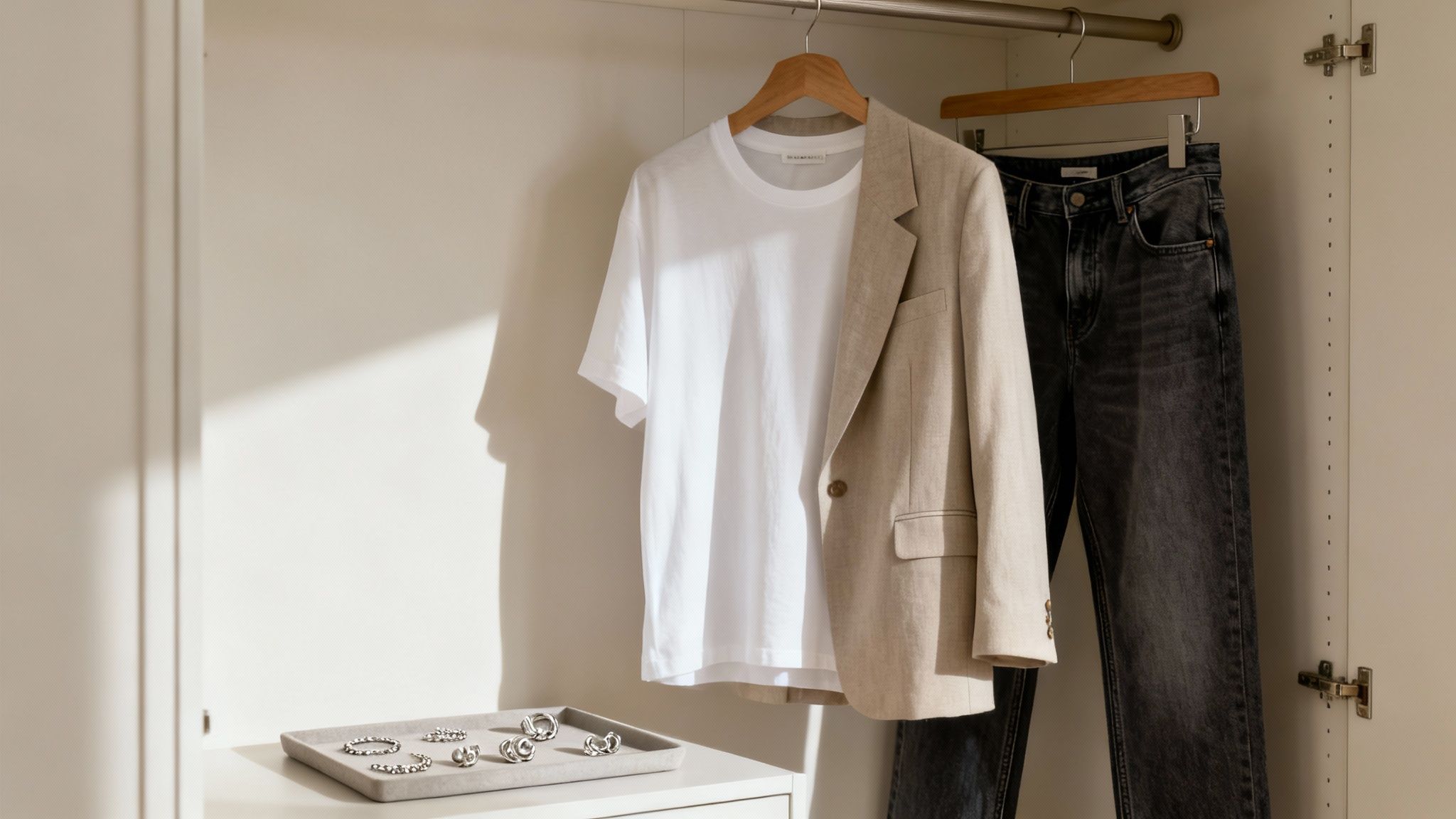
You understand the theory. Now, let's put it into practice. This is about making tangible, everyday choices to shape a wardrobe you feel good about—one that is functional, stylish, and reflects your values.
Building a sustainable wardrobe is not about starting from scratch. It is a thoughtful process of curating what you own, choosing quality over quantity, and investing in timeless pieces. It is about building a collection that serves you for years.
The philosophy is simple: buy less, but buy better. This shift moves from the thrill of a new purchase to the satisfaction of owning something well-made. This approach reduces waste and sharpens your personal style.
The Foundation of Quality Materials
The bedrock of a lasting wardrobe is material quality. Choosing durable fabrics is a direct investment in longevity. These are the pieces that handle real life—repeated wear and washes—while retaining their shape and feel.
Consider a classic oversized tee in dense, high-quality 100% cotton. It drapes better and will outlive a dozen flimsy counterparts. The same applies to jewellery. A timeless piece of S925 sterling silver has an enduring beauty that cheap plated metals lack.
A sustainable wardrobe is a curated collection, not an accumulation. Each piece is chosen with intention, valued for its craftsmanship, and designed to integrate seamlessly.
Focusing on foundational materials simplifies getting dressed. A classic linen dress, for example, can be styled for any occasion, proving its worth repeatedly. Explore its potential in our guide on the versatility of the linen dress.
Embracing Versatility and Minimalist Design
Sustainable fashion is not about a plain or boring aesthetic. It is about focusing on versatile cuts and classic silhouettes that sidestep trends and offer maximum styling mileage. It is about creating a high-quality toolkit of essentials.
These core items become the canvas for your style:
- The Perfect Oversized T-Shirt: A versatile piece for any look.
- A Classic Button-Down Shirt: Style it for the office or a relaxed weekend.
- Timeless Silver Jewellery: A simple chain or classic hoops elevate any outfit.
Investing in adaptable pieces reduces the need for a cluttered closet. This approach sparks creativity, encouraging new combinations with clothes you already own.
Supporting Local and Ethical Production
Knowing the story behind your clothes adds another layer of meaning to your wardrobe. Supporting local producers and transparent brands creates a connection to the artisans behind your favourite pieces.
This is a growing priority. A 2023 European study found 44.9% of French consumers bought eco-responsible clothing in the past year. Shoppers are prioritizing quality and versatility over volume. They are drawn to platforms transparent about sourcing and local production. Learn more in the growing sustainable clothing market on gminsights.com.
A modern sustainable wardrobe is a direct reflection of what you value. It is a collection of pieces made with respect for people and the planet.
Caring for Your Garments to Ensure Longevity
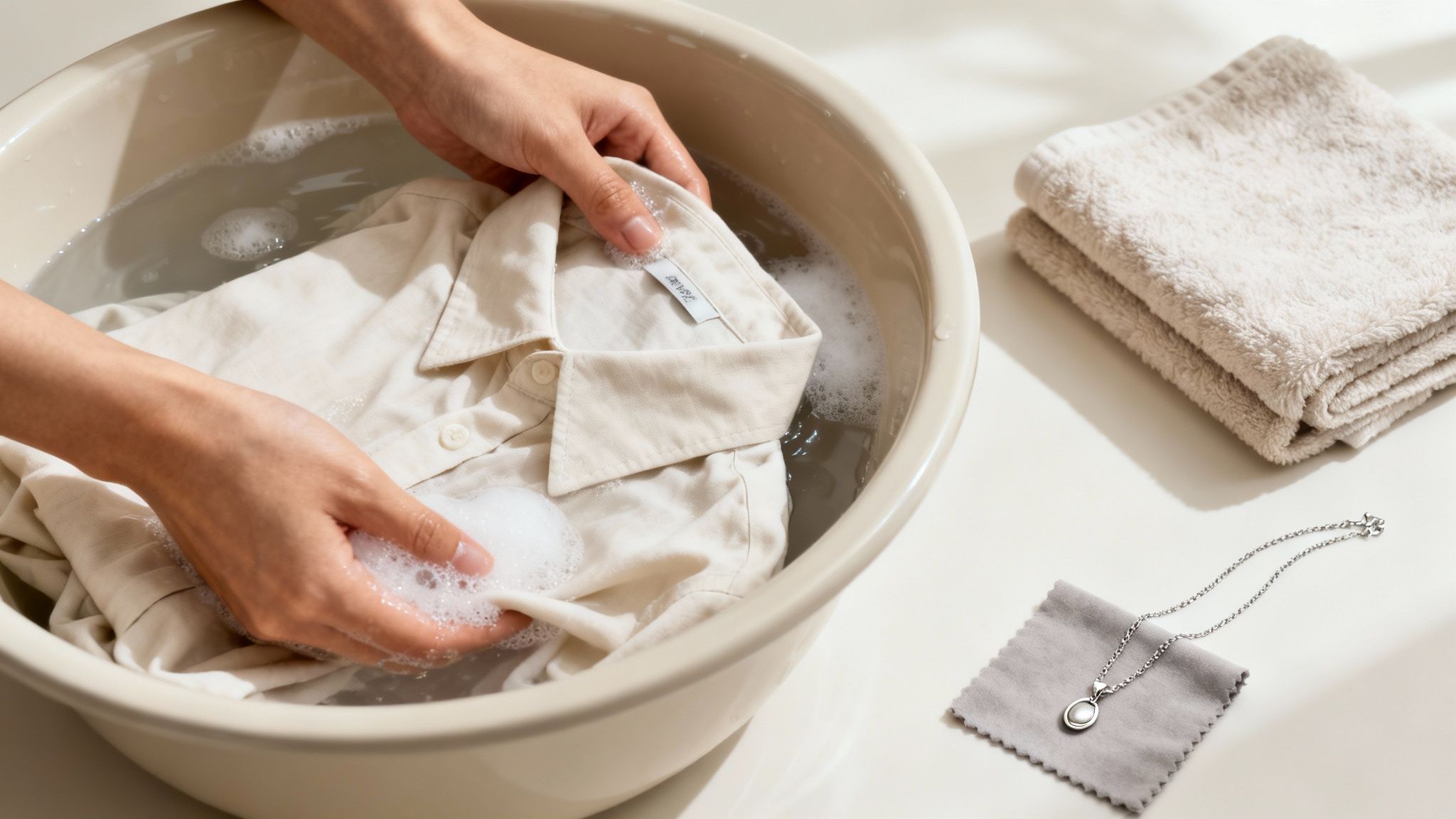
True sustainability continues after purchase. How you care for a garment is critical. Daily rituals of care help your favourite pieces last for years, not just a season.
These mindful habits shift your wardrobe from disposable trends to a curated collection of durable, well-loved items. An investment in quality pays off only with proper maintenance. The goal is simple: make every piece last.
Washing with Intention
Conventional washing is harsh on clothes. Harsh detergents, hot water, and aggressive spin cycles degrade fabric fibres. A gentler touch makes a significant difference.
For natural materials like dense 100% cotton, wash less often and use cold water. Cold water cleans effectively for most daily wear and is kinder to fabrics and dyes. Skip the high-heat tumble dryer; it is one of the fastest ways to ruin your clothes. Air-dry on a flat surface or hanger instead.
A significant part of a garment's environmental impact comes from home care. Switching to cold water washes can cut energy use per load by up to 90%.
Proper Storage and Daily Care
How you store your clothes and jewellery is as important as how you wash them. Good storage habits protect against dust, humidity, and physical stress.
A few simple principles:
- Fold Heavy Knits: Never hang heavy sweaters; their weight will stretch them out of shape. Fold them neatly on a shelf.
- Use Quality Hangers: Flimsy wire hangers distort clothes. Invest in sturdy wooden or padded hangers that support the garment. Our guide on how to determine your clothing size can help.
- Protect Your Jewellery: Store S925 silver pieces in a cool, dry place. Keeping them in individual soft pouches or a lined box prevents scratches and slows tarnishing.
The Art of Simple Repairs
Fast fashion teaches us that a lost button or small tear means an item is disposable. Sustainable fashion encourages us to embrace repair.
You do not need to be a master tailor. Learning to sew a button or patch a hole is an empowering skill. These small acts reconnect you to your clothes. By choosing to repair instead of replace, you build a more conscious, circular wardrobe.
The Future of Fashion Is Conscious
Sustainable fashion is not a trend. It is a fundamental shift in how we approach our clothes and our impact. It is a smarter way to build a wardrobe, proving that style and substance can coexist.
This is not a call for an overnight closet purge. It is about small, intentional steps. Each choice—from understanding labels to caring for clothes—creates a ripple effect.
A Growing Movement
Conscious consumerism is reshaping the fashion industry. The sustainable fashion market is projected to reach USD 9.2–12.5 billion by 2025, with some forecasts suggesting a surge to USD 53.4 billion by 2032.
Online marketplaces are leading this charge, as consumers actively seek platforms that vet brands for them. This is where transparent, local brands can shine. Explore the data in sustainable fashion statistics on bestcolorfulsocks.com. Mindful consumption is becoming the new standard.
A conscious wardrobe is not about perfection. It is about progress—making thoughtful choices that align with your values and elevate your style.
Your journey into sustainable fashion is your own. It starts by asking more questions. When you choose pieces built on quality, timeless design, and ethical production, you do more than buy a shirt.
You invest in a more considered, stylish, and sustainable future. You build a wardrobe that tells a story of intention and respect.
Answering Your Questions About Sustainable Fashion
It is normal to have questions when exploring sustainable fashion. It is a different way of thinking about the clothes we wear. Here are straightforward answers to common queries.
Is Sustainable Fashion Just a More Expensive Option?
A sustainable piece often has a higher initial price tag, but its real value lies in its longevity.
Consider the "cost-per-wear." A cheap shirt that falls apart after a few washes is a wasted expense. A high-quality garment is an investment. Made from better materials, it lasts for years, not weeks. Over time, you save money by not constantly replacing items.
Does Being Sustainable Mean I Have to Give Up My Style?
Not at all. This is a common myth. Sustainable fashion is diverse and stylish. The core idea is to build a wardrobe around timeless, versatile pieces that reflect you.
A tailored t-shirt, classic jeans, or elegant silver jewellery are the building blocks of great style. Sustainability encourages you to find high-quality versions of what you already love.
True style is intentional. It is curating a wardrobe that is both beautiful and ethical, filled with pieces that tell a story of quality and conscious choice.
What's the Best First Step I Can Take?
Start here: shift your mindset from quantity to quality. It is the most powerful change you can make.
Before buying anything new, ask yourself: "Will I wear this at least 30 times?"
This simple check-in moves you beyond impulse buys. It forces you to consider if a piece genuinely fits your life and style. It is a habit that reduces waste and helps you build a collection of clothes you truly love.
At Taton.shop, we bring together local Ukrainian brands that live by these principles of quality, longevity, and timeless style. You can start building your own conscious wardrobe by exploring our curated selection of durable 100% cotton apparel and S925 silver jewelry at https://taton.shop.
