
The Difference Between Gold Plated and Vermeil
The true character of gold-toned jewelry lies in its foundation. The core difference between gold plated and vermeil pieces is defined by two factors: the base metal and the thickness of the gold layer.
Gold plated jewelry uses a common metal like brass or copper with a whisper-thin coating of gold. Vermeil, a legally regulated term, requires a sterling silver base and a significantly thicker layer of gold. This distinction drives the differences in durability, value, and hypoallergenic properties.
Gold Plated vs. Vermeil: A Definitive Comparison
Understanding the difference between "gold plated" and "vermeil" is essential. They represent distinct tiers of quality. Knowing what sets them apart allows you to choose jewelry that aligns with your lifestyle, budget, and expectations for longevity.
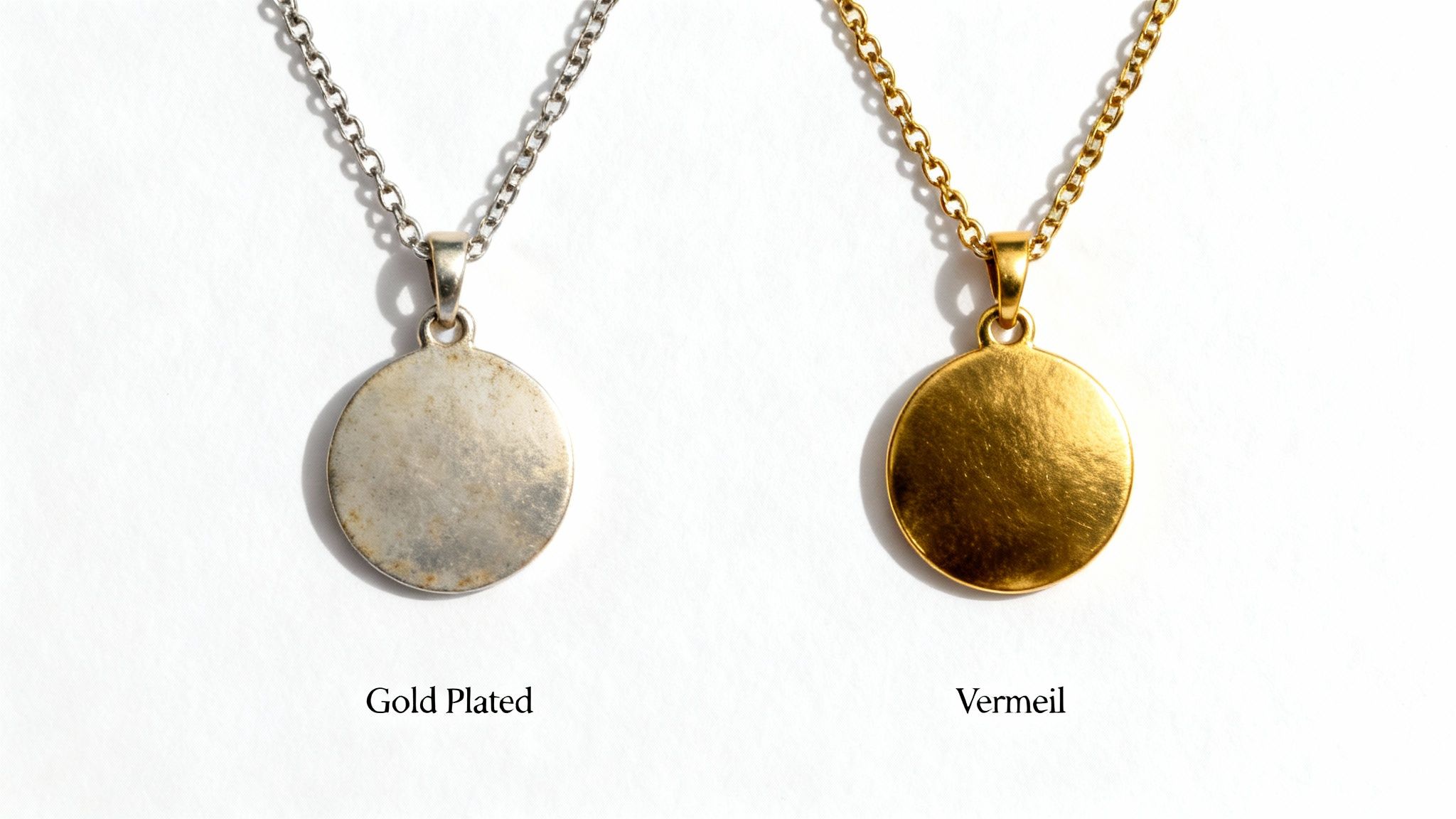
This table provides a direct, at-a-glance comparison of what truly separates these two popular jewelry types.
Quick Comparison: Gold Plated vs. Vermeil
| Characteristic | Gold Plated | Gold Vermeil |
|---|---|---|
| Base Metal | Brass, copper, or other common metals | Sterling Silver (925) exclusively |
| Gold Layer Thickness | Thin, often less than 0.5 microns | Thick, minimum of 2.5 microns |
| Gold Karat Requirement | No minimum requirement | Minimum of 10K gold |
| Durability | Lower; prone to rapid tarnishing and wear | Higher; designed for long-term wear |
| Hypoallergenic Quality | Varies; can cause reactions when gold wears off | Generally hypoallergenic due to silver base |
| Cost | More affordable, entry-level pricing | Higher price point, considered demi-fine |
The standards for vermeil are significantly higher, establishing its position as a "demi-fine" option.
The Defining Standards
The division between these materials is rooted in regulated standards. Gold plated jewelry can have a base of nearly any metal—typically inexpensive brass or copper—with a gold layer often less than 0.5 microns. It's a fleeting finish.
Vermeil occupies a different league. In the U.S., a piece must have a sterling silver base (92.5% pure silver) and a coating of at least 2.5 microns of 10K gold or higher to be legally termed "vermeil." This layer is five to ten times thicker than typical plating.
This strict regulation is why vermeil can last for years with proper care, while a gold-plated item may tarnish in months.
Key Takeaway: Vermeil is not just a name for plating. It is a regulated standard combining two precious metals—sterling silver and a substantial layer of gold. This places it in the "demi-fine" category, a significant step above standard fashion jewelry.
To understand the full spectrum of jewelry quality, exploring the difference between gold filled and solid gold provides context on where vermeil and gold plating fit.
Deconstructing The Material Layers
Beyond the initial shine, the core of the jewelry is what separates gold-plated from vermeil. Its value, durability, and skin compatibility all depend on the base metal and the thickness of its gold layer.
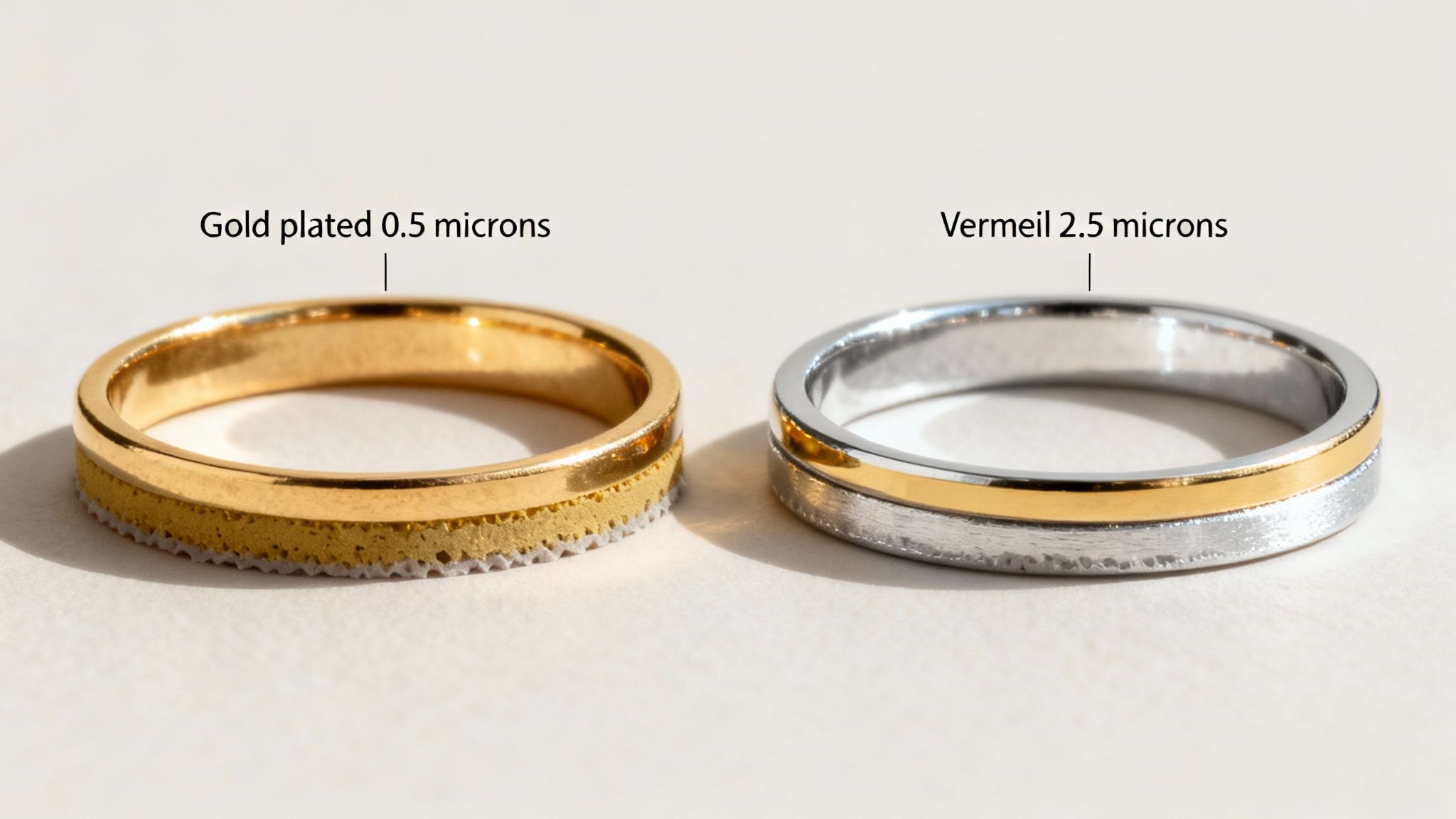
Standard gold-plated pieces are made using electroplating. An electric current adheres a microscopic layer of gold onto a base metal, usually an inexpensive alloy like brass, copper, or nickel.
The gold layer is incredibly thin—often under 0.5 microns. For context, a human hair is about 70 microns thick. This delicate coating offers little resistance to friction, chemicals, and moisture, causing it to wear away quickly.
The Regulated Standard of Vermeil
Vermeil is a legally defined category of demi-fine jewelry. To earn the name, a piece must meet strict standards set by bodies like the U.S. Federal Trade Commission (FTC).
The core of any vermeil piece must be sterling silver—92.5% pure silver. This precious metal base provides intrinsic value and is a safer choice for sensitive skin than reactive metals like brass or nickel. Our guide on what vermeil is offers more detail.
A critical distinction: To be legally called vermeil, a piece must have a sterling silver core and a gold layer of at least 10K that is a minimum of 2.5 microns thick. This guarantees a level of quality and longevity that standard gold plating cannot promise.
This union of precious metals—a solid sterling silver foundation bonded with a thick layer of gold—gives vermeil its unique market position. It provides the look and feel of solid gold at a more accessible price. The thicker gold layer is built for longevity.
The price and performance gap is significant. Gold-plated items are often 50-70% cheaper than vermeil, but this saving comes at a cost. Many find their plated jewelry fades within a year. Vermeil is built to last 5-10 times longer, cementing its value in the demi-fine jewelry space.
Analyzing Durability and Real-World Wear
The true test of jewelry is its performance over time. The construction of gold plated versus vermeil pieces creates a vast difference in their longevity. Durability comes down to the materials and their resistance to daily wear.
Gold-plated jewelry, with its gold layer under 0.5 microns, offers minimal protection. The base metals, usually brass or copper, are highly reactive. Everyday substances like lotions, perfumes, and sweat can quickly break down the delicate gold coating.
When the gold wears away, the exposed core metal tarnishes and discolors. It is common for a frequently worn gold-plated piece to fade within a few months, making it best for occasional use.
The Superior Resilience of Vermeil
Gold vermeil is engineered for a longer lifespan. Its strength comes from two sources: a solid sterling silver base and a thick layer of gold. The 2.5-micron minimum gold coating provides a robust shield against daily scuffs and chemical exposure.
Sterling silver is also less reactive than brass or copper. If the gold layer eventually wears thin in high-contact areas after years of use, the precious metal underneath is revealed. This avoids the drastic color change and potential skin irritation common with plated jewelry. Learn more about protecting silver in our guide on how to prevent silver tarnish.
Practical Expectation: With proper care, a gold vermeil piece can maintain its luster for years, making it an excellent choice for daily-wear items. Its construction is designed to last, offering a lifespan 5 to 10 times longer than its gold-plated counterparts.
Real-World Scenarios and Longevity
Consider how each type holds up in common situations:
- At the Gym: Sweat is acidic and corrosive to the thin gold on plated jewelry. A vermeil piece handles this exposure better, though removing all fine jewelry before a workout is recommended.
- Washing Hands: Frequent contact with water and soap accelerates the erosion of a plated finish. Vermeil’s thicker gold layer offers far greater protection.
- Applying Lotion or Perfume: Chemicals in cosmetics can cause immediate tarnishing on plated jewelry. Vermeil’s substantial gold layer can handle incidental contact, but direct application should be avoided to maximize its lifespan.
Gold plating is an affordable way to experiment with trends, but it is a temporary finish. Vermeil offers lasting, demi-fine quality that bridges the gap between fashion jewelry and the investment of solid gold.
How To Tell The Difference: Spotting Quality and Authenticity
Distinguishing between vermeil and gold-plated jewelry is simple once you know what to look for. The most reliable clues are the small stamps, or hallmarks, engraved on the piece. These legally required markings certify the jewelry's metal content.
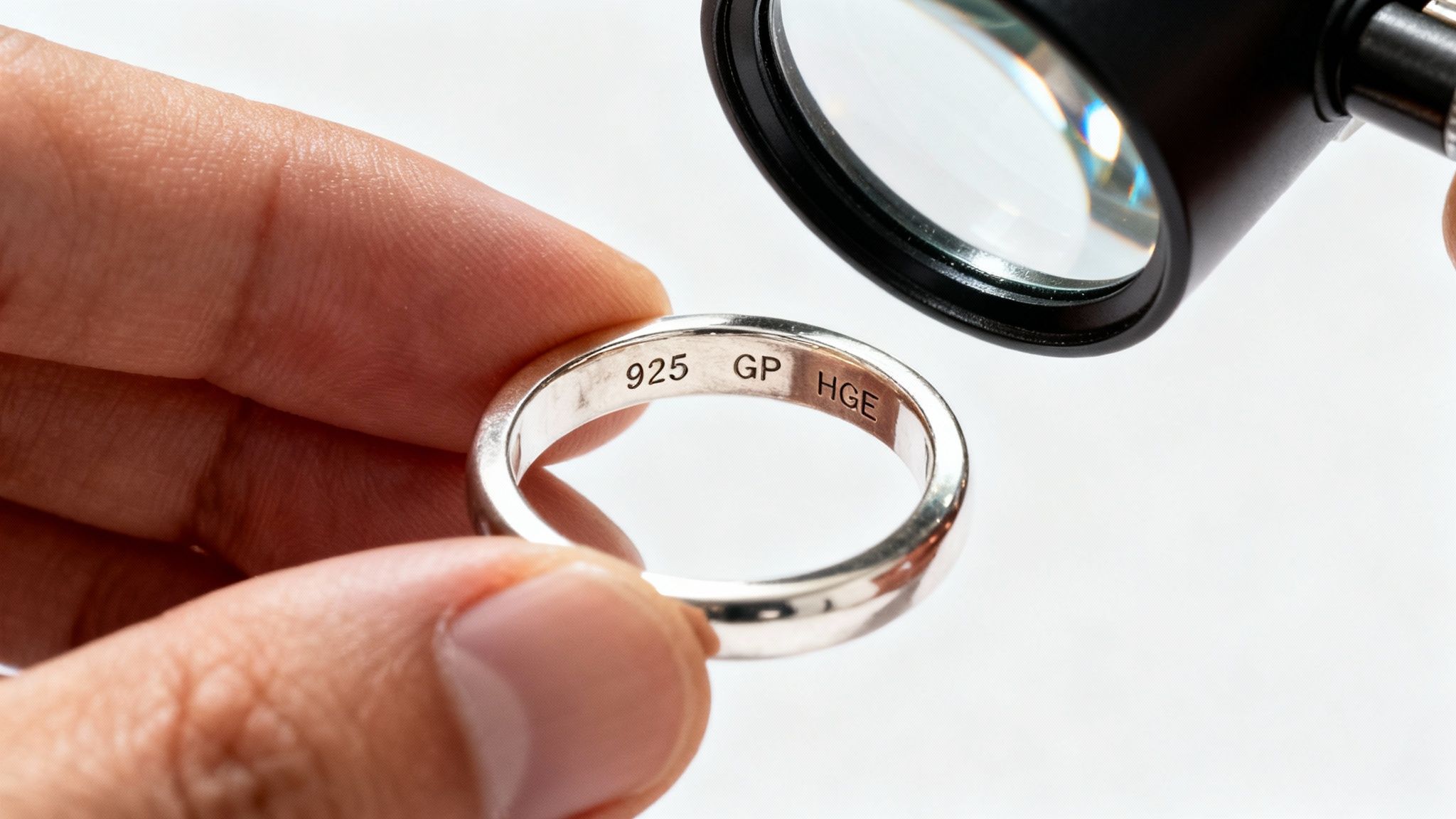
Inspect inconspicuous areas—the clasp, the inside of a ring, or an earring post. These inscriptions reveal the true story of the materials.
Decoding Jewelry Hallmarks
Familiarity with these stamps is key to making informed purchases. Each combination of letters and numbers details the material composition.
Common markings include:
- 925: The universal hallmark for sterling silver. If you see this on a gold-toned piece, it is almost certainly gold vermeil.
- GP (Gold Plated): This mark explicitly states the item is gold plated, with a thin layer of gold over a base metal.
- HGE (Heavy Gold Electroplate): Similar to GP, this indicates a plated item. "Heavy" may suggest a slightly thicker layer, but it is still plating.
- GEP (Gold Electroplated): Another abbreviation for gold plating, confirming a non-precious metal core.
Our guide to 925 silver jewelry explains why sterling silver is a benchmark for quality.
The most important clue for identifying vermeil is the "925" stamp. Since true vermeil is defined by its sterling silver core, this hallmark confirms the piece meets that critical standard. A piece marketed as vermeil without this stamp is a red flag.
Beyond The Stamps: Visual and Tactile Clues
Beyond official markings, you can assess a piece through visual and tactile inspection. Quality vermeil has a deep luster nearly identical to solid gold. It also feels more substantial due to the density of its sterling silver core compared to brass or copper.
Some gold-plated items can appear overly brassy or artificially yellow. With wear, discoloration or fading may appear on high-contact areas.
If you spot a different metal peeking through—typically a dull grey or coppery tone—it is a plated piece where the thin gold layer has already worn away.
Choosing The Right Jewelry For Your Lifestyle
The best choice of jewelry is one that fits your life. The decision between gold plated and vermeil should be based on your lifestyle, budget, and how you intend to wear the piece.
Gold plated jewelry is perfect for trying new styles or trends without a significant financial commitment. For an accessory worn to a single event or only occasionally, its affordability is a practical advantage.
However, its thin gold layer is not designed for daily wear, making it a poor choice for signature pieces.
Building A Lasting Collection With Vermeil
When building a core collection of accessories, gold vermeil excels. Its sterling silver foundation and thicker gold layer provide the durability needed for everyday wear, making it a true investment in your personal style.
Vermeil is for pieces that become part of your daily life—the necklace you always wear, the earrings that complete every outfit.
The hypoallergenic nature of its sterling silver base is a significant benefit for those with sensitive skin who react to base metals like nickel or brass. Our guide to hypoallergenic earrings for sensitive ears explores this further.
The core difference is purpose: gold plating is for short-term accessorizing, while vermeil is for building a lasting, high-quality jewelry wardrobe. Your choice reflects whether you are buying for a moment or for years to come.
Matching The Jewelry To The Occasion
Consider these real-world scenarios:
- For the Trend Follower: You enjoy bold, seasonal looks but don't want to overspend on temporary styles. Gold plated jewelry delivers the look without the long-term price.
- For the Daily Minimalist: You seek a reliable, elegant piece—a simple chain or classic hoops—for constant wear. Gold vermeil provides the necessary resilience and timeless quality.
- For a Thoughtful Gift: You want a special gift that feels substantial and lasting. Vermeil is the clear choice, its all-precious-metal construction conveying quality and care.
Understanding the fundamental difference between gold plated and vermeil empowers you to choose jewelry that serves its purpose beautifully.
Essential Care For Your Gold Jewelry
Proper care is the single most important factor in your jewelry's longevity. While gold plated and vermeil pieces may look similar, their different compositions require distinct maintenance approaches.
With gold-plated jewelry, prevention is key. The thin gold layer is delicate and easily worn down by friction or damaged by chemicals. Always remove it before activities involving moisture or rough contact.
Gold Plated Jewelry Preservation
Protect the thin gold finish like a delicate coating.
- Avoid All Moisture: Water, sweat, and humidity are the primary drivers of tarnish. Remove your jewelry before showering, exercising, or swimming.
- Keep Away From Chemicals: Apply lotions, perfumes, and hairspray before putting on jewelry, allowing them to dry completely. The chemicals in these products can rapidly erode the gold layer.
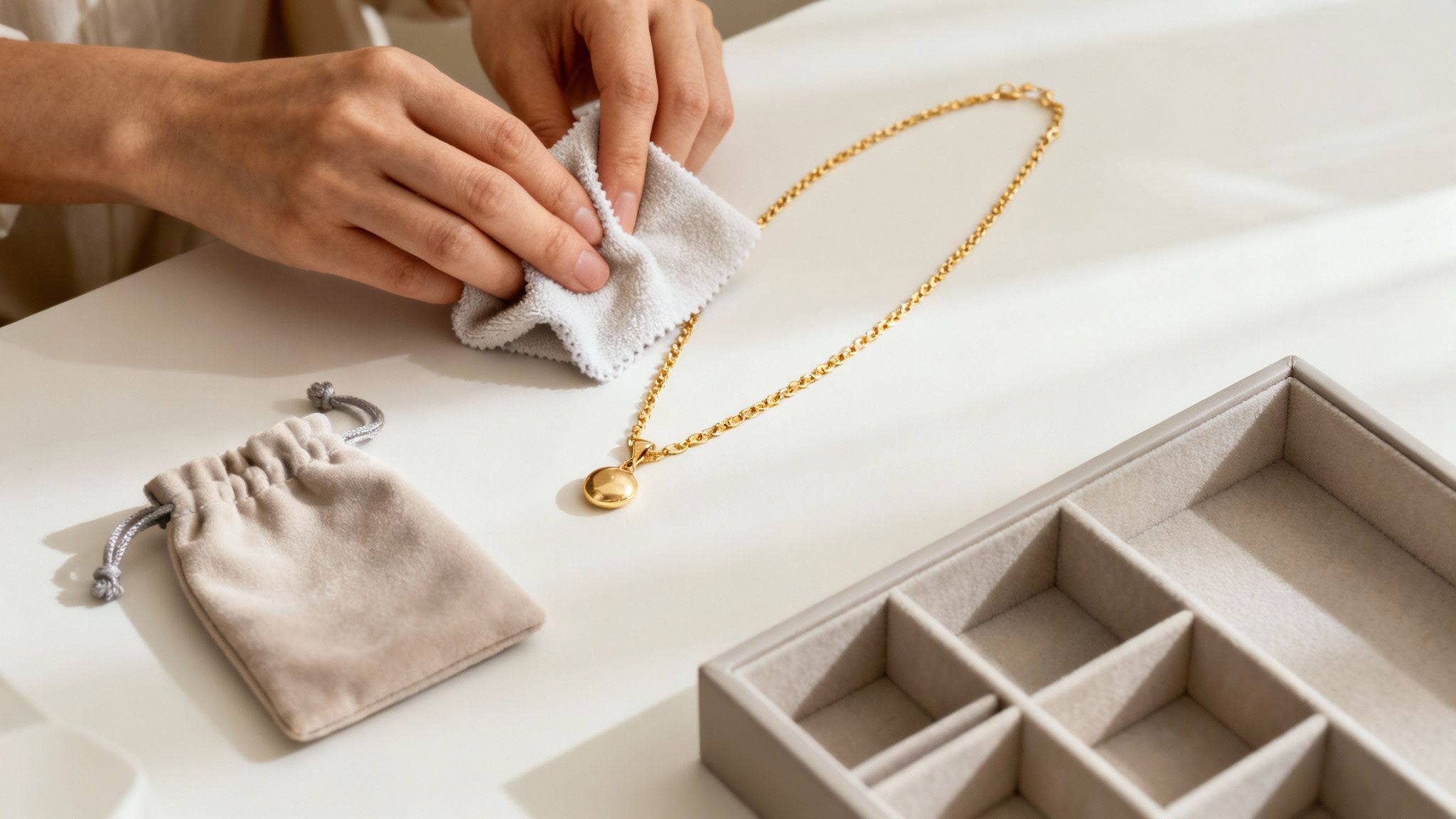
- Store Carefully: To prevent scratches that expose the base metal, store each piece in its own soft pouch or a lined jewelry box. Friction against other items will wear off the plating.
Our guide on how to clean gold plated jewelry provides more specific techniques.
Vermeil Jewelry Maintenance
Caring for vermeil is about gentle preservation. Its thicker gold layer and sterling silver core make it more durable, but it still requires mindful handling. The goal is to clean it without being abrasive.
Gently wipe your vermeil with a soft, dry microfiber cloth after each wear. This simple step removes skin oils and grime without stripping away the gold over time.
Avoid harsh chemical cleaners and polishing cloths intended for raw silver, as they are too abrasive for vermeil's gold layer. For deeper cleaning, use a drop of mild soap in lukewarm water, then rinse and dry completely. Storing pieces separately prevents scratches and protects the finish. For more tips, you can find excellent advice on Caring for Gold Plated Jewelry.
Common Questions About Vermeil & Gold Plating
A few key questions always arise when distinguishing between gold vermeil and gold-plated jewelry. Here are the direct answers.
Can Vermeil Tarnish Like Gold Plated Jewelry?
Yes, but the process is different. Gold itself does not tarnish. With vermeil, the base is sterling silver. If the thick gold layer wears down after years of heavy use, the underlying silver may oxidize.
Gold-plated pieces are different. Their thin gold layer wears away quickly, exposing reactive base metals like brass or copper. These metals tarnish rapidly and can leave a green stain on your skin.
Is Vermeil Jewelry Waterproof?
No jewelry is truly waterproof. While vermeil's 2.5+ micron gold layer offers good protection against an occasional splash, prolonged exposure to water, soaps, lotions, and chlorine will break down the gold layer over time.
For longevity, always remove vermeil pieces before showering, swimming, or exercising. Gold-plated jewelry is far less forgiving and must be kept dry.
It's better to think of vermeil as "water-resistant." It handles accidental water exposure much better than gold plating, but it is not intended for submersion.
Which Is Better for Sensitive Skin?
For sensitive skin, vermeil is the superior choice. Its core is sterling silver (925), a precious metal that is naturally hypoallergenic for most people.
Gold-plated jewelry often uses a base of nickel, brass, or copper. These metals are known to cause skin irritation and allergic reactions, especially once the thin gold plating wears off.
At Taton.shop, we believe in quality that lasts. Our minimalist designs are crafted from S925 sterling silver with a durable 18K gold plating, giving you that perfect blend of demi-fine quality and timeless style. Explore our collection to find your next favorite piece.
