
A Guide on How to Clean Gold Plated Jewelry
Cleaning gold-plated jewelry requires a gentle touch. Forget harsh chemicals or abrasive materials; the best tools are often just mild soap and warm water. The gold is a whisper-thin layer over a base metal, making it easy to strip away and cause permanent damage.
What to Know Before Cleaning Gold Plated Jewelry
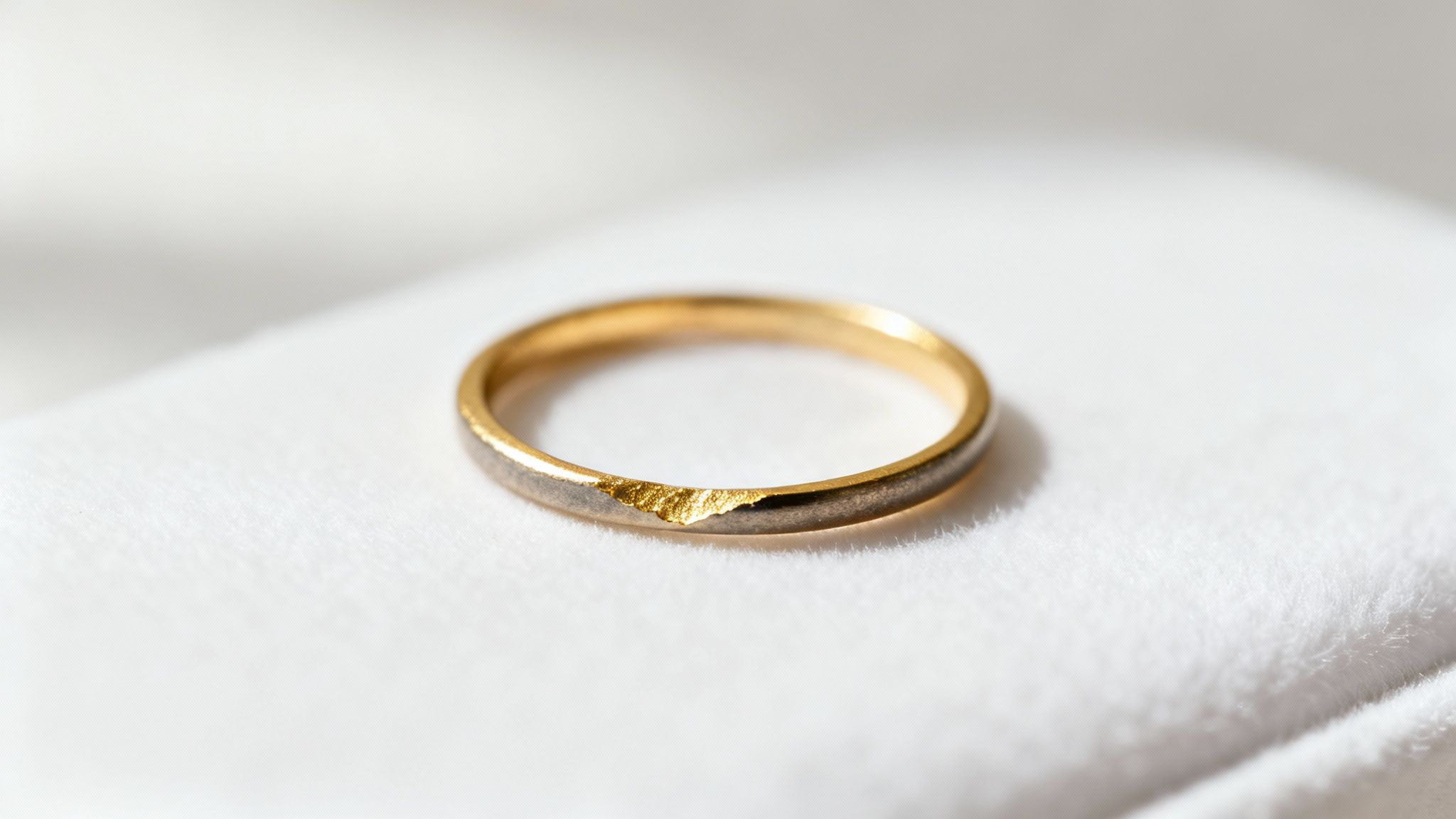
Before cleaning, understand what gold plating is. It’s not solid gold. It's a delicate layer of real gold electroplated onto a base metal. In quality collections like Taton.shop, that base is often sterling silver, creating a beautiful yet fragile piece.
This layered structure is why aggressive cleaning is disastrous. Because the plating is so thin, you can easily wear it away, exposing the metal underneath and ruining the piece.
The Science Behind the Shine
The gold layer on plated jewelry typically measures 0.5 to 2.5 microns. For perspective, a single human hair is about 70 microns thick. This microscopic coating gives your minimalist rings their glow but also makes them vulnerable.
Common household cleaners, gritty pastes, or even firm-bristled brushes don't just clean the surface—they physically scrape off the gold. Each scrub can cause irreversible fading, scratches, and discoloration.
The best "cleaning" method is preventative care. Understanding the material's fragility helps you avoid common mistakes that lead to damaged jewelry.
This isn’t just an opinion. Improper cleaning is behind over 70% of gold-plated jewelry returns in major markets. The culprits are almost always harsh abrasives and chemicals. This is why experts recommend starting with the simplest method: mild dish soap in warm water.
Common Materials That Cause Damage
Many well-intentioned cleaning attempts go wrong. To protect your pieces, know what to avoid.
Here are the worst offenders:
- Baking Soda & Toothpaste: Often seen in DIY guides, these are far too abrasive. Their gritty texture acts like sandpaper on the delicate gold finish, causing instant scratching and dulling.
- Harsh Chemicals: Ammonia, bleach, and alcohol-based cleaners are corrosive. They can eat away at the plating and cause the base metal to tarnish.
- Jewelry Polishing Cloths: This one is surprising. Pre-treated cloths are designed for solid metals. The embedded chemicals will strip the gold right off plated jewelry.
Preservation is key. Treat plated items with the care you would a fine silk scarf. For pieces mixing plating with sterling silver, knowing each metal's properties is crucial. Learn more in our guide on silver with gold plating. This knowledge is your best tool for protection.
The Only Tools You Need for a Safe Clean
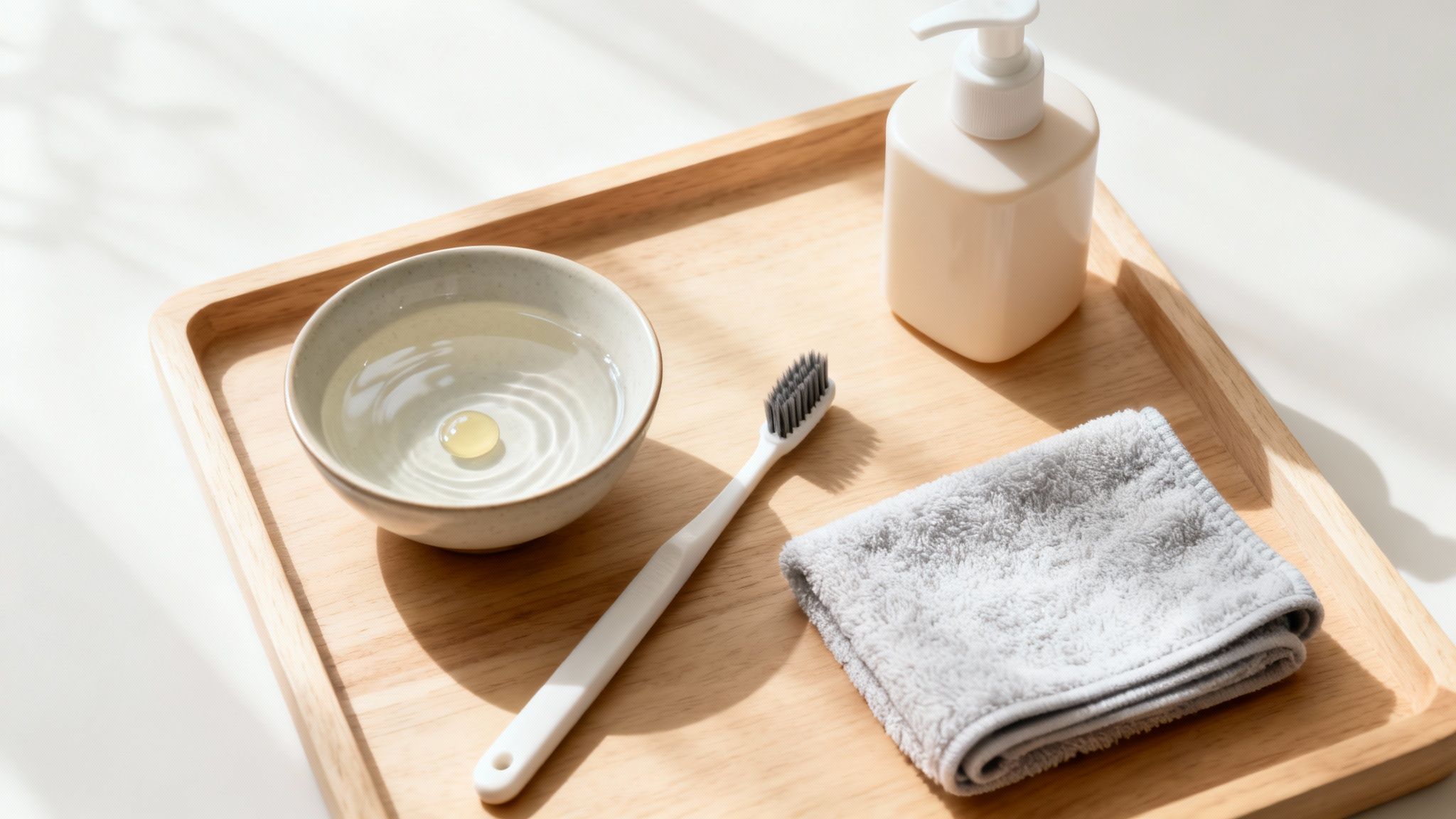
When caring for gold-plated jewelry, less is more. You don't need an expensive kit. Your most effective cleaning tools are likely already in your home, based on gentle, minimalist care.
The goal is to lift away skin oils, makeup, and grime without damaging the delicate gold layer. This means avoiding aggressive solutions and using a simple toolkit. Anything harsh will strip the finish.
Your Essential Cleaning Toolkit
You only need four simple items. This is the professional approach that guarantees a safe, effective clean while protecting the plating's integrity.
Here is the minimalist checklist:
- Mild, Phosphate-Free Dish Soap: A few drops are enough. Soap without harsh detergents breaks down oils without chemically attacking the gold plating.
- A Bowl of Lukewarm Water: Never use hot water. Extreme temperatures can weaken the bond between the gold layer and the base metal. Lukewarm is ideal.
- An Ultra-Soft Bristled Toothbrush: Only for intricate details like clasps or engravings. It must be new and used exclusively for jewelry to avoid transferring abrasive residue.
- A Premium Microfiber Cloth: Non-negotiable for drying. Its soft fibers absorb water without leaving lint or creating micro-scratches that dull the surface.
This simple setup is all you need. It's the professional standard because it works.
The Critical "Do Not Use" List
Knowing what not to use is as crucial as knowing what to use. Many beautiful pieces are ruined by bad DIY advice. Common household cleaners are destructive to gold plating because they are too abrasive or chemically harsh.
Remember: gold plating is not solid gold. Any product designed to polish solid metals or remove heavy tarnish will strip the plating. This is the single most common mistake.
Understanding which agents are safe is key to preserving your jewelry's finish for years.
Safe vs Harmful Cleaning Agents For Gold Plated Jewelry
| Safe to Use | Why It Works | Avoid At All Costs | Why It's Harmful |
|---|---|---|---|
| Mild Dish Soap | Gently dissolves oils and dirt without harsh chemicals. | Baking Soda & Toothpaste | Their gritty textures act like fine sandpaper, scratching and wearing away the plating. |
| Lukewarm Water | Effectively loosens grime without shocking the metal. | Ammonia, Bleach, or Alcohol | These are corrosive chemicals that will eat through the thin gold layer. |
| Microfiber Cloth | Ultra-soft and absorbent for a scratch-free, lint-free dry. | Commercial Polishing Cloths | They are often treated with chemicals formulated for solid metals, which are too aggressive. |
| Soft Toothbrush | Perfect for cleaning crevices without causing abrasion. | Paper Towels or Tissues | The wood pulp fibers are surprisingly abrasive and can leave a web of fine scratches. |
Sticking to the "Safe to Use" column is your best bet for keeping pieces pristine.
This knowledge is especially valuable for diverse collections, like those featuring the delicate work of contemporary Ukrainian jewelry. Preparing your space with only these safe items ensures a damage-free clean.
Your Gentle Cleaning Method for Lasting Shine
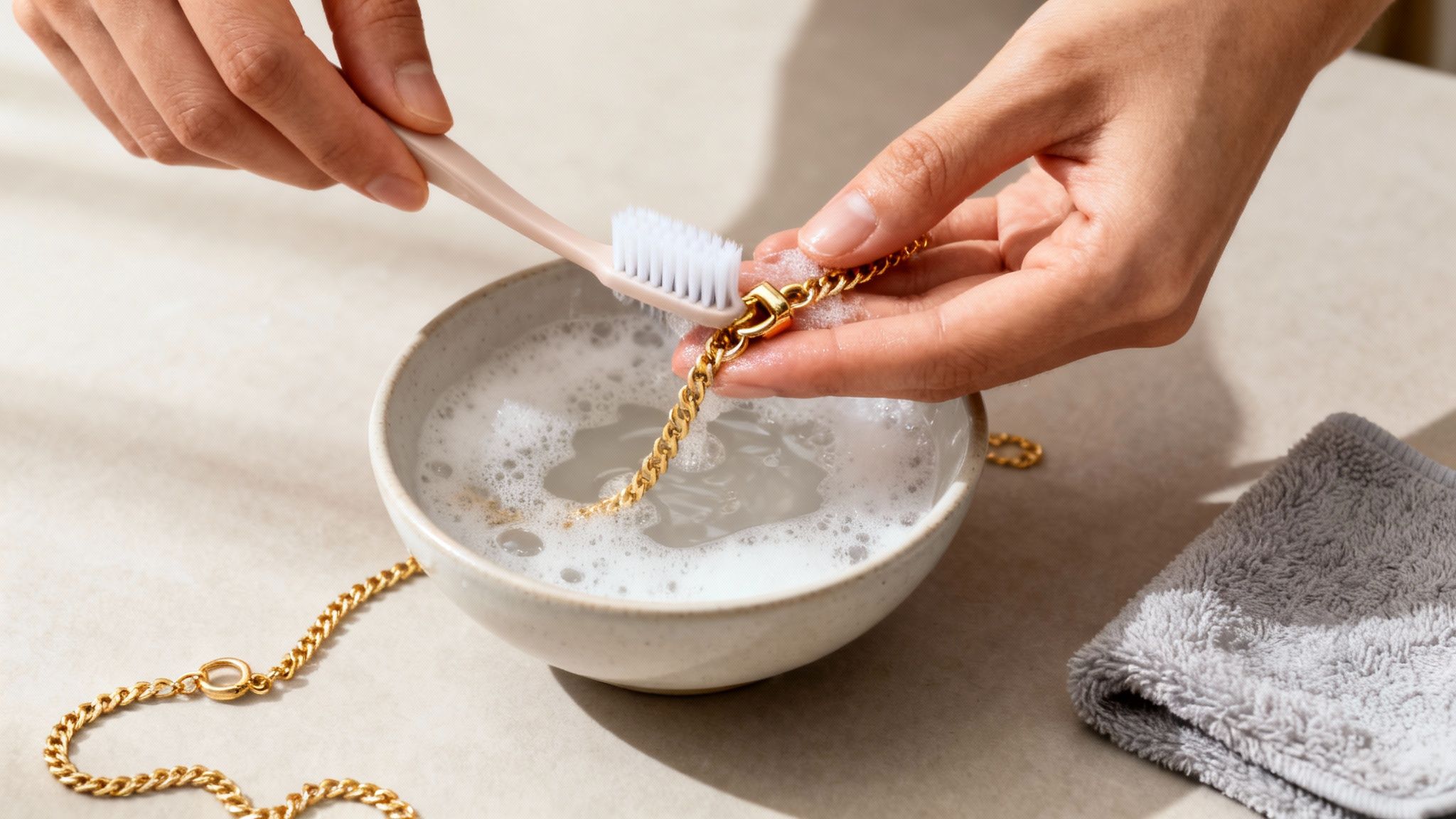
This is the go-to method for routine cleaning. It's safe, effective, and uses only the gentle tools already covered. Consider it a bi-weekly ritual to dissolve daily buildup of oils, lotions, and dust.
The process is simple, but the secret lies in a delicate touch. Rushing or using wrong motions can cause damage. Follow these steps closely.
Preparing the Cleaning Solution
First, mix your cleaning bath. Fill a small bowl with lukewarm water—never hot.
Add two or three drops of a mild, phosphate-free dish soap. Swirl gently to create a light, sudsy solution. You don't need a sink full of bubbles, just enough soap to act as a surfactant to lift grime without being harsh.
The Optimal Soak and Gentle Scrub
Carefully place your gold-plated jewelry into the bowl. Let the pieces soak for 5 to 10 minutes. This timing is key. It's long enough for the soapy water to loosen buildup but not so long it affects the plating.
The gentle soak does most of the work. Resisting the urge to scrub is the most important part of this process. The goal is to lift dirt, not scrape it off.
For pieces with intricate details, like a clasp or setting, use an ultra-soft-bristled toothbrush. After the soak, gently brush these crevices with a light, circular motion. Apply almost zero pressure; let the bristles do the work.
The Critical Rinse and Dry Technique
Once clean, remove the pieces from the soapy water. Rinse each one thoroughly under a gentle stream of cool running water. It's crucial to remove all soap residue, as any leftover film will attract more dirt and dull the surface.
Next, drying. Lay your jewelry on a clean, dry microfiber cloth and gently pat each piece. Never rub your jewelry dry, as this can drag debris across the surface and create fine lines. Let it air dry for another 10-15 minutes before storing.
Many online DIY methods suggest stronger solutions, but these are too risky for gold plating. While a baking soda solution revived 92% of tarnished pieces in the 1980s, we now know more. Experts from sources like Westpack.com warn against frequent use. A soak longer than 2-5 minutes can dull the finish by 15% and may cause "base metal bleed."
This soap and water method is the gold standard for weekly maintenance. For other precious metals, see our guide on how to clean gold items.
How to Handle Tarnish and Heavy Buildup
Sometimes, a gentle soap-and-water bath isn't enough. When a favorite piece has noticeable tarnish or stubborn grime, you need a more targeted approach. This requires a careful hand and an understanding of the material.
This isn’t a weekly routine. Think of it as a rare, restorative treatment. We will walk through using a highly diluted baking soda solution, a method that demands precision.
The Occasional Deep Clean Solution
For discoloration, a carefully prepared baking soda bath can help. The key words are dilution and brevity. This is not a paste or scrub; it's a quick chemical soak to dissolve tarnish without scratching the gold surface.
Here is the trusted formula:
- Mix one teaspoon of baking soda into one cup of lukewarm water.
- Stir until every grain is completely dissolved. No gritty residue should remain.
This ratio is critical. It makes the solution strong enough to lift tarnish but not corrosive.
This method is strictly for occasional use on heavily tarnished items. Regular use will accelerate wear on the gold plating, eventually exposing the base metal.
Submerge your jewelry for a maximum of two to five minutes. Set a timer. Any longer risks permanently dulling the finish. The goal is a quick dip, not a long chemical bath.
Immediate Rinsing and Drying
The moment the timer goes off, remove the jewelry. Rinse it thoroughly under cool, running water to remove every trace of the baking soda solution.
Any residue can continue to react with the plating and cause discoloration. After rinsing, gently pat the piece dry with a high-quality microfiber cloth. Never rub. A gentle pat soaks up water without creating scratches on the vulnerable surface.
Knowing When to Seek Professional Help
This baking soda method is a last resort for at-home care. If your jewelry is still tarnished, or if the plating looks chipped or faded, stop. Do not repeat the process or try something more aggressive.
The problem is likely deeper than surface tarnish. The plating itself may be compromised. Further DIY attempts will only make it worse. At this point, consult a professional jeweler. They have the tools to assess the damage and can suggest solutions like replating. For other metals, our guide on how to clean blackened silver may be useful.
Daily Habits to Preserve Your Jewelry
Keeping jewelry brilliant has less to do with cleaning and more with preventative habits. Daily actions are the single biggest factor in preserving the delicate 18K gold plating. Think of it as proactive care.
If you remember one thing, make it: “last on, first off.” Jewelry should be the last thing you put on after skincare, makeup, and perfume have dried. It should be the first thing you take off at night.
Chemicals are the enemy of gold plating. Compounds in perfumes, lotions, and hairsprays can react with the thin gold layer, causing it to tarnish and fade quickly.
Creating a Safe Zone for Your Jewelry
Some daily activities are not compatible with gold-plated jewelry. Protecting your pieces from moisture, chemicals, and physical impact is essential.
Always remove jewelry before:
- Showering or Swimming: Water, chlorine, and saltwater are a fast track to corrosion for both the plating and the base metal.
- Exercising: Sweat is acidic and can eat away at the finish. The risk of snagging or hitting a piece during a workout is also high.
- Cleaning or Cooking: Harsh chemicals in household cleaners are a definite no. Some food acids can also be damaging.
Adopting these small habits makes a world of difference. You are actively shielding your pieces from elements that cause the gold layer to wear away.
A 2021 EU study found that 78% of people who followed preventative routines reported their gold-plated jewelry lasted 50% longer. Those with inconsistent habits saw pieces fade 35% faster. More expert tips are available on cleaning your gold jewelry on us.missoma.com.
The Art of Proper Storage
Where you store jewelry is as critical as how you wear it. Tossing pieces onto a nightstand leads to scratches, tangled chains, and tarnish.
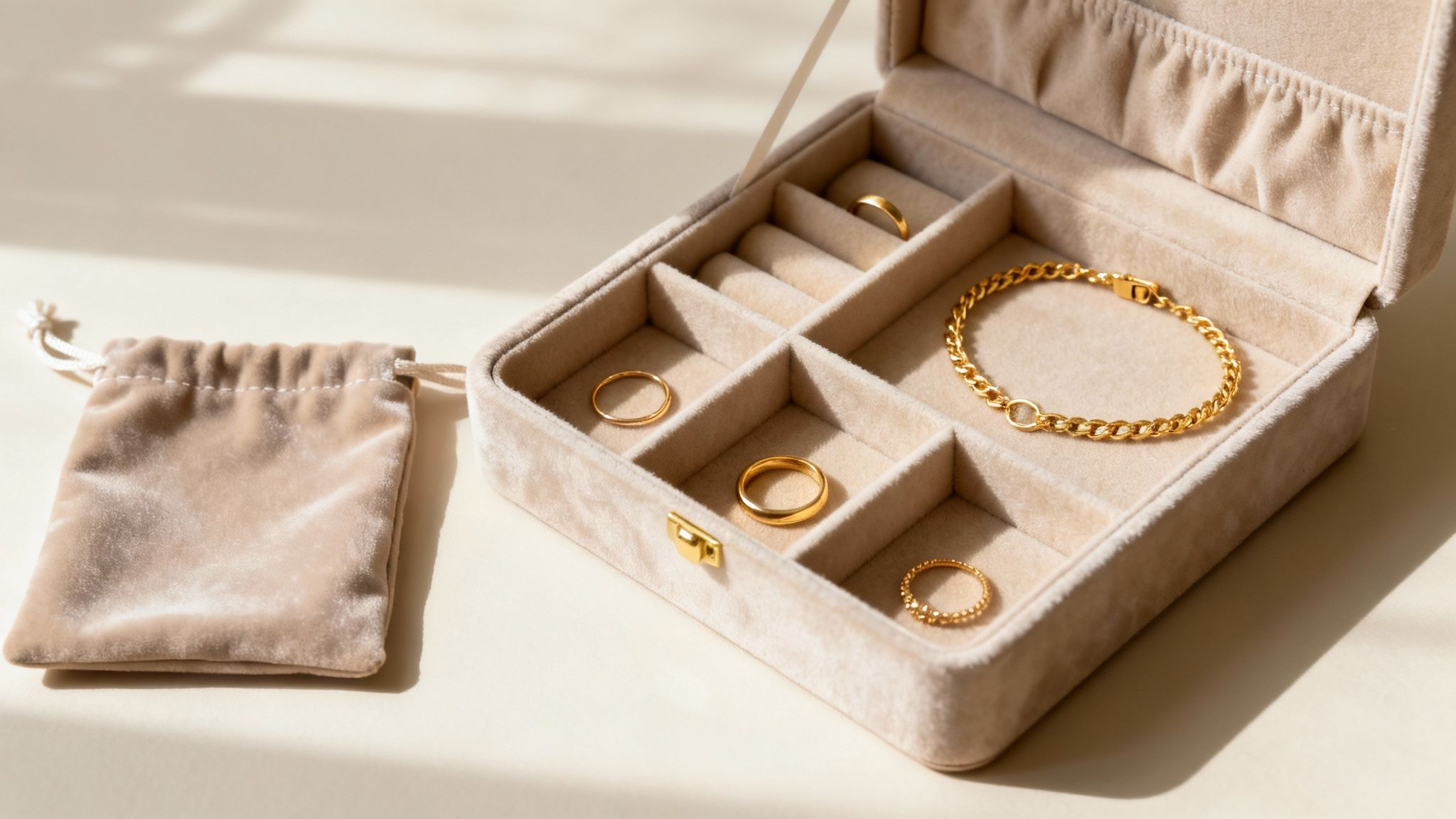
The goal is to keep each piece from rubbing against others. A jewelry box with a soft lining and individual compartments is a great investment. Alternatively, store each item in its own anti-tarnish pouch.
The environment also matters. A cool, dark, dry place—ideally below 20°C—can slow down tarnish by up to 40%. This is especially important for pieces with a sterling silver base. For a deeper dive, check our guide on how to prevent silver tarnish.
Mastering these habits protects your investment and ensures your jewelry looks pristine for years.
Common Questions About Cleaning Gold Plated Jewelry
Even with the best intentions, questions arise. Knowing the details about cleaning gold-plated jewelry gives you confidence. Here are the most common questions.
How often should I clean my jewelry?
There's no single answer—it depends on how often you wear a piece.
For an everyday ring or choker, a gentle soap-and-water bath every week or two is smart. This routine stops oils, lotions, and grime from building up and dulling the finish.
For a piece worn on special occasions, a wipe-down with a microfiber cloth before storing is usually enough. Pay attention. When a piece isn't shining as it used to, it's time for a gentle clean.
Are commercial jewelry cleaners safe for plating?
Almost always, the answer is a hard no.
Most commercial cleaners are packed with chemicals like ammonia designed for solid metals. They are too aggressive for a delicate plated surface.
Using one will likely strip the thin gold layer, leaving a faded, damaged piece. Stick with mild, phosphate-free dish soap. It’s effective, safe, and all you need.
Think of gold plating as a surface finish, not a solid material. Commercial cleaners react with metal—precisely what you must avoid with a delicate coating.
Plated vs. Filled vs. Solid Gold Cleaning
The material changes the approach. Each type requires a different cleaning method.
-
Gold Plated: The most delicate. It has a micro-thin layer of gold over a base metal (like the S925 sterling silver we use). Cleaning must be gentle, focused only on lifting surface dirt without scrubbing.
-
Gold Filled: A much thicker layer of gold mechanically bonded to the base metal. It’s more durable than plating but you should still avoid harsh chemicals.
-
Solid Gold: Gold all the way through, making it the most durable. It can handle professional ultrasonic cleaning and commercial solutions because there is no surface layer to wear away.
Each type demands its own level of care. Using a solid-gold cleaning technique on a plated piece is the quickest way to ruin it. Our gentle, minimalist method is the only safe choice for your plated jewelry.
At Taton.shop, our curated collection of S925 sterling silver jewelry with 18K gold plating is designed for lasting style. Explore our minimalist rings, necklaces, and earrings and find your next essential piece at https://taton.shop.
