
A Minimalist Guide to Cleaning Silver Jewelry
The simplest method is often the most effective. For light dullness, a gentle buff with a microfiber cloth is sufficient. For more stubborn tarnish on your S925 sterling silver, a brief bath in warm water with a drop of mild soap is the next step. This minimalist approach restores shine without harsh chemicals that can damage jewelry over time.
Understanding Why Silver Jewelry Tarnishes
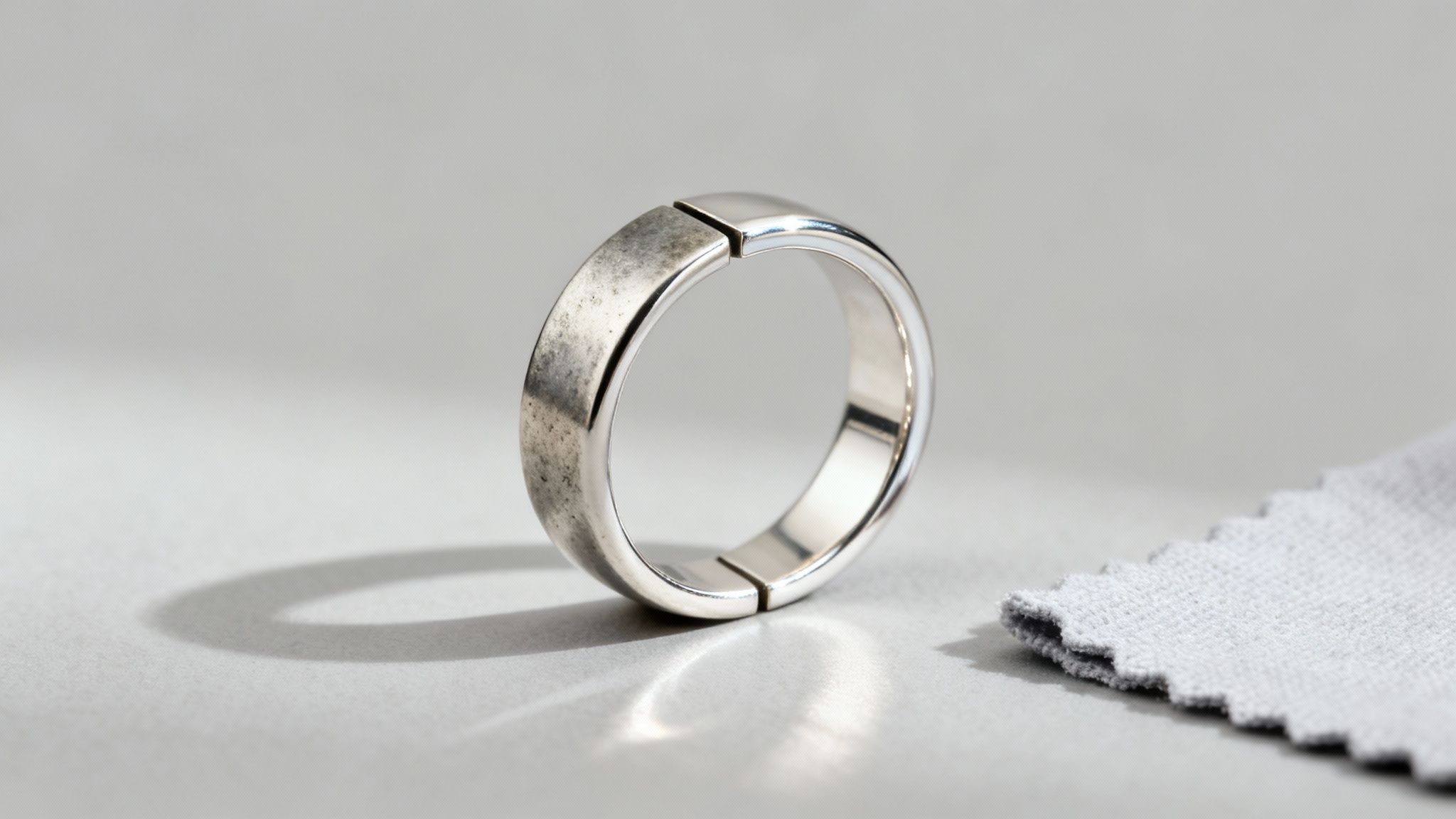
Discoloration on silver, or tarnish, is not a sign of poor quality. It is a natural chemical reaction.
When the copper alloy in sterling silver (S925) contacts airborne sulfur compounds, a reaction occurs. This forms a thin, black layer of silver sulfide on the surface, which we see as tarnish.
Common Triggers for Tarnish
Understanding what accelerates this process is key to maintaining your jewelry's brilliance. The goal is not to fight chemistry but to work with it through simple, proactive habits.
Everyday factors can speed up tarnishing:
- Environment: High humidity and air pollution create the ideal conditions for the chemical reaction.
- Products: Lotions, perfumes, hairspray, and skin oils leave residues that react with silver.
- Chemicals: Chlorinated pools and household cleaners cause significant, sometimes irreversible, discoloration.
Knowing these triggers allows you to adjust your routine and preserve your pieces. To learn more, explore our comprehensive guide to S925 silver jewelry.
Identifying the Level of Tarnish
Before cleaning, assess the piece. The extent of tarnish determines the correct method, preventing the use of an overly aggressive technique.
The key is to address discoloration early. A light yellow or brownish tint is far easier to remove than a deep black layer of oxidation.
A quick visual check is all that is needed. Is the piece dull, or are there dark spots? Is the tarnish uniform or concentrated in crevices? This assessment points to the most gentle and effective first step.
This table helps you decide where to start.
Quick Guide to Silver Tarnish Levels and Actions
| Tarnish Level | Appearance | Recommended First Action |
|---|---|---|
| Light | Slightly dull, faint yellow or brown tint. | Polish gently with a microfiber or silver cloth. |
| Moderate | Noticeable dark spots, gray or dark brown. | Use a mild soap and warm water bath, then polish. |
| Heavy | Mostly black or very dark gray coverage. | Try a baking soda paste or a professional dip. |
Our objective is to restore shine with minimal intervention. This preserves the delicate finish and intricate details of your jewelry.
Gentle At-Home Cleaning Methods
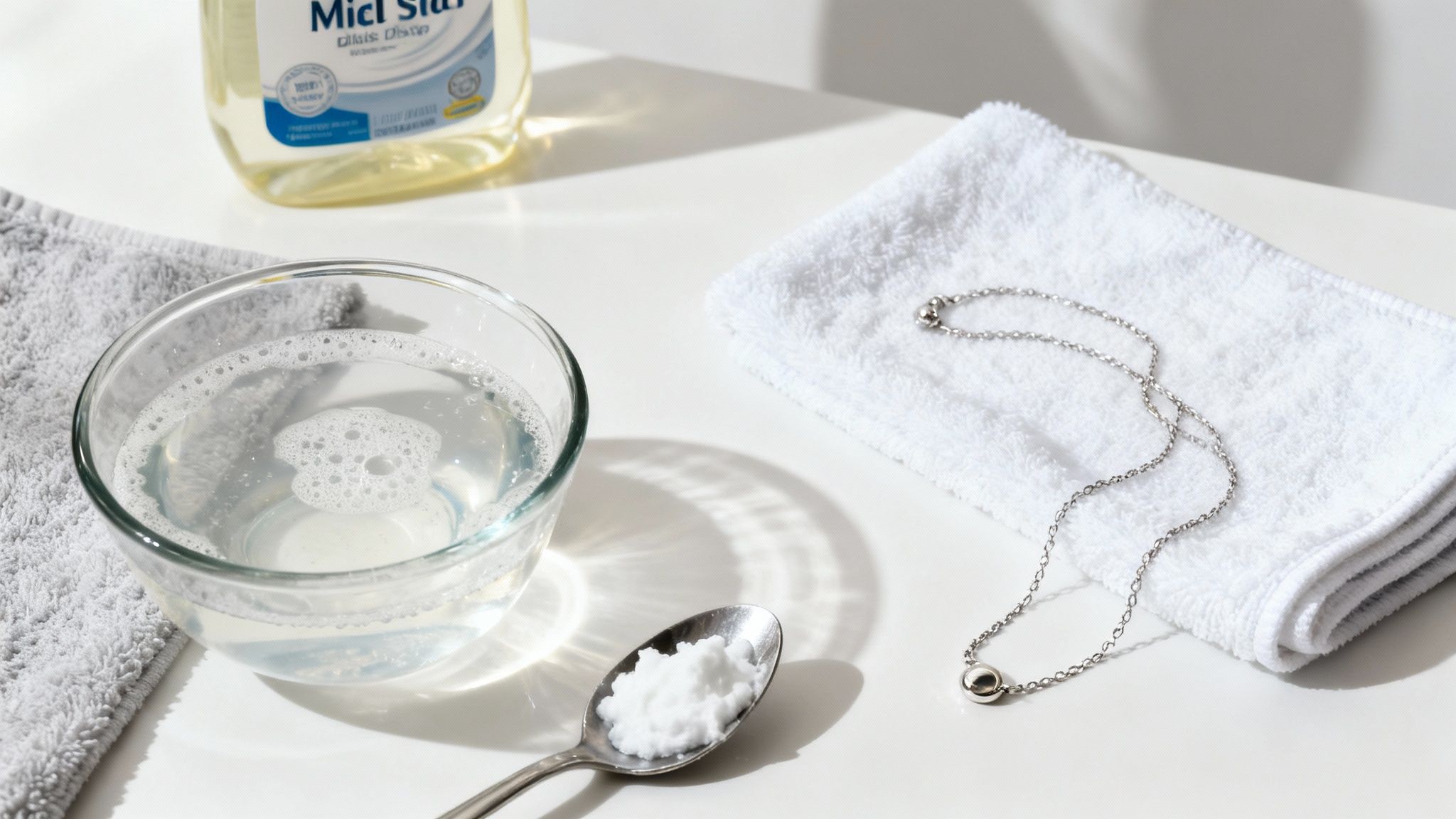
Restoring shine does not require harsh chemicals. The most effective methods often use simple, household ingredients. The goal is to gently lift tarnish without damaging the underlying silver.
This gentle-first philosophy is gaining traction. The market for silver jewelry cleaners, valued at USD 528.90 million in 2024, is projected to reach USD 696.00 million by 2032. With 34% of jewelry owners using specialized cleaners, mindful care is becoming standard.
Older, delicate items require extra caution. Follow specific steps to properly clean your vintage jewellery to preserve their character and value.
The Foundational Soap and Water Bath
For light tarnish or daily grime, a gentle soap and water bath is the ideal starting point. It safely removes oils, lotions, and light buildup.
What You'll Need:
- A small bowl
- Lukewarm water
- A few drops of mild, phosphate-free dish soap
- A soft-bristled brush, such as a baby toothbrush
- A soft, lint-free cloth
Fill the bowl with lukewarm water and add soap. Submerge the jewelry and let it soak for five to ten minutes to loosen buildup.
Use the soft brush to gently clean the piece, focusing on crevices. The keyword is gentleness.
Rinse thoroughly under cool running water to remove all soap residue, which can leave a dull film. Pat completely dry with a soft cloth before wearing or storing.
The Baking Soda Paste For Stubborn Tarnish
For more resistant tarnish, a baking soda paste provides stronger cleaning action. Proper application is crucial to avoid scratching the silver's surface.
The paste's consistency is key. It should be smooth and creamy, not gritty. A gritty paste is abrasive and can create micro-scratches, permanently dulling the finish.
What You'll Need:
- Baking soda
- Water
- A soft cloth or cotton ball
- A clean, lint-free cloth for drying
Mix two parts baking soda to one part water until it reaches a toothpaste-like texture. If it feels sandy, add more water until smooth.
Apply a small amount of paste to the cloth, not directly to the jewelry. Gently rub tarnished areas in straight, back-and-forth motions. Avoid circular rubbing, which can highlight fine scratches.
Continue until the tarnish lifts and transfers to the cloth. Resist applying firm pressure.
Rinse the piece meticulously under lukewarm water, removing all paste. Dry it completely with a clean cloth. Trapped moisture will encourage tarnish to return.
Critical Warning: Never use harsh chemicals like bleach, chlorine, or ammonia on silver jewelry. They can cause severe, often irreversible, corrosion and pitting that even a professional cannot repair.
By adhering to these methods, you can confidently maintain your silver collection's brilliance.
Cleaning Plated Jewelry and Pieces with Gemstones
Unlike solid silver, plated jewelry requires a different approach. Whether silver-plated or coated in 18K gold, you are cleaning a thin layer of precious metal over a base core. This delicate surface demands a philosophy of minimal intervention.
Aggressive polishing, abrasive pastes, and harsh chemicals will strip the plating, exposing the base metal. The best practice is to wipe pieces with a soft, dry microfiber cloth after each wear to remove skin oils and dust.
A Gentle Approach to Plated Jewelry
When a simple wipe is insufficient, use a very weak soap solution. The key is to minimize moisture and avoid any scrubbing action.
This is the only method I trust for plated items:
- Mix one or two drops of mild, phosphate-free dish soap into a small bowl of lukewarm water.
- Dip a soft, lint-free cloth into the solution and wring it out until it is just damp.
- Gently wipe the jewelry's surface. Do not apply pressure.
- Immediately follow with a dry, soft cloth to pat the piece dry. Trapped moisture can cause corrosion beneath the plating.
This technique lifts surface dirt without risking the delicate plating. For more details, see our guide on how to clean gold-plated jewelry.
Special Care for Jewelry with Gemstones
Adding gemstones means you are cleaning multiple materials. Porous stones like pearls, opals, and turquoise are highly sensitive to chemicals and water.
Never submerge jewelry with porous stones. Water and cleaning solutions can seep into the stone, causing permanent discoloration or cracking. Ultrasonic cleaners are also off-limits, as they can shatter these delicate gems.
Use a targeted spot-cleaning technique instead of soaking. This protects both the gemstone and its setting.
Spot-Cleaning Techniques for Delicate Stones
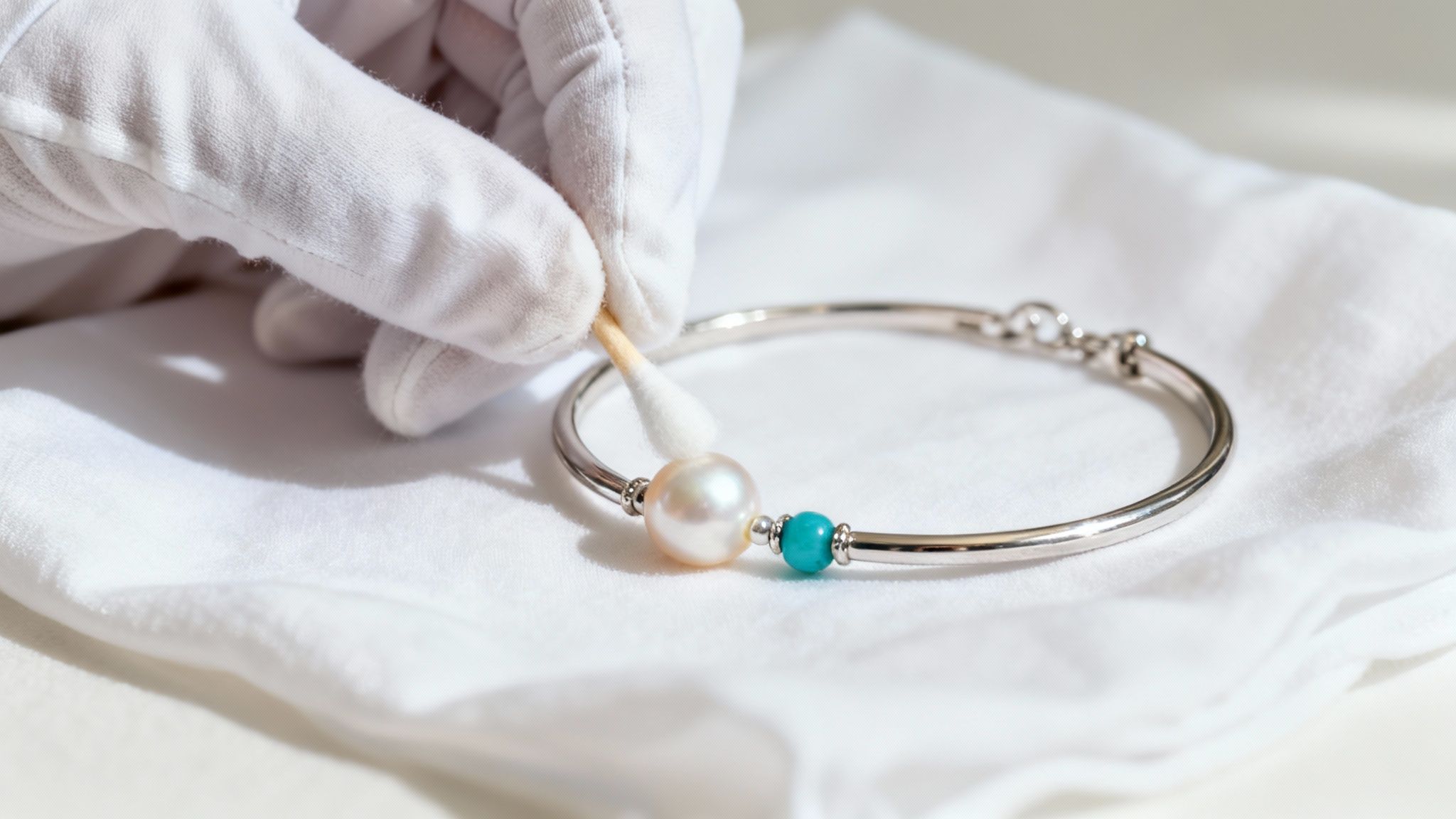
This method requires precision. The goal is to clean the metal without disturbing the stone. You will need a cotton swab and a highly diluted, mild soap solution.
Identify where dirt has built up, usually around prongs and settings. Dip the tip of a cotton swab into the soapy water, then press it against the side of the bowl to remove excess moisture.
Carefully trace the damp tip along the metal around the stone to lift grime. Avoid touching the gemstone's surface. If the stone itself is dull, a gentle buff with a dry microfiber cloth is sufficient.
Finish by going over the area with a dry cotton swab to absorb any remaining moisture. This precise method is the only safe way to clean silver set with porous gemstones.
Advanced Cleaning and Professional Care
For heavy tarnish or intricate designs, a gentle soap-and-water method may not be enough. In these cases, specialized tools are required.
The market for silver jewelry cleaning products is projected to grow by 4% annually between 2025 and 2031. This trend reflects a growing demand for effective, non-toxic products that deliver professional results.
Commercial Polishing Cloths
A professional-grade polishing cloth is the next step up from a simple microfiber cloth. These two-part systems feature one side treated with a fine polishing compound to lift tarnish and another for a final buff.
They are effective on smooth surfaces like band rings or flat pendants. However, they cannot reach the crevices of a detailed chain or filigree piece.
Use caution with intentionally darkened jewelry. Polishing can remove the intended oxidized aesthetic. Learn more in our guide on how to care for oxidized sterling silver jewelry.
Chemical Dips and Foams
For complex designs, a chemical dip can dissolve tarnish almost instantly. You dip the jewelry for a few seconds, rinse thoroughly, and dry.
This convenience comes with risks. These solutions can be harsh, stripping the desirable patina from antique pieces. They are absolutely unsuitable for jewelry with porous gemstones like pearls, turquoise, or opals. Always read the product label.
The Power of Ultrasonic Cleaners
An ultrasonic cleaner offers a professional-level clean at home. It uses high-frequency sound waves to create microscopic bubbles in a cleaning solution. The implosion of these bubbles creates a gentle scrubbing action that removes dirt from every crevice.
This method is ideal for intricate chains and detailed settings. It is non-abrasive and reaches areas no brush or cloth can touch.
Ultrasonic cleaners are not a universal solution. The vibrations can loosen settings or damage delicate, porous, or fractured gemstones. Never use them for pearls, opals, or emeralds.
For durable, solid sterling silver pieces without delicate gems, an ultrasonic cleaner is a worthwhile investment.
Comparing Advanced Cleaning Solutions
This table breaks down the commercial options to help you choose the right method for your jewelry.
| Cleaning Method | Best For | Pros | Cons / Risks |
|---|---|---|---|
| Polishing Cloth | Light tarnish on smooth, flat surfaces. | Inexpensive, fast, easy control. | Ineffective for intricate designs. Can remove intentional oxidation. |
| Chemical Dips | Heavy tarnish on complex, all-metal pieces. | Extremely fast, no physical effort. | Can be harsh. May strip patina. Damages many gemstones. |
| Ultrasonic Cleaner | Deep cleaning intricate chains and settings. | Non-abrasive, thorough. Reaches inaccessible areas. | Can damage soft/porous gems. May loosen stone settings. |
The best choice depends on your jewelry's design, materials, and condition.
When to Call in a Professional Jeweler
True expertise lies in knowing when to seek professional help.
Consult a jeweler in these situations:
- Heavily Tarnished Heirlooms: A professional can restore an antique piece without compromising its integrity or valuable patina.
- Deep Scratches: A jeweler has the tools to properly buff and restore a smooth finish.
- Damaged or Loose Settings: If a prong is bent or a stone is wobbly, stop wearing the piece. A jeweler can secure it, preventing loss.
A visit to the jeweler is a full-service check-up, including inspections for loose stones, worn prongs, and weak clasps—preventative care that protects your most cherished jewelry.
Proactive Care and Smart Storage to Prevent Tarnish
The best way to manage tarnish is to prevent it. A mindset of proactive care, rather than reactive cleaning, will keep your silver brilliant with minimal effort.
This involves forming a few smart habits to control your jewelry's exposure and slow the chemical reaction that causes discoloration.
Identifying Environmental Culprits
Silver's primary enemy is airborne sulfur, but certain conditions accelerate the tarnishing process.
The main triggers are:
- High Humidity: Moisture speeds up the reaction between silver and sulfur compounds.
- Direct Sunlight: Prolonged exposure can cause metal to discolor more quickly.
- Chemical Contact: Perfumes, lotions, hairsprays, and chlorine can cause rapid tarnishing.
The single most effective habit is to make your jewelry the last thing you put on and the first thing you take off. This shields it from daily cosmetics and chemicals.
The Last On, First Off Rule
Treat this as the golden rule. Complete your morning routine—lotions, perfumes, hair products—and allow everything to dry before putting on your silver.
At the end of the day, remove your jewelry before your skincare routine. This small step prevents the buildup of dulling residues that attract tarnish.
Smart Storage Solutions
Proper storage is as critical as how you wear your jewelry. Leaving silver exposed to air and humidity invites tarnish.
An organized system protects your pieces and makes them easier to enjoy. Maintaining a jewelry collection inventory helps you track and store each piece correctly.
Effective storage does not need to be expensive:
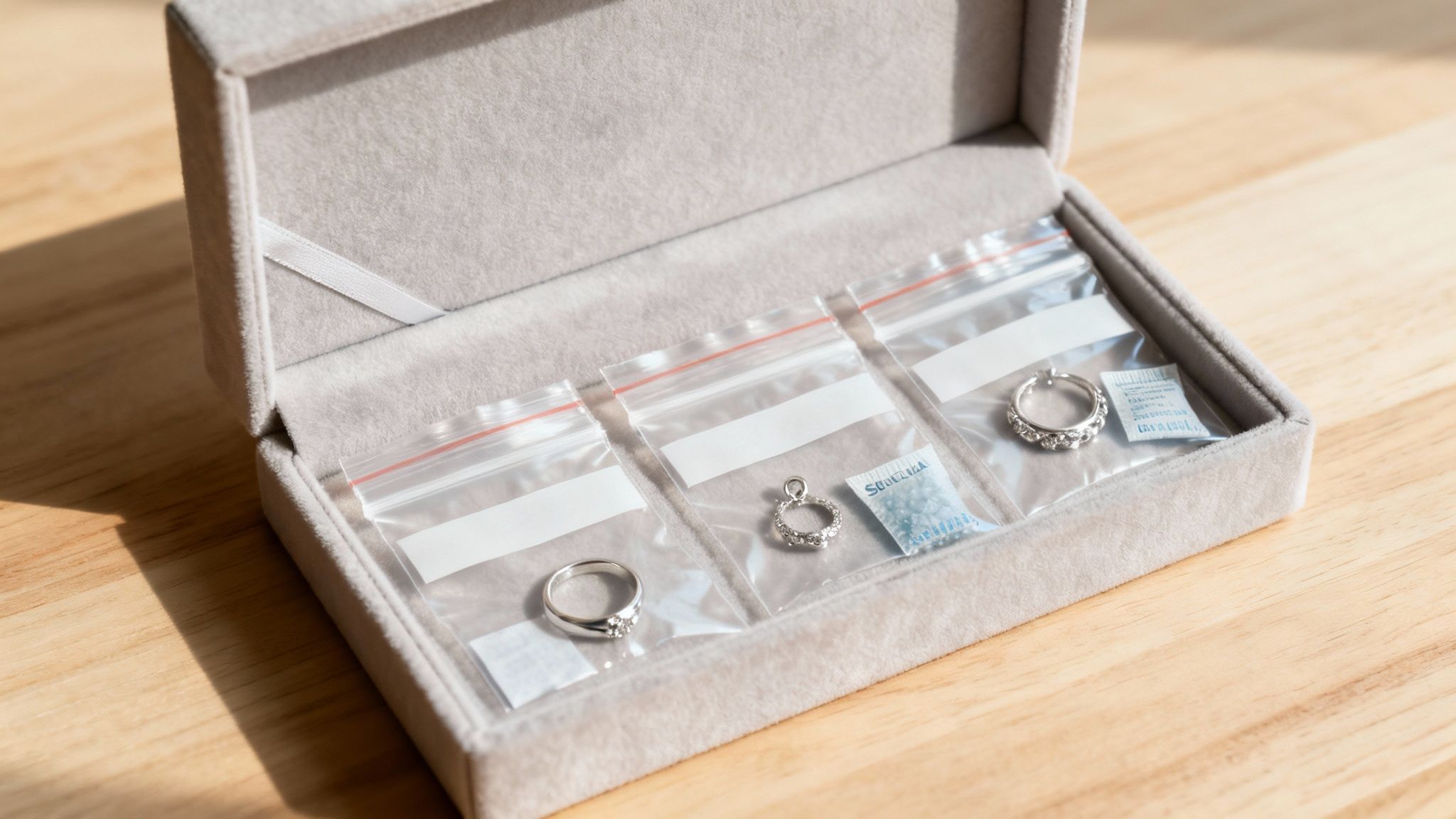
- Airtight is Ideal: A simple zip-lock bag is an excellent option. Squeeze out as much air as possible before sealing each piece individually.
- Add Anti-Tarnish Protection: Place an anti-tarnish strip or a small silica gel packet in the bag or jewelry box to absorb moisture and sulfur.
- Choose Soft-Lined Boxes: A jewelry box with a soft, felt-like lining helps inhibit tarnish.
- Store Pieces Individually: Always keep pieces separate to prevent scratching.
This mindful approach turns jewelry care into a simple ritual. These habits will reduce the need for frequent polishing. For more strategies, read our guide on how to prevent silver tarnish.
The global market for gold and silver cleaner was valued at USD 2.5 billion in 2023 and is projected to reach USD 4.1 billion by 2032, showing a growing commitment to preserving precious metals through better daily habits.
Your Top Silver Cleaning Questions, Answered
Here are expert answers to the most common questions about silver care.
How often should I clean my silver?
Frequency depends on wear and environment. For daily pieces, a quick wipe with a polishing cloth at night removes oils and moisture, preventing tarnish.
Give these favorites a gentle soap-and-water bath monthly. For stored items, an annual check is sufficient. It is easier to remove the faint yellow of new tarnish than to combat a dark gray piece.
Is using toothpaste to clean silver a myth or a hack?
It is a destructive myth. Toothpaste contains abrasives designed for tough tooth enamel. On soft silver, these particles create thousands of micro-scratches, permanently dulling the finish.
The damage is even worse on plated jewelry, where abrasives can strip the thin precious layer. Stick to a proper jeweler's cloth or a gentle soap solution. For more on delicate finishes, learn what vermeil is in our detailed guide.
I cannot stress this enough: using toothpaste is one of the fastest ways to ruin your silver's finish. The damage accumulates, leaving a dull piece that cannot be restored.
My silver tarnished almost overnight. What happened?
Sudden, rapid tarnishing is almost always caused by environmental factors that put the chemical reaction with sulfur into overdrive.
Consider recent exposures. The usual suspects are:
- High Humidity: Damp air accelerates tarnish.
- Air Pollutants: Urban or industrial air contains compounds that attack silver.
- Direct Chemical Contact: Lotions, perfumes, wool, and certain foods can leave a residue that speeds up tarnishing.
If you notice rapid discoloration, re-evaluate your storage and daily contact.
Can I leave sterling silver on in the shower or pool?
No. It is best to remove it. Soaps and shampoos in the shower leave a dull film that is difficult to clean from intricate details.
The pool is a definite no-go. Chlorine is silver's arch-nemesis. Pool chemicals cause aggressive, sometimes permanent, corrosion and blackening. Saltwater is also corrosive. Adhere to the "last on, first off" mantra, especially around water, to keep your pieces pristine.
At Taton.shop, we believe beautiful jewelry deserves the best care. Explore our curated collection of S925 sterling silver and 18K gold-plated pieces, designed for a modern, minimalist style that lasts.
Shop the collection at Taton.shop
