
Best Fabrics for Sensitive Skin: A Taton Guide
When skin is sensitive, fabric choice becomes the foundation of daily comfort. The best allies here will be 100% cotton, Beamsilk, and Rayon. These materials allow the skin to breathe, are soft to the touch, and help prevent irritation.
Why fabric choice is important for sensitive skin
Understanding how clothes interact with the skin is the first step toward lasting comfort. For many, skin sensitivity is a daily reality, where poorly chosen material can instantly cause redness, itching, or discomfort.
This is not just a matter of style. Choosing the right fabric is an important part of self-care. Each fiber interacts with the epidermis differently: some soothe, others provoke a reaction.
How materials affect skin health
Breathability and moisture-wicking capabilities play a key role. "Breathable" fabrics ensure free air circulation, preventing the skin from overheating and accumulating sweat—two main causes of irritation.
Clothing is a protective barrier. Quality fabric acts like a second skin, maintaining its natural balance. Poor-quality materials can disrupt this balance, creating conditions for inflammation.
And these are not isolated cases. The global sensitive skincare market was valued at $44.60 billion in 2023, and is projected to grow to $80.97 billion by 2030. This trend is driven by increasing awareness: today, 71% of people consider their skin sensitive—55% more than twenty years ago. You can learn more about skincare market trends to understand the scale.
By understanding these basics, you can build a wardrobe that is not only stylish but also truly comfortable. This is an investment in your daily well-being.
The best fabrics for delicate skin: a detailed review
For sensitive skin, choosing fabric is not shopping; it's a science. The goal is to find materials that feel like a gentle second skin, not a harsh, restrictive barrier. The best fabrics breathe with you, acting as a natural filter. They keep you cool and dry. In contrast, rough synthetics can create a plastic-like effect, trapping heat and moisture—a perfect recipe for irritation.

This difference is crucial. The fabric's structure, the smoothness of its fibers, and its ability to breathe are not just technical details. They determine your comfort throughout the day.
Timeless comfort of 100% cotton
Cotton is a popular choice for good reason. Its natural fibers are soft, hypoallergenic, and absorb moisture well, making it safe for reactive skin. Unlike scratchy synthetics, quality cotton has a smooth surface that glides over the skin rather than rubbing against it.
Of course, not all cotton is the same. Fabric density and processing play a huge role. At Taton.shop, we focus on high-density cotton—such as the 250 g/m² fabric we use for our oversized T-shirts. This weight gives the T-shirt a premium look without sacrificing softness and breathability. It's an ideal balance of quality and comfort.
Silky touch of Rayon and Beamsilk
Beyond the classics, the most comfortable options come from semi-synthetic fibers. These fabrics are made from natural raw materials, such as wood pulp, but are processed to achieve incredible smoothness and functionality.
-
Rayon: Made from purified wood cellulose, Rayon is known for its silky texture and beautiful drape. Its fibers are incredibly smooth, significantly reducing the risk of irritation. Rayon also breathes well and wicks away moisture, making it an ideal choice for warm days.
-
Beamsilk: This innovative material combines the best of both worlds. Beamsilk provides a luxurious, cool-to-the-touch feel of silk, but with better durability and easier care. Its exceptionally smooth surface makes it a top choice for those seeking refined style without sacrificing comfort.
The true test for skin-friendly fabric is when you forget you're wearing it. The best materials simply become part of your day, offering a feeling of lightness without discomfort.
Why fabric structure is no less important
The right choice of material is not just about the type of fiber. The weave, weight, and finish of the fabric are equally important for sensitive skin. A tight, coarse weave can be abrasive, regardless of composition, while a soft, loose weave promotes better airflow. Understanding these nuances is key. It allows you to create a wardrobe that not only looks good but truly cares for your skin.
Comparison of fabrics for sensitive skin
To make the choice easier, we've prepared a comparison table of our main recommendations. It shows why each of them is an excellent choice for sensitive skin.
| Fabric | Key Benefit | Best for | Taton.shop Example |
|---|---|---|---|
| 100% Cotton | Hypoallergenic, breathable, and naturally soft. | Everyday wear, basics, year-round comfort. | High-density oversized T-shirts. |
| Rayon | Silky-smooth texture, friction-reducing, and moisture-wicking. | Warm weather, elegant blouses, light dresses. | Light blouses and dresses. |
| Beamsilk | Luxurious cool feel with a durable, ultra-smooth surface. | Refined basics, sleepwear, and loungewear. | Premium tops and loungewear. |
Each of these materials offers a unique path to comfort. Whether you prefer the classic reliability of cotton or the modern luxury of Beamsilk, focusing on these fabrics is the surest way to keep your skin happy.
Natural versus synthetic fibers: what's the difference
When we talk about the best fabrics for sensitive skin, the conversation almost always starts with one question: natural or synthetic? Understanding the origin and properties of these materials is your first step toward creating a wardrobe that feels like a second skin.
All fabrics fall into three categories by origin.
First, natural fibers. They come from plants and animals—classic cotton, lightweight linen, luxurious silk, and cozy wool. Their main advantage is natural breathability, which is a prerequisite for healthy skin.
Second, semi-synthetic fibers. Materials like Rayon begin their life as natural raw materials, usually wood cellulose, but then undergo a process that transforms them into fiber. This method combines natural origin with modern technologies to create incredibly smooth and soft fabrics.
Finally, synthetic fibers. They are created from scratch using artificial polymers, often derived from petroleum. You know these names: polyester, nylon, and acrylic. While they have their uses, they often lack what sensitive skin needs most—the ability to breathe.
The critical role of breathability
If there's one characteristic that distinguishes natural fibers from synthetic ones, it's breathability. Natural materials, like cotton, have a porous structure that allows air to circulate freely and moisture to evaporate from the skin. This is extremely important because it prevents heat and sweat retention—two major causes of irritation.
Wearing 100% cotton is like letting your skin breathe through an open window. On the other hand, many synthetic materials, like polyester, can make you feel as if you've wrapped your skin in a plastic bag.
Therefore, choosing natural or high-quality semi-synthetic fabrics is not just a matter of aesthetics, but a practical solution for skin health. This applies even to sportswear, where sweat-wicking is key. For a deeper analysis, our guide on choosing comfortable women's sportswear shows how much fabric choice affects workouts and skin condition.
Not all synthetics are created equal
It's easy to label all synthetics as "irritating," but that's not entirely accurate. The world of textiles has come a long way, and today's semi-synthetic materials beautifully bridge this gap.
Take Rayon, for example. It's derived from natural cellulose but engineered to have a silky-smooth surface that glides over the skin with minimal friction. Its structure makes it highly absorbent and breathable, giving it cooling properties. This makes it a fantastic choice if you love a luxurious feel but aren't willing to sacrifice comfort.
Identifying fabrics that irritate reactive skin
Understanding which fabrics are comfortable for your skin is only half the battle. For lasting comfort, you also need to know which materials to avoid. Some fabrics are known for their ability to cause irritation, redness, and general discomfort. Learning to recognize these "troublemakers" is the first step toward creating a wardrobe sanctuary.
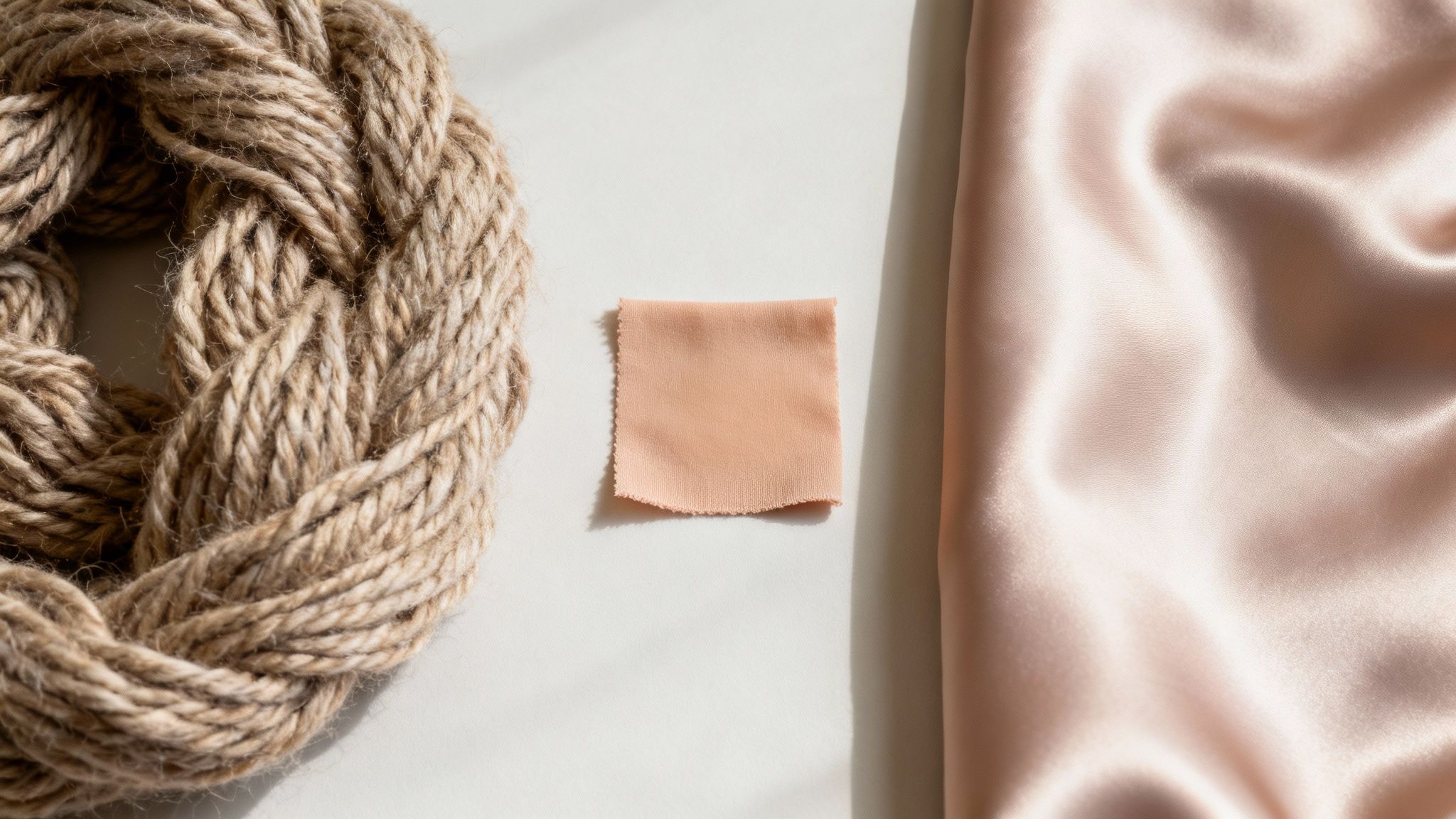
The main culprits are usually two groups: prickly, coarse natural fibers and "stifling" synthetics. They create problems in different ways: some through friction, others by trapping moisture. Neither of these options is suitable for sensitive skin.
The problem with coarse and synthetic fibers
Let's talk about wool. While some types, like merino, can be incredibly soft, many coarser varieties have microscopic scaly fibers that literally prick and scratch the skin. This causes mechanical irritation, leading to the familiar itching and redness.
Then there's synthetics. Materials like polyester and nylon cause problems because they don't breathe. These fabrics act like plastic wrap, trapping heat and sweat against the skin. This creates a warm, moist environment, ideal for rashes and bacterial growth. For a much more comfortable alternative, check out our guide on how to find a women's t-shirt with a stylish print made from skin-friendly fabrics.
Choosing fabric is like setting the climate for your skin. A breathable cotton t-shirt creates a cool, dry microenvironment. A polyester top, on the other hand, can quickly turn into a "swamp."
Hidden chemical irritants: what beyond the fiber
Sometimes the problem isn't the fiber itself, but what's been added to it. The journey from raw material to finished garment often involves a cocktail of chemicals that can be a hidden source of irritation.
These "hidden" triggers are the hardest to detect, but here are some common ones to watch out for:
- Harsh dyes: Extremely bright, saturated colors are often achieved using aggressive chemical dyes that can cause allergic contact dermatitis.
- Formaldehyde resins: Often used to give fabrics "wrinkle-free" or "no-iron" properties, but they are also a known skin irritant.
- Conditioners and finishes: A wide range of chemicals are used to give fabrics certain tactile sensations, but they can leave an irritating residue.
That's why looking at the label is just the beginning. You need to consider the whole picture: not just the fabric composition, but also how it was dyed and treated. Choosing clothes with minimal chemical processing is another smart way to protect reactive skin.
How to care for clothes and skin
Choosing the right fabrics is half the battle, but caring for them is no less important for sensitive skin. Think of washing as an extension of skincare: the goal is to clean clothes without leaving chemical residues that can cause a reaction.

It all starts with the laundry detergent. Your best choice is a fragrance-free and hypoallergenic formula. Perfumes and dyes in popular products are among the most common triggers for contact dermatitis, so eliminating them makes a big difference.
Washing routine for sensitive skin
Creating a delicate washing system is not difficult. It comes down to a few conscious habits and avoiding harsh products.
An important step is to ditch fabric softeners and dryer sheets. They promise softness but work by coating fibers with a waxy chemical film. This residue not only traps irritants close to the skin but also "suffocates" the fabric, destroying its natural breathability.
The rinse cycle is a crucial step in cleaning your clothes. Using an extra rinse is one of the simplest and most effective ways to ensure all detergent residues are washed away.
This small change can be key, especially for extremely reactive skin.
Best practices for new and existing clothing
To give your skin the best protection, make these practices a habit:
- Wash before wearing: This is a must. New clothes often contain residual dyes, chemical treatments, and starch from manufacturing. A quick wash eliminates these potential problems.
- Use an extra rinse cycle: It's worth repeating. This simple option helps completely rinse away any detergent that might have remained in the fibers.
- Choose a delicate wash cycle: For premium materials, such as the high-density cotton used in our oversized women's t-shirts, a delicate cycle is gentler. This helps preserve the perfect softness and integrity of the fabric for longer.
By adopting these habits, you are not only caring for your skin but also investing in your clothes. It's a simple, minimalist approach to washing that is rewarded with pure comfort.
Building a wardrobe for sensitive skin
Now that you know which fabrics are your skin's friends and which to avoid, it's time to put that knowledge into practice. Creating a wardrobe for sensitive skin isn't a chore; it's an art where quality always trumps quantity.
This approach is about building a collection of premium, comfortable, and durable pieces. Every item in your wardrobe should not only look good but also feel great, giving you a sense of lightness and confidence.
Practical shopping checklist
To make the task easier, here are a few simple shopping rules. They will be your guide, helping you make smart investments in your own comfort.
- Always read the label. This is a must. Look for compositions with 100% natural fibers, such as cotton, or high-quality semi-synthetics, such as Rayon.
- Feel the texture. Don't just trust your eyes. Run the fabric along the inside of your wrist—one of the most sensitive areas. It should be exceptionally soft and smooth.
- Choose a loose fit. Clothing that doesn't cling tightly to the body minimizes friction and allows air to circulate. For sensitive skin, breathability is everything.
- Prefer light shades. As a rule, lighter colors require fewer dyes. This reduces potential contact with chemical irritants.
Creating the perfect wardrobe for sensitive skin isn't about limitation, but about conscious freedom. It's knowing how to choose clothes that allow your skin to breathe and make you feel incredible.
This philosophy is perfectly embodied in the design of basic items, such as a simple strap top. To understand what we mean, check out our guide on how to choose the perfect strap top, which combines minimalist style with maximum comfort.
By applying these principles, you can easily create a capsule wardrobe where every item is stylish, versatile, and, most importantly, absolutely safe for your skin.
Frequently asked questions about fabrics for sensitive skin
When skin is reactive, figuring out which fabrics are friends and which are foes can feel like a full-time job. To clear up some of the confusion, we've answered some of the most common questions. We hope this gives you confidence in choosing clothes that offer true comfort.
Is 100% cotton always the best choice?
While 100% cotton is a wonderful, top-tier choice due to its natural softness and breathability, not all cotton is created equal. The quality of the fiber, the weave, and the finishing make all the difference. High-quality cotton with a smooth finish will feel like a dream, while a rough, heavily processed version can be surprisingly abrasive.
For some, other fibers like silky-smooth Rayon or luxurious Beamsilk might feel even gentler. Ultimately, the "best" choice is a personal equation: a premium fiber, a quality weave, and a cut that allows your skin to breathe.
Are all synthetic fabrics bad for sensitive skin?
Not all, but they warrant caution. The usual suspects – polyester and acrylic – often don't breathe well. They can trap heat and moisture against the skin, creating a stuffy microclimate that's a perfect recipe for irritation.
However, textile innovation doesn't stand still. There are now fantastic semi-synthetic materials, like Rayon, which comes from natural wood pulp. It’s specifically engineered to be soft and highly breathable. These modern materials offer the best of both worlds, providing high functionality without compromising comfort.
Here’s a simple tip we always recommend: the "wear test." If a new item causes itching or leaves red marks within just a few hours — especially at the collar or cuffs — it's a clear signal from your skin.
How to tell if clothing is causing irritation?
- Le choix d'une sélection entraîne l'actualisation de la page entière.
- S'ouvre dans une nouvelle fenêtre.
