
What Is Streetwear Fashion And How To Master The Look
Streetwear is more than clothing. It's a cultural movement built on self-expression, authenticity, and community. Born from skate parks, surf breaks, and underground hip-hop, the style is defined by attitude, not trends. It's the personal story you bring to what you wear.
What Defines Streetwear Fashion
Streetwear is a philosophy. It grew organically from subcultures, a direct contrast to high fashion's top-down model. It originated in California's skate parks and New York's hip-hop communities, giving a voice to a raw, unfiltered personal style.
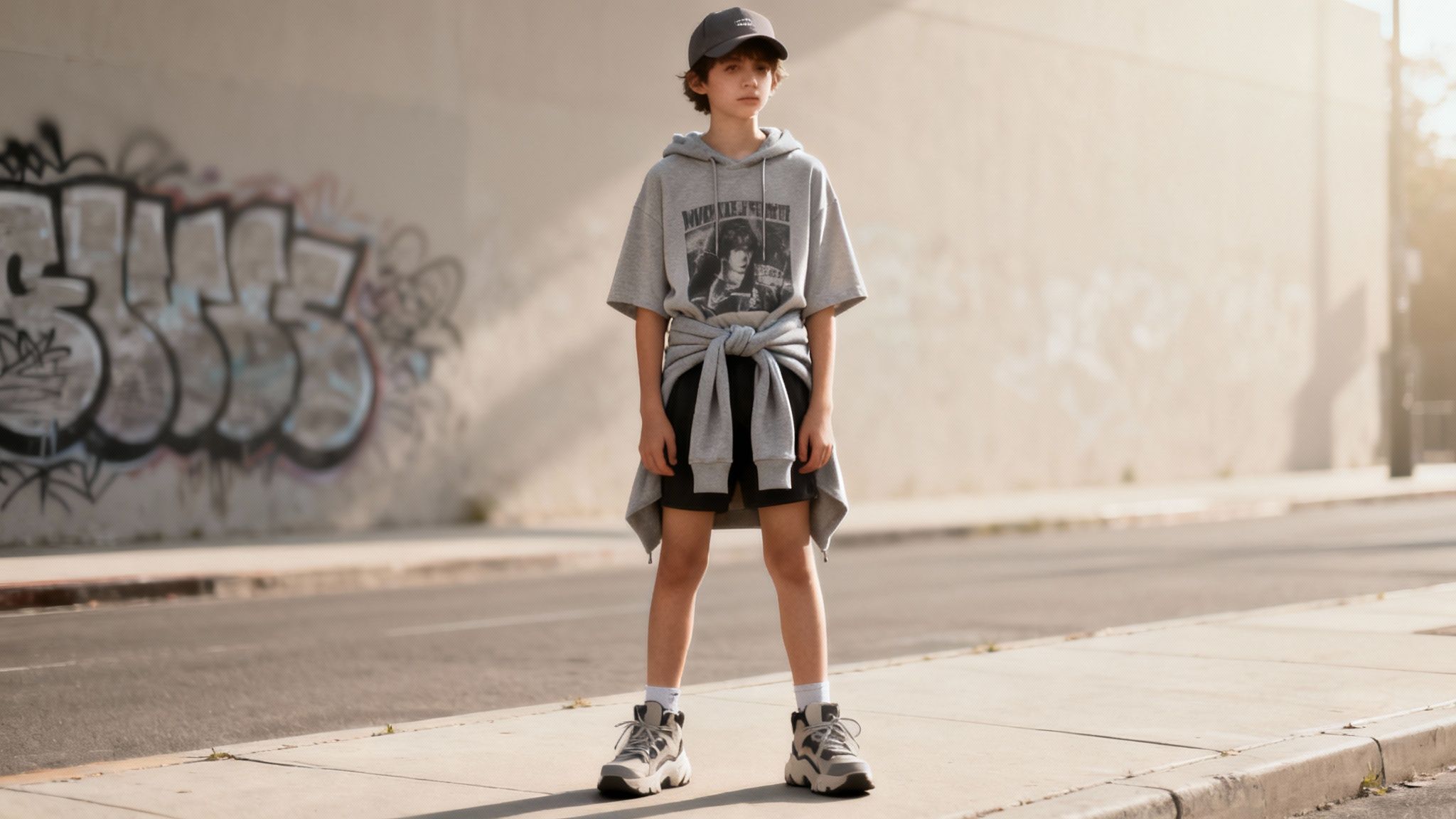
At its core, streetwear rejects the impractical norms of the fashion establishment. It prioritizes comfort and individuality, offering a wardrobe that is both functional and a powerful form of expression. Core pieces are relaxed and built for real life.
The Building Blocks of a Streetwear Wardrobe
A solid streetwear look is built on essential pillars that emphasize relaxed fits and high-impact details.
- Oversized T-Shirts: A non-negotiable staple. The best are heavyweight cotton, giving them a structured drape that hangs correctly.
- Hoodies and Sweatshirts: The definitive comfort garment. It's a canvas for bold graphics, logos, or clean, minimalist designs.
- Sneakers: Often the centerpiece of an outfit. Sneaker culture is a world of its own, from timeless icons to rare, limited-edition "grails."
- Relaxed-Fit Trousers: Look beyond standard jeans to durable cargo pants, wide-leg denim, and well-fitting joggers.
These elements create a silhouette that is intentionally casual yet thoughtful. The art lies in the quality of materials and the deliberate play on proportions. For visual references, see the photoshoot outfit ideas on Taton.shop.
Streetwear’s magic is its power to turn a t-shirt or hoodie into a statement of identity. It’s not just what you wear, but how you wear it and the community it connects you to.
The fundamental concepts of streetwear are clear and consistent.
The Core Pillars Of Streetwear
| Pillar | Description |
|---|---|
| Cultural Roots | From skate, surf, and hip-hop, it reflects an authentic, ground-up mentality. |
| Comfort & Functionality | Prioritizes relaxed silhouettes, durable fabrics, and pieces meant for daily life. |
| Individuality | Focuses on personal expression, allowing the wearer to tell their own story. |
| Key Garments | Built on staples like oversized tees, hoodies, sneakers, and relaxed-fit trousers. |
| Exclusivity | Driven by limited-edition "drops" and collaborations that create hype and community. |
These pillars are not trends; they form a lasting cultural framework.
The Hype Is Real: A Culture of Scarcity
Streetwear's business model is unique. Instead of mass production, sought-after brands use limited-edition "drops." They release small quantities of new items at specific times, generating immense hype and urgency.
This approach creates a powerful culture of exclusivity. Acquiring a piece isn't just about ownership; it's proof of being part of an informed group. Collaborations between brands, artists, and luxury houses are also central, constantly blurring creative boundaries and pushing the culture forward.
The Cultural History Of Streetwear
Streetwear’s narrative is authentic, born from the needs and creative defiance of distinct subcultures. To understand what streetwear is, you must understand its origins.
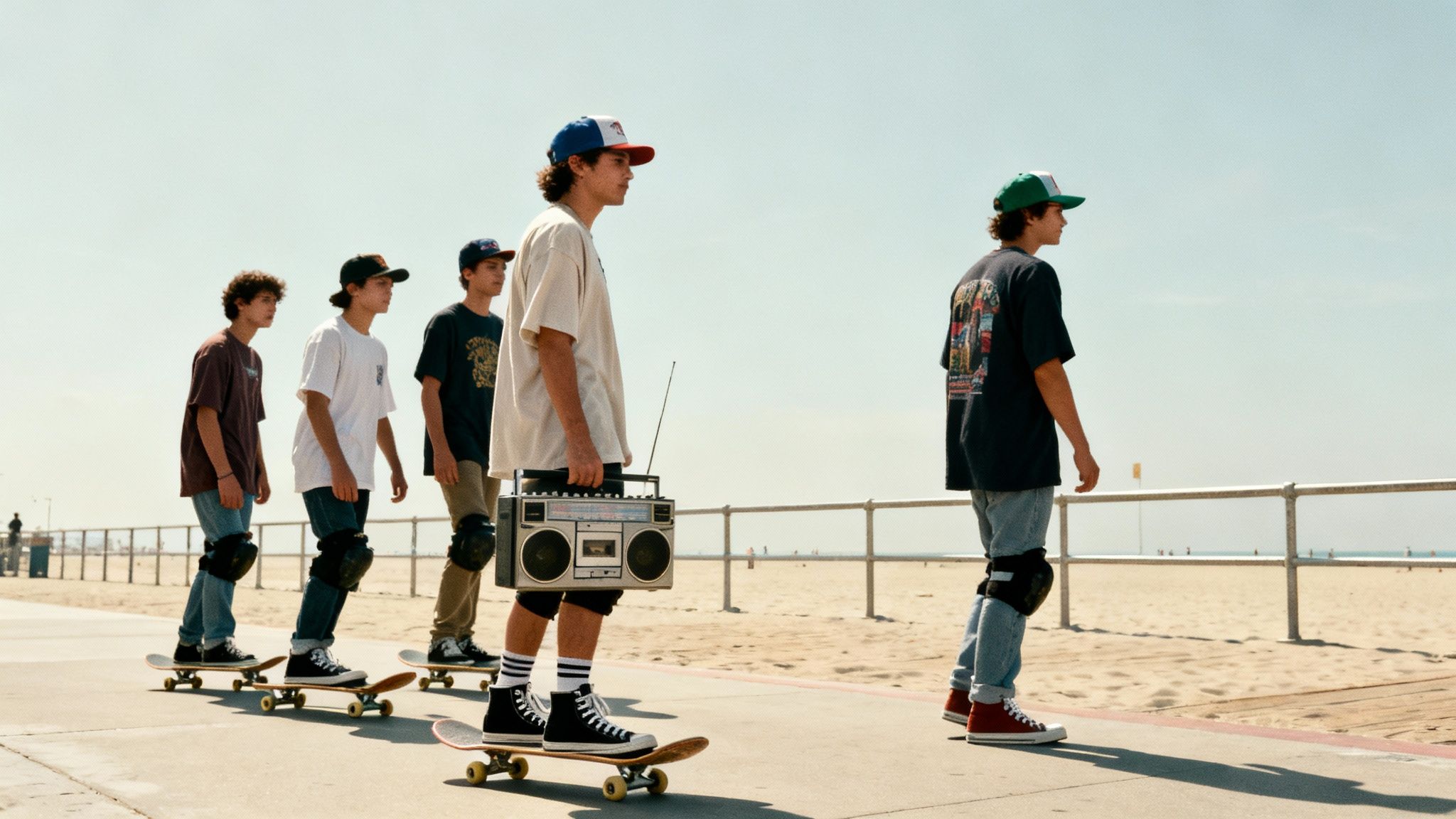
The story begins on two opposite coasts of the United States, each contributing a vital piece of DNA.
In California during the late 70s and 80s, the surf and skate scenes prioritized function. Participants needed durable, comfortable clothes they could move in. This practical need created an unofficial uniform: graphic tees, loose shorts, and tough sneakers.
Meanwhile, New York City’s rising hip-hop scene used style as a statement of identity and confidence. Artists and followers wore bold logos, tracksuits, and iconic sneakers. Though geographically separate, both movements shared a fierce independence from mainstream fashion.
From Niche To Mainstream
Pioneering brands became the voice of these communities. In 1980, surfboard shaper Shawn Stussy began screen-printing his signature on t-shirts. What started as a local surf-shop item exploded, blending surf culture with a clean, graphic edge. Stüssy is widely considered a foundational streetwear brand.
This grassroots model became the blueprint. Streetwear was about building a tribe.
- Community First: Brands were part of the scene, creating products for friends and peers.
- Authenticity as Currency: Respect was earned through genuine participation in the culture.
- Limited Drops: Scarcity created hype and a fiercely loyal following.
This model was perfected by brands that followed. Supreme, opened in 1994, became a clubhouse for New York's skate scene. In Japan, brands like A Bathing Ape (BAPE), founded in 1993, reinterpreted American pop culture with meticulous design.
Streetwear’s power comes from its origin. It was never just apparel; it was a uniform for cultural movements, a tangible piece of a community’s identity.
This phenomenon is now a massive economic engine. What began as a counter-cultural movement is a global force. Research estimates streetwear makes up roughly 10% of the entire global apparel and footwear market, translating to USD 185 billion in annual sales.
The Enduring Values Of Streetwear
Even as a global business, streetwear's core values remain compelling. Authenticity and community still reign. The most respected brands stay true to their roots while innovating. This focus on quality aligns with modern conscious consumption, a topic detailed in our guide to sustainable fashion.
The limited-drop model has reshaped the fashion industry, with luxury houses adopting similar tactics. Most importantly, streetwear proved that fashion could be a democratic, bottom-up conversation, where the best ideas emerge directly from culture.
Building Your Foundational Streetwear Wardrobe
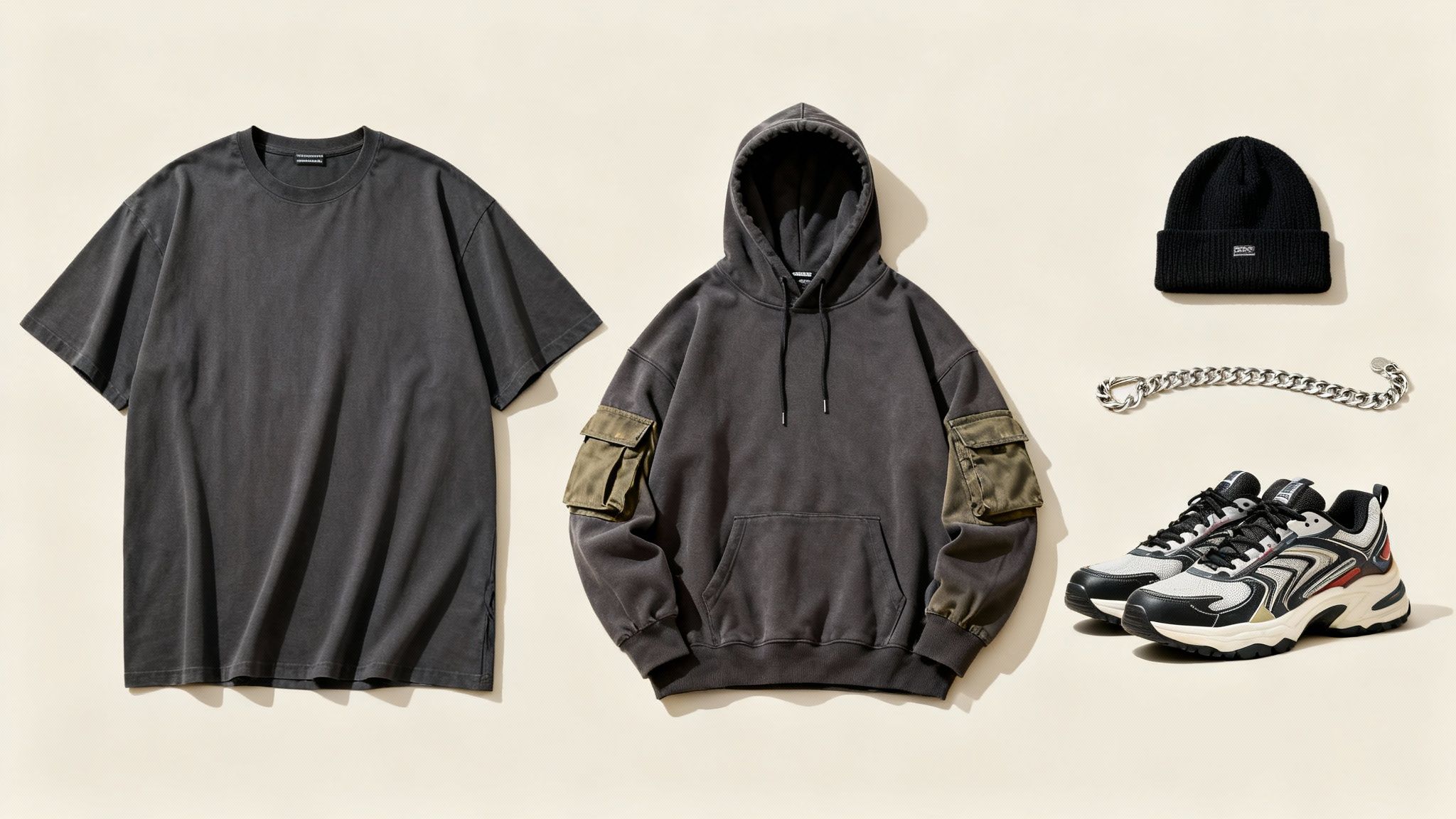
Building a streetwear wardrobe isn't about chasing hype. It's a deliberate focus on high-quality materials, precise fits, and versatile pieces you can wear repeatedly. Think of it as a toolkit. Each piece should stand alone but work seamlessly with others.
The Premium Oversized T-Shirt
The oversized tee is the anchor. This isn't just any large shirt. Look for heavyweight cotton, around 240 gsm or higher, for a structured, premium drape. Key details include a reinforced collar, dropped shoulders, and a boxy cut. A well-made oversized tee is the most versatile piece you can own. Taton.shop offers more guidance in our guide to styling women's oversized t-shirts.
The Quintessential Hoodie
The hoodie is a cultural icon. A great hoodie is an investment, defined by its fabric, fit, and construction.
- Fabric Weight: Seek heavyweight fleece or dense French terry cotton for a substantial feel and shape retention.
- Construction: Double-lined hoods, strong ribbed cuffs, and clean stitching are signs of quality.
- The Fit: The silhouette should be intentionally relaxed, with enough room to layer without being overwhelming.
Versatile Cargo Pants And Trousers
Bottoms ground the silhouette. Cargo pants and relaxed trousers offer a modern, functional alternative to jeans. Today's cargos feature cleaner tapers or sharp straight-leg cuts. Look for durable fabrics like cotton twill or ripstop that hold their shape. The pockets should be useful but not bulky, adding a utilitarian edge without disrupting the clean lines.
An effective streetwear wardrobe is built on interchangeability. Each core piece—tee, hoodie, trousers, sneakers—should be strong enough to be a focal point yet neutral enough to complement everything else.
Statement And Staple Sneakers
Sneakers are the soul of streetwear. A well-rounded collection requires two types: the clean, everyday staple and the head-turning statement piece.
Your staple sneaker is your go-to, versatile for any outfit. Think classic white leather court shoes. The statement sneaker showcases personality, whether through a bold colorway, unique silhouette, or a coveted collaboration.
This checklist will guide you in building your collection. Focus on these core pieces first to establish a versatile foundation.
Essential Streetwear Wardrobe Checklist
| Garment / Accessory | Key Features To Look For | Ideal Materials |
|---|---|---|
| Oversized T-Shirt | Heavyweight (240+ gsm), reinforced collar, dropped shoulders, boxy fit. | 100% Heavyweight Cotton |
| Hoodie | Double-lined hood, substantial ribbed cuffs/hem, relaxed silhouette. | |
| Cargo Pants/Trousers | Tapered or straight-leg fit, functional but streamlined pockets. | Cotton Twill, Ripstop, Canvas |
| Staple Sneakers | Minimalist design, neutral color (white, black, grey), versatile shape. | Leather, Suede, Canvas |
| Statement Sneakers | Bold colorway, unique silhouette, or collaborative design. | Varies by design |
| Headwear | Simple, clean design, neutral color. | Knit (Beanies), Cotton Twill (Caps) |
| Jewelry | Understated and minimalist; focus on quality over size. | Sterling Silver, Stainless Steel |
Finishing With Essential Accessories
Accessories complete the look. A "less is more" approach is often most effective.
- Headwear: A classic beanie or a simple baseball cap in a neutral color adds a casual finish.
- Minimalist Jewelry: A subtle silver chain or a simple ring elevates an outfit with understated quality.
Focusing on these foundational items means building a versatile, authentic wardrobe based on quality, not just hype.
How To Style Streetwear Outfits That Work
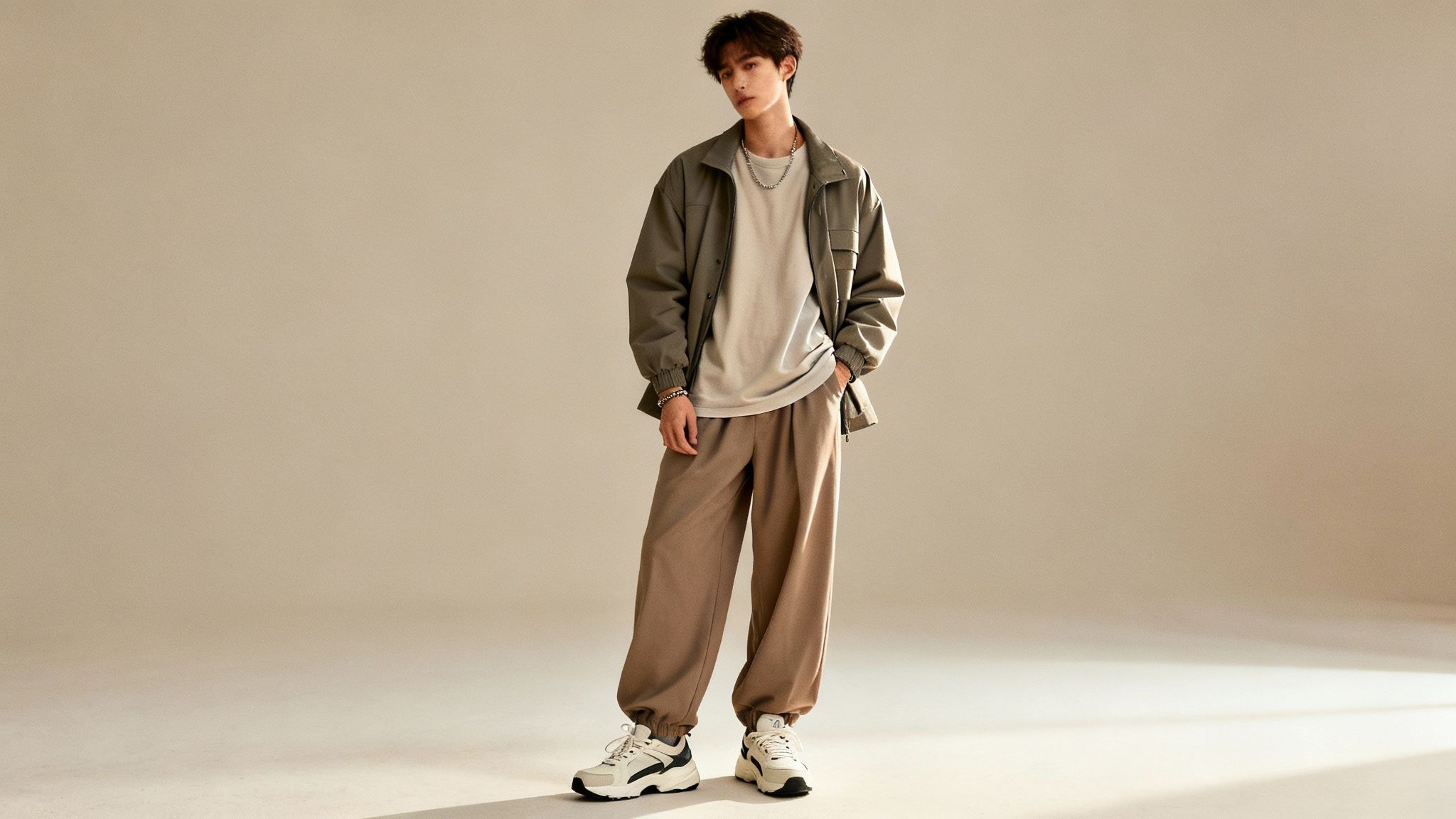
Assembling a strong streetwear look is about balance, proportion, and personality. Mastering silhouettes and textures is key to creating outfits that appear authentic and deliberate. The magic lies in managing volume. Since oversized pieces are central, create contrast by pairing a voluminous item with something more fitted for a sharp, defined look. This conscious choice prevents a sloppy appearance.
Mastering Proportions And Silhouettes
Correct proportions are the foundation of a strong streetwear outfit. The goal is a balanced look, even with oversized garments. Pair a roomy top with a more structured or tapered bottom, and vice versa. This contrast prevents the clothes from overwhelming your frame. For example, a boxy, heavyweight t-shirt looks sharp with straight-leg trousers. Conversely, wide-leg cargo pants work well with a slimmer top layer, creating a clear focal point and structure.
The Art Of Strategic Layering
Layering is essential. It adds depth, texture, and practicality to any outfit. This is more than throwing on a jacket; it’s an intentional combination of pieces. Start with your thinnest layer, typically a quality oversized tee, and build outwards. A classic formula is a hoodie over a t-shirt, topped with a statement jacket like a coach jacket or bomber. For more on this staple, see our guide on styling oversized women's hoodies. Effective layering involves playing with lengths and materials. Let the hem of your tee show under your hoodie. These deliberate details make an outfit feel complete.
Streetwear styling is a conversation between garments. The way a relaxed hoodie drapes over structured trousers or how a bold sneaker anchors a muted outfit is where personal style emerges.
Mixing High And Low Elements
Modern streetwear excels at blending high-end pieces with everyday basics. This "high-low" mix adds unique character. It can be as simple as pairing a premium Taton.shop oversized tee with basic cargo pants, anchored by rare, limited-edition sneakers. The contrast creates an instant focal point. Alternatively, elevate a simple hoodie and jeans with a single piece of quality jewelry, like a clean silver chain. This approach demonstrates a feel for style that values both craftsmanship and simplicity. The goal is a curated, not just expensive, look.
Building A Cohesive Color Palette
While streetwear embraces bold colors, a smart wardrobe is built around a core of neutrals: black, white, grey, beige, and olive. These versatile shades allow for easy mixing and matching. They also provide a perfect canvas for a single pop of color or a strong graphic to stand out.
- Monochromatic: An all-black or all-grey outfit is timeless. Vary textures—like a cotton hoodie with nylon track pants—to add interest.
- Neutral Base with a Pop: Start with a neutral foundation and add one shot of color, like a bright beanie or bold sneakers.
- Tonal Dressing: Build a look with different shades of the same color, such as a light grey tee under a charcoal hoodie, for depth and sophistication.
Mastering these principles—proportion, layering, the high-low mix, and color—elevates dressing from wearing clothes to true styling.
The Business And Global Impact Of Streetwear
Streetwear has evolved from its subcultural roots into an economic and cultural heavyweight that has reshaped the modern fashion industry. It is now a business model, a marketing playbook, and a global movement that sets trends from the ground up.
The numbers confirm its influence. The global streetwear market is valued in the hundreds of billions. Fortune Business Insights reports the sector at USD 347.14 billion in 2024, projected to reach USD 637.14 billion by 2032, with a 7.89% CAGR. This signifies a fundamental shift in consumer behavior. You can explore more on the streetwear market's impressive growth trajectory.
A New Fashion Hierarchy
Streetwear's greatest legacy is its dismantling of the old fashion hierarchy. Previously, trends were dictated top-down from elite runways. Streetwear inverted this model. It introduced a community-first, bottom-up system where authenticity and cultural credibility are paramount. Brands gain respect from the communities they originate from—skaters, artists, musicians—forcing even storied luxury houses to pay attention to the street.
The Power Of Hype And The Resale Market
The business of streetwear operates on a masterfully crafted cycle of hype and scarcity. Limited-edition "drops" and collaborations create a frenzy for products that are intentionally difficult to obtain. This strategy transforms a t-shirt or sneaker from clothing into a collectible asset. This scarcity fuels a massive resale market. Platforms like StockX have become virtual stock exchanges for apparel, where value is determined by community demand, not retail price.
- Exclusivity as a Driver: A sold-out item gains cultural weight, and its value can skyrocket.
- Community Validation: Resale prices act as a real-time measure of a brand's relevance.
- Investment Mentality: Consumers now purchase certain pieces as investments, anticipating future value growth.
This secondary market adds another dimension to the streetwear economy, creating a self-sustaining ecosystem built on hype and passion.
Streetwear's genius is its ability to turn consumption into a cultural event. A product drop is not just a transaction; it's a moment of community engagement that reinforces brand loyalty and identity.
Social Media And Global Reach
Social media propelled streetwear to a global stage. Platforms like Instagram are the new runways, where trends emerge organically from creators and consumers. A single viral post can launch a worldwide phenomenon, bypassing traditional media entirely. This digital-first approach allows independent brands to compete globally without large marketing budgets. A unique aesthetic and genuine community connection are often more powerful than a glossy ad campaign. This dynamic has enabled countless independent brands to thrive, including many of the top Ukrainian clothing brands. Streetwear’s success is a masterclass in authenticity, proving that a brand built on a genuine story can rewrite the rules.
Your Streetwear Questions Answered
Despite its global presence, streetwear can be complex. Here are clear answers to common questions.
Is Streetwear Still In Style?
Streetwear has transcended trend status. It is a permanent and powerful fixture in modern fashion. While specific graphics or colors may fade, its core principles—comfort, authenticity, and high-low mixing—are more relevant than ever. This is evident in the constant collaborations between luxury houses and streetwear designers. Silhouettes like the oversized hoodie and the essential sneaker are now modern wardrobe staples. Streetwear is not just "in style"; it is a fundamental part of today's style language.
What Is The Difference Between Streetwear And Street Style?
These terms are often confused but have distinct meanings.
Streetwear is a specific fashion category with clear roots in skate, surf, and hip-hop culture. It is defined by signature garments—graphic tees, hoodies, sneakers—and a culture of limited "drops" and collaborations.
Street style is not a type of clothing. It is the documentation of what real people wear in everyday life, outside of formal fashion shows. It captures individual style in any form, from vintage to avant-garde.
In short: Streetwear is a type of clothing. Street style is the documentation of how people wear any clothing in the real world.
Can You Wear Streetwear To The Office?
Yes, with a thoughtful approach. The key is to achieve a "smart streetwear" aesthetic by balancing relaxed pieces with traditional office attire. This involves creating contrast and focusing on quality materials.
- Start with a premium, quiet base. Choose a high-quality, unbranded piece like a heavyweight oversized tee in a neutral color.
- Add tailored bottoms. This is crucial. Swap joggers for sharp, tailored trousers or smart chinos.
- Pick the right shoes. Opt for clean, minimal sneakers in leather or suede. Polished loafers or boots also work. Avoid anything bulky or loud.
- Lean on quality fabrics. Premium cotton and structured trousers always look more professional than flimsy alternatives.
This formula creates an outfit that feels current and comfortable without looking unprofessional.
How Do I Start Building A Streetwear Wardrobe?
Avoid chasing hype. Instead, build a solid foundation of high-quality, versatile basics. These are the workhorses of your wardrobe.
Start with these five pillars:
- A Premium Oversized T-Shirt: Invest in one great tee. Look for heavyweight cotton (240 gsm or more) in a neutral color. A reinforced collar and structured drape are essential.
- A Quality Hoodie or Sweatshirt: Find a hoodie or crewneck with a substantial feel. Details like a double-lined hood signal durability.
- Versatile Trousers: Choose a go-to pair of pants, such as relaxed-fit chinos, modern cargo pants, or straight-leg selvedge denim.
- A Classic Pair of Sneakers: Begin with a timeless silhouette you can wear with anything, like simple leather or canvas low-tops.
- Essential Accessories: Start simple. A clean baseball cap, a classic beanie, or a minimal silver chain can complete an outfit effectively.
Once these core items are in place, you can slowly introduce more expressive pieces that showcase your personality. This foundational method ensures you build a functional, cohesive, and authentic wardrobe.
At Taton.shop, we focus on the power of these foundational pieces. Our collection of oversized t-shirts, minimalist sweatshirts, and timeless accessories are designed as versatile building blocks for your ideal streetwear wardrobe. Discover quality you can feel and style that lasts.
