
How to Care for Sterling Silver: A Guide to Lasting Shine
Caring for sterling silver is simple. The key is protecting it from moisture and chemicals, wiping it after wear, and storing it in an airtight container. This routine prevents tarnish, keeping your jewelry bright with minimal effort.
Understanding Sterling Silver and Why It Tarnishes
To properly care for your jewelry, you must know its composition. The pieces you love aren't pure silver—it's too soft for daily wear. Instead, they are crafted from a high-quality alloy called sterling silver, or S925. This metal is 92.5% pure silver mixed with 7.5% other metals, typically copper, for strength and durability.
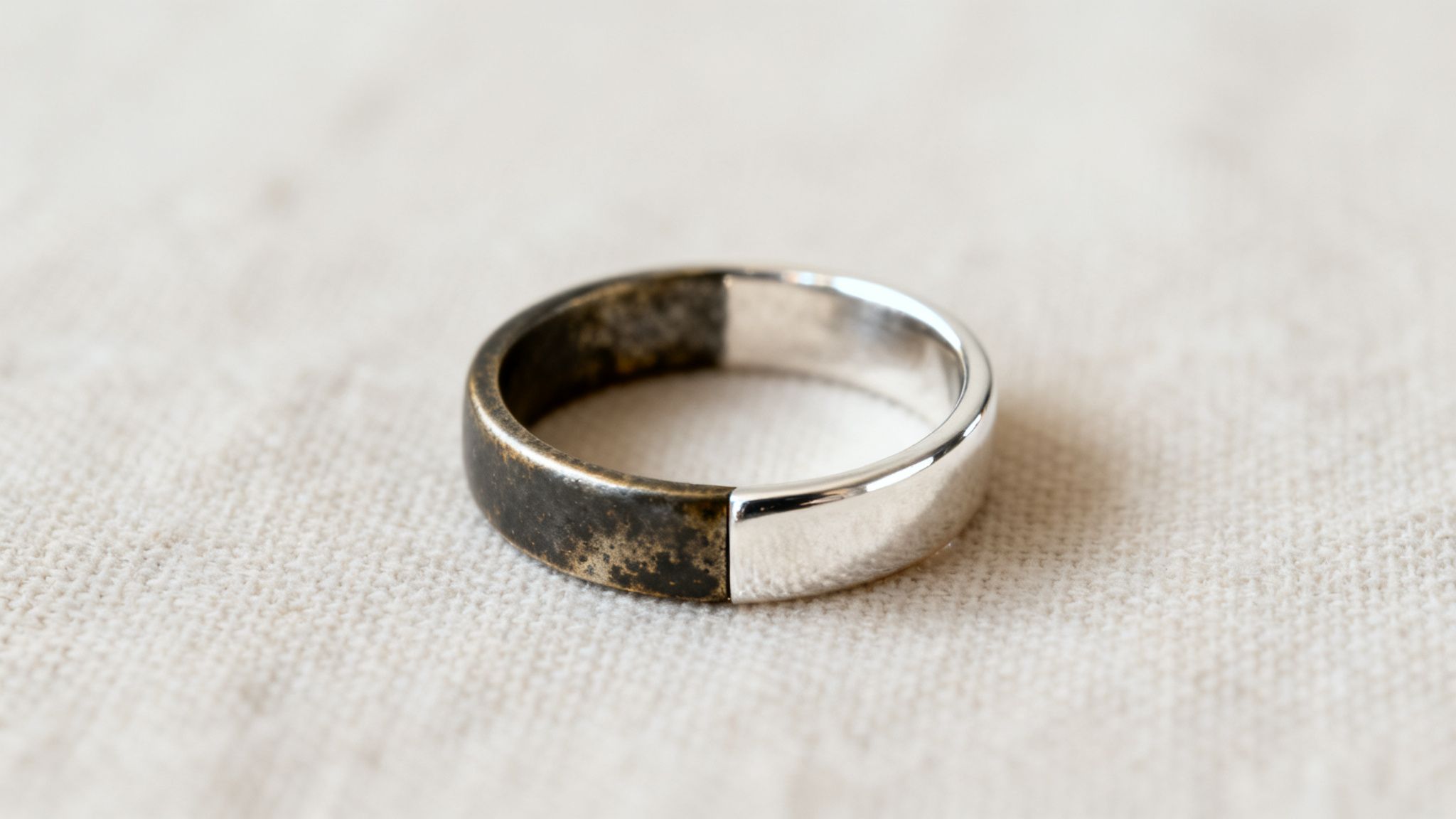
It is this small amount of copper that makes sterling silver tarnish. The dark, cloudy layer that may appear is not a defect or a sign of poor quality. It is a natural chemical reaction.
Tarnish occurs when sterling silver reacts with sulfur compounds in the air, creating a thin layer of silver sulfide. This dark patina is a definitive sign of genuine sterling silver.
Everyday environmental factors can accelerate this process. Identifying these triggers is the first step in keeping your pieces pristine.
The Science Behind Tarnish
Tarnish is a slow oxidation process, accelerated by common factors. Humidity is a primary catalyst, speeding the reaction between silver and airborne sulfur. This is why jewelry left in a steamy bathroom tarnishes faster than pieces stored correctly.
Other common culprits include:
- Cosmetics & Perfumes: Chemicals in lotions, hairsprays, and perfumes react with the metal alloy.
- Skin Chemistry: Natural oils and your skin's pH can contribute to tarnish on frequently worn pieces.
- Household Cleaners: Harsh chemicals like chlorine or ammonia are corrosive and will damage silver.
Plated and Gemstone Jewelry
Not all sterling silver is the same. Many contemporary designs, including those at Taton.shop, feature unique finishes requiring a gentler touch.
Pieces with 18K gold plating have a fine layer of gold over the sterling silver base. This finish is beautiful but can be worn away by aggressive polishing or harsh chemical cleaners.
Jewelry set with gemstones also needs special consideration. Porous stones like turquoise or pearls can be damaged by liquids and should never be soaked. Vigorous scrubbing can also loosen settings over time. Attention to these details preserves the beauty of each piece.
Assembling Your Silver Care Toolkit
Properly caring for sterling silver does not require professional equipment. The best tools are often already in your home. A few key supplies are all you need to keep your favorite Taton.shop pieces brilliant.
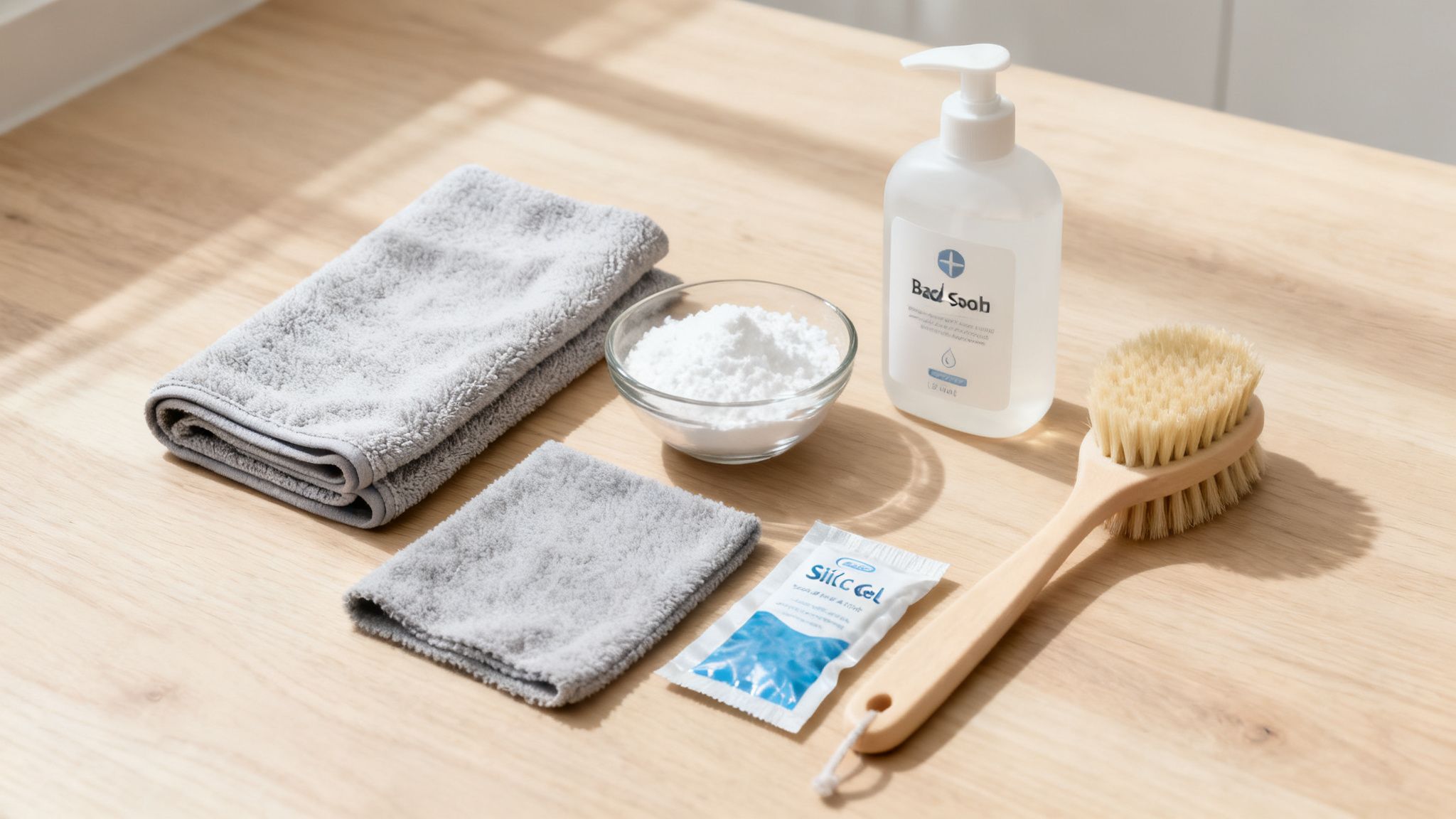
The most important item is a soft, lint-free cloth. A microfiber cloth, like one for eyeglasses, or a dedicated jeweler’s polishing cloth is ideal. Its fine weave gently removes fingerprints and oils without leaving fibers or creating micro-scratches.
Choosing Cleaning Solutions
When cleaning, less is more. For routine upkeep, a bowl of warm water with a few drops of mild, pH-neutral soap is sufficient. This simple solution effectively cuts through daily grime without harming the metal.
For light tarnish, a simple paste of baking soda and water is a safe and effective DIY option. This paste works chemically to lift silver sulfide (tarnish) from the surface without abrasion.
The goal is to remove tarnish, not a layer of silver. Abrasive materials create fine scratches that accumulate, permanently dulling the jewelry’s luster.
Think of it like cleaning a window with steel wool—the damage is often permanent.
What to Never Use
Knowing what to avoid is as important as knowing what to use. Many common household products can cause scratches or irreversible discoloration.
Keep these items away from your collection:
- Paper Towels and Tissues: Their wood pulp fibers are abrasive and will leave fine scratches.
- Toothpaste: This is a persistent myth. Most formulas contain gritty ingredients that are too harsh.
- Harsh Chemicals: Bleach, ammonia, and chlorine are highly corrosive and will ruin the finish.
Avoid at-home ultrasonic cleaners for pieces with gemstones. The vibrations can loosen settings or crack porous gems like turquoise or pearls.
Silver Care Toolkit: Do's and Don'ts
| Tool/Agent | Recommended Use (The Do's) | Avoid At All Costs (The Don'ts) |
|---|---|---|
| Cleaning Cloths | Soft, lint-free microfiber or a jeweler's cloth. | Paper towels, tissues, or any rough, abrasive fabric. |
| Soaps/Cleaners | Mild, pH-neutral soap mixed with warm water. | Bleach, ammonia, glass cleaner, and harsh detergents. |
| DIY Polishers | A simple paste of baking soda and water for tarnish. | Toothpaste, scouring powders, or any gritty paste. |
| Brushes | An extra-soft-bristled toothbrush (for intricate details only). | Stiff-bristled brushes that will definitely scratch the metal. |
With this curated toolkit, you are equipped for everything from a daily wipe-down to thorough tarnish removal, protecting your silver's integrity for years.
Practical Methods for Cleaning and Polishing
Keeping your sterling silver brilliant requires consistent, gentle maintenance and a focused approach for tarnish. These methods are safe, effective, and use common household items, ensuring every piece from your Taton.shop collection remains radiant.
Think of cleaning as a quick, regular ritual. A routine clean removes daily culprits—skin oils, lotions, dust—before they can initiate the tarnishing process. This proactive care reduces the need for heavy-duty cleaning.
Gentle Maintenance for Everyday Shine
For frequently worn pieces, a simple soap and water bath is the best method. It is gentle enough for regular use and safe for most sterling silver.
Fill a small bowl with warm water and a few drops of mild, phosphate-free dish soap. Avoid soaps with moisturizers or antibacterial agents, as they can leave a film.
Soak your jewelry for a few minutes to loosen grime. For intricate details, use an extra-soft-bristled toothbrush.
Rinse the jewelry thoroughly under cool, running water to remove all soap residue. Pat the piece completely dry with a soft, lint-free microfiber cloth. Never air-dry silver, as water spots can lead to new tarnish.
Removing Tarnish: A Chemical-Free Method
Tarnish is the result of silver reacting with sulfur in the air. Instead of abrasive polishes that remove silver, use a simple scientific method to reverse the process chemically.
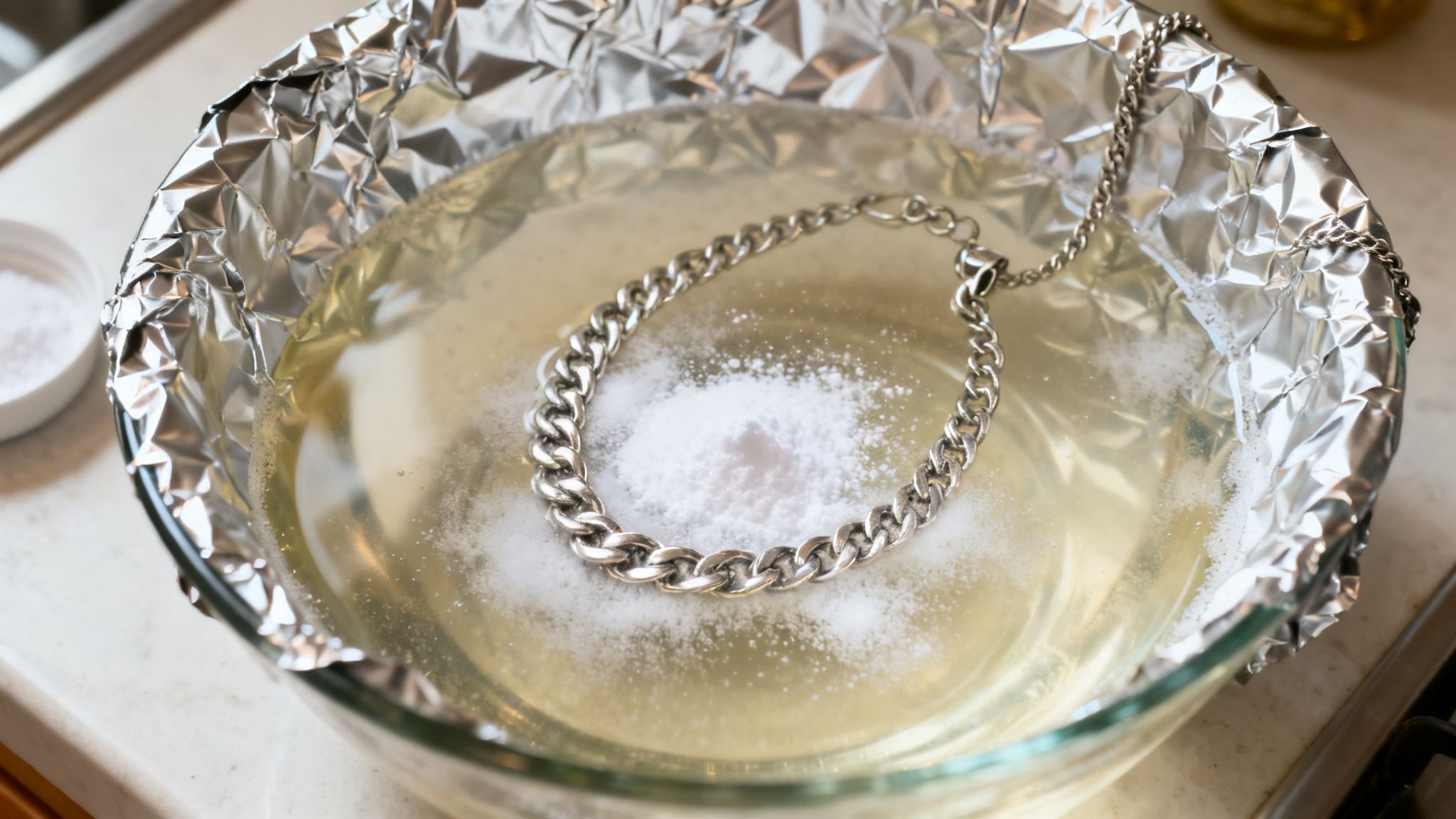
This technique uses baking soda and aluminum foil to create a gentle electrochemical reaction, transferring the silver sulfide (tarnish) from your jewelry to the foil.
Here’s how it works:
- Line a small, heat-safe bowl with aluminum foil, shiny side up.
- Place the tarnished silver jewelry directly onto the foil, ensuring contact.
- Sprinkle a tablespoon of baking soda over the jewelry.
- Carefully pour hot (not boiling) water into the bowl to cover the jewelry. You may notice bubbling and a faint sulfur smell—this indicates the reaction is working.
- Let it soak for 5-10 minutes. The tarnish will visibly disappear.
Afterward, carefully remove the jewelry, rinse it under cool water, and dry it meticulously with a soft cloth for an immediate, brighter shine.
This method is favored by experts because it removes tarnish without physical abrasion. It preserves fine details and integrity by reversing the chemical process, avoiding the micro-scratches caused by traditional polishing.
Using a Polishing Cloth
A professional jeweler's polishing cloth is a two-in-one tool for a brilliant finish. It has a treated inner cloth for cleaning and a plain outer cloth for buffing.
First, use the treated inner cloth, rubbing the jewelry with long, straight strokes to lift any remaining tarnish.
Then, use the clean outer cloth to buff the piece to a high shine. This enhances the metal’s natural luster and leaves a mirror-like finish.
As the global sterling silver jewelry market grows—projected from USD 16.09 billion in 2025 to USD 27.23 billion by 2035—proper care is essential. With up to 70% of owners reporting tarnish in the first year, proactive cleaning is key. These gentle methods can restore 95% of luster in under 10 minutes without damage. You can explore more data on the sterling silver jewelry market to see these trends.
Caring for Plated Finishes and Gemstones
Many pieces from Taton.shop feature 18K gold plating or gemstone settings. These details require an adjusted care routine, as standard silver cleaning can be too harsh. A nuanced, gentle touch is essential.
Protecting Gold-Plated Finishes
Gold plating is a thin layer of gold over sterling silver. It is delicate and susceptible to friction and chemicals.
Critically, never use a standard silver polishing cloth on gold-plated jewelry. These cloths contain micro-abrasives that will scrub the gold away. Instead, use a soft microfiber cloth with mild soap and warm water for occasional cleaning.
When caring for gold-plated silver, your mantra should be to clean, not polish. The goal is to remove dirt and oils, preserving the delicate plated layer.
Professional jewelers often use gentle steaming on gold vermeil, which can maintain its integrity for over two years. With silver recycling hitting 180 million ounces in 2023, well-cared-for pieces retain up to 92% of their material value.
For added durability, professional rhodium plating every one to two years offers 5-10 times more protection against wear. This option is popular in the high-end market. You can dive deeper into the latest silver market trends to learn more.
Navigating Gemstone Care
Gemstones add character but require specific cleaning methods based on their hardness and porosity.
Hard, non-porous stones like sapphires or diamonds can be cleaned with the same mild soap and water method as plain silver. Use a soft brush to clean around settings.
Porous or soft stones need a much lighter touch:
- Pearls: These organic gems are very soft. Avoid chemicals and never submerge them in water.
- Turquoise: This porous stone can absorb oils and liquids, causing discoloration.
- Opals: Opals contain water. Drastic temperature changes can cause them to crack.
- Emeralds: Often treated with oils for clarity. Harsh soaps can strip these oils.
For these sensitive stones, wipe them with a soft, damp cloth. Avoid soaking and ensure the piece is dry before storage. If you have questions, consult broader resources with general jewelry FAQs.
Preventing Tarnish with Smart Storage and Daily Habits
The best way to manage tarnish is to prevent it. Proactive care through smart daily habits and proper storage will dramatically slow the chemical reaction that causes discoloration. This keeps your Taton.shop pieces bright and ready to wear.
Tarnish is silver sulfide, formed when silver reacts with airborne hydrogen sulfide. Research shows daily exposure can dull a piece by 40% in three months. Wiping down jewelry after wear removes over 90% of the oils and moisture that accelerate this process. Paired with airtight storage, you can reduce tarnish risk by 75%.
The "Last On, First Off" Rule
Adopt this one habit: "last on, first off." Sterling silver should be the final touch to your outfit, applied after lotions, hairsprays, and perfumes have dried.
These products contain chemicals that catalyze tarnishing. Putting jewelry on last creates a buffer.
Similarly, jewelry should be the first thing you remove at night. This protects it from cleansers and prevents snagging.
Creating an Anti-Tarnish Environment
Where you store your jewelry is critical. The goal is to limit its contact with air and moisture. Leaving pieces on a nightstand invites discoloration.
Instead, create a dry, airtight home for each piece.
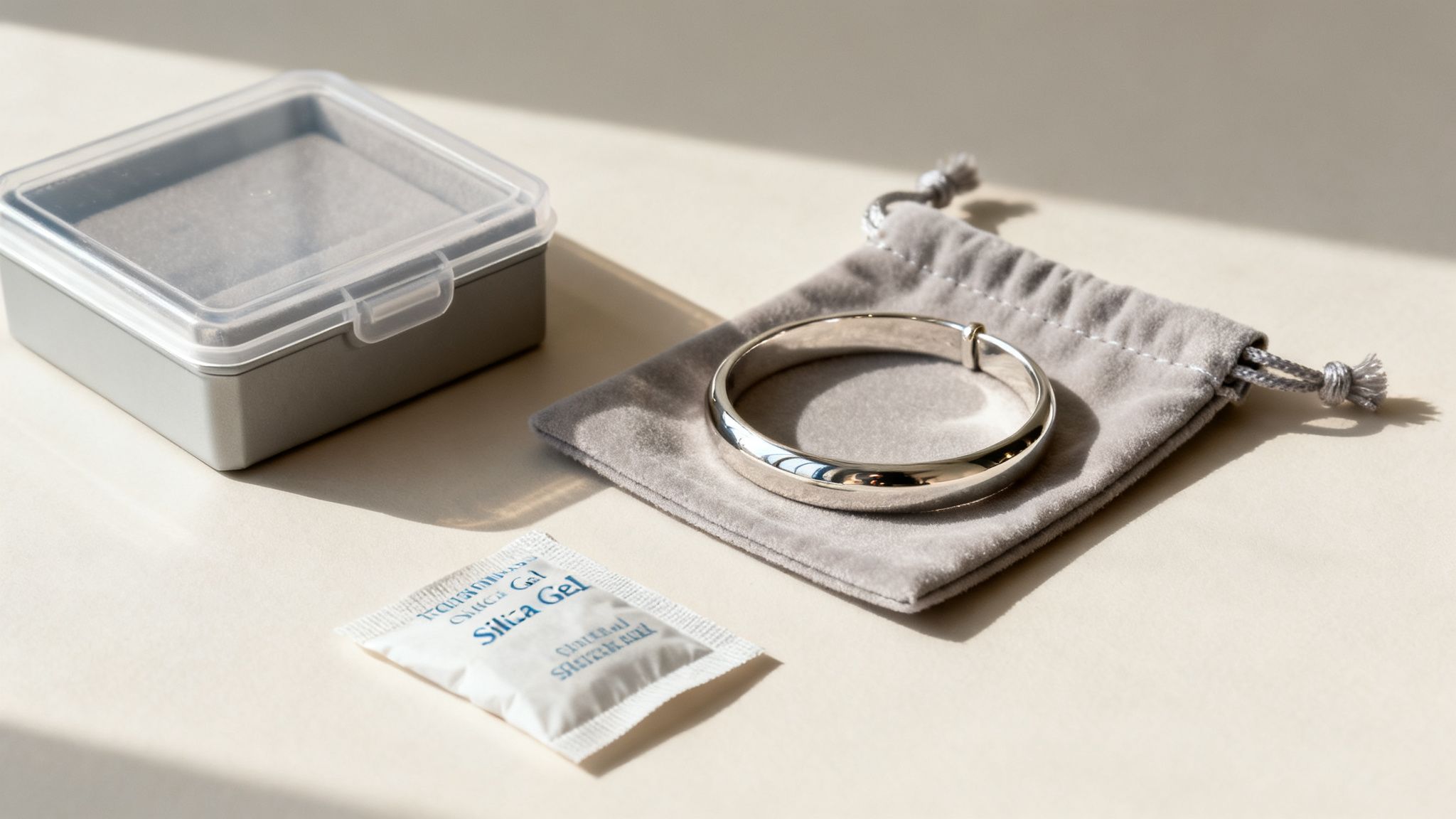
- Airtight Containers: A jewelry box with a snug lid is a good start. For superior protection, use individual ziplock bags.
- Anti-Tarnish Pouches: High-quality jewelry often comes in treated cloth bags designed to absorb airborne sulfur compounds. Use them.
- Silica Gel Packets: These excellent moisture absorbers can be placed in your jewelry box, especially in humid climates.
Effective storage is active preservation. By controlling the environment, you stop the chemical reactions that lead to tarnish.
For those with a growing collection, mastering your jewelry organization and storage is one of the most effective ways to preserve your pieces.
Activities to Avoid While Wearing Silver
Sterling silver is durable but not indestructible. Certain activities can cause instant damage or accelerate tarnishing.
Remove your silver jewelry before:
- Showering or Bathing: Soap leaves a dull film, and humidity promotes tarnish.
- Swimming: Chlorine and saltwater are extremely corrosive and will tarnish silver almost immediately.
- Exercising: Sweat contains salts and sulfur that react with silver. Friction can also cause scratches.
- Cleaning: Household cleaners contain potent chemicals like ammonia and bleach that cause permanent damage.
By integrating these preventative steps into your routine, you shift from reacting to tarnish to proactively caring for your jewelry, preserving its integrity and shine.
Common Silver Care Mistakes to Avoid
Knowing what not to do is as crucial as knowing what to do. Many well-intentioned cleaning attempts cause permanent damage. Avoiding these missteps is key to keeping your Taton.shop pieces brilliant.
The biggest myth is using toothpaste as a polish. Never do this. The fine abrasives in most toothpastes will cover your jewelry in micro-scratches, leaving a dull, hazy finish.
Resisting Abrasives and Harsh Chemicals
Avoid grabbing whatever is handy to scrub tarnish. Paper towels and tissues contain wood pulp fibers that will scratch your silver's surface. Always use a dedicated microfiber or jeweler's cloth.
Even more damaging are household cleaners. Keep products with bleach, ammonia, or chlorine far away from your silver.
A single splash of bleach can cause a chemical reaction that leaves dark spots, which is permanent damage to the metal itself, not just tarnish.
Stick to gentle methods like pH-neutral soap and water. There is no need for heavy-duty chemicals.
Rethinking Daily Storage Habits
Leaving jewelry on a dresser or in an open dish is a common mistake. This constant exposure to air and humidity is the primary cause of tarnish.
Another pitfall is letting tarnish build up. When left for months, the dark layer becomes harder to remove. A light, regular polish is far better for your jewelry than an infrequent, aggressive deep clean. Smart storage and consistent care are your best defense.
Common Questions About Silver Care
Here are quick, direct answers to the most common questions about keeping your sterling silver pristine.
How Often Should I Clean My Sterling Silver Jewelry?
For daily wear pieces, wipe them with a soft cloth before storing. A gentle wash with mild soap and water every few weeks removes built-up oils. Deep clean for tarnish only when you see discoloration. Proper storage will make this infrequent.
Is It Okay to Wear My Sterling Silver Ring in the Shower?
It is not recommended. Repeated exposure to water and soap speeds up tarnishing and can leave a dull film.
The warm, humid air in a bathroom is a perfect environment for tarnish. Remove silver jewelry before showering, swimming, or exercising to maintain its brilliant shine.
My Silver Tarnished in My Jewelry Box. Why?
A standard jewelry box is not airtight. Air gets in, and so do the sulfur compounds that cause tarnish. Use an airtight plastic bag or a specialty anti-tarnish pouch to create a better barrier and slow the process.
Can Faded Gold Plating on Silver Be Fixed?
Gold plating naturally wears away over time with friction. This is normal. Be gentle and never use abrasive cloths on plated pieces to prolong their life. When fading is significant, a professional jeweler can re-plate the item to restore its original glow.
Ready to find your next everyday favorite? Discover our curated collection of minimalist, long-lasting sterling silver jewelry at Taton.shop. https://taton.shop
