Care Guide for Gold-Plated Jewelry - Taton.shop

Care Guide for Gold-Plated Jewelry

Preserving your gold-plated jewelry requires three core habits: mindful daily wear, gentle cleaning, and correct storage. The goal is to protect the delicate gold layer from friction, chemicals, and moisture. Simple routines ensure your minimalist pieces remain brilliant.

Preserving Brilliance
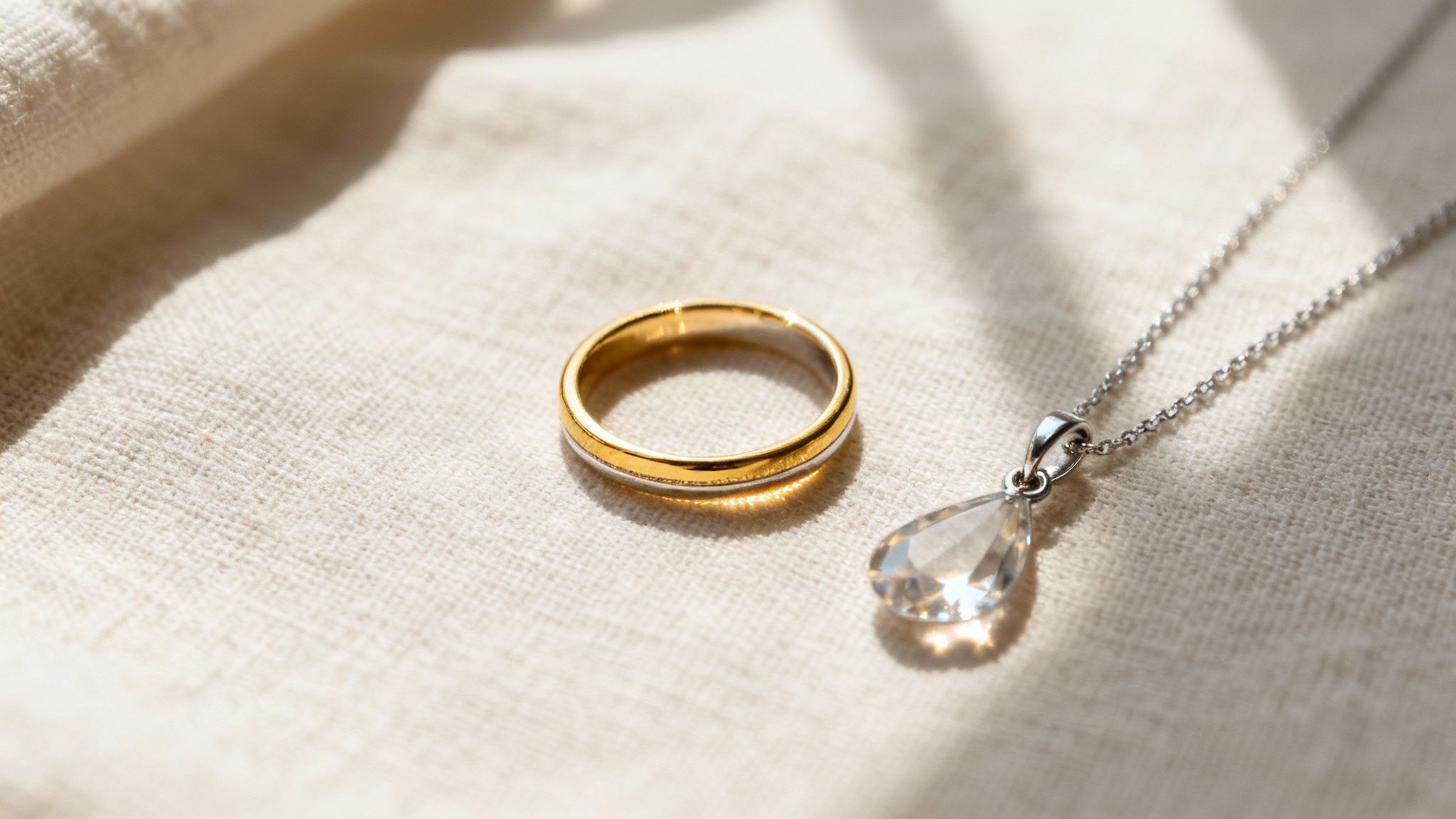
A two-tone gold and silver ring next to a silver necklace with a clear teardrop pendant on textured fabric.

Gold-plated jewelry, like the 18K gold over S925 silver pieces at Taton.shop, offers the aesthetic of solid gold without the high cost. Its longevity is in your hands. A durable base metal is bonded with a fine layer of gold; your job is to protect that layer.

This guide provides a direct manual for extending the life of your jewelry. Proactive care is simpler and more effective than repair. Understanding the vulnerabilities of gold plating makes these protective habits second nature.

Understanding Lifespan

How long your jewelry looks pristine is directly tied to your care. With proper attention, the finish can last for a surprisingly long time.

A quality gold-plated piece, such as one with an S925 silver base and an 18K gold overlay, should last two to three years with diligent care. Thicker plating can extend this to five years. Unfortunately, while over 40% of consumers own plated accessories, an estimated 70% of pieces tarnish within one year due to improper handling. For a deeper analysis of longevity factors, Icecartel.com offer some great insights.

The core principle is proactive prevention. Every small action—from removing a ring before washing hands to storing a necklace in its pouch—contributes to a longer, more brilliant lifespan.

Essential Care at a Glance

This quick-reference table distills the essential practices for maintaining your jewelry. The checklist covers the absolute must-know dos and don'ts.

Gold-Plated Jewelry Care Quick Reference

This table summarizes core principles for daily care, cleaning, and storage. These guidelines will maximize the lifespan and beauty of your Taton.shop accessories.

Action Do Don't
Daily Wear Apply cosmetics and perfumes before wearing jewelry. Wear during workouts, swimming, or showering.
Cleaning Use a soft, lint-free cloth for regular wiping. Use harsh chemicals, abrasives, or ultrasonic cleaners.
Storage Store each piece individually in a soft pouch or lined box. Store items together where they can scratch each other.

Mastering these basics will ensure your jewelry remains a lasting part of your personal style.

The Daily Care Ritual

Hands gently placing a simple gold ring into a soft fabric drawstring pouch for storage.

The secret to brilliant gold-plated jewelry is not an intensive monthly cleaning session. It is found in small, consistent daily habits. Proactive care is far more effective than attempting to reverse damage to a delicate 18K gold layer.

Your daily routine should create a protective shield around your pieces. The primary threats are chemicals, moisture, and friction. Simple rituals that become second nature will keep your Taton.shop accessories pristine.

The “Last On, First Off” Rule

This is the single most important habit to adopt. The mantra “last on, first off” is your best defense against chemical damage, a primary cause of finish degradation.

Lotions, perfumes, hairspray, and makeup contain oils and chemicals that are corrosive to the thin gold layer. Direct contact can cause the plating to break down, tarnish, or fade prematurely.

Follow this practice:

  • Complete your beauty routine first. Allow lotions and serums to fully absorb.
  • Style your hair and apply any finishing sprays.
  • Apply perfume to pulse points and let it dry.
  • Finally, put on your jewelry as the last step.

Reverse the process at the end of the day. Your jewelry should be the first thing you remove before using makeup remover or changing clothes.

By making jewelry the last item on and first item off, you create a crucial buffer. This habit minimizes chemical contact and dramatically extends the life of the 18K gold plating.

Navigating Daily Activities and Moisture

Daily life presents challenges beyond your vanity. Sweat, skin oils, and humidity constantly work against your jewelry's finish. Being mindful of when you wear your pieces makes a significant difference.

Perspiration is acidic and can erode the gold layer. Friction from physical tasks can also wear down the finish on rings and bracelets. Remove your jewelry before certain activities.

Remove your pieces before:

  • Exercising: Sweat is produced during gym sessions, runs, or yoga.
  • Household Chores: Cleaning products contain harsh chemicals, while tasks like gardening involve friction and moisture.
  • Swimming or Showering: Chlorine, saltwater, and tap water minerals are damaging.

Water contact is a major cause of premature wear. Showers and pools are responsible for 75% of plating failures within the first year. The combination of hot water and chemicals can erode the thin gold layer by up to 3 microns annually. In the $15 billion global gold-plated jewelry market, avoiding water is a universal rule. Removing your Taton.shop pieces before showering can extend their life by 200%. Sweat, with its acidic pH, can strip plating 40% faster, a concern for the 55% of buyers who wear accessories with activewear. Learn more about plating durability from experts at ylume-creation.com.

Protecting From Environmental Factors

The environment affects your jewelry, both on and off your body. Humidity and direct sunlight influence how long the plating lasts.

High humidity promotes oxidation, which leads to tarnish. This is especially true for the underlying S925 sterling silver base if the gold layer is scratched. Prolonged sun exposure can also cause the gold's color to fade over time.

Proper storage is critical. When not in use, keep your pieces in a cool, dry place. These small, conscious habits form a powerful defense, protecting your jewelry's integrity for years.

Safe Cleaning Methods for Luster

Gold necklace, cleaning solution, brush, and towel laid out for jewelry care on a white surface.

While daily habits are the first line of defense, a proper cleaning routine maintains brilliance. Aggressive cleaning can inflict more damage than daily wear, stripping the delicate 18K gold layer and exposing the S925 silver underneath. The goal is to gently lift buildup, not scrub away flaws.

Gold plating is vulnerable. Unlike solid gold, which can handle polishing, a plated item has a thin surface layer. Harsh chemicals and abrasive materials don't just clean—they remove the gold. A gentle method is essential for the life of your Taton.shop accessories.

The Ideal Cleaning Solution

The safest cleaning solution is one you can make at home. Avoid harsh, chemical-heavy jewelry dips, which are designed for solid metals and are too aggressive for plated finishes.

You only need a bowl of warm water and a few drops of mild, phosphate-free dish soap. The water should be warm, not hot, as extreme temperatures can weaken the bond between the gold and the silver base. The soap gently breaks down grime without corrosive agents.

Crucial Insight: Use simple, clear dish soap. Formulas with dyes, perfumes, or lotions can leave a residue that dulls the shine. Simpler is better.

The Gentle Soak and Cleaning Process

With your solution ready, the process requires patience and a light touch. The aim is to loosen dirt, not force it off.

Soak your jewelry in the warm, soapy water for 5-10 minutes. This brief bath softens any buildup. Do not over-soak; prolonged immersion can allow water to penetrate microscopic cracks in the plating and affect the base metal.

After soaking, use the softest tool available for any remaining spots.

  • For Intricate Details: A baby toothbrush or a clean, ultra-soft makeup brush is perfect for crevices or stone settings. Use light, circular motions.
  • For Smooth Surfaces: A cotton ball or a soft cloth dipped in the solution will suffice.

Never use a regular toothbrush, paper towel, or textured fabric. Their fibers are coarse and will create micro-scratches on the gold surface.

The Final Rinse and Dry

Rinsing and drying are as important as washing. Soap residue creates a dull film, and moisture leads to tarnish, especially if it reaches the sterling silver base.

Rinse each piece under a gentle stream of lukewarm water. Immediately place the jewelry on a soft, lint-free cloth and pat it dry—never rub. A gentle blotting motion is sufficient.

For chains or intricate pieces, a quick blast of cool air from a hairdryer on its lowest setting is an effective final step to ensure no moisture remains.

Quick Daily Maintenance

Between deep cleans, a quick wipe-down maintains shine. This is especially true for rings and bracelets, which collect fingerprints and skin oils.

Use a clean, dry microfiber cloth to gently polish the surface. This simple act lifts smudges and restores the 18K gold luster. It takes only a few seconds but preserves the premium, minimalist look of Taton.shop jewelry.

Smart Storage to Prevent Damage

An open, light-colored velvet jewelry box with a gold ring and several small pouches.

Proper storage is as crucial as cleaning. It is your primary defense against scratches, tangles, and tarnish. For your Taton.shop collection, storage is the final step in your care ritual.

The guiding principle is simple: every piece deserves its own space. Storing jewelry together creates friction. Harder gemstones can scratch delicate 18K gold plating, and chains can knot and weaken. These impacts create micro-abrasions that wear down the gold layer, exposing the S925 silver base.

The Power of Individual Storage

Storing each piece separately is the most effective way to prevent physical damage. This single habit preserves the smooth, mirror-like finish of minimalist jewelry by creating a protective cushion around every item.

Improper storage is responsible for approximately 65% of scratches and 50% of premature tarnish on plated items. Constant friction in a jewelry dish causes micro-abrasions that can expose the base metal in under a year. In markets like Ukraine, the US, and the EU—where affordable luxury plated jewelry sales jumped 25% YoY—using separate pouches has been shown to increase longevity by 150%.

Choosing the Right Storage

The material of your jewelry box or pouch matters. Look for a soft, non-abrasive interior and a design that keeps pieces separate.

Here are the best options for your collection:

  • Soft Fabric Pouches: Every Taton.shop piece includes a pouch for a reason. They provide a soft cushion, prevent damage, absorb moisture, and are ideal for travel.
  • Lined Jewelry Boxes: A box with individual, fabric-lined compartments keeps pieces organized, protected from friction, and free from dust.
  • Anti-Tarnish Bags or Strips: For humid climates, specialty bags treated to inhibit oxidation are effective. Anti-tarnish strips can be placed in a standard jewelry box to absorb airborne sulfur.

Expert Tip: For long-term storage, wrap items in acid-free tissue paper before placing them in a box. This provides another layer of protection against chemical reactions.

The market offers various storage options. Let's compare the most common choices.

Jewelry Storage Solutions Compared

Storage Method Scratch Protection Tarnish Protection Best Suited For
Individual Pouches Excellent Good Daily use, travel, single items
Compartmentalized Box Excellent Good Organizing a larger collection
Open Jewelry Dish Poor Poor Very temporary storage
Anti-Tarnish Box/Bag Excellent Excellent Long-term storage, high humidity

Any solution that isolates your pieces is effective. A combination often works best: a main jewelry box for organization and individual pouches for travel.

The Ideal Storage Environment

The location of your jewelry box is as important as the box itself. The ideal environment is cool, dry, and dark. Heat and humidity accelerate the chemical reactions that cause tarnish. Direct sunlight can fade the gold's color.

The bathroom is one of the worst storage locations due to high humidity from showers. A bedroom dresser drawer or a closet shelf is a much safer option.

Smart Travel Storage

Travel can be harsh on jewelry. Tossing pieces into a toiletry bag will result in a tangled, scratched mess.

Use these strategies to keep accessories safe on the go:

  • Use Pouches: Pack each item in its own soft pouch.
  • Invest in a Travel Roll: These cases have padded compartments designed to keep jewelry secure and tangle-free.
  • The Straw Trick for Necklaces: Thread one end of a chain through a drinking straw and clasp it to prevent knotting.

Making these storage habits part of your routine actively preserves your collection’s beauty.

Troubleshooting: Fading and Tarnish

Even with perfect care, well-worn jewelry eventually shows signs of use. The skill is knowing how to interpret these signs. Differentiating between a surface issue and genuine wear is key to maintaining your Taton.shop collection.

You will primarily encounter two issues: tarnish and fading. They can look similar but are fundamentally different. One is a quick fix, while the other is a permanent change requiring professional service.

Tarnish vs. Plating Wear

Tarnish is a surface-level chemical reaction. With our S925 sterling silver core pieces, tarnish occurs when the underlying silver reacts with airborne sulfur. It appears as a dull, dark film that obscures the shine. Tarnish sits on top of the metal and can usually be gently cleaned off.

Fading, or plating wear, is different. It is the physical abrasion of the 18K gold layer. Over time, friction and chemical exposure wear the gold thin, revealing the cooler-toned sterling silver base underneath.

Analogy: Tarnish is like dust on a mirror—it can be wiped clean. Fading is like a scratch in the mirror's reflective coating. One is a cleaning job; the other is a restoration.

Spotting Early Fading

Catching wear early is your best defense. Fading rarely occurs evenly. It starts in high-contact spots that experience the most friction.

Monitor these areas:

  • Rings: The back and edges of the band.
  • Necklaces: The clasp and points where a pendant rubs the chain.
  • Bracelets: The clasp and the underside against your wrist.

If the warm, yellow glow of the 18K gold looks dull or a cooler, silvery tone appears in these zones, you are seeing the first signs of plating wear. The piece is still beautiful, but this signals a need for extra care.

The Professional Solution: Re-Plating

Once the gold layer has worn significantly, cleaning will not restore its color. The only way to achieve the original finish is through re-plating.

This process, also known as electroplating, involves a professional jeweler applying a new layer of gold. It is an effective way to restore a beloved item. The jeweler first deep-cleans and polishes the piece, then uses an electric current to bond a fresh layer of gold onto the S925 silver core.

Finding a Jeweler and Costs

Seek a local jeweler with specific experience in electroplating. Ask to see their work and check reviews for transparency.

The cost varies based on:

  • Size and Complexity: A large necklace costs more than a simple ring.
  • Plating Thickness: Measured in microns. Standard plating is 0.5-1.0 microns, but for daily wear, a thicker layer of 2.5 microns is more durable and costs more.
  • Gold Karat: 18K is a common choice for its balance of rich color and durability.

While re-plating is an investment, it is more affordable than replacing a cherished piece. It breathes new life into items with sentimental value and is a crucial part of long-term jewelry care.

Common Questions: Gold-Plated Jewelry Care

A few questions about gold-plated jewelry care arise frequently. We hear them often from Taton.shop customers. Here are clear answers to help you care for your 18K gold-plated S925 silver pieces.

Can I Wear Gold-Plated Jewelry in the Shower?

It is strongly advised against it. While a single accidental shower may not cause immediate damage, making it a habit will rapidly degrade the 18K gold layer.

Chemicals in soaps and shampoos are abrasive. The steam and moisture create ideal conditions for tarnish, especially if the underlying S925 silver becomes exposed. Make it a rule to remove your jewelry before showering, bathing, or swimming.

My Gold-Plated Necklace Looks Dull. Is It Ruined?

It is likely not ruined. A dull finish is usually just a surface film of skin oils, lotion, and dust. This is a temporary issue hiding the shine, not a sign of permanent plating loss.

Before assuming the worst, follow the gentle cleaning steps outlined earlier. A brief soak in warm, soapy water, a delicate cleaning with a soft brush, and thorough drying almost always restores the original luster. If the silvery base is visible after cleaning, then the plating has worn down.

Is Caring for 18K Gold on S925 Silver Different?

The core principles remain the same: avoid moisture, chemicals, and friction. However, the S925 sterling silver base in your Taton.shop piece offers a significant quality advantage over brass or copper. Sterling silver is a hypoallergenic precious metal, so you are far less likely to experience skin discoloration even if the gold plating wears over time.

The trade-off is that silver can tarnish when exposed to air. This makes protecting the outer gold layer, which acts as a shield, even more important. When wear eventually occurs, you are left with a valuable S925 silver piece, making our jewelry a superior long-term investment.

The combination of an 18K gold plate over S925 sterling silver provides the rich look of high-karat gold with the quality of a precious metal base. Your care routine protects both.

How Often Should I Re-Plate My Jewelry?

There is no single timeline. It depends entirely on how you wear your pieces.

Frequency of wear is the biggest factor.

  • For an everyday item like a ring: Consider re-plating every 1-2 years to maintain a new appearance.
  • For pieces worn less often, like a special occasion necklace: You may go many years without needing to re-plate.

Your eyes are the best guide. Inspect your jewelry periodically. When the S925 silver base is clearly visible on high-contact points, it is time to consult a professional jeweler.


At Taton.shop, we believe in pieces that merge minimalist design with lasting quality. Our curated collection of 18K gold-plated S925 silver jewelry is crafted to be a timeless part of your style. Explore our accessories and find your next favorite piece.

Discover the Taton.shop Jewelry Collection

Back to the blog