
A Guide to the Gold Plated Necklace
A gold-plated necklace is crafted from a base metal, like sterling silver, covered by a thin layer of genuine gold. This process, known as electroplating, delivers the authentic look and feel of solid gold at a more accessible price.
It is a thoughtful combination of materials: a radiant gold finish supported by a durable, quality foundation.
The Art of Gold Plating
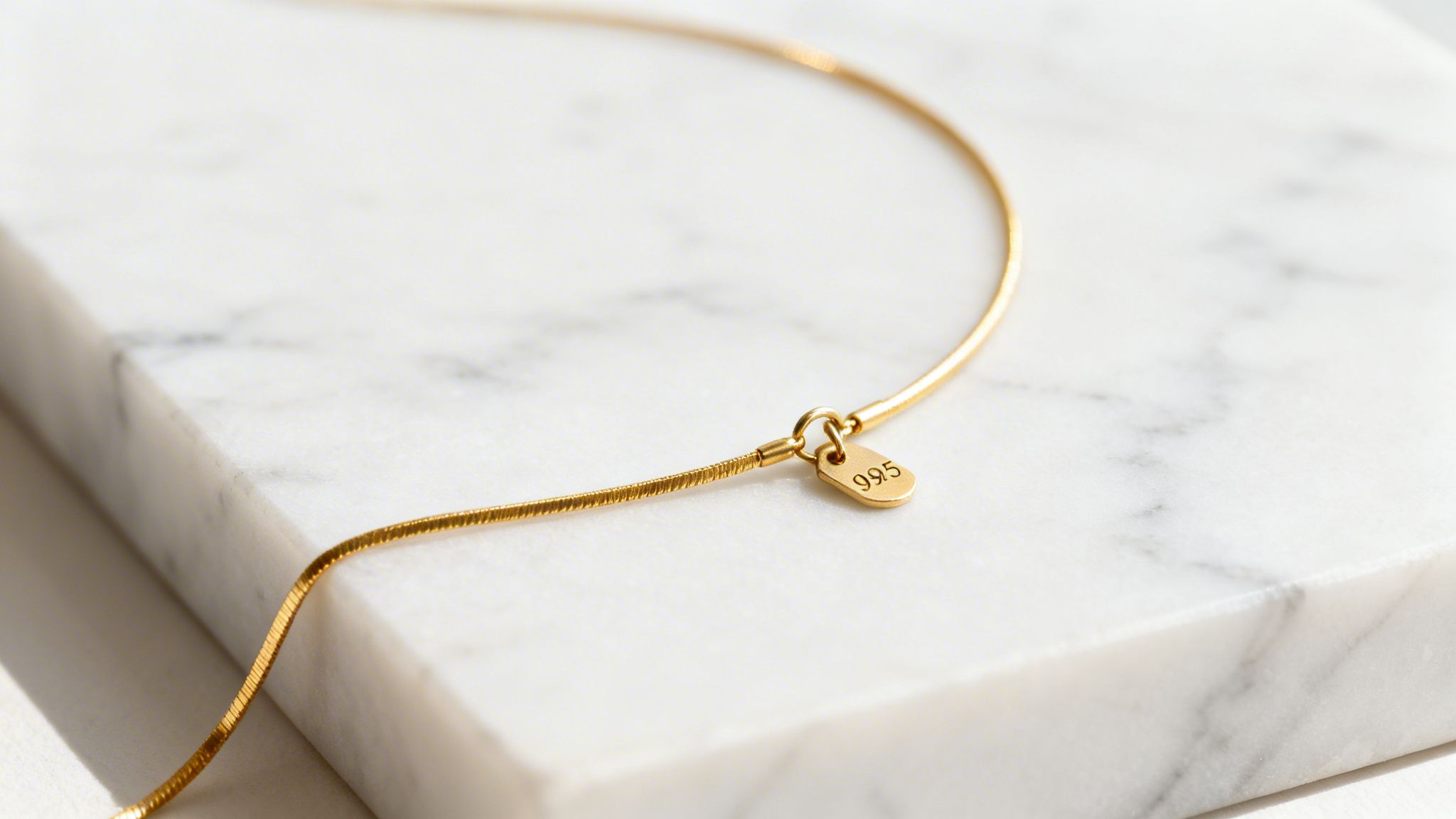
A gold-plated necklace uses real gold where it matters most—on the surface. The technique gives the piece its signature warmth and luster, making the elegance of gold attainable without the cost of a solid piece.
The base metal is the canvas, and the gold is the brilliant final layer. For a piece to be beautiful and lasting, the quality of both is critical.
The Importance of the Foundation
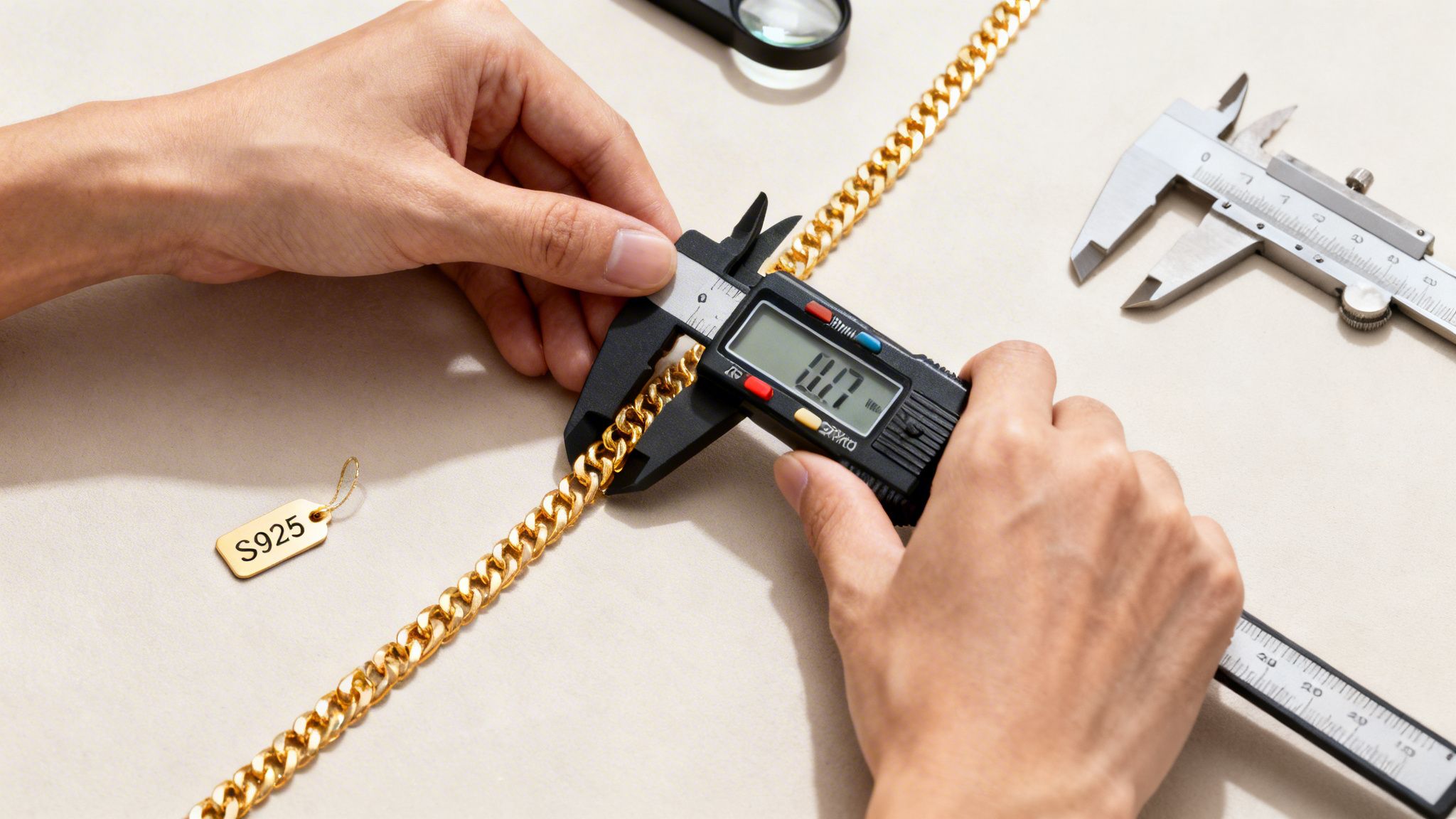
The core of any quality gold-plated necklace is its base metal. While some pieces use common metals like brass, premium jewelry uses a more resilient foundation. This is why brands like Taton use sterling silver, marked as S925 for 92.5% pure silver.
A sterling silver base offers distinct advantages:
- Durability and Value: Silver provides a solid structure that holds its value better than industrial metals.
- Hypoallergenic Properties: Sterling silver is a safer choice for sensitive skin compared to base metals that may contain irritants like nickel.
- A Premium Feel: An S925 base gives a necklace a satisfying weight, feeling substantial and luxurious.
A precious metal base elevates the entire piece, ensuring quality from the inside out.
The Plating Process
The creation of a gold-plated necklace is a precise process called electroplating. First, the base piece is meticulously cleaned. Then, it is submerged in a solution containing dissolved gold ions.
An electric current passes through the solution, causing the gold ions to chemically bond to the surface of the base metal. This creates a thin, uniform, and durable layer of real gold.
The result is a seamless fusion. To the naked eye, the finish is indistinguishable from solid gold. This technique combines craftsmanship and science for a flawless result.
Judging Plating Quality and Durability
Not all gold-plated necklaces are created equal. The difference between a piece that lasts for years and one that tarnishes quickly comes down to two factors: the thickness of the gold layer and the quality of the base metal.
Gold plating is a significant market. The global precious metal plating industry was valued at USD 201.21 million in 2021 and is projected to reach USD 312.01 million by 2028, according to precious metal plating market growth data. With many options available, understanding quality is essential.
The Significance of Micron Thickness
The best measure of a plated necklace's lifespan is the thickness of its gold layer, measured in microns (µm). A quick "flash" plating can be as thin as 0.175 microns and will not last.
The gold layer acts as a shield against friction, sweat, and lotions. Its thickness directly indicates how long the finish will endure before the base metal is exposed.
For a necklace intended for regular wear, aim for the premium range.
- Standard Quality: Plating between 0.5 to 1.0 microns is suitable for occasional wear.
- Premium Quality: A thickness of 1.0 to 2.5 microns is ideal for high-quality jewelry designed for longevity.
- Heavy Plating: Anything over 2.5 microns is considered heavy-duty and offers maximum durability.
The Foundation is Key
The base metal is as critical as the gold layer. A solid foundation adds value, durability, and comfort. This is why sterling silver (S925) is the standard for quality jewelry.
Sterling silver creates a stable, non-reactive surface to which gold bonds effectively. Cheaper metals like brass can corrode, causing the gold layer to bubble or flake. S925 provides a solid, precious foundation.
Choosing a piece with a sterling silver base ensures your necklace feels substantial, is hypoallergenic, and maintains its shape. It is a smarter style investment.
Gold Plated vs. Other Gold Jewelry Types
Understanding terms like "vermeil," "filled," and "solid" is the first step to choosing the right jewelry. The key differences are the amount of gold used and its application method.
A gold plated necklace has a fine layer of gold electrically bonded to a base metal. Other types use thicker layers or are made of gold alloy throughout, which affects their price and durability.
A Clear Comparison
Each type of gold jewelry serves a different purpose, from trend-driven accessories to timeless investments.
Here is a direct comparison to help you choose the best option for your style and budget.
A Comparison of Gold Jewelry Types
| Jewelry Type | Base Metal | Gold Layer | Durability | Price Point |
|---|---|---|---|---|
| Gold Plated | Sterling Silver (S925), Brass, or Copper | A thin layer of gold (0.5-2.5 microns) applied via electroplating. | Good for everyday wear; longevity depends on plating thickness and care. | Most Accessible |
| Gold Vermeil | Sterling Silver (S925) only | A much thicker layer of gold (at least 2.5 microns) over sterling silver. | Higher durability than standard plating due to the thicker gold layer. | Mid-Range |
| Gold-Filled | Brass or Copper | A thick gold layer bonded with heat and pressure, must be at least 5% of the item's total weight. | Very durable, tarnish-resistant, and can last for decades with proper care. | Mid-to-High Range |
| Solid Gold | Gold alloyed with other metals (e.g., 14k, 18k) | The entire piece is made of a solid gold alloy; no base metal is used. | The most durable and valuable; it will not tarnish or fade. A lifetime piece. | Highest |
Each type offers a unique balance between cost and composition.
Finding the Sweet Spot
Solid gold is the pinnacle of luxury, but its price often positions it as a special-occasion investment. Gold-filled and vermeil are durable alternatives, but they command higher prices due to their significant gold content.
For the modern wardrobe, a quality gold plated necklace over a sterling silver base strikes the perfect balance. It delivers the authentic look of gold on a precious metal foundation, making elevated style accessible.
A well-crafted, gold-plated S925 necklace is a smart and stylish choice, not a compromise. It is key to building a versatile jewelry collection that feels luxurious without the financial commitment of solid gold.
How to Care for Gold Plated Jewelry
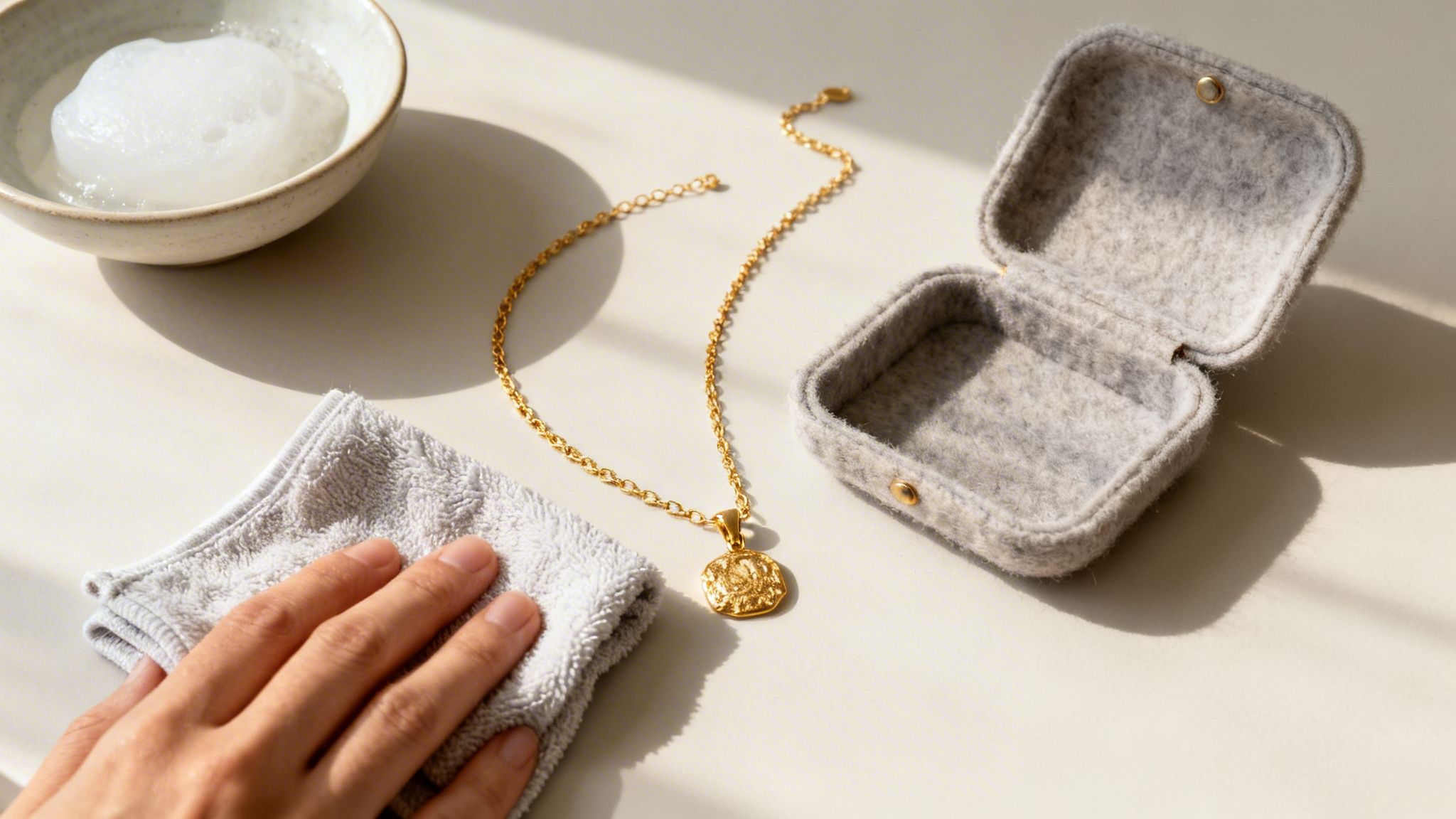
The lifespan of a gold-plated necklace depends on proper care. The goal is simple: protect the thin layer of gold from daily wear. With a few smart habits, you can keep your pieces looking new.
The gold plating is a beautiful but delicate outer shell. Everyday chemicals and friction are its main threats, but they are easy to avoid.
Essential Daily Habits
Simple, mindful practices can preserve your jewelry’s shine. It is about minimizing contact with anything that could wear down the gold finish.
Consistent care prevents the buildup of oils and the micro-scratches that dull a necklace’s luster.
- Last On, First Off: The golden rule. Put your necklace on after applying lotions, perfumes, and hairspray. Allow these products to dry first.
- Avoid Moisture: Remove jewelry before showering, swimming, or exercising. Chlorine and sweat can be corrosive and accelerate fading.
- Wipe Down After Wear: When you take your necklace off, gently wipe it with a soft, lint-free cloth. This removes skin oils and moisture.
Chemicals and abrasion are the two primary threats to a plated finish. By creating a barrier between your necklace and these elements, you safeguard its original shine.
Proper storage is as crucial as how you wear it. Avoid tossing it into a cluttered drawer.
Cleaning and Storing Your Necklace
Occasional cleaning can restore its sparkle. The key is to be gentle. Harsh chemicals or abrasive cloths can strip the gold layer.
Giving your necklace its own safe space for storage is non-negotiable.
- Gentle Cleaning Solution: Use a simple mix of warm water and a few drops of mild, phosphate-free soap. Avoid aggressive detergents or commercial jewelry cleaners.
- Soak and Brush: Let the necklace soak for 10–15 minutes. Use a very soft-bristled brush, like a baby toothbrush, to gently clean crevices.
- Rinse and Dry: Rinse the necklace thoroughly under clean, warm water. Pat it completely dry with a soft, lint-free cloth. Ensure it is 100% dry before storing.
- Proper Storage: Keep your piece in a soft pouch or a separate compartment in a jewelry box to protect it from scratches and limit air exposure.
How to Style Your Gold Plated Necklace
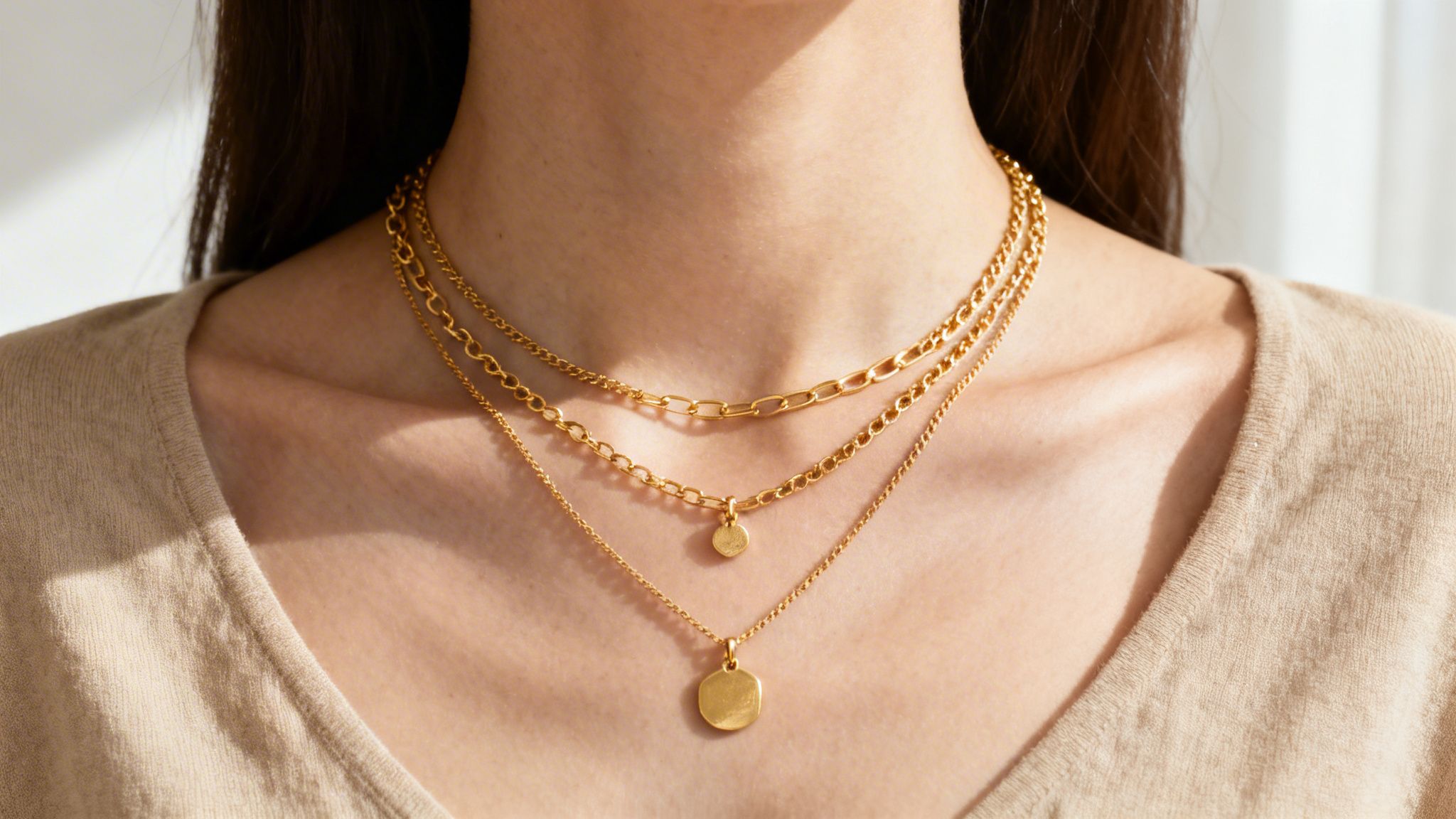
A gold-plated necklace is a versatile style tool. Its adaptability can pull an entire outfit together, shifting from minimalist to expressive.
Consider your necklace a foundational element of your look. Whether layering multiple chains or featuring a single piece, the goal is to create a look that feels intentional and personal.
The Art of Layering
Layering necklaces adds depth and personality to an outfit. The key is to create visual harmony through contrast.
To master the layered look, play with a few different elements:
- Length: Mix different lengths to create tiers—a choker, a mid-length chain, and a longer pendant. This prevents tangling and ensures each piece is visible.
- Texture: Combine different chain styles. A smooth snake chain pairs well with the detailed texture of a rope or Figaro chain, adding visual interest.
- Weight: Blend delicate chains with one or two more substantial pieces. This creates a focal point and keeps the stack looking balanced.
A well-executed stack tells a story. It is a curated collection that reflects personal style, with each chain playing a specific role.
Following these guidelines ensures your layers look curated, not chaotic.
Creating a Singular Statement
Sometimes, less is more. A single, well-chosen gold-plated necklace can be a powerful focal point, anchoring your entire look. This minimalist approach allows a beautiful design to speak for itself.
When wearing a solo piece, your outfit becomes the backdrop. A bold chain against a simple black turtleneck instantly elevates a casual look. A delicate pendant brings quiet elegance to a blazer or dress.
Pay attention to the neckline. V-necks are ideal for framing a pendant. A crew or scoop neck creates the perfect canvas for a statement chain on the collarbone. It is about creating synergy between your clothes and your gold plated necklace.
Choosing the Perfect Necklace as a Gift
Giving jewelry is a personal gesture. A gold-plated necklace offers everyday luxury—a thoughtful gift that can capture someone's style and serve as a constant reminder of you.
The secret to a great gift is selecting a piece that feels made for them.
Matching the Necklace to Their Style
Start by observing their current jewelry. Do they prefer understated elegance or statement pieces? Noting their go-to accessories will guide your choice.
Consider which style profile fits them best:
- The Minimalist: Prefers clean lines and simplicity. A delicate chain with a small geometric pendant or a thin snake chain is a perfect choice.
- The Trendsetter: Uses accessories for self-expression. Look for a chunky chain, a unique charm, or a pre-layered set that reflects their fashion-forward thinking.
- The Classic Enthusiast: Gravitates toward timeless designs. A simple Figaro or rope chain offers enduring elegance they will appreciate.
Practical Considerations for the Perfect Fit
Aesthetic is half the battle. Practical details ensure the necklace is wearable.
Jewelry is a popular gift. The global necklace market was valued at USD 52.32 billion in 2025 and continues to grow. You can discover more insights about the necklace market on Fortunebusinessinsights.com. This shows how much a well-chosen piece can mean.
A gift’s value is measured by how often it is worn. Considering details like length and occasion turns a nice present into a cherished part of their daily life.
Consider the necklines they typically wear. A 16-inch chain sits at the collarbone and works with most tops. An 18-inch chain is a universally flattering length. When in doubt, an 18-inch gold plated necklace is a reliable and elegant choice.
Your Questions Answered
Here are answers to common questions about gold-plated jewelry to help you buy and care for your pieces with confidence.
How Long Does Gold Plating Last?
Longevity depends on two factors: the quality of the piece and your care routine. A necklace with thick plating—1.0 to 2.5 microns—over an S925 sterling silver base can last for years with proper maintenance.
In contrast, a piece with thin "flash" plating may tarnish within months. Plating thickness is the single most important factor for durability.
Is It Safe for Sensitive Skin?
For most people, yes. High-quality gold plating over a sterling silver (S925) base is generally hypoallergenic.
Most skin reactions are caused by reactive base metals like nickel and copper. Choosing jewelers who use an S925 base significantly reduces the risk of irritation. The outer layer of genuine gold also acts as a protective, skin-safe barrier.
A gold plated necklace on a quality S925 sterling silver foundation is a smart choice for sensitive skin, offering the beauty of gold without common allergens.
Can You Wear a Gold Plated Necklace Every Day?
Yes, with mindful care. If a piece is your daily accessory, following proper care tips is non-negotiable. Remove it before showering, exercising, or applying perfume.
Constant wear increases contact with friction and skin oils. A quick wipe with a soft cloth at the end of the day makes a significant difference. For daily wear, investing in a piece with thicker plating is a wise choice.
At Taton.shop, we believe luxury should be accessible and craftsmanship paramount. Explore our curated collection of gold-plated S925 jewelry, designed for a modern, effortless style.
