
The Ultimate Guide to Finding the Best Quality Cotton T Shirts
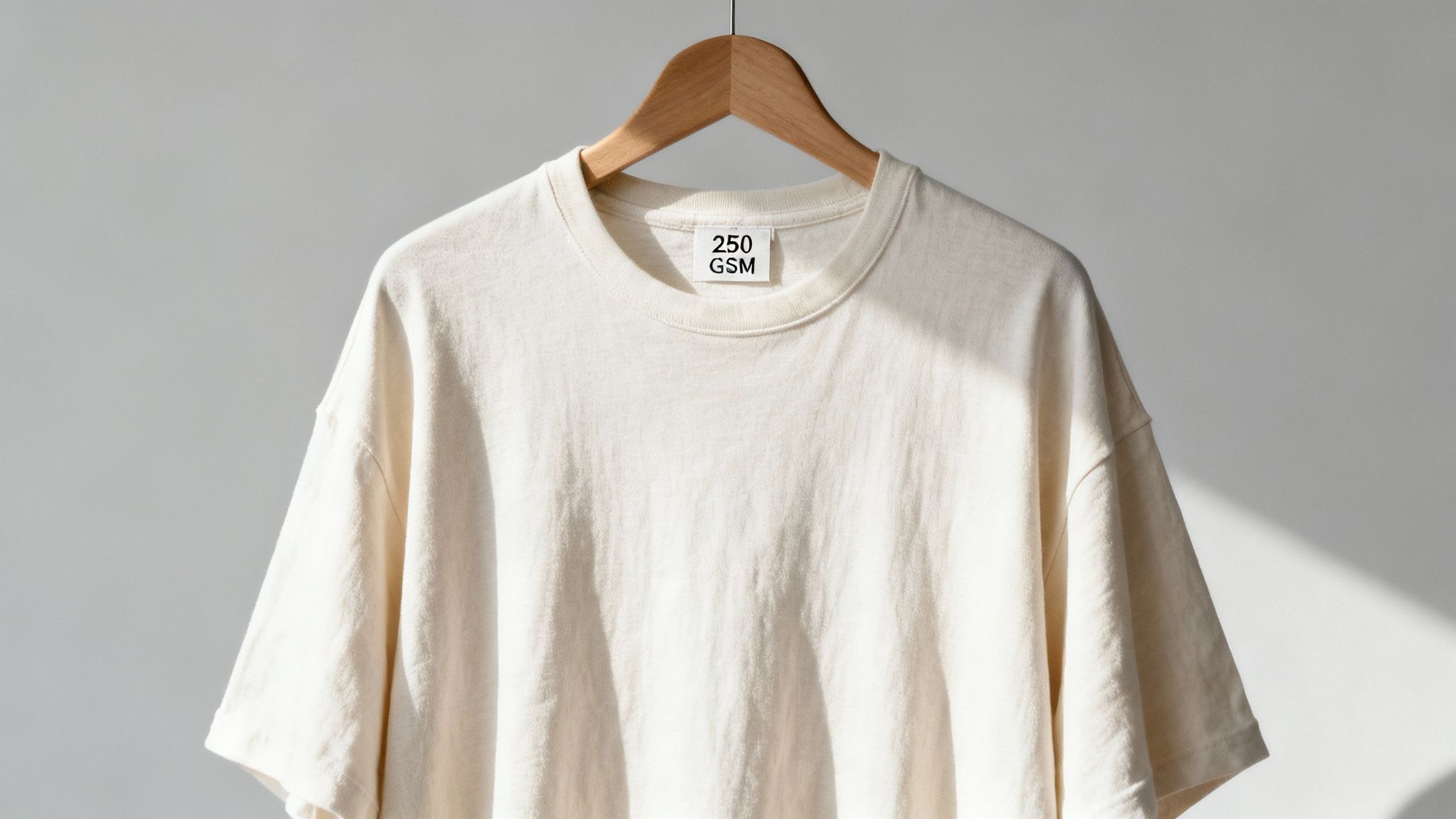
A truly premium T-shirt is defined by details: fabric weight, cotton type, and construction quality. The best quality cotton t shirts offer a structured fit, superior softness, and durability that lasts beyond a few washes. A heavyweight 250 GSM option is the benchmark for this standard.
The Search for the Perfect T Shirt
The T-shirt is a modern wardrobe backbone, yet finding one that lasts is a common challenge. Too often, a new tee loses its shape, color, and texture after minimal wear, turning a staple into a disposable item.
This guide provides a clear framework for identifying genuine quality. We will analyze the tangible markers of a superior garment, from cotton fiber length to fabric weight (GSM) and the small construction details that signal longevity. Consider this your definitive guide to investing in T-shirts with confidence.
For more on building a lasting wardrobe, explore our guide on [minimalist wardrobe essentials](https://taton.shop/en/blogs/news/minimalist- wardrobe-essentials).
Key Indicators of a Quality T Shirt
This table summarizes the core features that separate a premium tee from an ordinary one. We will explore each in detail.
Quick Guide to Quality T Shirt Features
| Feature | What to Look For | Why It Matters |
|---|---|---|
| Cotton Type | Long-staple cotton like Pima or Supima. | Softer feel, higher durability, less pilling. |
| Fabric Weight (GSM) | 180-250 GSM for a substantial, durable feel. | Higher GSM means a denser, more structured fabric that drapes well. |
| Knit and Stitching | Tight, consistent knit; neat, reinforced seams. | Prevents stretching, warping, and unraveling over time. |
| Fit and Cut | A well-considered cut that complements your body shape. | Ensures the shirt looks good and feels comfortable, not just boxy. |
| Finishes | Pre-shrunk or sanforized labels. | Minimizes shrinking after the first wash, preserving the fit. |
This table provides a solid foundation. We will reference premium 250 GSM oversized tees as a benchmark, as they exemplify the ideal blend of structure, comfort, and durability.
A high-quality T-shirt is defined by its performance over time. Its weight, fabric feel, and seam integrity after repeated wear are the truest indicators of value.
Understanding these elements transforms shopping from a guess into a skill. It empowers you to select pieces that become trusted staples. Now, let's break down each feature.
The Foundation of Quality: It All Starts with the Cotton Fiber
The story of a great T-shirt begins with the raw cotton. The single most important factor is the length of the individual cotton fibers—the detail that separates a premium tee from a disposable one.
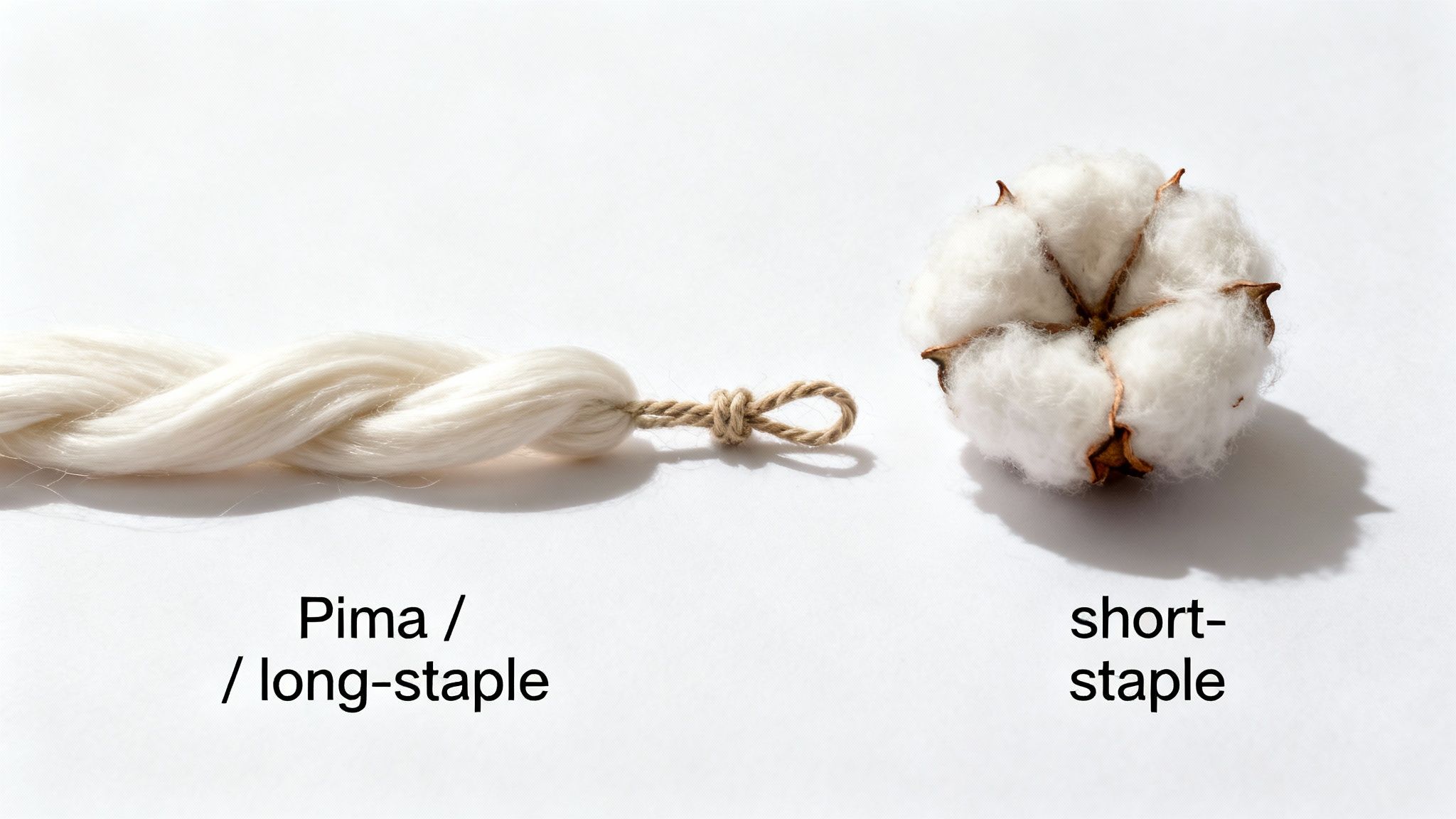
Think of it like building a rope. Short, choppy strings create a weak, fuzzy rope prone to snapping. Long, continuous strands yield a smooth, strong rope built to last. This is the core difference between short-staple and long-staple cotton.
Why Fiber Length Is Everything
Most mass-market T-shirts use short-staple cotton. The short fibers create tiny ends that stick out from the yarn, resulting in a rough texture and pilling.
In contrast, long-staple cotton uses fibers over 1 1/8 inches. With fewer exposed ends, the yarn is inherently smoother, stronger, and more resilient.
This difference in raw material significantly impacts the final garment:
- Unmatched Softness: The smooth yarn surface creates a fabric that feels luxurious and soft.
- Serious Durability: Stronger yarn means the T-shirt withstands washing and wearing without tearing or losing its shape.
- Pill-Resistant: Fewer fiber ends keep the surface clean and smooth, looking new for longer.
- Richer, Deeper Color: Long-staple fibers absorb dye better, resulting in vibrant, fade-resistant colors.
Cotton remains the gold standard, making up nearly 42% of the global T-shirt market. Its natural comfort and breathability, when sourced correctly, are unmatched.
The Elite Cottons: Pima and Egyptian
In the premium market, two extra-long-staple (ELS) cottons set the benchmark for quality.
Pima Cotton
Grown in the US, Peru, and Australia, Pima is an ELS cotton known for its softness and strength. Its long fibers produce a fabric with a silky feel that is still tough enough for daily wear.
Egyptian Cotton
Sourced from the Nile River Valley, authentic Egyptian cotton features some of the longest and finest fibers in the world. T-shirts made from it offer unparalleled smoothness and decades-long durability.
The choice of cotton is the most critical decision in creating a quality T-shirt. A garment with perfect stitching will not last if it begins with inferior raw material.
While premium cotton is the starting point, fabric weight is equally important. To understand it better, see our guide on what GSM means in fabric.
How to Feel the Difference
You can spot quality cotton by touch. A long-staple cotton tee has a subtle sheen and feels exceptionally smooth and cool.
Short-staple cotton often feels slightly fuzzy or coarse. By choosing 100% long-staple cotton, you invest in a T-shirt built on a foundation of quality, comfort, and longevity. For a deeper dive, explore this an expert guide to t-shirt material.
Fabric Weight And Knit: The Feel And Foundation Of A Great T-Shirt
After cotton type, fabric weight is the next critical factor. It dictates how a T-shirt feels, drapes, and endures over time.
Fabric weight is measured in GSM (Grams per Square Meter). This metric indicates how much a one-by-one-meter square of fabric weighs. A higher weight means more cotton was used, resulting in a thicker, denser material.
Making Sense of T-Shirt GSM Weights
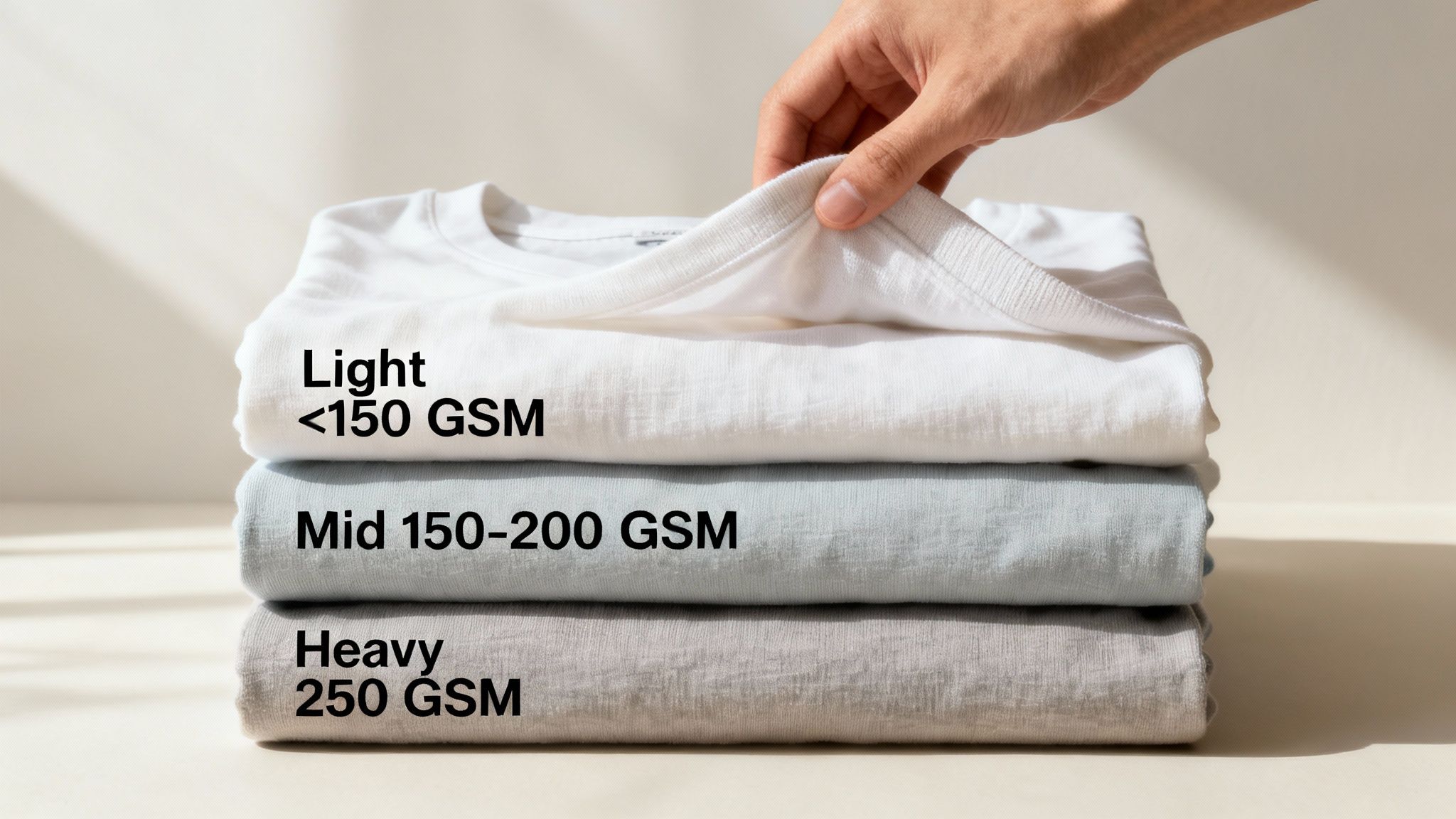
T-shirt weights fall into three general categories. Understanding them helps match a shirt to its purpose.
-
Lightweight (Under 150 GSM): These are breathable tees ideal for hot weather or as an undershirt. The drawback is they are often sheer and quickly lose their shape.
-
Midweight (150-200 GSM): This is the standard for most T-shirts, offering a balance of durability and comfort. A 180 GSM tee is typical, but quality can vary.
-
Heavyweight (Over 200 GSM): This range signifies premium quality. Heavyweight T-shirts have a luxurious feel, a structured drape, and superior longevity. They are built to resist warping and shrinking.
For a strong silhouette and premium feel, a heavyweight tee is essential. A 250 GSM cotton shirt has a satisfying heft, holds its shape, and is designed to be a long-term favorite.
Why The Knit Structure Is Just As Important
While weight provides body, the knit determines texture and stretch. Most T-shirts use a Jersey knit, known for its smooth outer face, soft feel, and natural stretch.
The mark of quality is the tightness of the knit. A dense knit, common in higher GSM tees, creates a smoother surface that resists pilling and stretching. A well-made T-shirt has a uniform surface with no gaps between stitches. This density enhances durability and is gentle on the skin. Learn more about the best fabrics for sensitive skin in our guide.
A heavyweight fabric combined with a tight, high-quality knit creates the perfect T-shirt. It is a garment that performs well over time and often improves with age.
This combination of substantial weight and meticulous knit elevates a T-shirt from a basic to a statement piece. It is crucial for anyone seeking the best quality cotton T-shirts.
Examining Construction and Finishing Details
Beyond the fabric, the craftsmanship defines the best quality cotton t shirts. These small details separate a durable garment from a disposable one.
A T-shirt's primary weak points are the collar, shoulder seams, and hems. These areas endure significant stress from wear and washing. Mass-produced tees often cut corners here, leading to stretched necklines and twisted seams. A premium garment fortifies these areas.
The Collar and Shoulder Seams
A low-quality collar will curl, stretch, and develop "bacon neck." A high-quality tee features a substantial, ribbed collar, often blended with a small amount of elastane for shape retention. It should feel thick and spring back when stretched.
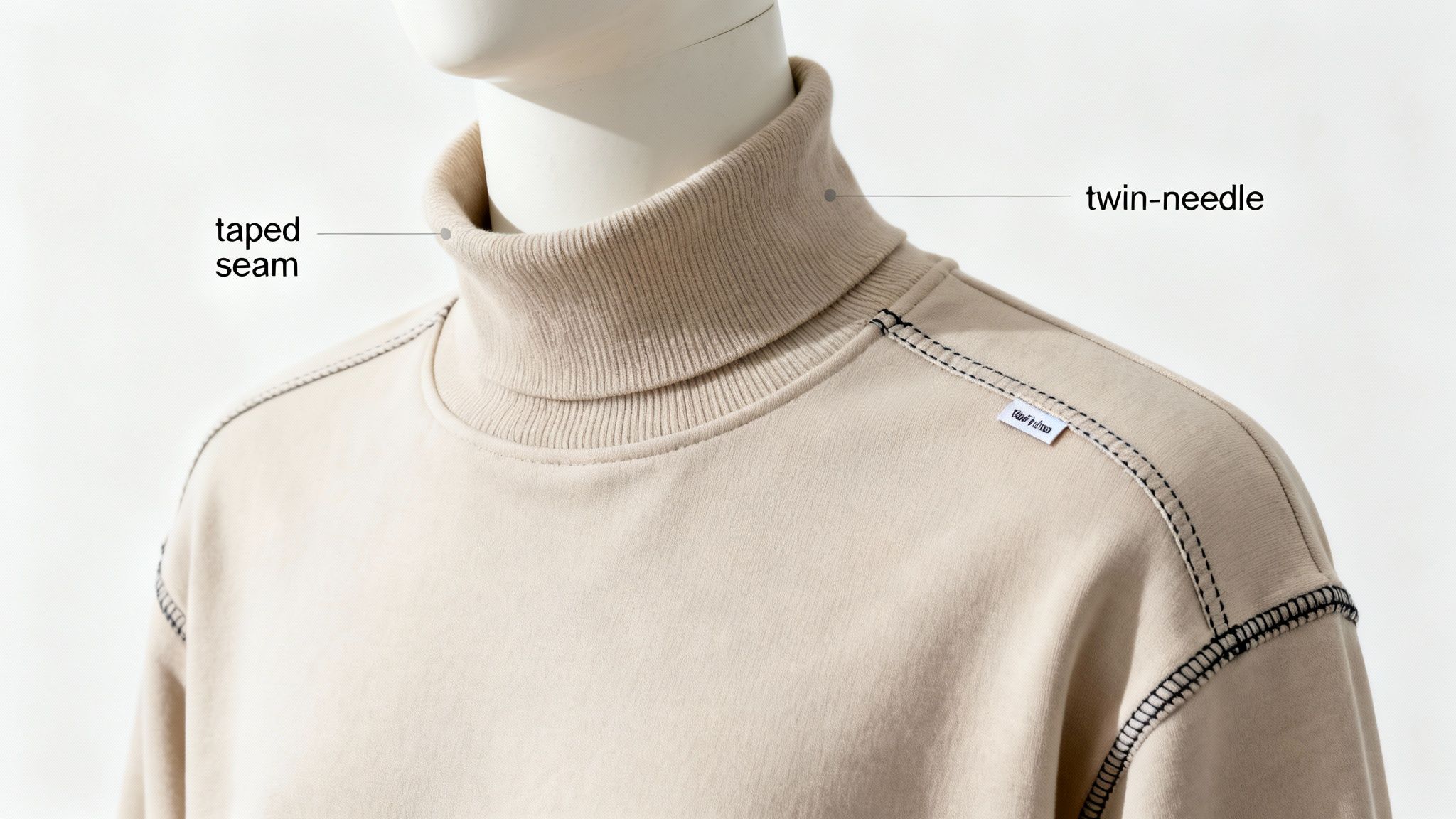
The shoulder seams are equally critical. A key quality indicator is taping—a fabric strip running across the back of the neck from shoulder to shoulder. This taped seam covers the raw edge for comfort and provides structural support, preventing stretching and sagging.
Stitching Density and Durability
Stitching quality is a clear indicator of craftsmanship. A well-made T-shirt has a high stitch density (stitches per inch, or SPI). More stitches create tighter, stronger seams that resist puckering.
The seams on a great tee are clean and straight. Cheaper shirts have loose, sloppy stitching with a low SPI, prioritizing speed over durability.
Look for these specific techniques:
- Twin-Needle Stitching: Two parallel rows of stitches on hems and sleeves add strength and create a clean, flat finish.
- Overlock or Serged Seams: Inside the shirt, fabric edges should be bound with a tight overlock stitch to prevent fraying.
A well-constructed T-shirt is a system of reinforcements. Taped shoulders maintain the drape, dense stitching secures the seams, and a robust collar preserves the shape. Together, these elements ensure longevity.
Once you can identify these markers, you can judge a T-shirt’s quality yourself, without relying on brand names.
Proper storage also protects your investment. Using the best hangers for t-shirts prevents shoulder stretching and preserves the shirt’s structural integrity.
Finding the Right Fit and Silhouette
A T-shirt can be made from luxurious cotton with flawless stitching, but if the fit is wrong, none of it matters. The silhouette is the final piece of the puzzle, elevating a tee from a basic garment to a style statement. A great fit doesn't just hang; it complements your form.
Classic Fits Versus Modern Silhouettes
Most T-shirt fits fall into a few key styles. Understanding them helps build a versatile wardrobe.
- Slim Fit: A tailored cut that sits close to the body. It creates a sharp profile ideal for layering or accentuating an athletic build.
- Classic (or Regular) Fit: The timeless standard, cut straight from the shoulders to the waist. It offers comfortable room to move without looking baggy.
- Oversized Fit: A modern staple where quality design is paramount.
A true oversized fit is not simply a larger size, which results in a sloppy look with a saggy neckline and awkward sleeves.
A well-designed oversized T-shirt is an exercise in proportion. It has dropped shoulder seams, a wider chest, and a balanced length to create a structured, deliberate drape that is both relaxed and refined.
This intentional cut separates a high-fashion silhouette from a sizing error. Our guide on how to determine your clothing size can help you find the right measurements.
How to Choose Your Ideal Silhouette
Choosing the right fit is about balancing your body type and personal style. A classic fit is a versatile foundation, easily dressed up or down.
For a more modern aesthetic, an oversized tee is a strong choice. Pairing it with fitted items, like slim trousers, creates a powerful contrast that highlights the T-shirt's silhouette.
Ultimately, the best T-shirt feels like an extension of you. Investing in a thoughtfully designed silhouette ensures it will look as good as it feels.
Why Ethical Production Is the New Standard of Quality
The definition of the best quality cotton t shirts has evolved. It now includes the garment's impact on people and the planet. Ethical production is a fundamental component of true quality.
It begins with sustainable materials like organic cotton. Growing cotton without synthetic pesticides and fertilizers protects soil, wildlife, and farm workers. This approach also reduces water consumption by up to 91% compared to conventional methods—a significant achievement for a thirsty crop.
The Power of Conscious Choices
Opting for sustainable materials challenges the fast-fashion model of disposable clothing. A quality T-shirt is an investment, built to be a wardrobe staple for years. This inherent durability is a form of sustainability.
This shift has increased demand for high-quality, eco-friendly cotton. Heavyweight cotton tees are a logical choice, as their dense fabric better resists pilling and fading. It is a smarter investment for both your wallet and the planet. You can discover more insights about the t-shirt world market on indexbox.io to see these global trends.
A mindful approach also means supporting local manufacturing.
True quality is holistic. It measures a garment’s entire lifecycle, from seed to wardrobe. A T-shirt made with respect for people and the planet is the ultimate expression of modern luxury.
Choosing brands that produce locally reduces the carbon footprint from global shipping. Less transport means fewer emissions—a direct way to make a positive impact.
Investing in More Than Just a Garment
Supporting local businesses also strengthens communities and ensures fair labor practices. It fosters a transparent supply chain where craftsmanship is valued. Our article on what is sustainable fashion explores this in more detail.
An exceptional T-shirt must meet three criteria:
- Exceptional Materials: Premium, long-staple cotton for feel and longevity.
- Meticulous Construction: Reinforced seams and dense stitching for durability.
- Ethical Origins: Production that respects both the environment and workers.
A T-shirt that meets these standards is more than just clothing. It is a statement—a vote for a more responsible way of living.
Common Questions About Cotton T-Shirts
Let's clarify common questions about finding a truly great cotton tee.
What’s the Best GSM for a Quality T-Shirt?
While there is no single best number, the heavyweight range of 200-270 GSM is ideal for a T-shirt that feels substantial, drapes well, and is built to last.
A 250 GSM tee hits the sweet spot. It has a luxurious heft that provides structure for a clean silhouette. It is thick enough to be opaque yet remains comfortable, signaling true quality.
How Can I Stop My Cotton T-Shirt From Shrinking?
Any 100% natural cotton garment may shrink slightly. High-quality tees are typically pre-shrunk to minimize this. Look for labels like "pre-shrunk" or "sanforized."
Proper care is also essential:
- Wash Cold: Use a cold water cycle, as heat is the primary cause of shrinking.
- Dry Low or No Heat: Tumble dry on the lowest setting or, ideally, hang to air dry.
A well-made, heavyweight fabric is naturally more stable and will hold its shape better through repeated washes.
Is 100 Percent Cotton Always the Best Choice?
For softness, breathability, and comfort, 100% cotton is superior. It is naturally hypoallergenic and softens with wear. For the main body of a shirt, top-tier, long-staple cotton is unbeatable.
However, a small blend can be beneficial in specific areas. A touch of elastane (1-5%) in a ribbed collar adds stretch and recovery, preventing sagging. But for the primary fabric, pure cotton remains the gold standard.
At Taton.shop, we are obsessed with these details. Our collection is built around premium heavyweight T-shirts and foundational pieces made with uncompromising quality. Find your new go-to at https://taton.shop.
