
Best Fabrics for T Shirts: A Guide to Premium Materials
The search for the perfect T-shirt begins and ends with fabric. While 100% cotton is a timeless standard, the best material is defined by its purpose. A structured fit, a modern drape, or performance characteristics demand different textiles, from heavyweight cotton to innovative blends.
This guide explores the essential fabrics that define a premium T-shirt.
Why T-Shirt Fabric Matters
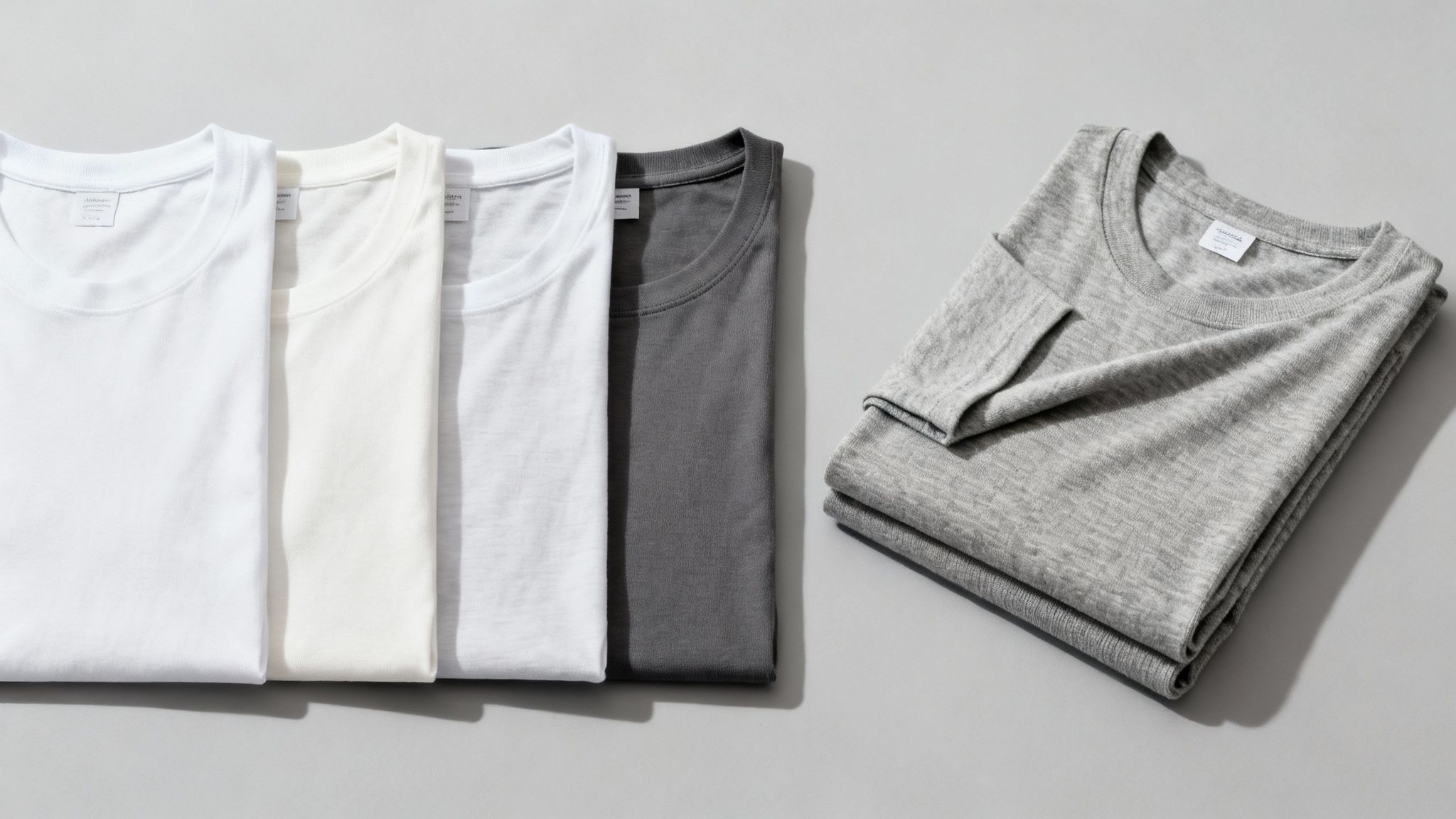
Fabric is the foundation of a T-shirt. It dictates feel, longevity, and silhouette. Understanding material properties is the first step toward building an intentional, lasting wardrobe.
A T-shirt's fabric determines its character. It can be light and airy for summer, substantial and structured for a modern aesthetic, or smooth and fluid for a refined look.
Core Fabric Families
To make an informed choice, it is useful to understand the main fabric categories. Each offers distinct advantages for a clean, minimalist aesthetic.
- Timeless Cottons: This natural fiber is the backbone of classic essentials, valued for its softness and breathability.
- Modern Synthetics: Materials like polyester are engineered for performance, offering durability and wrinkle resistance.
- Refined Blends: Fabrics such as Beamsilk or Rayon combine the best attributes of different fibers, balancing comfort and sophistication.
Here is a brief comparison of these fabric groups.
| Fabric Family | Primary Strength | Ideal Use Case |
|---|---|---|
| Natural Cotton | Breathability & Comfort | Everyday premium essentials |
| Synthetic Fibers | Durability & Performance | Activewear and travel |
| Modern Blends | Unique Drape & Feel | Elevated minimalist style |
Cotton dominates the textile market. Consumer data shows that 70-80% of people prefer it for daily wear. In warm climates, it can reduce skin irritation by up to 50% compared to synthetics.
By focusing on specific materials, like a heavyweight 250 GSM cotton, you can select pieces that align with a desired aesthetic. For a comprehensive overview, this guide on Choosing the Best Fabric for T Shirts is a valuable resource.
The Enduring Appeal of 100% Cotton
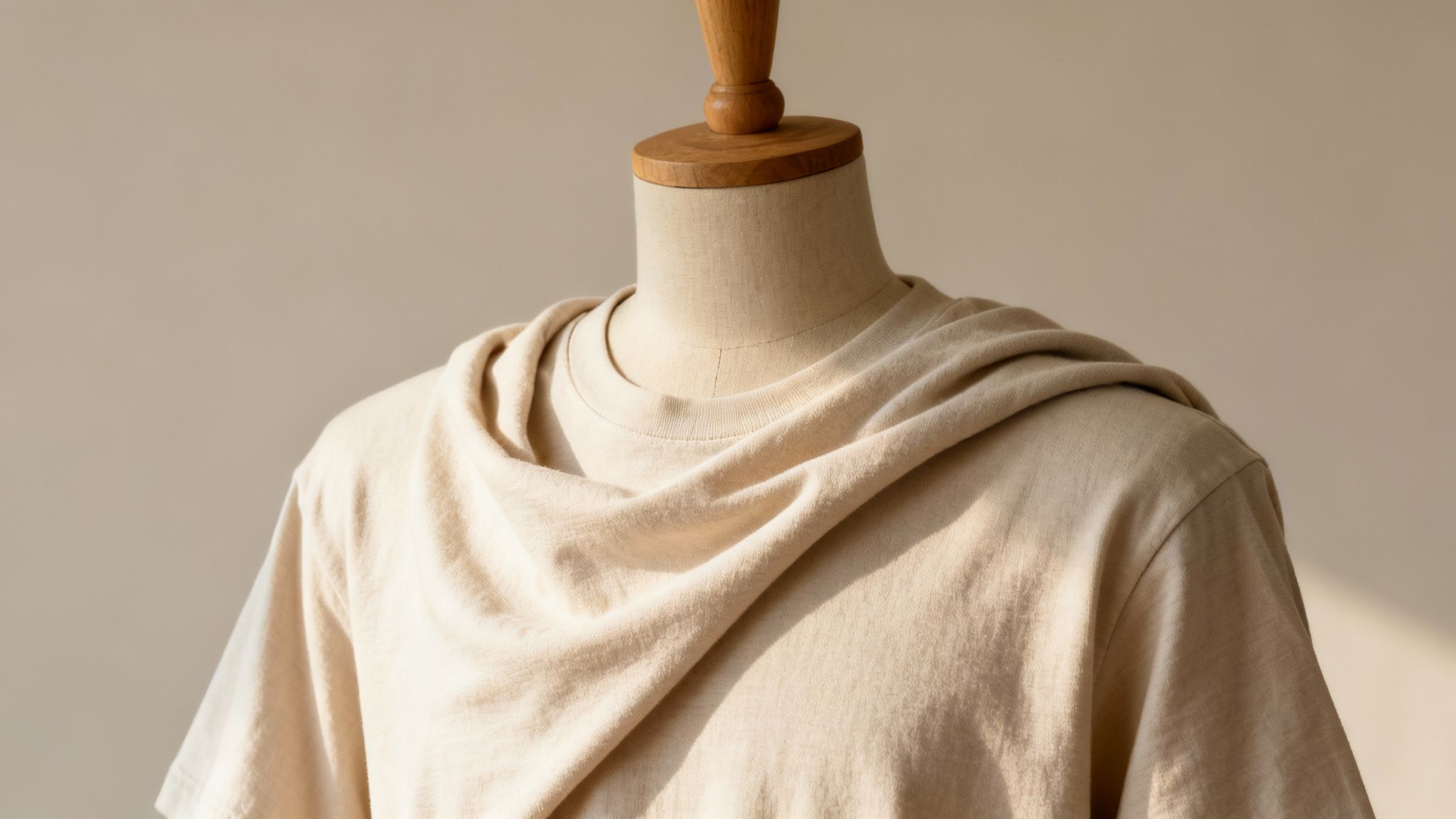
In essentials, 100% cotton is the benchmark. Its appeal is rooted in a natural feel that synthetics have yet to replicate—it is breathable, soft, and comfortable against the skin.
Cotton is the foundation of a thoughtful, minimalist wardrobe. It is versatile, absorbing moisture to keep you comfortable in warm or cool conditions. This simple, reliable functionality is why cotton remains the choice for quality basics.
Understanding Cotton Quality
Not all cotton is created equal. The difference between a disposable tee and a long-term favorite lies in the fiber and its processing.
-
Combed Cotton: This cotton undergoes a combing process where fine brushes remove short fibers and impurities, leaving only the longest, straightest strands. The resulting yarn is stronger, smoother, and softer.
-
Ring-Spun Cotton: The ring-spinning process continuously twists and thins cotton strands into a fine, tight yarn. This makes the fabric exceptionally soft and significantly more durable than standard cotton.
A "combed and ring-spun cotton" label signifies the highest quality. This combination creates an exceptionally smooth, resilient fabric that feels luxurious and holds its shape, wash after wash.
This attention to detail separates a basic from an investment. Fiber choice directly impacts not only texture but also the T-shirt's ability to withstand daily wear without pilling or warping.
The Significance of Fabric Weight (GSM)
Beyond cotton type, fabric weight defines a T-shirt's character. Measured in Grams per Square Meter (GSM), this metric indicates material density. Higher GSM means a thicker, more substantial fabric.
A lightweight tee may lack structure and be sheer. Heavyweight cotton, however, is ideal for achieving a modern, architectural silhouette.
A 250 GSM T-shirt offers distinct advantages:
- Structured Drape: The weight allows the fabric to hang cleanly instead of clinging, creating a strong, defined shape ideal for oversized or boxy fits.
- Enhanced Durability: Heavier fabric is inherently tougher, handling more wear and washing without stretching or thinning.
- Opaque Finish: High density ensures total opacity for a clean, solid look.
Why Heavyweight Cotton Defines Modern Essentials
The trend toward heavyweight cotton aligns with a minimalist ethos of quality over quantity. A 250 GSM cotton tee is a structural piece, its substantial feel communicating quality.
This weight provides a crispness that holds its form, looking sharp alone or layered. The structured drape elevates both modern streetwear and refined casual looks, delivering a premium feel. Choosing heavyweight cotton is an investment in durability, style, and a reliable staple.
Exploring Modern Synthetics and Blends
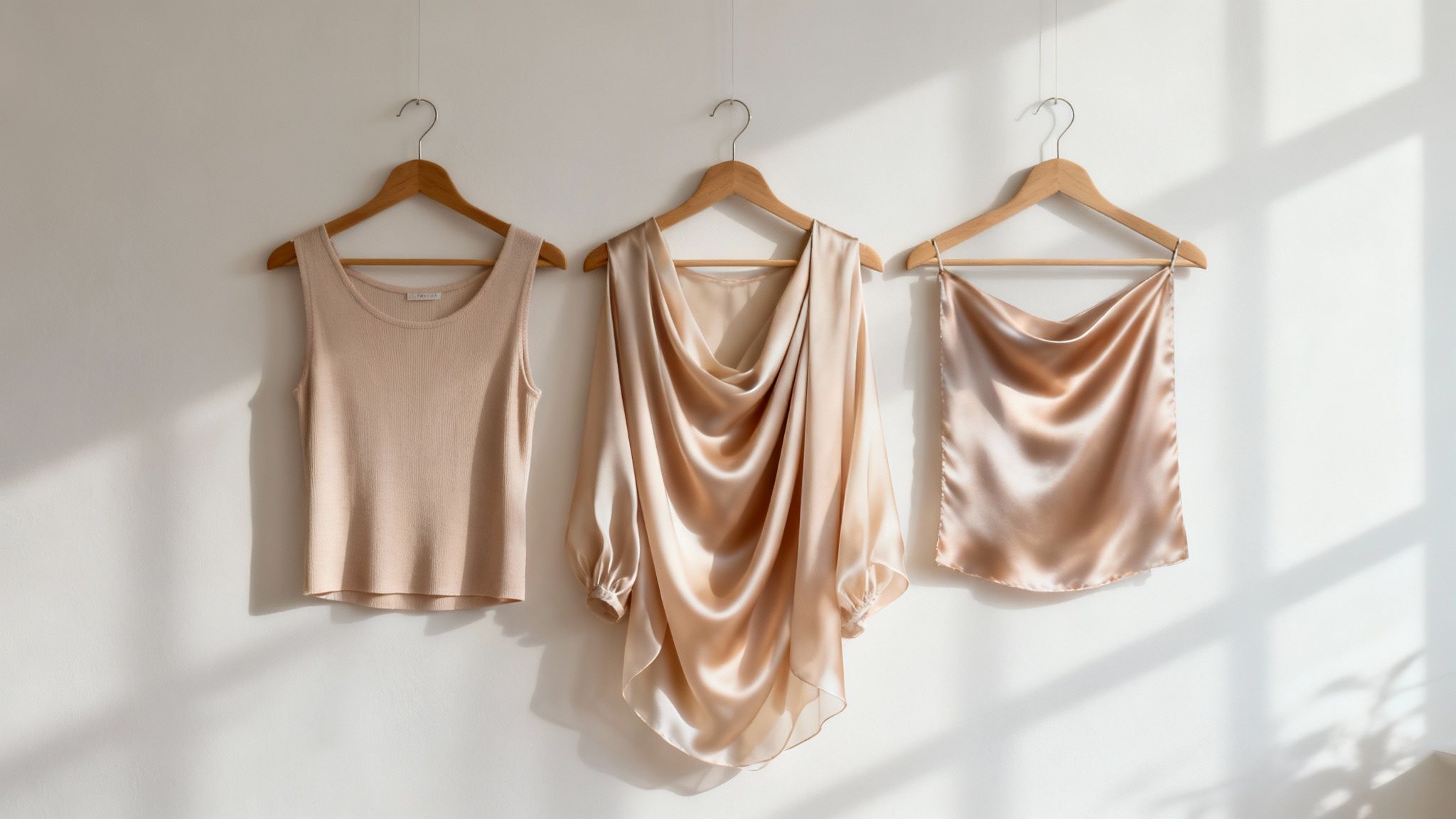
While cotton is a classic, modern textiles offer functional advantages where natural fibers leave off. Synthetics and engineered blends introduce performance, durability, and unique textures essential for a versatile wardrobe.
These materials are engineered to resist wrinkles, retain shape, and create drapes unattainable with natural fibers alone. They are key for a minimalist aesthetic that values both form and function.
The Case for Polyester
Modern polyester is a high-performance material prized for its resilience. It naturally resists stretching, shrinking, and creasing, making it ideal for travel and an active lifestyle.
Its key advantage is its hydrophobic nature—the fibers do not absorb moisture. Instead, sweat is wicked away from the skin to the fabric's surface for evaporation, which is why it is foundational to athletic wear.
Polyester's value is maximized in blends. Paired with cotton, it creates a fabric that combines natural comfort with synthetic strength for a garment that is soft yet durable.
Polycotton blends offer the comfort of cotton with the wrinkle resistance and shape retention of polyester. With polyester comprising 59% of the 132 million tonnes of global fiber produced, its impact is clear. Durability tests show polyester blends shrink 50% less than pure cotton and retain color 40% better after 50 washes. You can explore these figures in the global materials market report from Textile Exchange.
The Fluid Elegance of Rayon
Rayon is a semi-synthetic fiber made from natural cellulose (wood pulp) through a manufacturing process. This yields a material known for its silk-like feel and a uniquely fluid, graceful drape.
Unlike the crisp structure of heavyweight cotton, rayon hangs loosely and flows with the body. This quality lends an understated elegance to a T-shirt, elevating it to a refined piece for smart-casual looks.
Rayon is exceptionally smooth and highly absorbent, making it comfortable in warm weather. The tradeoff is its weakness when wet, requiring delicate laundering to maintain its shape.
Innovative Blends and Modern Textiles
The most compelling fabric advancements are in innovative blends designed for a specific balance of properties.
-
Beamsilk: This proprietary blend combines the softness of natural fibers with the smooth drape and subtle sheen of materials like rayon, resulting in a luxurious feel with a clean, minimalist look.
-
Tri-Blends: A mix of cotton, polyester, and rayon, these blends are known for exceptional softness and drape. Cotton provides breathability, polyester adds durability, and rayon contributes a fluid, lightweight feel.
-
Modal and Tencel (Lyocell): These next-generation rayons are made from sustainably sourced wood. They are incredibly soft, resistant to shrinkage, and more eco-conscious than traditional viscose rayon.
These engineered fabrics demonstrate a commitment to functional design, creating T-shirts that perfectly balance comfort, performance, and style.
A Head-to-Head Fabric Comparison
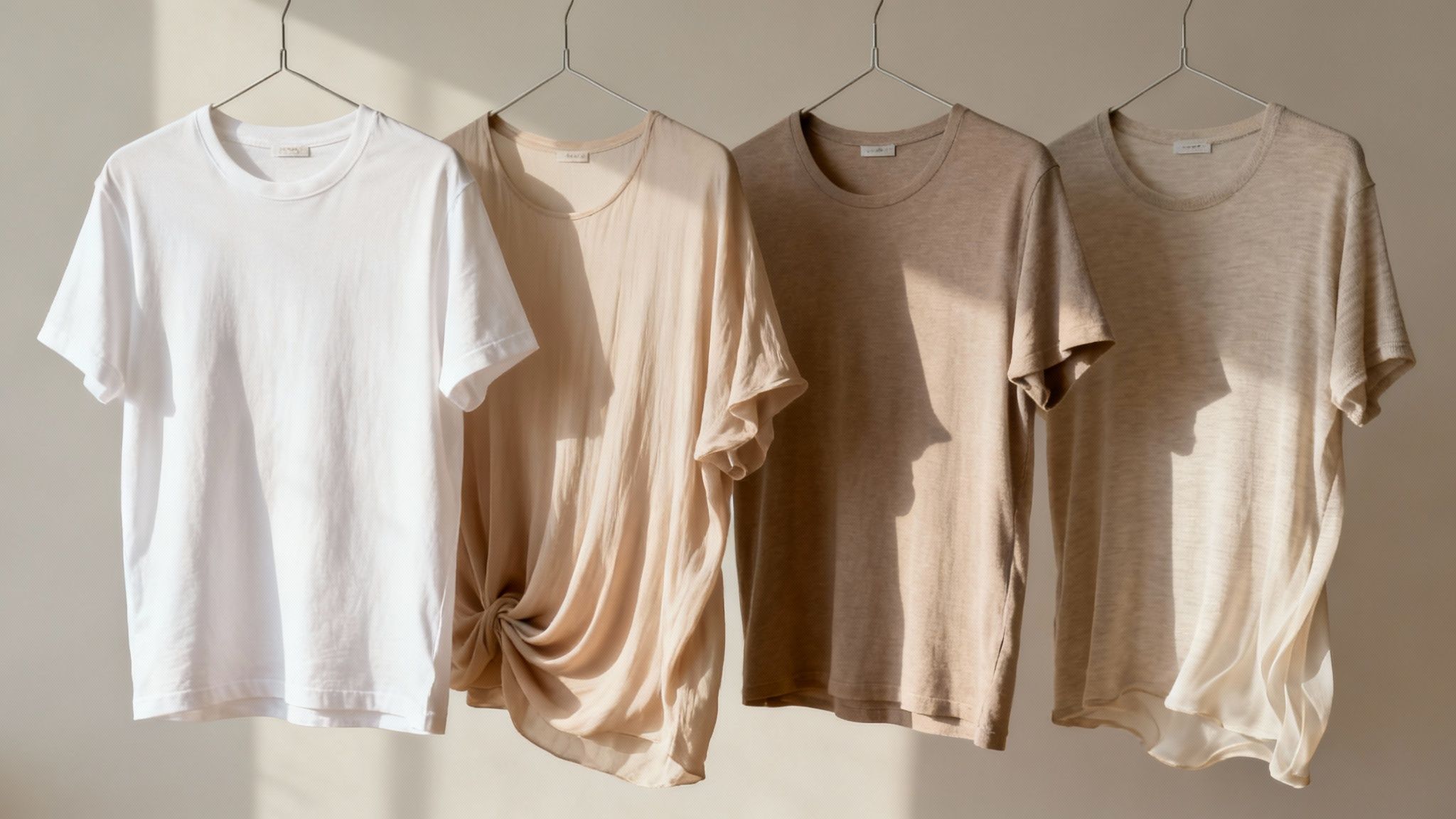
To identify the best fabric for a T-shirt, a side-by-side comparison is essential. Analyzing heavyweight cotton, polyester, and rayon across key criteria clarifies which material suits a specific look, function, or lifestyle.
This breakdown makes their unique strengths and ideal use cases clear, enabling a precise and informed choice.
Breathability And Feel
A T-shirt's feel against the skin is its most immediate quality.
Heavyweight Cotton has a crisp, dry feel. Its natural fibers offer excellent breathability, allowing air to circulate and wicking moisture from the skin for comfort.
Polyester is known for a smooth, slick texture. It excels at wicking sweat away from the body but is less breathable than cotton, making it ideal for workouts but potentially clammy for casual wear.
Rayon provides exceptional comfort with a smooth, cool-to-the-touch sensation similar to silk. Its high absorbency makes it comfortable in hot weather, though it can feel heavy when saturated.
Durability And Shape Retention
A quality T-shirt must withstand repeated wear and washing.
Heavyweight cotton, particularly long-staple, ring-spun varieties, is very durable. Its dense weave resists pilling and tearing but can shrink if exposed to high heat.
Polyester is the most resilient fabric. Its synthetic fibers are incredibly strong, resisting abrasion, stretching, and shrinking, ensuring the garment looks new after many washes.
Rayon is the most delicate. Its fibers are weaker, especially when wet, making it susceptible to stretching. Careful handling is required to maintain its shape.
When customizing tees, the material's reaction to printing methods is a key factor, as detailed in this comparison of polyester and cotton for printing.
Drape And Fit
A fabric's drape defines the T-shirt's final silhouette and is crucial for achieving a specific style.
The structure of heavyweight 250 GSM cotton creates a crisp, architectural drape that stands away from the body, ideal for the clean lines of an oversized or boxy fit.
Polyester's drape has more flow than structured cotton, following the body’s shape without clinging, making it suitable for athletic cuts that require freedom of movement.
Rayon offers the most fluid, dramatic drape. It moves with the wearer, creating a soft, relaxed silhouette with an effortless elegance perfect for looser, sophisticated designs.
Required Maintenance
The level of care a fabric requires impacts its suitability for your lifestyle.
- Heavyweight Cotton: Low-maintenance. Wash cold and tumble dry low to prevent shrinking.
- Polyester: Very low-maintenance. Machine wash and dry. It is wrinkle-resistant and dries quickly.
- Rayon: High-maintenance. Requires a gentle, cold wash and should be laid flat or hung to dry to prevent stretching.
T-Shirt Fabric Feature Comparison
This table summarizes key differences to help you select the best material for your needs.
| Fabric Type | Best For Style | Feel & Comfort | Durability | Care Level |
|---|---|---|---|---|
| Heavyweight Cotton | Oversized, streetwear, boxy fits | Crisp, dry, and breathable | High, but can shrink | Low to Moderate |
| Polyester & Blends | Activewear, performance basics | Smooth, slick, moisture-wicking | Excellent, resists everything | Very Low |
| Rayon/Viscose/Modal | Draped, relaxed, sophisticated looks | Silky, cool, and fluid | Low, delicate when wet | High |
This comparison highlights the trade-offs. Your ideal T-shirt depends on whether you prioritize the structured look of cotton, the performance of polyester, or the elegant drape of rayon.
Matching the Right Fabric to Your Style
Matching fabric properties to your personal style is key. A T-shirt is a deliberate choice that defines a look.
The right material can elevate an outfit from an afterthought to an intentional statement. This section provides actionable advice on how to choose the best fabrics for t shirts to achieve a specific aesthetic.
For The Streetwear Enthusiast
Streetwear centers on silhouette and structure. An oversized, boxy fit requires a fabric with enough body to hold its shape.
A 250 GSM cotton tee is the ideal foundation. Its density creates a crisp, structured drape that stands away from the body, achieving the clean lines of a deliberately oversized fit. Lighter fabrics cling and sag, undermining the look.
The substantial feel of heavyweight cotton also communicates quality and durability—core values in authentic streetwear.
For a defined, modern profile, heavyweight cotton is non-negotiable. Its structure provides the architecture for the streetwear silhouette.
For The Minimalist Professional
The minimalist professional seeks understated elegance in versatile pieces. The wardrobe must transition seamlessly from a creative office to an evening out.
Rayon and its modern variants like Modal or Tencel are perfect. Their fluid drape is a sophisticated alternative to classic cotton. A rayon T-shirt hangs beautifully, creating a soft silhouette that layers well under a blazer.
The silk-like feel and subtle sheen elevate the T-shirt from a basic to a refined garment. It signals a focus on quiet quality and thoughtful detail.
For The Active Individual
An active lifestyle demands function as much as form. The ideal T-shirt must be durable, easy to care for, and comfortable.
Cotton-polyester blends excel here. They combine the softness of cotton with the strength of polyester, resisting wrinkles and holding their shape through constant washing.
The moisture-wicking properties of polyester add a performance edge for commuting or travel. A poly-cotton blend is a practical, low-maintenance solution that remains sharp and put-together.
How to Read a T-shirt Label Like a Pro
A T-shirt's fabric label is its specification sheet. It provides the key to understanding how the garment will perform, wash, and wear over time.
The fiber percentage is the most obvious detail. A tag reading 80% Cotton / 20% Polyester indicates an engineered blend that balances the soft feel of cotton with the wrinkle resistance of polyester.
A 100% Cotton label signals a commitment to natural fibers and breathability. However, the true quality indicators are in the finer details.
Looking for Clues to Quality
Certain terms on a label indicate superior fabric processing. Identifying them helps you find the best fabrics for T-shirts.
- Ring-Spun Cotton: This term means the fibers were twisted into a fine, strong yarn, resulting in a much softer and more durable fabric than standard cotton.
- Combed Cotton: The cotton fibers have been combed to remove short, prickly strands, leaving only the longest, smoothest fibers for a noticeably softer fabric that resists pilling.
- GSM (Grams per Square Meter): A critical measure of fabric weight. A 250 GSM tee is a true heavyweight, offering a structured feel. Anything under 150 GSM will be lighter and more transparent.
A "100% Combed and Ring-Spun Cotton" label is a clear indicator of quality. It signifies a fabric engineered for softness, a smooth finish, and longevity.
This knowledge transforms you from a consumer into an informed buyer, enabling you to judge a T-shirt's value based on its construction.
Your T-Shirt Fabric Questions Answered
Understanding premium fabrics can raise questions. Here, we address common inquiries about material performance and care to help you choose with confidence.
What Does GSM Mean and Why Is 250 Premium?
GSM (Grams per Square Meter) measures fabric density or weight. Most standard T-shirts are 160-180 GSM. A 250 GSM fabric is in another league—noticeably heavier and more substantial.
This extra weight creates a structured, architectural drape that holds its shape, essential for modern oversized and boxy fits. The high density also ensures opacity and durability, setting it apart from lighter alternatives.
High GSM is a deliberate choice for longevity and a superior silhouette. It transforms a simple T-shirt into a foundational piece with tangible quality.
Is 100% Cotton Always Better Than a Blend?
The better option depends on the intended use.
100% cotton is unmatched for breathability and classic, soft comfort. For daily wear and a natural feel, it is the top choice.
A well-engineered blend offers distinct advantages. A cotton-polyester mix is more durable, wrinkle-resistant, and dries faster, making it ideal for travel or active days. The choice is between pure, natural comfort and enhanced, practical performance.
How Should I Care for Different T-Shirt Fabrics?
Proper care ensures longevity. Each fabric requires a slightly different approach.
- 100% Cotton: Wash in cold water to prevent shrinking. Tumble dry on low or, for best results, air dry.
- Polyester Blends: These are durable. Machine wash cold and tumble dry on low without concern for shape loss.
- Rayon and Modal: These delicate fabrics require a gentle cycle with cold water. Lay flat or hang to dry, as the weight of water can cause stretching.
The key rule is to avoid high heat, which is the enemy of all fabrics and can cause irreversible damage.
At Taton.shop, our collections are built on exceptional materials like heavyweight 250 GSM cotton and sophisticated blends. We are committed to the highest standards of quality and style. See the difference for yourself.
