
How to clean gold to make it shine: a guide to restoring its shine
Even your most beloved gold jewelry will eventually lose its original shine. This is a natural process that is easy to fix.
The easiest and safest way to restore the shine is with warm water and a drop of mild detergent. This method is ideal for most types of gold, from pure 18K to delicate gold-plated jewelry.
Why does gold lose its luster?
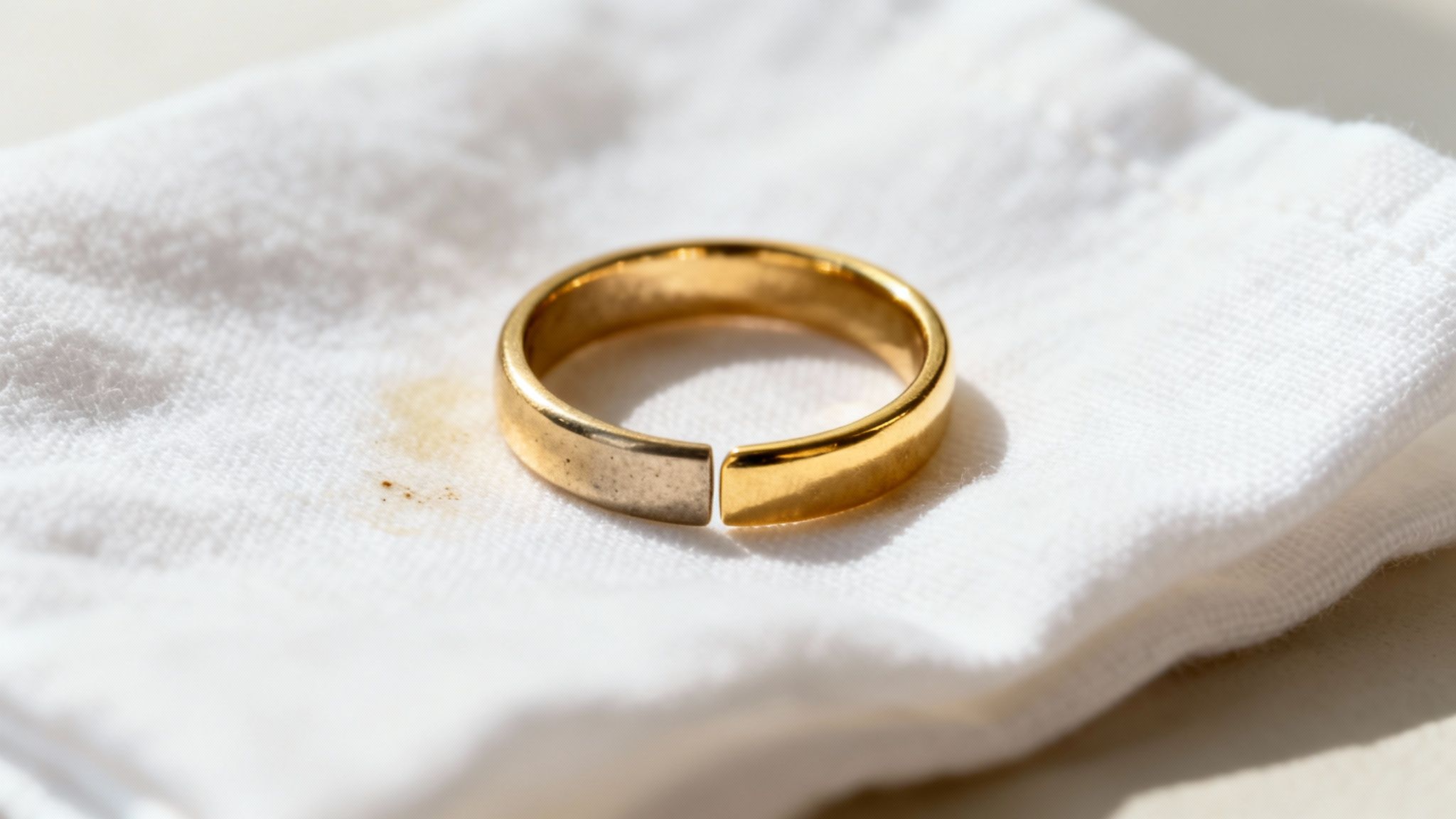
Have your vintage 18K earrings or modern S925 gold-plated jewelry lost their shine? This is not a sign of poor quality, but a result of daily contact with the world around you.
As you wear your jewelry, a subtle film forms on its surface. It’s made up of everything that gold comes into contact with, from cosmetics to ordinary dust. It’s this film that scatters light, making the metal look dull. Understanding these processes is the first step to proper care that will preserve your jewelry.
Main causes of tarnishing
There are several main "culprits" that strip gold of its natural shine.
- Cosmetics and care. Natural skin oils, cream residue, perfume, and hairspray create a sticky base. Dust easily clings to it, forming a dull film.
- Household chemicals: Chlorine, harsh detergents, and other chemicals can react with the alloy—metals added to gold for strength (such as copper or silver). This causes the alloy to darken and change color.
- Environment: Air and moisture over time cause the impurities in the alloy to slowly oxidize, especially when it comes to lower-purity gold.
The main rule of care is regularity and delicacy. Timely cleaning not only restores the shine to the jewelry, but also prevents the accumulation of dirt, which can damage the stone settings.
Demand for proper care
Today, more and more people are striving to keep their belongings in perfect condition. Jewelry is no exception. This is stimulating the demand for high-quality and safe care products. According to forecasts, the global market for gold and silver cleaning products could reach $1.5–2.5 billion US dollars by the early 2030s.
This highlights the importance of proper techniques, especially for designer jewelry with 18K gold plating on a S925 silver base. After all, proper care is the key to preserving its beauty and value.
In this guide, we've put together proven methods to help you confidently care for your entire collection. Taking care of your favorite pieces, like gold hoop earrings , will allow you to enjoy their beauty for years to come.
Safe home methods for all types of gold
If you're looking for "how to clean gold to make it shine," the answer depends on the material of your jewelry. Cast gold and gold-plated items require completely different care. Each type has its own resistance to cleaning.
For example, 14K or 18K solid gold is quite durable and can withstand more thorough cleaning. However, jewelry with a thin layer of gold plating requires a much more delicate approach.
Caring for cast gold (14K and 18K)
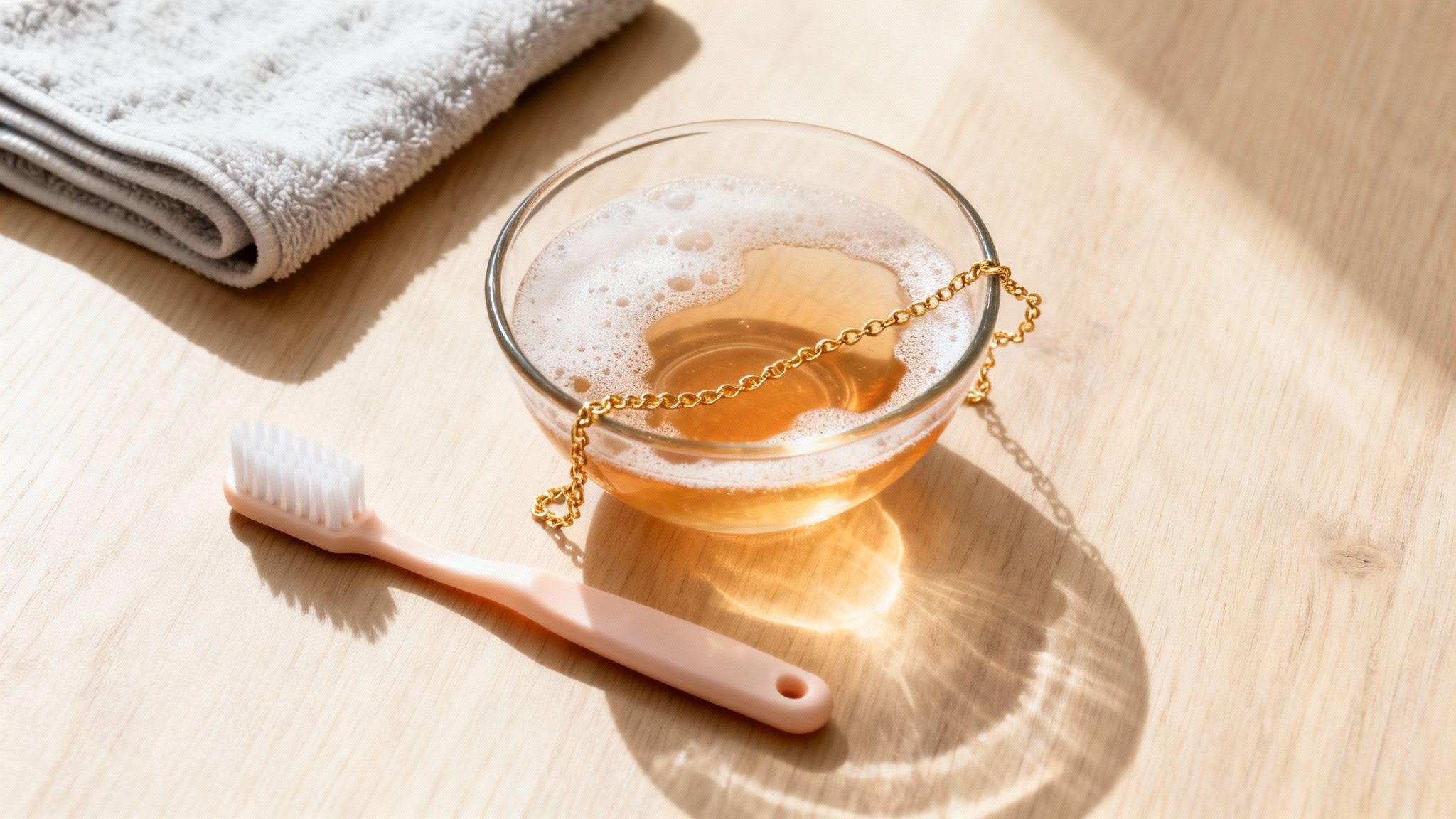
Cast gold is easy to clean, so restoring its shine is relatively easy. The safest and most effective method is to soak it in warm water with a few drops of a mild, pH-neutral detergent. This solution is ideal for dissolving grease, lotions, and everyday grime without the use of harsh chemicals.
Leave the jewelry in for 15-20 minutes . If you need to clean hard-to-reach areas, use a tool with ultra-soft bristles, such as a child's toothbrush. It is gentle enough not to scratch the metal. Then rinse the jewelry under cool running water and dry with a soft, lint-free cloth.
Expert Tip: This soaking method is ideal for intricately designed jewelry. The soapy water removes dirt from small crevices that a regular cloth can't reach, restoring the shine of patterns and engravings.
A delicate approach to S925 gold-plated jewelry
Gold-plated jewelry, like the exquisite products from the Taton.shop collection, requires much more delicate care. Their luxurious appearance is provided by a thin layer of gold on top of the S925 silver base, and any aggressive cleaning can damage it. That is why soaking such products is prohibited.
The best way to clean your silver is to gently wipe it with a soft, damp microfiber cloth. This is usually enough to remove fingerprints and light dust. A low-moisture technique is effective at cleaning without getting any liquid under the coating, which could cause it to peel or tarnish. We recommend the same gentle approach for silver, as outlined in our guide to cleaning silver at home.
The risk of improper cleaning of gold-plated jewelry is real. The thickness of the gold coating on jewelry is typically only 0.5–2.5 microns . Industry data shows that a coating about 1 micron thick can noticeably fade in as little as 6–12 months when exposed to aggressive media. However, with careful care, the lifespan of the coating can be extended to 1–3 years .
For a better understanding, here is a brief overview of the proper care of each type of gold.
Comparison of safe cleaning methods by gold type
This table shows the best home techniques for cast gold and S925 gold plated jewelry. It is important to know the difference to protect your pieces.
| Type of gold | Recommended method | What to use | What to avoid |
|---|---|---|---|
| Cast gold (14K/18K) | Soaking and delicate cleaning | Warm water, mild detergent, baby toothbrush, microfiber | Aggressive chemicals (chlorine, ammonia), abrasives (baking soda, toothpaste) |
| Gold plated S925 | Delicate wiping | Damp microfiber cloth, dry polishing cloth (without impregnation) | Soaking, brushing, abrasive cloths, any chemicals |
Choosing the right method depends on understanding the material. Use a gentle but effective soak for cast gold and a minimalist wipe for your exquisite gold-plated treasures.
Cleaning gold jewelry with delicate stones
When gold jewelry is encrusted with gemstones, the rules of cleaning change. It's not just about keeping the metal shiny, but also about protecting the stones. Many of them are much more delicate than you might think, and can be easily damaged by chemicals, sudden changes in temperature, or even soaking in water.
Before you begin, it's important to know exactly what type of stone you're dealing with. This detail will determine your entire cleaning strategy, as a method that works for a diamond may ruin an opal.
Understanding porous and solid rocks
Porous stones can be compared to microscopic sponges. They easily absorb liquids, which can lead to permanent discoloration or even cracking. This group includes some of the most desirable and fragile gemstones.
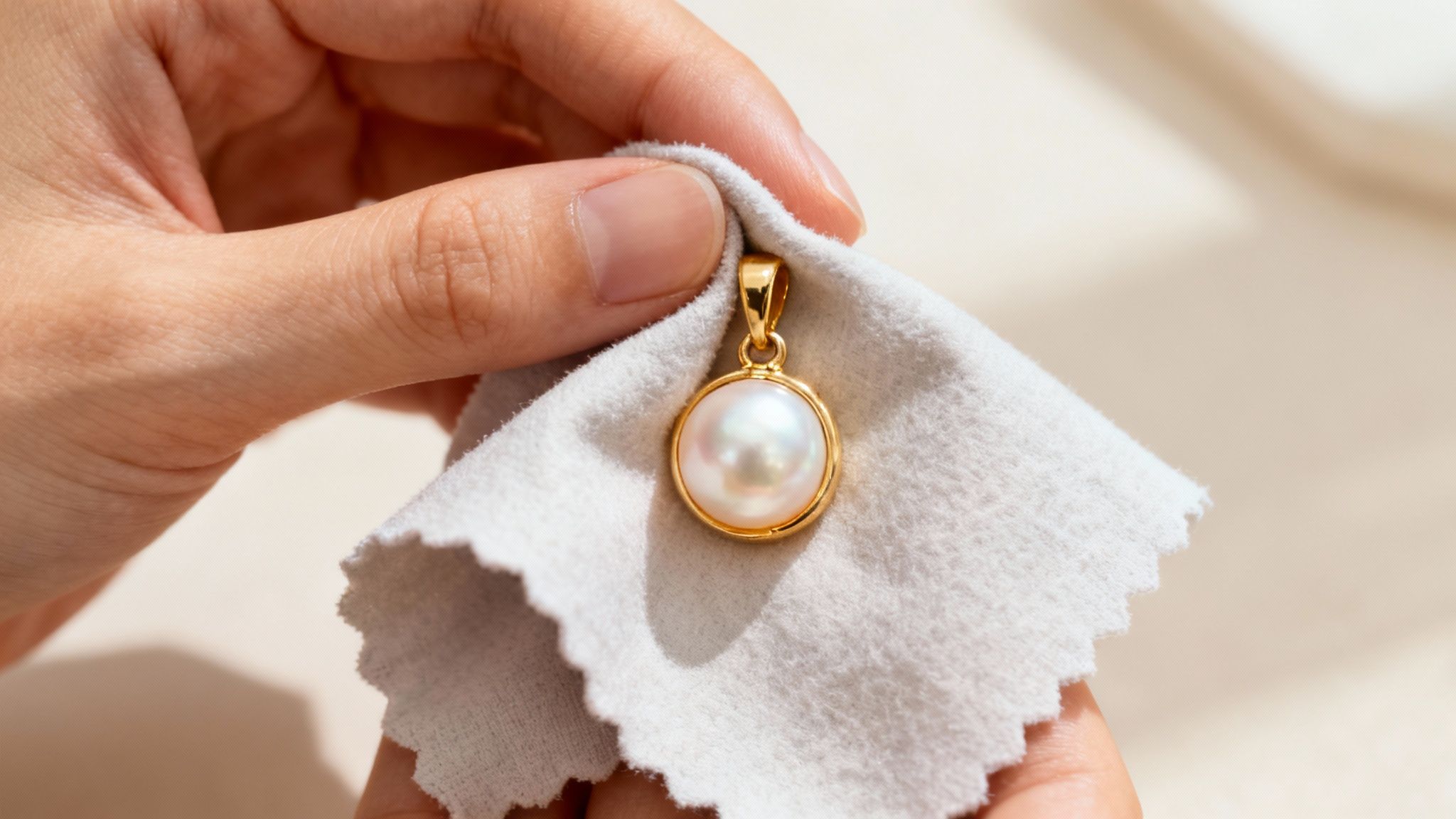
- Porous stones: pearls, opals, turquoise, corals, and amber. Soaking is strictly prohibited for these. The only safe approach is to gently wipe the stone with a soft, dry cloth. If necessary, a very slightly damp cloth can be used, but avoid the setting where moisture can trap and cause damage.
On the other hand, solid, non-porous gemstones are much more durable. They can withstand a cleaning process similar to that used for cast gold.
- Hard stones: Diamonds, sapphires, rubies, and amethysts. A solution of mild soap and warm water is safe for these. You can even use an extra-soft child's toothbrush to gently remove dirt around the stone and its setting.
The main goal is to always protect both the metal and the stone. Using a universal cleaning method can lead to irreversible damage to your favorite jewelry.
Targeted cleaning strategy
For more complex pieces, a more targeted approach is needed. For example, if you have a gold ring with a delicate opal, instead of completely submerging it, clean the gold part with a damp cloth, carefully avoiding the stone. Then, with a separate, completely dry cloth, lightly polish the surface of the opal.
This gentle method allows you to care for your jewelry without the risk of accidental damage. For more tips on caring for unique pieces, especially those that combine different materials, check out our guide to modern Ukrainian jewelry .
Expert Tip: Never use ammonia, harsh detergents, or ultrasonic cleaners on jewelry with porous or soft stones. These methods are too aggressive and can cause clouding, cracking, or even completely dissolving delicate materials like pearls.
After cleaning any piece of jewelry—especially hard stones that you've washed in water—drying is extremely important. Use a soft, lint-free cloth to gently pat the jewelry dry, paying special attention to the crevices around the setting. Residual moisture can gradually weaken metal prongs or cause dirt to accumulate under the stone, dulling its shine from the inside.
Common mistakes that can ruin gold
When you're trying to figure out "how to clean gold to make it shine," knowing what not to do is just as important as knowing the right way. Too many people turn to popular "life hacks" found online, only to cause irreparable damage to their favorite jewelry.
Let's take a look at the most common mistakes so you can avoid them. Many of these methods seem effective at first glance, but in reality they cause long-term damage.
The problem with abrasives
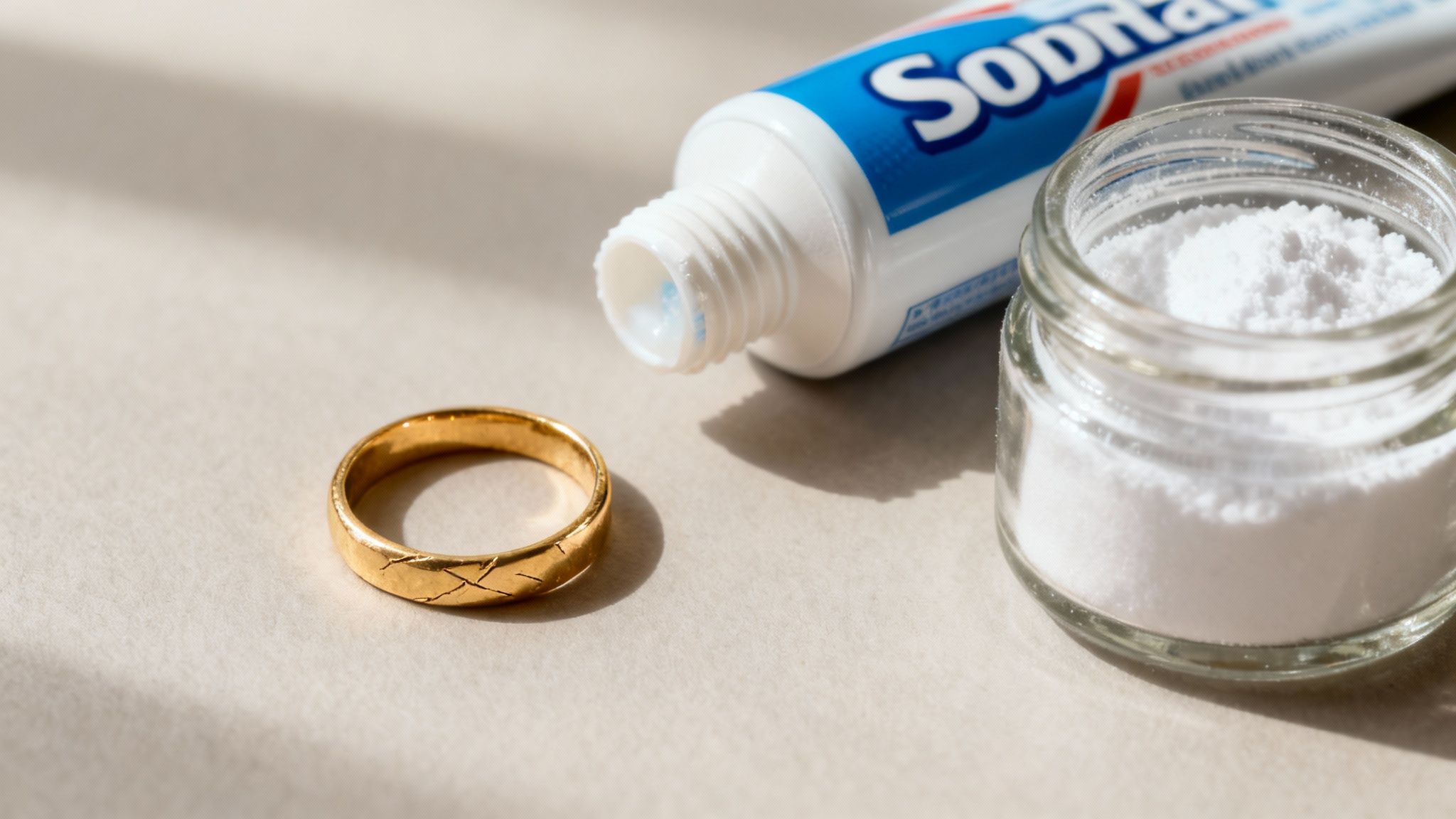
It's tempting to grab something from your kitchen cabinet, like baking soda or toothpaste, to scrub away the grime. It seems simple, but you're essentially scrubbing your jewelry with very fine sandpaper.
These substances create thousands of microscopic scratches on the surface of the gold. Over time, they build up and begin to scatter light instead of reflecting it. This causes the gold to lose its luster, leaving it with a dull, lifeless finish that even professional polishing cannot always restore.
Key takeaway: Abrasives create a false sense of cleanliness. They may remove dirt, but they also strip away the smooth, mirror-like surface that gives gold its iconic shine, causing irreversible tarnish.
Danger of harsh chemicals
Even more damaging than abrasives are the harsh chemicals found in many household cleaning products. Products containing chlorine bleach, ammonia, or acetone should never come into contact with your gold jewelry. These chemicals can react aggressively with other metals alloyed with gold.
On cast gold, this can weaken the metal structure, cause discoloration, or even make it brittle. But for gold-plated jewelry, the result is much worse. The chemicals can eat away at the thin layer of gold, exposing the S925 silver base. This is a common and very unfortunate mistake.
A gentle approach is always best, especially for items with a delicate finish. If you’d like to learn more, our guide to caring for gold-plated silver jewelry has some important tips.
What to avoid under all circumstances
To keep your collection safe and shiny, avoid these common but harmful methods. The risk is not worth it.
- Toothpaste: Contains silica and other fine abrasives that will scratch both cast gold and delicate plating.
- Baking soda: While it's a great remedy for many things, its crystalline structure is too rigid for soft metals like gold.
- Boiling water: A sudden, extreme change in temperature can cause cracks in some gemstones and even loosen old solder joints on jewelry.
- Chlorine bleach: Can permanently discolor and, in some cases, even begin to destroy gold alloys.
- Ammonia: Can be too aggressive, especially for lower-purity gold and any type of plating.
By avoiding these common mistakes, you can ensure that your jewelry stays beautiful for years to come. Remember, the best cleaning method is always the most gentle one that is appropriate for your specific piece.
Preventative care to maintain shine for a long time
The best way to answer the question “how to clean gold to make it shine” is to never let it tarnish in the first place. This isn’t about a grueling once-a-year general cleaning, but about simple, consistent habits that are easy to incorporate into your daily life. Think of it as preventative care for your most precious jewelry.
The main principle here is to minimize exposure to moisture and chemicals. These are the main culprits in the gradual buildup of tarnish that hides the shine of your gold. Make it a rule to remove your jewelry before any activity that could expose it to this type of exposure.
Forming simple protective habits
Creating a little “safety zone” for your jewelry can make all the difference. Before you start your daily routine, take a moment to take care of your gold.
- Before activities: Always remove your jewelry before swimming, showering, or exercising. Chlorine, minerals from hard water, and sweat all accelerate tarnishing and dull the metal.
- Before applying makeup: Wear jewelry after applying lotions, perfumes, and hairspray. These products create a sticky film that attracts dirt and dust, quickly tarnishing gold.
Proper storage is another key element of preventative care. When you’re not wearing your jewelry, don’t just leave it on your nightstand. Store each piece individually in a soft pouch or lined box. This simple step will prevent scratches and tangling as your pieces rub against each other. This is especially important for storing intricate pieces like the ones featured in our guide to chain styles .
This approach is consistent with the behavior of many jewelry owners. Studies show that a significant portion of them, between 20% and 35% , already clean their jewelry several times a year. Informing them about safe maintenance frequencies—such as a light wipe after each wear and a gentle soak every few months for gold-plated items—can reduce the risk of damage.
When to contact a professional
While home care is key to maintaining cleanliness, it's equally important to understand when your jewelry needs more than just a DIY fix. Some problems require the tools and expertise of a professional jeweler, or you can only make things worse.
Knowing the limits of home cleaning is just as important as knowing the correct methods. Trying to fix major problems yourself can cause irreversible damage, turning a minor problem into an expensive repair.
Here are some clear signs that it's time to contact an expert:
- Deep scratches: If you notice significant scratches, not just surface scuffs, professional polishing will be required to restore a smooth, mirror-like surface.
- Loose stones: Never try to tighten a loose setting yourself. A jeweler has specialized tools to securely tighten the stone without damaging it or the metal.
- Persistent discoloration: If gentle cleaning does not remove persistent discoloration, it may be a sign of a deeper chemical reaction that requires professional intervention.
By contacting a jeweler for services such as ultrasonic cleaning (for appropriate items) or professional polishing, you are providing your treasures with expert care that will preserve their shine for a lifetime.
Answers to your questions about cleaning gold
Even with the best instructions, you may still have questions. Let's look at the most common ones so you can confidently care for your favorite jewelry.
How often should gold jewelry be cleaned?
There is no universal answer - it all depends on the material and frequency of wearing.
For everyday jewelry made of cast gold, a light cleaning every few weeks will help remove sebum and dirt. For S925 gold-plated products, like the Taton.shop collection, less is more. We recommend wiping them with a soft, dry cloth after each wear. A deeper cleaning with a damp cloth should be done only when necessary, about once a month.
Special occasion jewelry should be cleaned no more than once a year. Remember: excessive care, especially for gold-plated items, can damage the coating.
Are home ultrasonic cleaners safe for gold?
Ultrasonic cleaners can be effective, but they are quite aggressive. They are great for solid, cast gold items without inlays, such as chains or rings. The high-frequency vibrations effectively remove dirt from the smallest crevices.
However, never put gold-plated jewelry in them . Powerful vibrations can easily damage or wear away the thin layer of gold, significantly shortening the life of the product.
It's also worth noting that they can be destructive to certain gemstones. Soft or porous stones, such as opals, pearls, emeralds, and turquoise, can crack or become cloudy from the vibrations. If in doubt, it's best to forgo the device in favor of professional cleaning.
Can I use a standard polishing cloth for gold-plated items?
This is an important question, and the answer is a resounding “no.” Most store-bought polishing cloths are impregnated with microabrasives. They are designed to remove tarnish from silver or polish away small scratches on cast gold.
If you use this cloth on gold-plated jewelry, you will actually remove the gold layer. The abrasive texture will wear away the thin coating, exposing the S925 silver base. For gold-plated jewelry, the best choice is a regular, non-soaked microfiber cloth, like the one you use for glasses. It is ideal for removing fingerprints and smudges without damaging the finish.
At Taton.shop, we know that proper jewelry care is the key to lasting love. Browse our collection of S925 silver and gold-plated items and you'll now have the expert knowledge to keep your new favorites sparkling. Visit https://taton.shop to find your jewelry.
