
The Art of Oxidized Sterling Silver: A Complete Guide
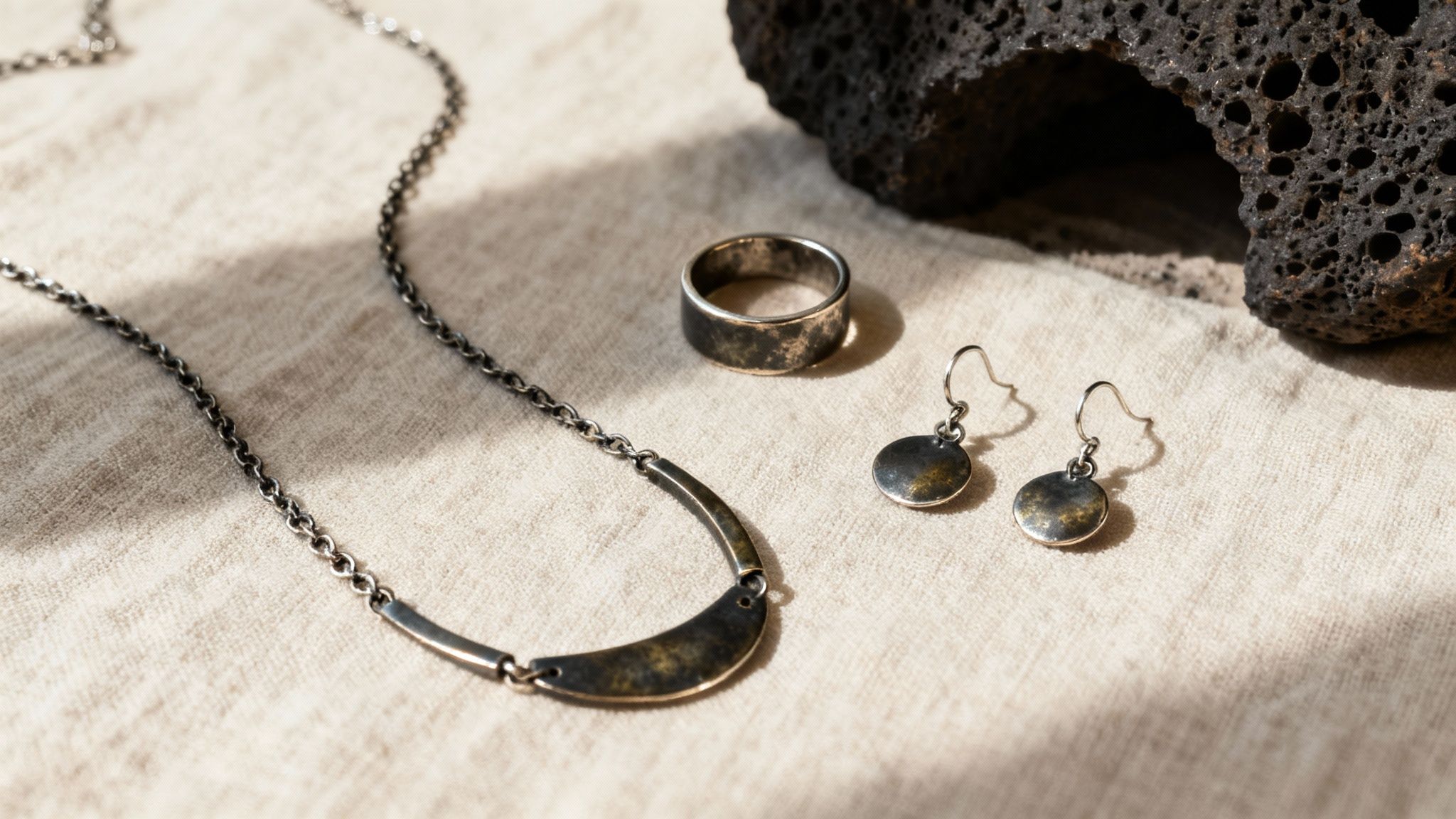
Tarnish is often seen as a sign of neglect. In artisan jewellery, it can be a deliberate, artistic finish. Sterling silver oxidised is a process that intentionally darkens the metal, creating a stunning contrast that highlights every detail.
This technique transforms a simple piece into something with depth and character, perfect for a style that is confident yet understated.
The Understated Elegance of Oxidised Sterling Silver
Oxidation is a carefully controlled craft. A chemical process gives sterling silver a dark, charcoal-grey patina, adding depth and personality.
This finish moves easily from the office to a casual weekend. The darker tones highlight craftsmanship, throwing every curve and engraving into sharp relief.
Why This Finish Resonates
The appeal of oxidised jewellery lies in its unique blend of vintage charm and modern minimalism. It offers a sophisticated alternative to high-shine finishes.
This appreciation for character is reflected in the market. The global silver jewelry market, valued at USD 38.2 billion in 2023, is projected to reach USD 57.2 billion by 2032. This points to a shift toward pieces that offer both style and substance. Dig deeper into this trend in this report on the silver jewelry market.
At its core, sterling silver oxidised jewellery is for those who value detail and nuance. It reflects a modern sensibility rooted in timeless aesthetics, where beauty is found in deliberate contrast and texture.
This distinctive style is surprisingly accessible. Exploring affordable luxury jewelry brands is a great way to discover high-quality S925 pieces that feature this unique finish, combining expert craftsmanship with contemporary design.
The Craft Behind the Darkened Finish
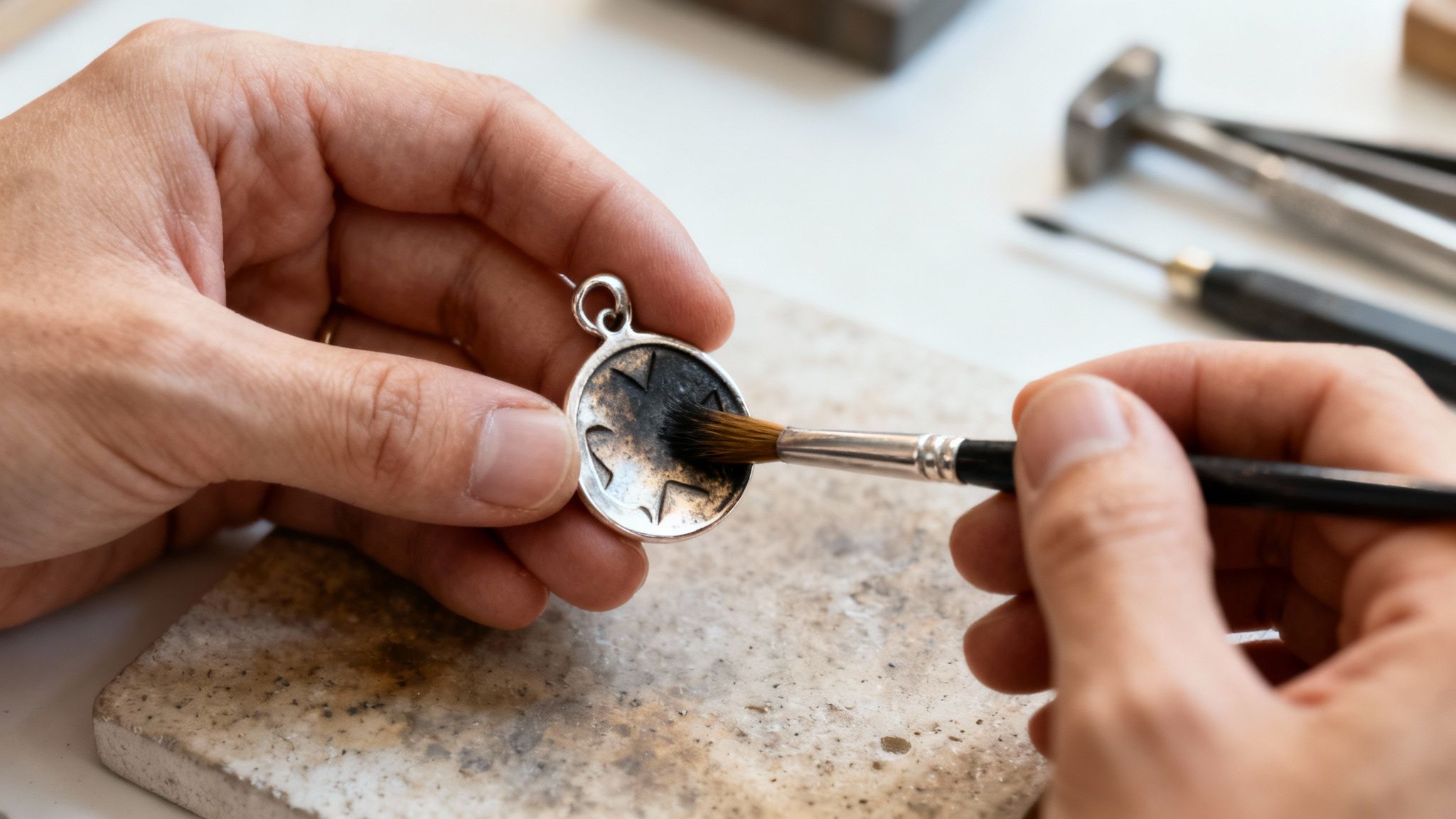
The finish of sterling silver oxidised jewellery is the result of a deliberate, controlled chemical process. It is an art form, not an accident.
The technique involves exposing sterling silver to a sulfur compound. This triggers a reaction, forming a thin, stable layer of silver sulfide (Ag₂S) on the metal's surface. While chemically the same as natural tarnish, a jeweller accelerates and controls it to achieve a specific aesthetic.
The outcome is a consistent, dark patina that gives the piece visual weight and character.
From Chemistry to Contrast
The true artistry is not just in the darkening, but in the selective polishing that follows. Jewellers rarely blacken an entire piece.
Once the initial darkening is complete, raised surfaces are carefully polished back to their original shine. This technique leaves the dark patina only in the crevices, engravings, and textured pockets. The result is a dramatic play of light and shadow that clarifies every detail. To see how this works, explore various chain weaving styles and imagine how oxidation would accentuate each link.
This method is about creating visual depth. The darkened recesses make polished surfaces appear brighter, giving the piece a three-dimensional quality that is both subtle and impactful.
This artistic control separates a professionally made sterling silver oxidised piece from a simply tarnished one. It is an intentional design choice that celebrates the jewellery's unique architecture.
A Practical Comparison of Silver Finishes
To appreciate the oxidised finish, it helps to compare it against other common sterling silver treatments. Each offers a different aesthetic and requires different care.
This table compares oxidised sterling silver with other finishes to help you choose the right style.
| Finish Type | Appearance | Maintenance Level | Best For |
|---|---|---|---|
| Oxidised | Dark, matte, or satin finish in recesses with polished highlights. Creates high contrast and a vintage or edgy feel. | Low | Emphasising intricate details, filigree, and creating a modern or antique-inspired look. |
| Polished | Bright, mirror-like, and highly reflective. The classic, brilliant silver look. | High | A clean, minimalist, and timeless aesthetic. Requires frequent polishing to remove fingerprints and tarnish. |
| Brushed/Matte | Soft, non-reflective, and textured surface. Hides minor scratches well. | Low to Medium | Understated, contemporary designs where a soft glow is preferred over a high shine. |
| Rhodium-Plated | Extremely bright, white finish that resists tarnishing. Often used on fine jewellery. | Very Low | Pieces that require maximum durability and tarnish resistance. The plating can wear off over time and need re-application. |
This comparison clarifies why a jeweller chooses oxidation. It infuses a piece with texture, depth, and the specific story it is meant to tell.
How to Identify Authentic S925 Oxidised Silver
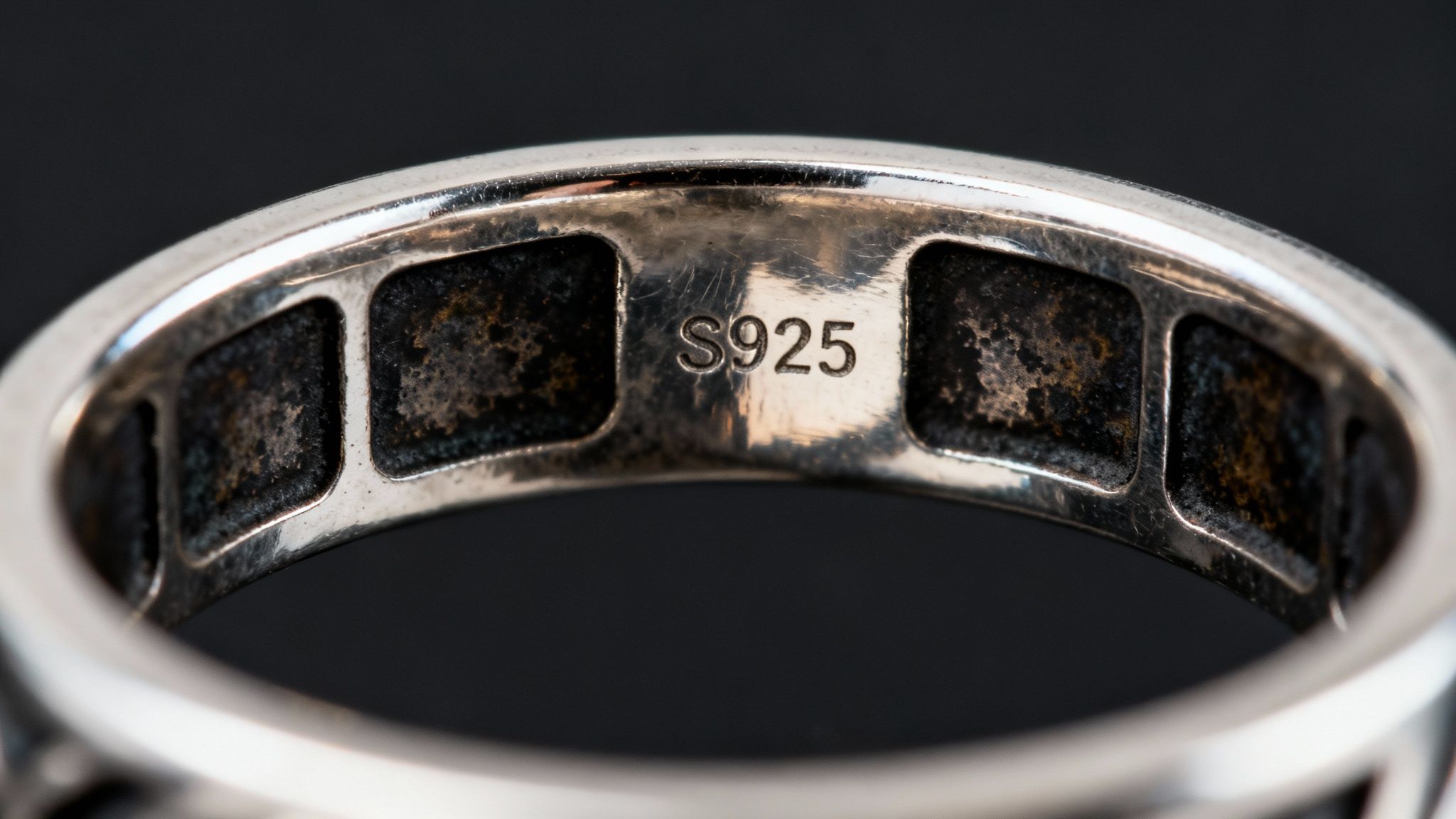
When investing in sterling silver oxidised jewellery, authenticity is key. The most reliable sign is the hallmark.
Look for a tiny stamp, usually "925" or "S925", inside a ring band or on a clasp. This is a legal guarantee that the piece contains at least 92.5% pure silver, the global standard.
In an industry valued at USD 13.21 billion in 2024, this certification is crucial. At Taton.shop, verified S925 is our promise of quality. You can explore more sterling silver market insights on verifiedmarketresearch.com.
Inspecting the Finish and Craftsmanship
After finding the hallmark, assess the quality of the oxidation. Genuine, artfully oxidised silver shows clear intention, not random tarnish.
Look for these key indicators:
- Precise Contrast: The dark patina is settled into the lower areas—crevices, recessed patterns, and grooves—to create depth.
- Polished Highlights: Raised surfaces are polished back to a bright shine. This interplay between dark and light signals skilled work.
- Uniform Application: The darkened areas should look consistent and even, not patchy or blotchy.
A well-made piece feels balanced. The darkness enhances the silver's form, making every detail stand out.
The true test of craftsmanship is in the balance between light and shadow. The oxidation should feel like a part of the design, enhancing its form rather than obscuring it.
Verifying Quality When Shopping Online
Judging quality on a screen is possible with a few steps. Start with retailers that provide clear, detailed product descriptions.
Ensure the material is explicitly listed as S925 sterling silver. Check customer reviews and photos for real-world impressions. Finally, choose retailers that curate their collections and stand behind their products. To understand the terminology better, learn more about 925 silver in our detailed article.
Caring for Your Oxidised Jewellery
Sterling silver oxidised jewellery is remarkably easy to maintain. The goal is gentle care to preserve the unique, dark patina.
This finish is low-maintenance by design. Avoid harsh chemicals, abrasive silver polishes, dip cleaners, and ultrasonic machines, as they can strip the darkened layer.
For routine care, a soft, dry cloth is usually sufficient to remove fingerprints and dust. This light buffing keeps the raised surfaces bright while leaving the recessed details untouched.
Smart Storage and Handling
Storage is as important as cleaning. Air and humidity accelerate tarnish. Store your pieces in a cool, dry place, such as a soft pouch or a lined jewellery box.
This habit prevents scratching and limits air exposure, helping to maintain the original finish. For more tips, read our guide on how to prevent silver tarnish.
Remember, the oxidised finish is a surface treatment designed to evolve. Protecting it from harsh elements ensures this evolution is graceful and personal.
Embracing the Evolution of Your Jewellery
With wear, the finish on high-contact spots—like the shank of a ring—may lighten. This is not a defect; it is the natural lifecycle of the jewellery. The piece tells a story unique to you.
This gradual wear is part of what makes sterling silver oxidised jewellery feel so personal. The piece adapts to your life as the contrast between dark and light subtly shifts. Embracing this evolution turns your jewellery into a true reflection of your journey.
How to Style Oxidised Silver Jewellery
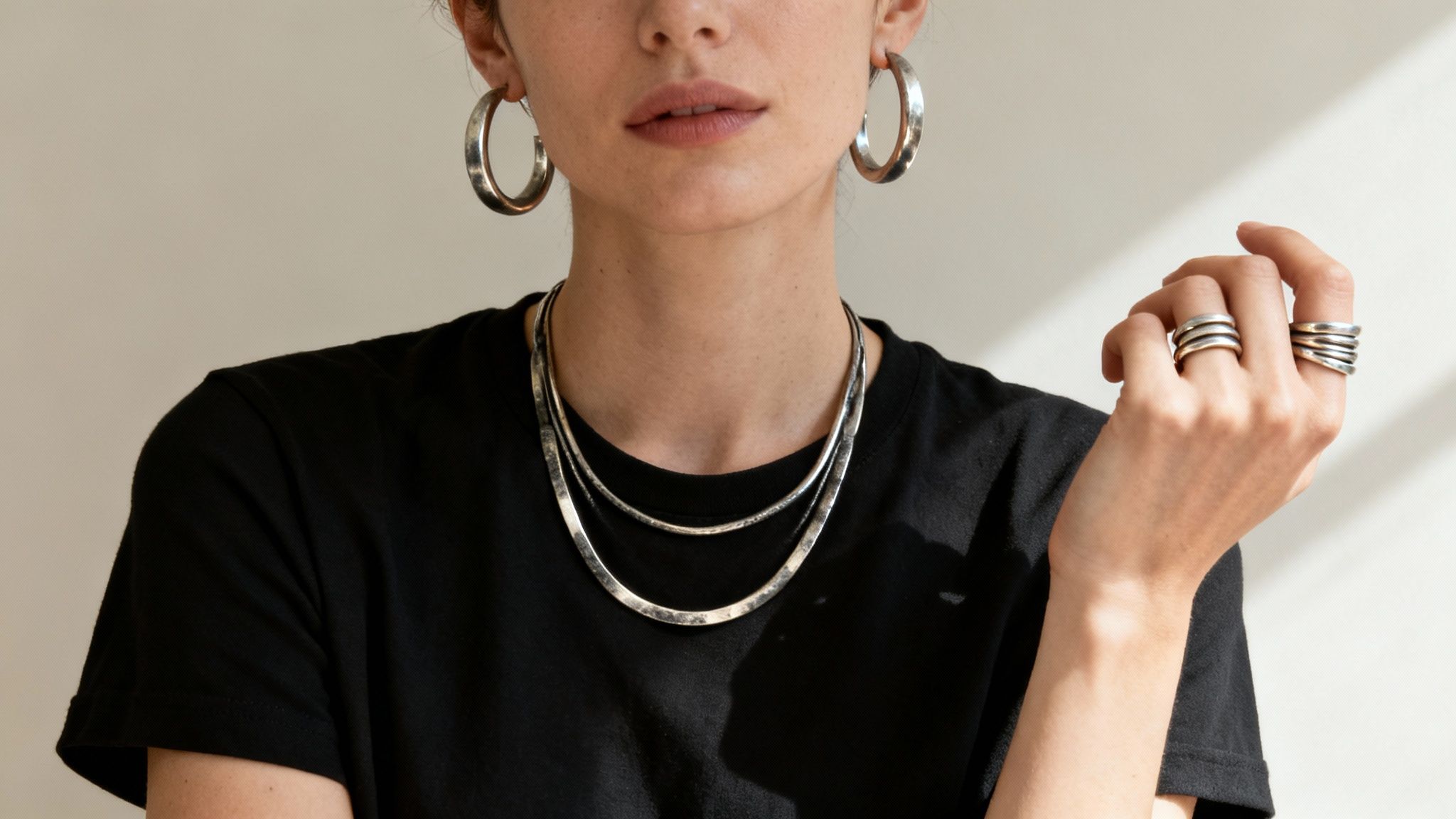
The versatility of sterling silver oxidised jewellery is its greatest strength. Its understated edge complements almost any look, bridging the gap between minimalist and bold styles.
Styling these pieces is about creating smart contrasts and balance. The dark, antiqued tones are designed to make a quiet but confident statement.
Creating Contrast And Harmony
Playing with different textures and finishes makes oxidised silver stand out. The muted patina looks incredible next to brighter, shinier metals, creating a dynamic, layered effect.
Consider these approaches:
- Layering Necklaces: Pair a delicate oxidised chain with a polished one. The difference in finishes adds visual depth. For a unique touch, add one of our silver pendants.
- Stacking Rings: Stack oxidised rings with smooth, polished bands. This highlights the character of the oxidised finish while keeping the vibe modern.
- Mixing Textures: Combine an oxidised silver bracelet with a leather watch strap or a fabric cord. The mix of metal and organic materials creates a grounded, effortless look.
Learning how to layer your jewelry well is key to building a style that feels uniquely you.
Styling For Minimalist And Bold Aesthetics
Oxidised silver fits both minimalist and bold styles.
For a minimalist look, let one or two key pieces stand out. A single oxidised ring or small stud earrings add personality to a clean outfit without clutter.
The beauty of this finish is its ability to communicate confidence quietly. Its character speaks for itself through texture and contrast.
For a bolder statement, make oxidised pieces the main event. A chunky oxidised cuff or large, intricate earrings transform a simple outfit. The jewellery becomes a core part of your style story, adding depth and purpose.
Your Top Questions About Oxidised Silver, Answered
Here are answers to the most common questions about oxidised sterling silver.
Is Oxidised Silver Actually Real Silver?
Yes. Oxidised silver is genuine sterling silver, which is why authentic pieces bear the S925 hallmark.
The oxidation is a surface treatment. It does not change the metal's composition of 92.5% pure silver. The dark finish is an artistic layer applied to the precious metal.
Will The Black Finish Rub Off?
As a surface patina, the finish will change over time. High-contact spots will gradually lighten with wear.
This is not a defect but part of the jewellery's charm, creating a piece that is uniquely yours. To slow this process, avoid abrasive polishes and harsh chemicals.
Think of it like a pair of raw denim jeans or a quality leather jacket—the piece develops a unique character based on how you wear it. The evolving patina tells your story.
Can I Wear My Oxidised Jewellery In Water?
While a quick splash is fine, it is best to remove your pieces before showering, swimming, or washing dishes.
Chemicals in pools and soaps can react with the silver sulfide layer, potentially altering the dark finish. If your jewellery gets wet, pat it dry thoroughly with a soft cloth.
Is Oxidised Sterling Silver Hypoallergenic?
Yes, for most people. Sterling silver is widely considered hypoallergenic.
Most metal allergies are reactions to nickel, which is common in lower-quality jewellery. Reputable S925 sterling silver, including oxidised pieces, is nickel-free. The primary alloy is copper, and copper allergies are far less common.
Discover the understated elegance of authentic S925 oxidised jewellery in the curated collection at Taton.shop. Explore our sterling silver pieces today.
