
How to Prevent Silver Tarnish and Keep Jewellery Flawless
Preventing tarnish combines smart storage, mindful wear, and routine cleaning. These habits are your defense against the chemical reactions that dull your jewelry's shine.
Understanding Why Silver Tarnishes
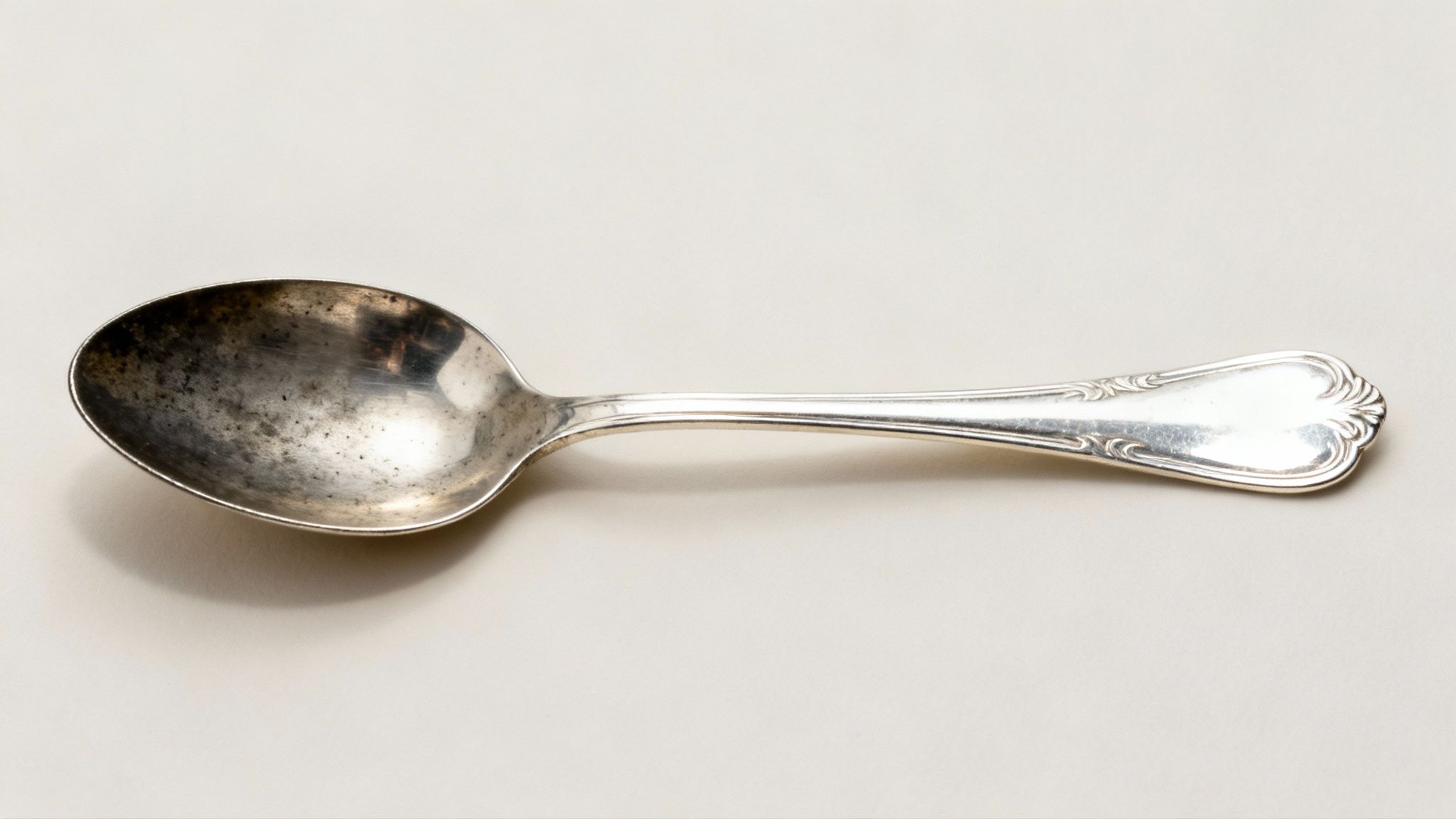
Tarnish is not dirt; it is a chemical process. Understanding what happens to the metal makes prevention intuitive, not a chore.
The dark layer is not a sign of poor quality. It's proof of genuine sterling silver. Pure silver is too soft for daily wear, so it is alloyed with metals like copper for strength. This alloy is sterling silver.
The Science Behind the Discoloration
Silver tarnish is a form of corrosion. It occurs when silver reacts with sulfur compounds in the air, creating a new compound: silver sulfide. This appears as a thin, dark film.
Sulfur is ubiquitous, found in polluted air and everyday materials. Even skin oils can initiate this slow reaction.
Accelerants and Common Triggers
Certain environmental factors accelerate the tarnishing process. Humidity is the primary culprit. The reaction between silver and airborne sulfur compounds speeds up dramatically in humid environments.
At 70% relative humidity, silver can tarnish up to 10 times faster than in drier conditions below 40%. Storing your S925 silver jewelry in an airtight container with silica gel packets, which absorb moisture, can preserve its shine for an additional 6-12 months.
Other common triggers include:
- Cosmetics and Chemicals: Hairspray, perfume, and lotions contain chemicals that react aggressively with silver.
- Certain Foods: High-sulfur foods like eggs and onions cause immediate tarnishing on contact.
- Household Items: Wool, latex, and rubber bands release sulfur compounds over time.
Minimizing exposure to these triggers is a significant step toward lasting brilliance.
Tarnish is a surface-level reaction, not a defect. It is reversible and largely preventable with the right habits.
This reference table connects common tarnish triggers to effective prevention tactics.
Tarnish Triggers and Prevention Tactics
| Tarnish Trigger | Primary Cause | Effective Prevention Method |
|---|---|---|
| High Humidity | Moisture accelerates the silver-sulfur reaction. | Store in an airtight bag or box with anti-tarnish strips or silica gel. |
| Cosmetics/Perfume | Chemicals react directly with the silver alloy. | Apply products and let them dry completely before putting on jewelry. |
| Household Cleaners | Ammonia and chlorine cause rapid discoloration. | Remove silver jewelry before cleaning or using chemical products. |
| Sweat & Skin Oils | Natural salts and acids in skin can tarnish silver. | Wipe jewelry with a soft, dry cloth after each wear. |
| Sulfur-Rich Foods | Direct contact with foods like eggs or onions. | Remove rings and bracelets before cooking or eating these foods. |
| Chlorinated Water | Chlorine in pools is highly corrosive. | Remove jewelry before swimming or using a hot tub. |
Mindfulness of these everyday situations significantly reduces the need for polishing.
Daily Habits for Tarnish-Free Jewelry
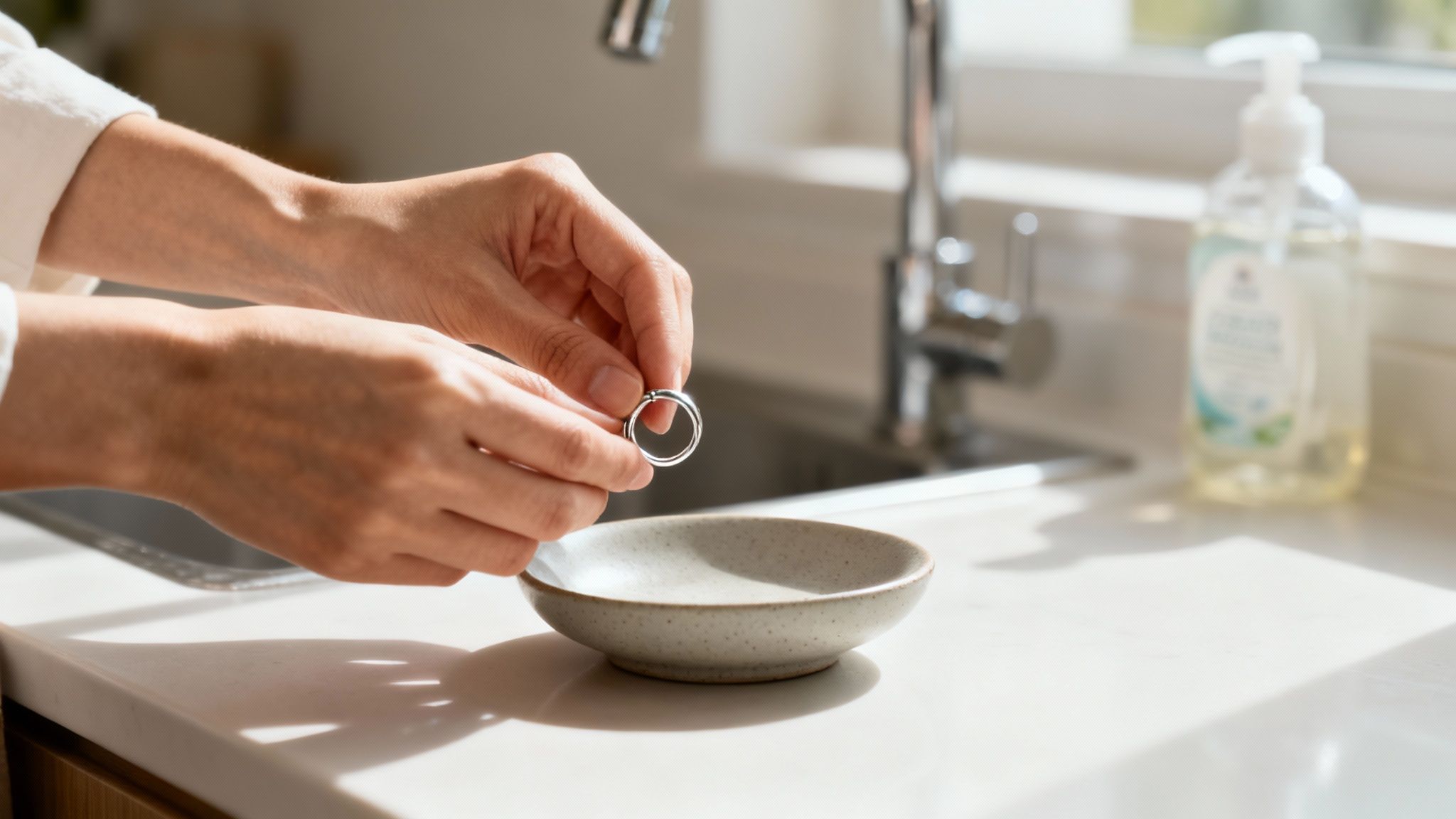
The most effective way to fight tarnish is not aggressive polishing, but small, protective daily habits. These consistent actions create a powerful shield against discoloration with minimal effort.
The goal is to create a barrier between your silver and environmental factors, keeping your pieces brilliant for longer.
The "Last On, First Off" Rule
Remember this: jewelry should be the last thing you put on and the first thing you take off. This foundational rule protects your pieces from chemicals in cosmetics, lotions, and perfumes.
Complete your morning routine before putting on jewelry. Let lotions absorb and perfumes dry. Many products contain sulfur and alcohols that cause tarnish on contact.
At night, reverse the process. Remove jewelry before your skincare routine to prevent residue from sitting on the metal overnight.
Natural skin oils can create a protective barrier, but this benefit is nullified if the jewelry is also coated in chemical-laden products.
Navigating Specific Daily Scenarios
Certain daily activities are red flags for silver jewelry. The primary culprits are water, sweat, and household chemicals.
Remove rings before washing hands or dishes. Soap leaves a dull film, and dampness promotes tarnish. The same applies to any activity that causes sweating.
- Before a Workout: Remove all jewelry. Sweat is acidic and salty, a combination that aggressively reacts with the copper in sterling silver.
- Before Swimming or Showering: Chlorine is highly corrosive to silver. Minerals in tap water can also be problematic over time.
- Before Housework: Cleaning products contain harsh chemicals like ammonia and bleach. Remove jewelry to protect it.
Mindfulness in these moments protects your jewelry from common tarnish triggers. Consistent care, especially for a delicate sterling silver women's bracelet, preserves its beauty.
The Post-Wear Wipe-Down
Adopt this two-second habit: gently wipe your jewelry after each wear. Use a soft, lint-free cloth to remove skin oils, makeup, and daily residue.
This simple action removes sulfur compounds and moisture before they can react with the metal. It stops the chemical reaction before visible tarnish forms.
This habit dramatically reduces the frequency of deep cleaning.
Strategic Storage to Preserve Lasting Shine
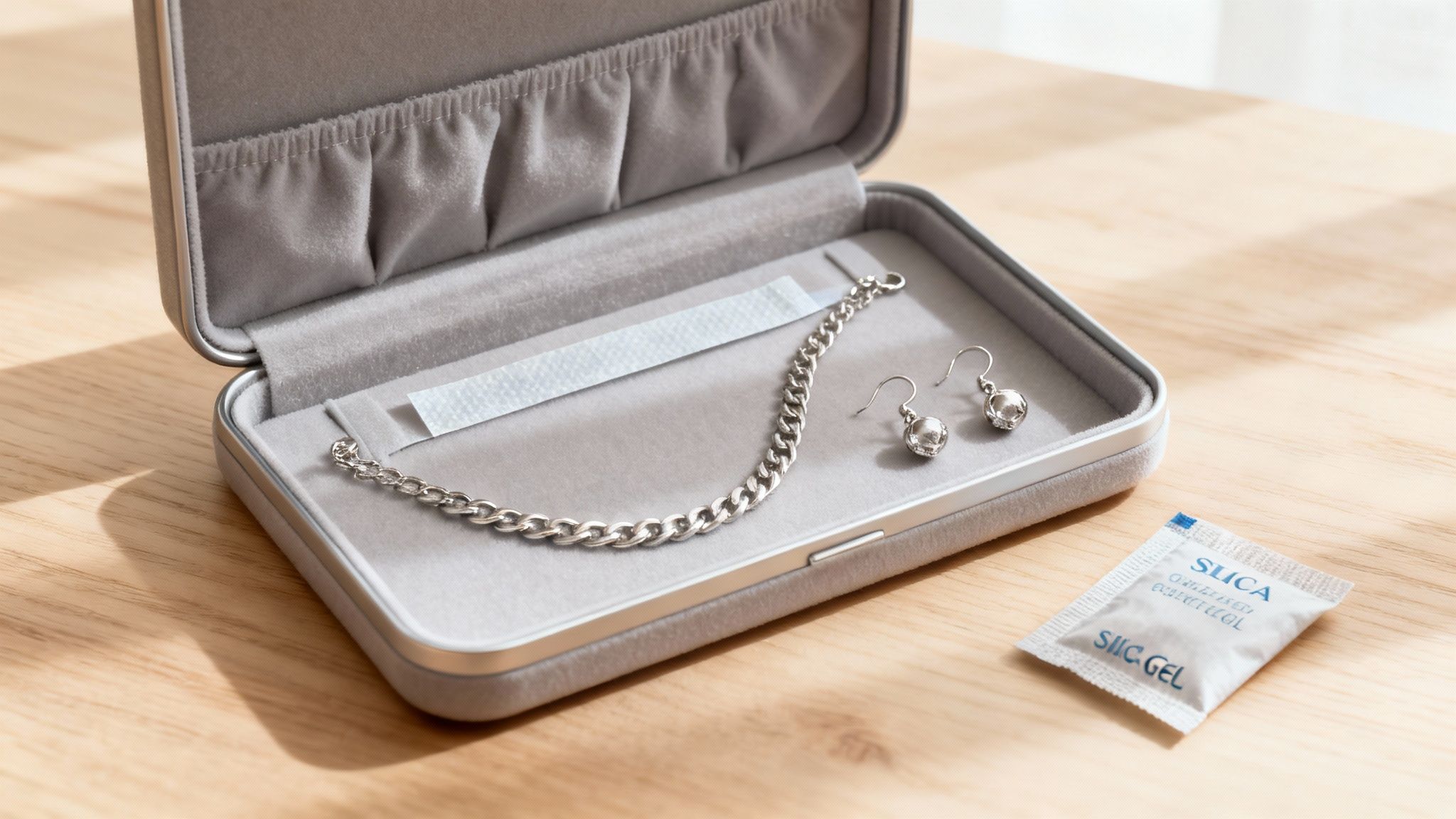
How you store your silver is as important as how you wear it. Leaving jewelry exposed to air and humidity invites tarnish. Proper storage is an active defense.
The goal is to create a controlled environment. Limiting contact with airborne sulfur and moisture slows the chemical reaction that causes the dark film, keeping your pieces looking freshly polished for months.
The Power of an Airtight Environment
Minimize air exposure. This is the cardinal rule of silver storage. Since airborne sulfur is the primary cause of tarnish, an airtight seal is your most effective weapon.
A simple press-seal plastic bag is highly effective. Press out as much air as possible before sealing to starve the tarnishing process.
An airtight container acts as a vault, protecting your silver from environmental aggressors. It is the single most impactful storage adjustment you can make.
For larger collections, invest in a quality jewelry box with a soft, anti-tarnish lining. These are treated to absorb damaging sulfur gases, providing another layer of protection.
Organizing for Protection and Longevity
How you organize pieces within their container matters. Tossing items together causes scratches and can accelerate discoloration as metals rub against each other.
Separation is key. Use individual soft pouches, small bags, or a compartmentalized jewelry box. This is critical for delicate items.
- Prevent Scratches: Sterling silver is a soft metal. Storing it next to harder items can cause fine scratches that mar the finish.
- Avoid Tangling: Keep necklaces and bracelets in separate sealed bags to prevent knots that weaken links.
- Isolate Different Metals: Keep sterling silver separate from plated items. An exposed base metal can accelerate tarnish on nearby sterling silver.
This breakdown compares common storage options.
Comparing Silver Storage Solutions
| Storage Method | Effectiveness | Best For | Pro Tip |
|---|---|---|---|
| Anti-Tarnish Jewelry Box | High | Large collections; easy access. | Choose boxes with a tight lid and treated liners. |
| Sealed Plastic Bags (Ziploc) | High | Travel; long-term storage. | Squeeze all air out before sealing. Double-bag for extra protection. |
| Flannel or Velvet Pouches | Moderate | Preventing scratches inside an airtight box. | Must be placed inside a sealed container to prevent air exposure. |
| Open Trays or Dishes | Low | Very short-term display only. | Avoid for more than a few hours. This invites tarnish. |
Combining methods—like a pouch inside a sealed bag—offers maximum protection against both scratches and tarnish.
Simple Hacks for Maximum Impact
A few inexpensive additions can supercharge your storage. These items directly combat humidity and sulfur.
Tackle moisture by adding a small silica gel packet to your jewelry box or bag. These absorb ambient moisture, creating a dry environment hostile to tarnish.
Anti-tarnish strips are another effective tool. These paper tabs neutralize airborne sulfur. Place one in each sealed bag or compartment. They are inexpensive and provide months of invisible protection. Quality gift packaging for jewelry often incorporates these protective elements.
Pairing an airtight container with these hacks creates a robust defense system for your silver.
Safe and Effective Cleaning Techniques
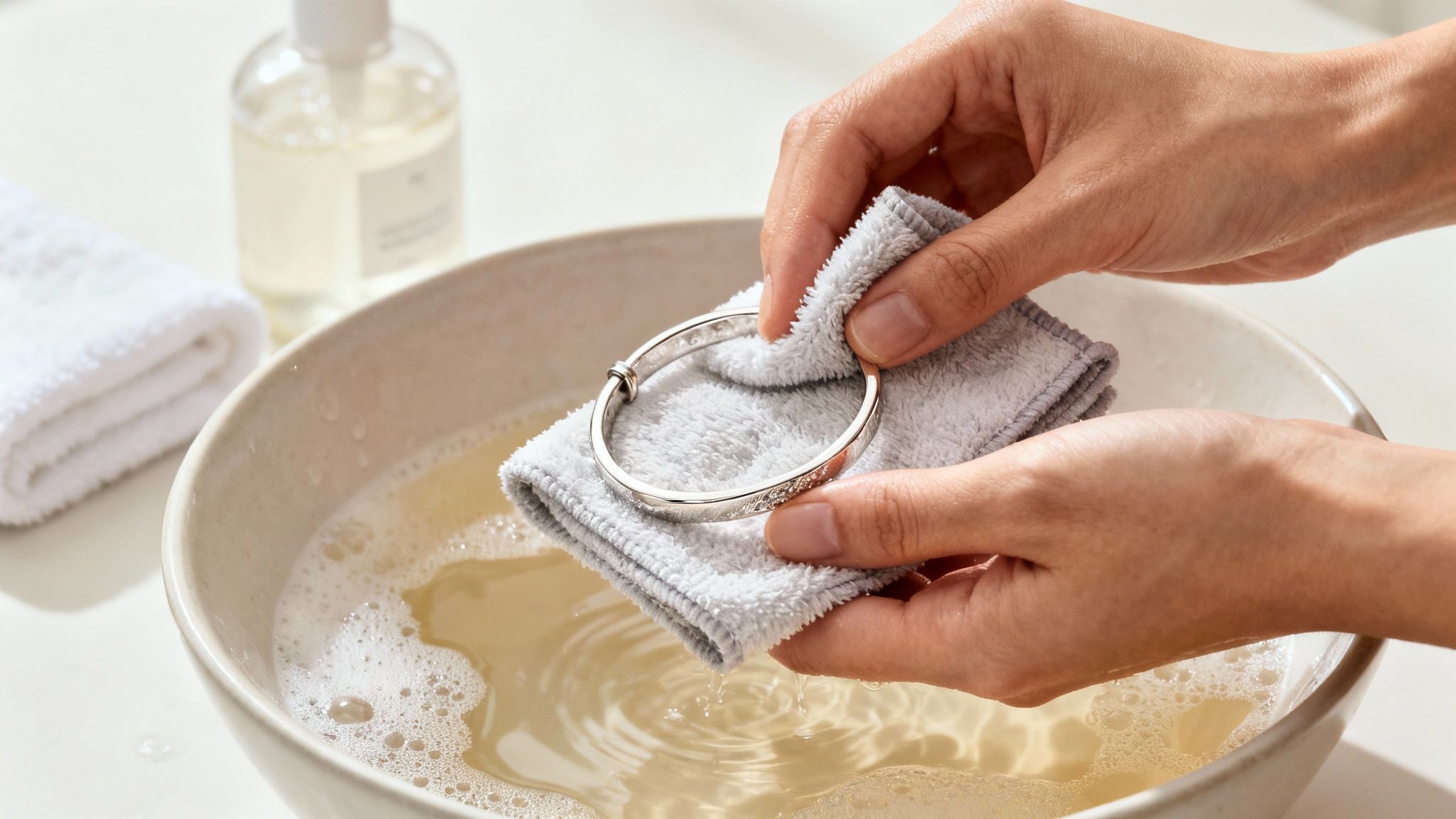
Even with preventative care, silver will eventually need cleaning. It is crucial to distinguish between routine upkeep and deep tarnish removal, using methods that will not harm the metal.
Gentle, consistent care is superior to infrequent, aggressive scrubbing. For frequently worn pieces, a quick wipe with a polishing cloth is often sufficient.
Gentle Maintenance for Everyday Brilliance
Light cleaning requires only a few household items. This technique is safe for both solid S925 sterling silver and plated pieces.
Fill a small bowl with warm water and a few drops of mild, phosphate-free dish soap. Soak the jewelry for a few minutes. Use a very soft-bristled toothbrush or cotton swab to gently clean crevices.
Rinse the piece thoroughly under clean, lukewarm water. Finally, pat it completely dry with a soft, lint-free cloth. Ensuring your jewelry is 100% dry before storage is non-negotiable.
Always start with the gentlest method. You cannot undo damage from harsh cleaning. Aggressive scrubbing creates micro-scratches that dull the finish and attract more tarnish.
This soap-and-water method is often all that is needed. For more options, see our guide on how to clean silver jewelry at home.
What to Avoid During Cleaning
Knowing what not to do is critical. Many online "hacks" can cause irreversible damage.
- Abrasive Materials: Avoid toothpaste, baking soda pastes, and scouring powders. Their gritty particles will scratch the silver surface.
- Harsh Chemicals: Never use bleach, acetone, chlorine, or ammonia-based cleaners. These are extremely corrosive.
- Ultrasonic Cleaners: While useful in professional settings, they can cause the thin gold layer on plated pieces to flake or chip.
These shortcuts risk the long-term health and beauty of your jewelry.
Special Care for 18K Gold Plated Silver
Cleaning gold-plated silver requires extra care. The goal is to clean surface grime without stripping the thin layer of gold.
The mild soap and water method is best. Avoid commercial silver polishes and chemically treated cloths, as they are too abrasive for gold plating. Use only the softest cloth and never scrub.
Anti-tarnish technology is advancing. Projections show a 12-15% annual increase in wholesale sales of anti-tarnish jewelry by 2026. Taton.shop's S925 silver rings with 18K plating resist environmental sulfur for up to two years, reducing cleaning time by as much as 75%.
Understanding the unique needs of solid versus plated silver allows for a tailored cleaning routine that preserves every piece.
When It’s Time to Call in a Professional
At-home care has its limits. Sometimes, DIY solutions can do more harm than good. Knowing when to consult a professional jeweler protects the value and integrity of your pieces.
Attempting to fix deep scratches or severe tarnish can permanently damage the metal or gemstones. A professional has the tools and expertise to handle these issues safely.
Recognizing the Warning Signs
Certain problems require an expert's touch. If you see any of these issues, consult a jeweler.
Heavy, stubborn tarnish—a deep black or brown layer that resists gentle cleaning—is a clear sign. Jewelers use professional-grade equipment to lift oxidation without harming the finish.
Other critical signs include:
- Deep Scratches or Gouges: These require professional buffing to smooth the metal without distorting the shape.
- Loose or Damaged Settings: A jeweler can secure loose stones correctly, preventing loss.
- Broken Clasps or Links: Structural damage requires specialized repairs like soldering.
- Damage Near Gemstones: Porous stones like pearls, opals, or turquoise are sensitive to cleaning solutions. A professional knows how to clean the silver without damaging them.
Trusting a professional is a smart investment in your jewelry's future. The cost of a professional cleaning is minimal compared to replacing a ruined heirloom.
The Dangers of an Aggressive DIY Approach
Impatience leads to bigger problems. Using household abrasives like toothpaste or baking soda on heavy tarnish creates micro-scratches, permanently dulling the shine. Chemical dips can strip protective finishes or ruin a patina if used incorrectly.
The risk is greatest with plated jewelry. Scrubbing stubborn tarnish can easily rub through the thin gold layer, exposing the silver beneath and causing irreversible damage. Learn more about safe methods for how to clean your silver.
What a Professional Jeweler Can Do for You
A professional jeweler offers services that restore beauty and ensure structural integrity.
- Expert Polishing and Buffing: They use specialized tools to remove deep tarnish and scratches, restoring a mirror-like shine.
- Ultrasonic Cleaning: This process uses high-frequency sound waves to dislodge dirt from intricate areas.
- Replating Services: For worn-down gold-plated jewelry, a jeweler can apply a fresh layer of 18K gold.
- Structural Repairs: They can mend broken chains, rebuild worn prongs, and handle any repair to make your piece wearable again.
Knowing the limits of at-home care is part of responsible jewelry ownership.
Answering Your Silver Care Questions
Here are answers to common questions about silver care.
How Often Should I Really Be Cleaning My Silver?
It depends on wear. For daily pieces, a quick wipe with a soft cloth after each use removes oils and grime before they can react with the metal.
A deeper clean with mild soap and water every month or two is usually sufficient. Check stored pieces every six months to ensure no tarnish is developing.
Are Those Anti-Tarnish Polishing Cloths Actually Safe?
Yes, a quality silver polishing cloth is a safe and effective tool for both S925 sterling silver and plated pieces. These cloths are treated with a fine polishing compound that lifts light tarnish and leaves a protective shield.
With 18K gold-plated items, use a very light touch. Rubbing too hard can wear away the gold layer over time.
A polishing cloth is for maintenance. It restores luster but is not designed for heavy tarnish removal.
I Heard Toothpaste Works for Cleaning Silver Rings. Is That True?
No. This myth can cause irreversible damage. Toothpaste contains abrasives that create micro-scratches on the silver's surface, permanently dulling its shine and creating more surface area for future tarnish.
Why Does My Silver Tarnish So Much Faster Than My Friend's?
This is a common issue resulting from a mix of personal chemistry, environment, and daily habits.
- Your Body Chemistry: Unique skin pH, sweat composition, and diet can accelerate tarnishing. More acidic skin often causes a quicker reaction.
- Your Environment: High humidity and air pollution expose your silver to more moisture and sulfur compounds, the primary causes of tarnish.
- Your Daily Habits: Applying lotion or perfume after putting on jewelry, or cooking with sulfur-rich foods while wearing rings, can cause rapid darkening.
Understanding these factors helps you create a smarter, more effective care routine tailored to your jewelry.
At Taton.shop, we believe proper care is essential to enjoying your jewelry. We design our S925 silver and 18K gold-plated collections with a minimalist aesthetic and lasting quality. Discover your next favorite piece at Taton.shop.
