
How to clean gold at home to restore its shine
Even the highest quality gold jewelry loses its original shine over time. The reason lies not in the gold itself - a corrosion-resistant metal - but in its impurities. This is a ligature: copper, silver or nickel, which are added to the alloy for strength. It is these metals that react with sweat, cosmetics and oxygen, forming a thin layer of plaque that steals the shine.
Why gold tarnishes and how to prevent it
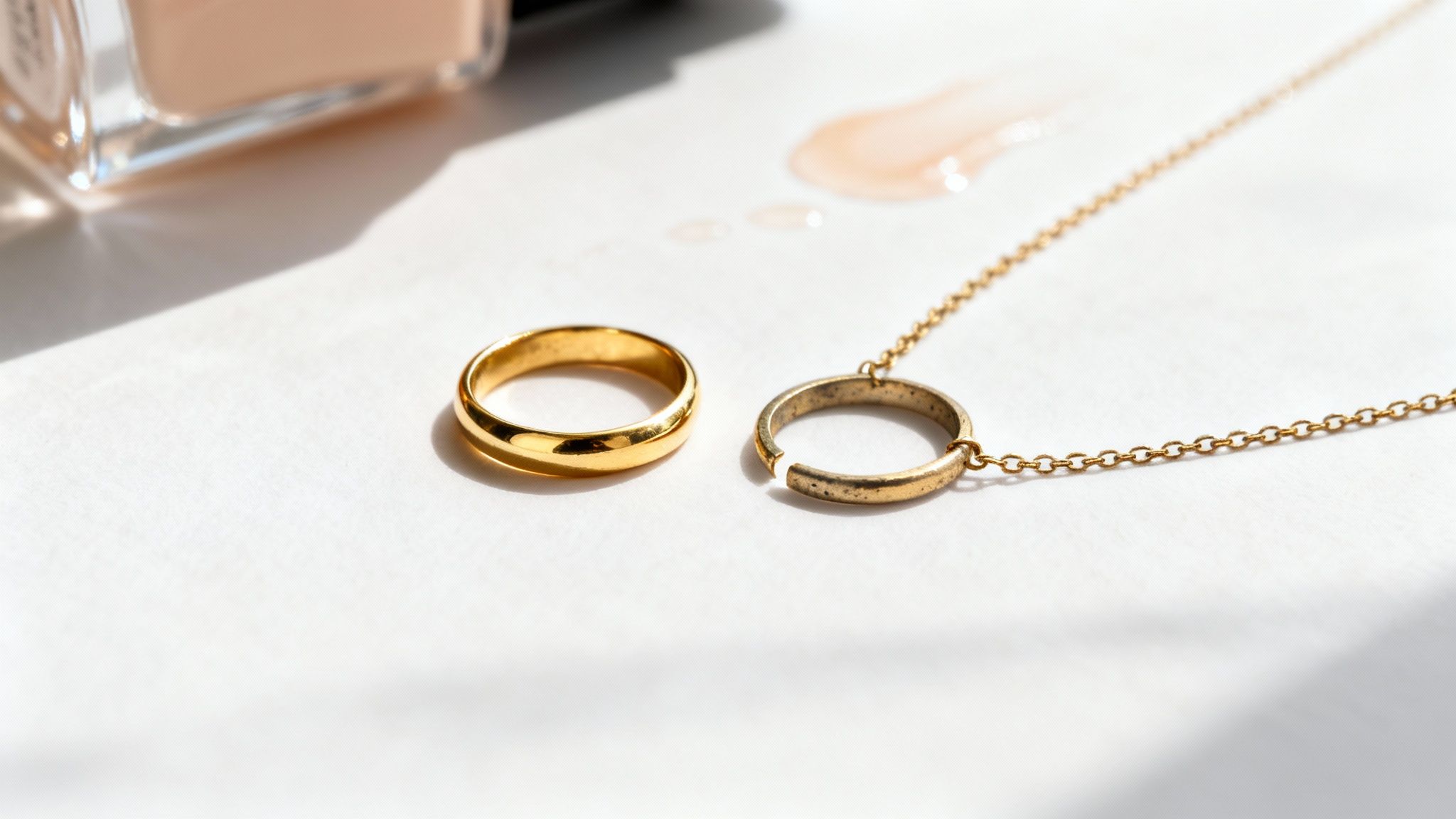
In its pure form, gold is a very soft metal. To make jewelry withstand daily wear without deforming, it is mixed with other metals. This process is called alloying. The most popular alloy in Ukraine, 585 gold, contains 58.5% pure gold. The rest is a ligature, which makes the jewelry vulnerable to external influences.
Daily contact with the environment leaves its mark on your favorite accessories. Even routine rituals can accelerate the oxidation and contamination process.
The main culprits of darkening
Tarnishing is a slow process. It all starts with a microscopic coating. If you don't remember how to clean gold in time, this coating will turn into permanent dirt.
The most common factors that "steal" radiance:
- Skin contact: Skin sebum and sweat contain compounds that react with the copper and silver in the alloy, triggering oxidation.
- Cosmetics. Creams, lotions, and perfumes create a sticky film on the surface of jewelry that attracts dust and dirt.
- Household chemicals. Aggressive components, especially chlorine, can damage not only the ligature, but also the gold itself, leaving stains.
- Environment: Hydrogen sulfide in the air and salty seawater are powerful oxidation catalysts.
Understanding these causes is half the battle. Prevention is always easier than fighting dirt that has become deeply embedded in the metal.
How to assess the condition of jewelry before cleaning
Before you start cleaning, assess the degree of contamination to choose the appropriate method. Light deposits that have only slightly "dampened" the shine are easy to remove with delicate methods. For example, elegant gold-plated hoop earrings that you wear every day require only gentle, regular care.
Another thing is dark spots, especially in the recesses of the pattern or around the stone mounts. This is a signal of deep oxidation of the ligature. Such contamination requires a more serious approach. Remember: prevention and timely care are the best way to avoid complex procedures.
Proven home methods for cleaning gold
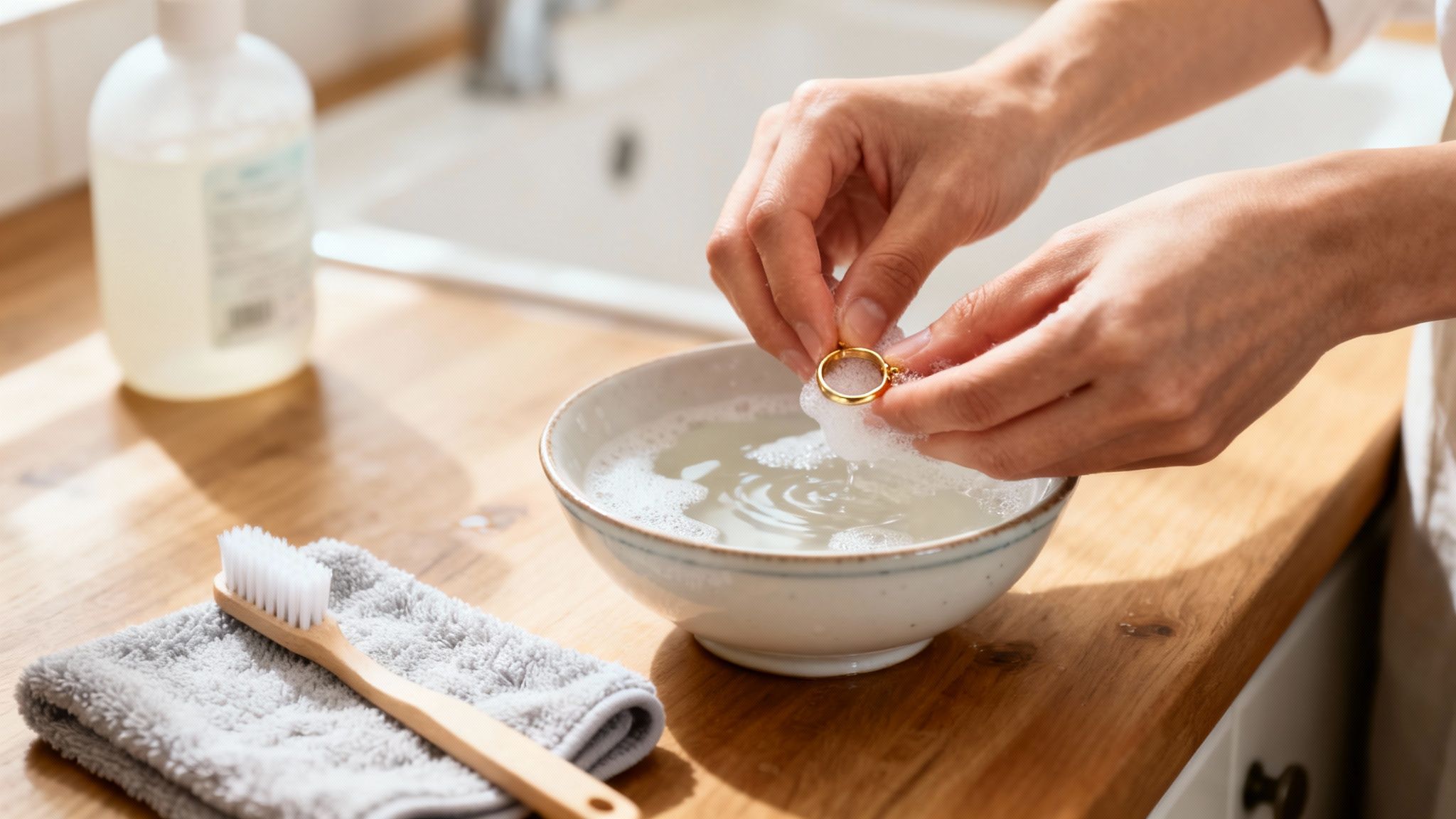
You can restore your gold jewelry to its original shine without a trip to the jeweler. Most often, all the necessary tools are already in your kitchen. The main thing is to use them correctly so as not to damage the metal.
Before you figure out how to clean gold , remember the rule: always start with the mildest method. Only if it doesn't work, move on to stronger methods.
Basic care with soapy water
This is your first and safest step. It is ideal for removing fresh buildup from skin oils, makeup, and dust. It is also the only method recommended for jewelry with stones or gold plating.
Prepare the solution: Add a few drops of mild dish soap or baby shampoo to a bowl of warm (not hot) water.
- Soak the jewelry in the solution for 15–20 minutes to soften the dirt.
- Take a brush with very soft bristles and carefully go over hard-to-reach places: patterns, clasps, stone attachments.
- After cleaning, rinse the product thoroughly under running water and polish dry with a soft microfiber cloth.
The principles of caring for precious metals are similar. A similar approach is used for silver, which we discussed in the article on how to clean silver at home .
Methods for heavier soiling
If the soap solution doesn't work, it's time to move on to stronger products. However, these methods are not suitable for items with gold plating or sensitive stones.
According to local jewelry associations, about 90% of Ukrainians have tried a solution of soda and vinegar at least once. The recipe is simple: for 100 ml of warm water, take 1 tbsp. of soda and 2 tbsp. of vinegar, soak the product for 15–20 minutes. This method is effective for gold of 585–750 samples and removes up to 95% of typical contaminants.
Important: Never use dry baking soda as an abrasive. Its crystals will leave micro-scratches on the surface, which will permanently remove the gold's glossy shine.
Another proven method is a mixture of ammonia and hydrogen peroxide. This “cocktail” effectively dissolves even old oxide films.
- Solution: In a glass container, mix 250 ml of warm water, 1 tsp. 10% ammonia, 30 ml of 3% hydrogen peroxide and a drop of liquid soap.
- Soaking: Submerge the jewelry in the liquid for 10–15 minutes .
- Finishing: Rinse the product under running water and wipe dry.
This method is a lifesaver for intricately woven chains and rings with openwork patterns. Clean in a well-ventilated area due to the pungent smell of ammonia.
Comparison of home gold cleaning methods
To make it easier for you to navigate, we have summarized the main methods in one table. It will help you quickly choose the best option.
| Method | Type of pollution | Required ingredients | Procedure time | Efficiency level |
|---|---|---|---|---|
| Soap solution | Light plaque, dust, grease | Warm water, mild soap/shampoo | 15–20 minutes | Low |
| Baking soda + vinegar | Persistent stains, darkening | Warm water, baking soda, vinegar | 15–20 minutes | Average |
| Ammonia + peroxide | Old oxides, heavy dirt | Water, ammonia, peroxide, soap | 10–15 minutes | High |
There is an optimal recipe for each case. The main thing is to correctly assess the condition of the jewelry and not use aggressive products unnecessarily.
How to clean jewelry with stones and gold plating
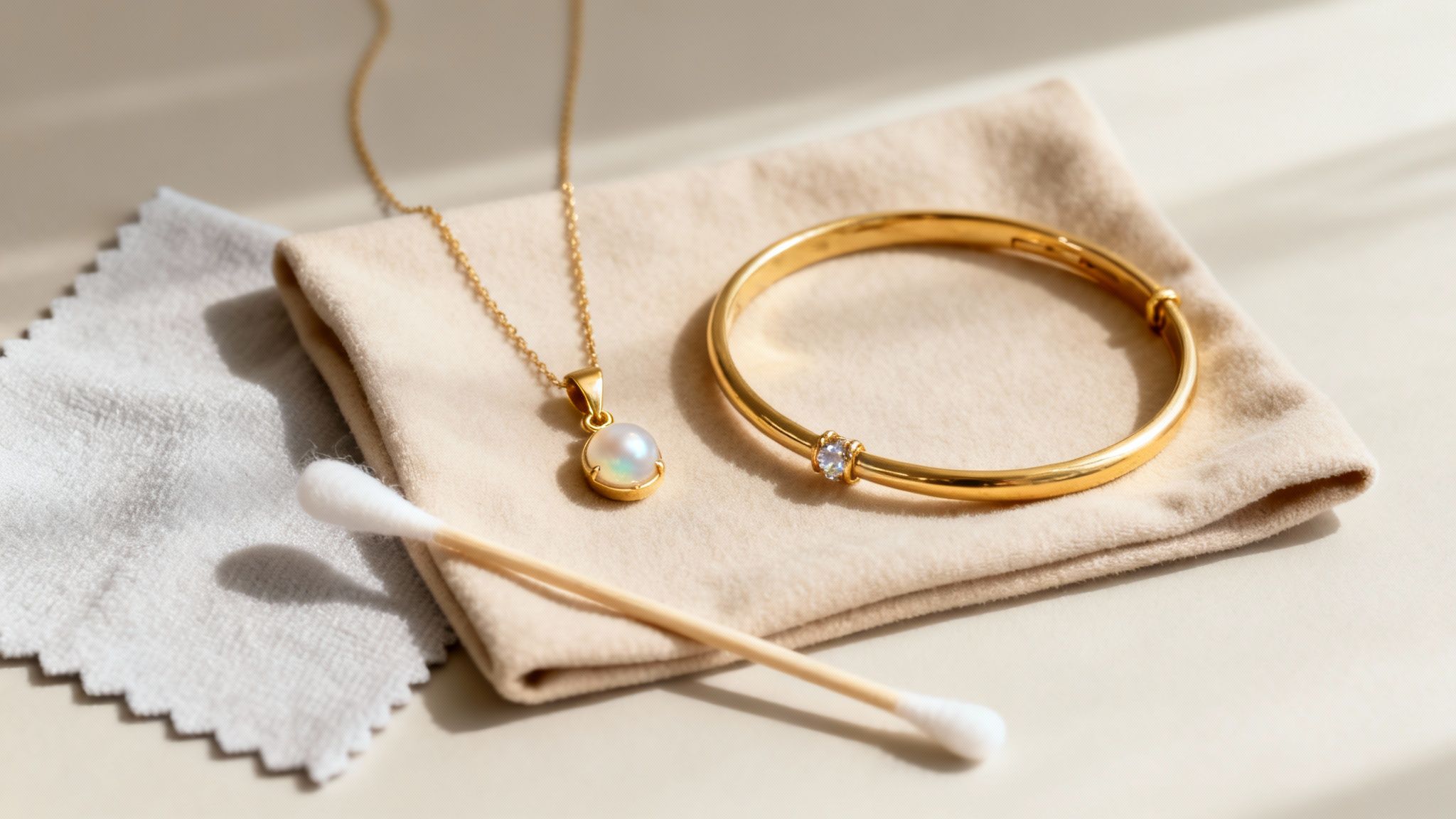
When it comes to products with stones or gold plating, the main rule is maximum delicacy. Methods that work for solid gold can be fatal for such jewelry. Aggressive chemical solutions and abrasives are strictly prohibited here.
A thin layer of gold plating, measured in microns, is easily damaged. Even an innocent soda slurry can erase the coating. The same goes for stones: many of them are sensitive to chemicals and temperature changes.
A delicate approach to gold-plated products
Gold-plated jewelry is silver or another metal covered with a thin layer of gold. Our task is not to erase this coating. Therefore, aggressive methods, such as ammonia or vinegar, are categorically not suitable here.
The only safe way is to use a warm soapy solution. It gently dissolves grease and dirt without damaging the delicate surface.
Soak the jewelry in the solution for 5-10 minutes , then gently wipe it with a soft cloth or cotton swab. No brushes! Finally, polish the product with a microfiber cloth to remove any water spots. This approach ensures that your gold-plated silver rings retain their shine.
Features of cleaning jewelry with stones
Each stone has a unique structure and hardness. Before deciding how to clean gold with inlay, it is important to find out what mineral you are dealing with.
Conditionally, stones can be divided into two groups:
- Hard and durable: Diamonds, sapphires, rubies, emeralds. They can withstand warm soapy water and gentle brushing around their settings.
- Soft and porous: Pearls, turquoise, opal, amber, coral. These stones are afraid of moisture, chemicals, and high temperatures. Their maximum is wiping with a slightly damp soft cloth.
For jewelry with sensitive stones, dry cleaning is the best solution. Take a soft flannel cloth and polish the metal and stone with it.
If you have a piece with hard stone, feel free to use a soapy solution. Pay attention to the space under the stone and around the fasteners, where dirt accumulates. After the procedure, the jewelry must be thoroughly dried.
When home remedies aren't enough
Sometimes, despite all efforts, jewelry cannot regain its original shine. Some types of dirt are not amenable to home methods and require a professional approach.
These include old stains, deep oxidation, or dirt that has become embedded in complex patterns. Experimenting with harsh chemicals on your own can only do harm, leaving irreversible damage.
Specialized cleaning products
When folk methods have exhausted themselves, pay attention to professional jewelry cosmetics. These products are designed taking into account the properties of precious metals.
- Professional pastes and solutions. Contain components and soft microabrasives that delicately remove plaque and restore mirror shine.
- Impregnated wipes. Ideal for quick polishing.
- Ultrasonic baths. Workshop-grade equipment available for home use. The device creates high-frequency waves that form microbubbles that literally “knock out” dirt even from the smallest cracks.
Although many are looking for ways to clean gold at home, switching to professional solutions is a logical step. In Ukraine, 65% of gold owners still use a solution of hydrogen peroxide with ammonia, which removes up to 99% of oxides in 10 minutes. But jewelers are increasingly advising ultrasonic cleaners, although 75% of households prefer home methods due to savings. You can learn more about market trends by studying current information on gold and foreign exchange reserves .
Signals that it's time to contact a jeweler
There are situations when it is better to stop any independent actions and entrust the jewelry to a master. This is a manifestation of care for a valuable item.
Going to a jeweler is an investment in the longevity of your jewelry. A professional will not only clean the item, but also check its overall condition.
Here are some signals that indicate the need for a visit to the workshop:
- Visible scratches or scuffs. Only professional polishing can restore the surface.
- The stone in the product is wobbly. The craftsman will securely fix it.
- The clasp or chain elements are damaged. Attempting to repair them yourself may permanently break the product.
- Antique or very valuable jewelry. Such items require an expert approach.
If you notice one of these problems or are simply not confident in your abilities, don't take any chances. Contact us and we will advise you on jewelry care .
How to care for gold to keep it shining for years
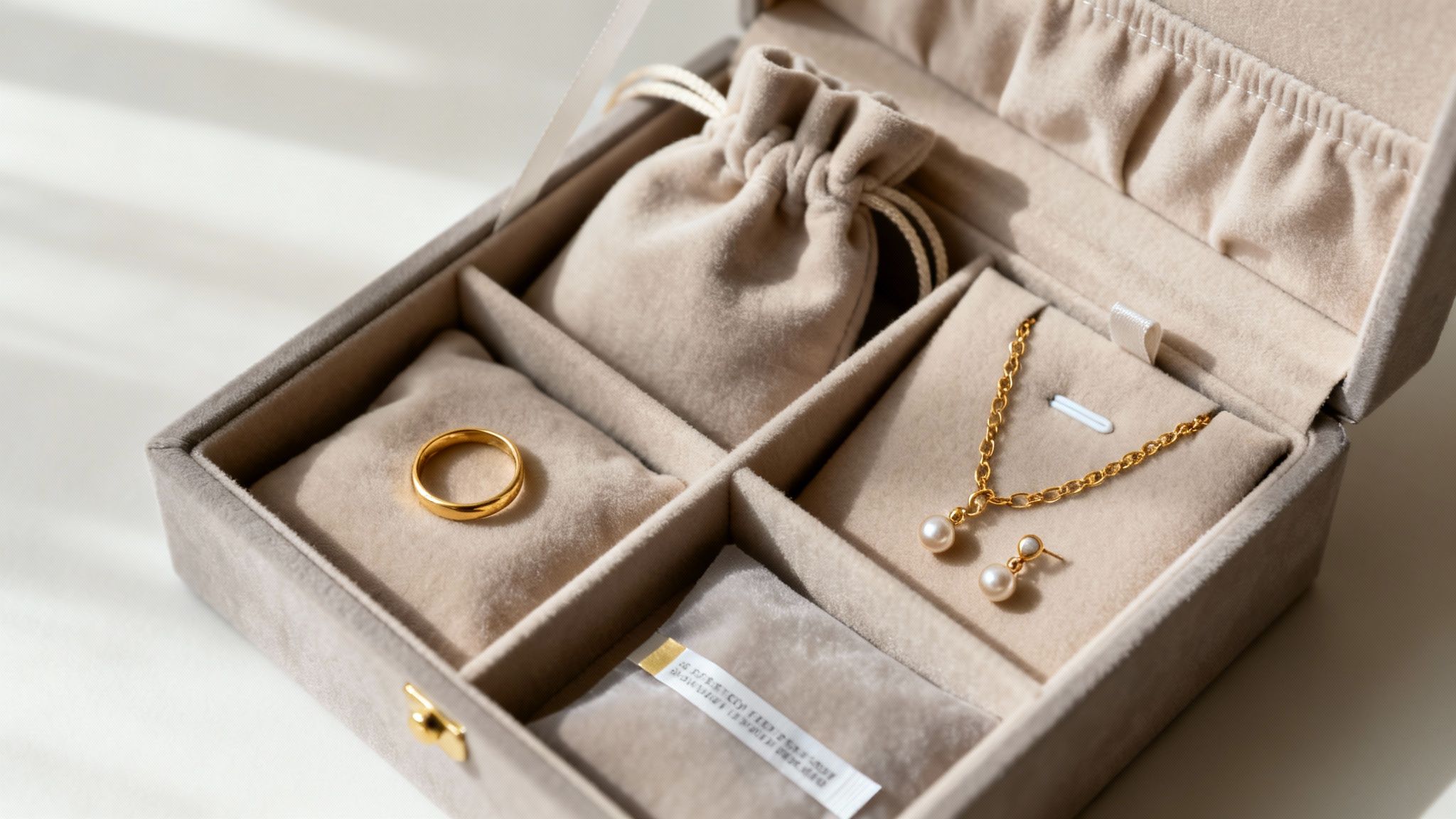
The best way to combat dirt is prevention. Proper daily care will allow you to forget about the question of how to clean gold for a long time.
Develop a few good habits and your jewelry will be protected from premature tarnishing and damage. Make it part of your routine and it will thank you with a lasting shine.
We protect against external factors
Minimize gold's contact with anything that could harm it — both chemicals and physical exertion.
- Remove your jewelry before going to bed. This will prevent the links of the chains and the fastening of the stones from getting tangled.
- The gym, swimming pool, and sauna are not the place for gold. Sweat accelerates oxidation, and chlorinated water leaves stains.
- Jewelry is the final touch. First, cosmetics, perfume, hairspray, and only then earrings and necklaces.
- Household chemicals are enemy number 1. Always remove your rings before washing dishes or cleaning.
By the way, a simple recipe is popular among Carpathian jewelers: a mixture of the juice of half a lemon and a teaspoon of salt removes up to 98% of stains from 375-grade gold in 5 minutes.
We organize proper storage
How you handle your jewelry when you're not wearing it makes a huge difference. Storing everything together in one box is a surefire way to scratches and tangled chains.
The ideal storage location is dark and dry, with no temperature fluctuations. Humidity is one of the main causes of oxidation.
Organize your space so that each piece of jewelry has its own place. This will keep it looking its best and make the daily accessory selection a pleasure.
- Each has its own place. The best option is a soft velvet bag or a box with separate compartments.
- Chains are separate. Store them hanging or in long, narrow compartments.
- Keep out of the sun. Direct sunlight is harmful to some natural stones, which can cause them to fade.
These simple tips will help you preserve not just the appearance, but also the history of your favorite things. After all, modern Ukrainian jewelry is more than just accessories.
Frequently asked questions about cleaning gold
Even with detailed instructions, jewelry owners still have questions. We have collected the most common ones and prepared clear answers.
Proper care is not just about what to clean gold with , but also about understanding the nature of the metal. Often, it's the small details that determine whether a piece of jewelry will shine for years to come.
How often should gold jewelry be cleaned?
It all depends on the intensity of wear. If this is a wedding ring that you wear every day, a light preventive cleaning every 2-3 months would be ideal. This will allow you to remove the layers in time, preventing them from being etched into the surface.
It is enough to refresh your “out-of-town” jewelry once every six months. The best indicator is your eyes. Have you noticed that the product has become dull? It’s time to pay attention to it.
Can white gold be cleaned the same way as yellow gold?
In general, yes, but there is a critical nuance. Most white gold products have a rhodium coating. This is a thin layer of platinum-group metal that gives a cool shine and serves as protection. This layer is very delicate.
Therefore, any abrasives are strictly prohibited for white gold: soda, tooth powder, hard brushes. All of this will leave micro-scratches on rhodium, which will "eat away" the coating over time.
Your best ally in caring for white gold is a mild soapy solution. For a quick shine refresh, special jewelry wipes are ideal.
Why does gold leave dark marks on the skin?
This phenomenon rarely indicates poor quality of the metal. Usually the reason lies in chemistry. Impurity metals in the alloy (most often copper) can react with components of your sweat, cosmetics, or even some medications.
Another culprit is microscopic dirt on the jewelry itself. This mixes with skin oil, forming a dark coating. The problem is completely solved by regular cleaning.
Is it safe to use toothpaste to clean gold?
No. This is one of the most common and dangerous myths. Any toothpaste contains abrasive microparticles designed to clean hard tooth enamel.
Gold is a very soft metal. Abrasives act on it like sandpaper, leaving thousands of micro-scratches. With each such “cleaning”, the polish will be destroyed, and the jewelry will irreversibly lose its glossy shine. Always choose proven and delicate methods.
We hope these tips will help you preserve the beauty and shine of your favorite jewelry. And if you are looking for something new for your collection, visit Taton.shop — discover exquisite products from Ukrainian brands that combine minimalist design and impeccable quality. View the collection .
