
What Is Vermeil: A Guide to Premium Jewelry
Gold vermeil isn't just a fancy name for gold-colored jewelry. It's a legally defined standard—a specific category of high-quality jewelry that sits in a class of its own.
What Is Vermeil? A Closer Look
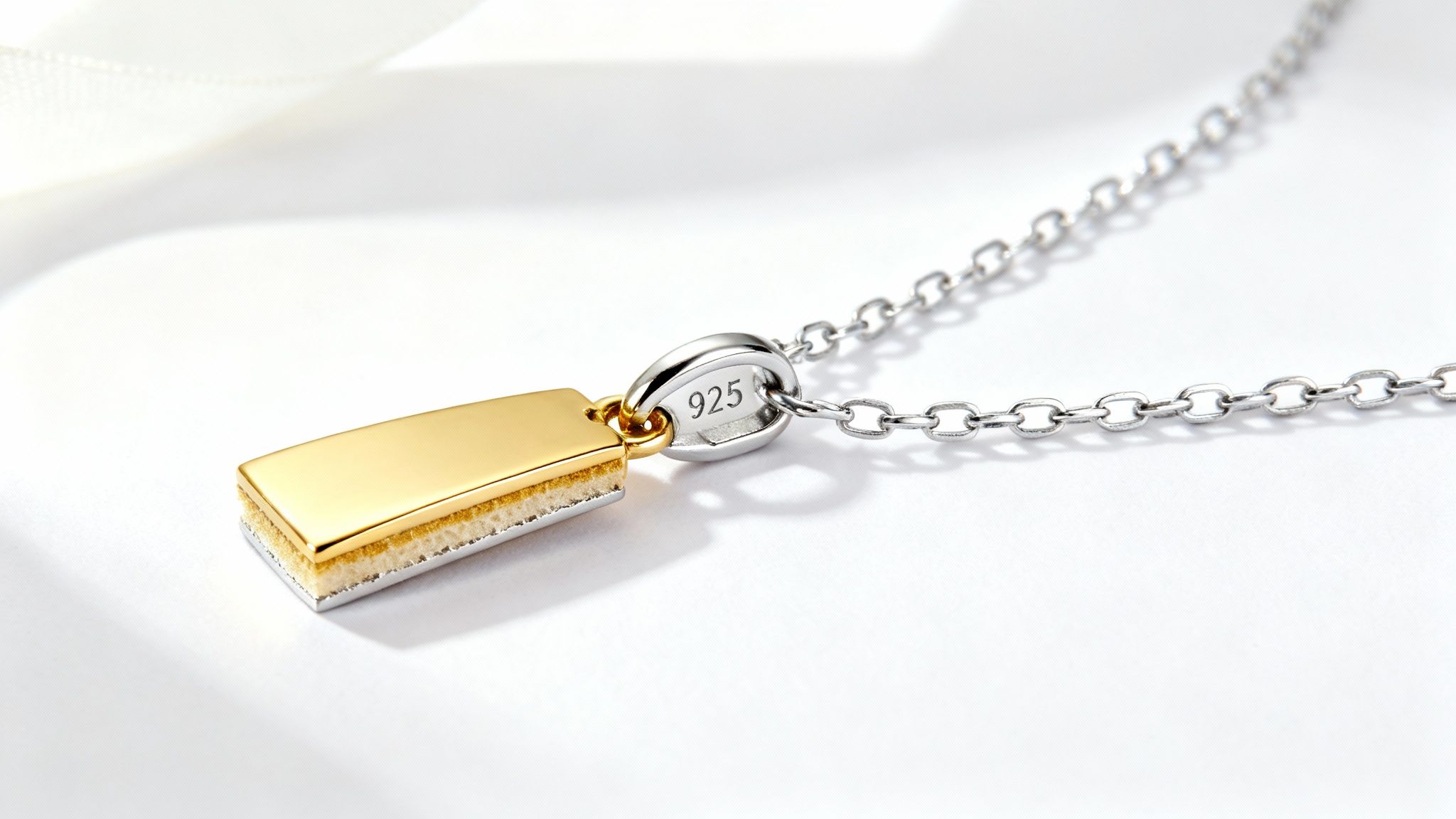
Vermeil bridges the gap between fast-fashion jewelry and solid gold heirlooms. It has the look and feel of fine jewelry, constructed to be more accessible.
Think of it like the difference between a giclée art print and a poster. Both show the same image, but the giclée uses superior materials and a precise process for richer color and longevity. Vermeil is the same—defined by strict, legally enforced standards that set it apart.
These regulations give the term its weight. For a piece to be legally sold as "vermeil" in the United States, it must meet specific criteria set by the Federal Trade Commission. This isn't just industry jargon; it's a consumer guarantee of quality and value.
The Three Pillars of Authentic Vermeil
The definition of vermeil rests on three non-negotiable rules. These pillars ensure any piece labeled vermeil meets a consistent, high standard.
- The Base Metal: Every piece of authentic vermeil must be S925 sterling silver. The core is 92.5% pure silver, a precious metal that gives the jewelry intrinsic value and hypoallergenic properties.
- The Gold Purity: The gold used for plating must be at least 10 karats. This guarantees the outer layer is real, high-quality gold, not just a gold-colored coating.
- The Gold Thickness: The gold layer must be a minimum of 2.5 microns thick. Standard gold plating is often a paper-thin 0.1 to 0.5 microns.
This precise combination—a precious silver core and a heavy layer of real gold—is what gives vermeil its signature heft, lasting color, and tarnish resistance. It is the smart choice for affordable luxury.
This quick breakdown clarifies the official requirements that make vermeil distinct.
Vermeil At a Glance: Key Requirements
| Component | Standard Requirement | Why It Matters |
|---|---|---|
| Base Metal | Must be Sterling Silver (S925)—92.5% pure silver. | Provides intrinsic value, durability, and hypoallergenic properties. A precious metal core, unlike the brass or copper in cheap plating. |
| Gold Karatage | Plating must be a minimum of 10K gold. | Ensures the outer surface is genuine gold, providing the rich color and feel of fine jewelry. |
| Plating Thickness | A minimum of 2.5 microns of gold must be applied. | This heavy layer is 5–20 times thicker than standard plating, dramatically increasing durability and preventing the silver from showing through. |
These rigorous standards are why vermeil is a trusted category in major markets like the US, EU, and UK. The substantial gold layer explains why it wears better and keeps its shine longer than gold-plated counterparts.
Because the core is sterling silver instead of brass, vermeil is a superior option for pieces worn every day. This careful construction, detailed in our article on gilded silver types, makes it the choice for designers creating durable, beautiful, and high-quality jewelry that lasts.
The Rich History of Vermeil From Royal Courts to Modern Luxury
Understanding vermeil requires looking beyond technical specs to its impressive history. The story of vermeil unfolds in royal courts, born from artistic innovation and the desire for accessible luxury. Its roots lie in European high society, where it became a hallmark of opulence.
This journey starts in 18th-century France, where the technique captivated royalty and aristocracy. French artisans perfected a method of coating sterling silver with a thick, durable layer of gold, creating pieces with the brilliant look of solid gold at a more approachable price. This "gilded silver," or vermeil, became the standard for everything from ceremonial objects to intricate court jewelry.
By the late 1700s, many stunning "gold" artifacts in France were actually vermeil. The original method, fire-gilding, was effective but extremely dangerous, involving a toxic mercury mixture. You can learn more about the evolution of gold finishing techniques to understand this hazardous process.
The Shift to Modern Methods
The danger of fire-gilding led to its ban in 19th-century France, pushing innovators to find a safer alternative. The invention of electroplating in the 1800s was a game-changer. This new technology gave artisans precise control over applying a uniform gold layer onto silver, altering the future of jewelry.
This innovation democratized luxury. The beauty of gold could be enjoyed by more people without sacrificing quality. Today's vermeil is a direct result of that technological leap, blending historical prestige with modern safety and precision.
The ultimate proof of vermeil's high-status reputation? Since 1912, all Olympic "gold" medals have been made of vermeil—solid sterling silver plated with pure gold.
This detail captures vermeil's unique place. It bridges powerful symbolism and practical substance, delivering the appearance of gold with the value of sterling silver. This rich legacy makes vermeil more than just a material; it is a piece of history, refined for today. Its timeless appeal shines in classic designs like those in our guide on gold hoop earrings.
Comparing Vermeil, Gold Plated, and Gold Filled Jewelry
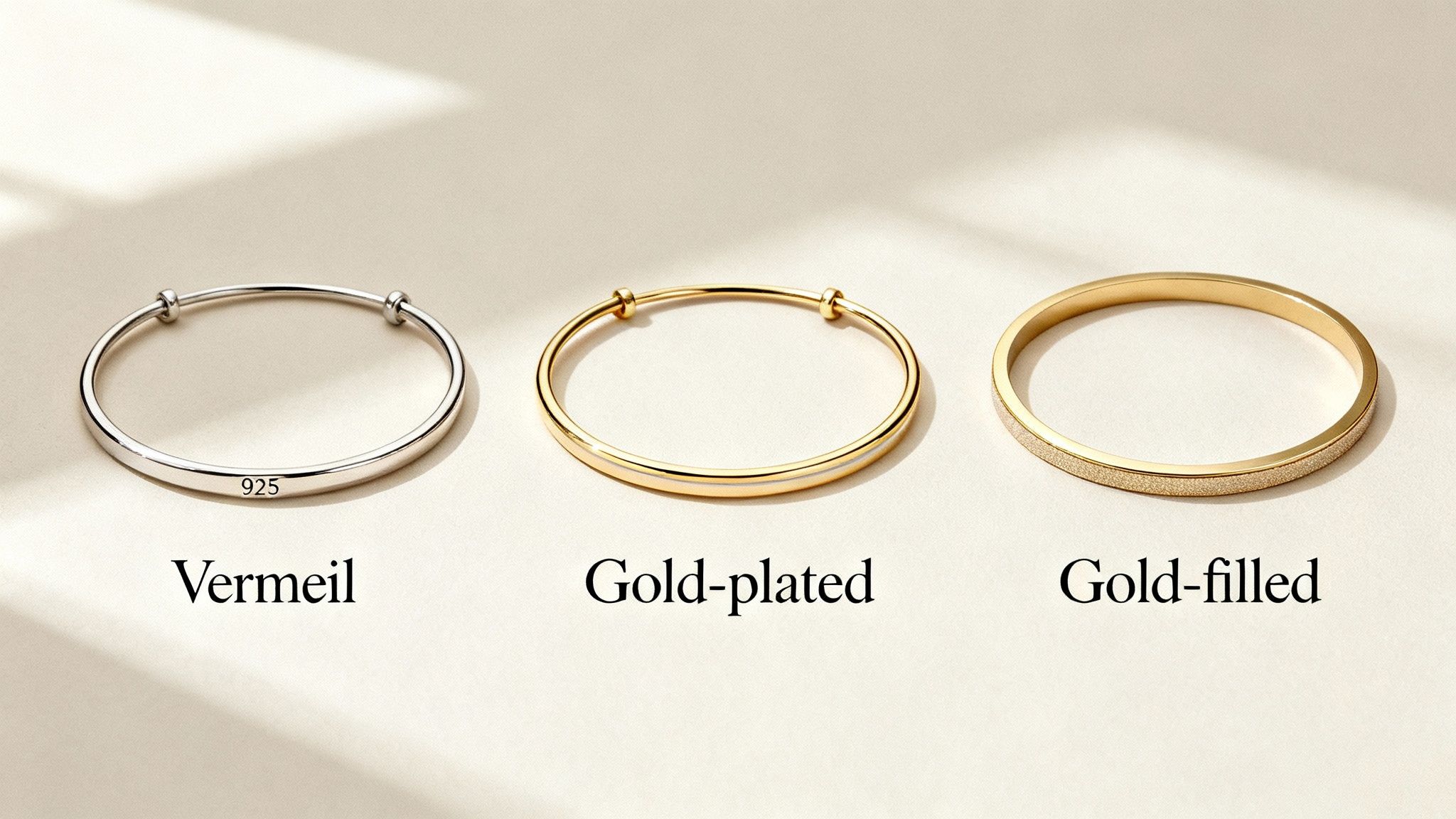
When shopping for gold jewelry, you will encounter "vermeil," "gold-plated," and "gold-filled." These terms represent different levels of quality, durability, and value. Understanding these differences is key to making a purchase you will be happy with.
What sets them apart are three factors: the base metal, the amount of gold, and the application process. Each factor impacts how the jewelry looks, feels, and wears over time.
The Foundation Matters: The Base Metal
The core metal is the first major distinction. To be legally called vermeil, a piece must have a base of S925 sterling silver—a precious metal that is 92.5% pure silver. This gives the jewelry intrinsic value and makes it a safe, hypoallergenic choice.
Gold-plated and gold-filled jewelry are usually made with less expensive base metals like brass, copper, or steel. These materials lack the inherent value of silver and can sometimes cause skin irritation. Learn more about this superior foundation in our complete guide to S925 silver jewelry.
A Question of Thickness: The Gold Layer
Next is the gold itself. Vermeil requires a substantial layer of at least 10k gold that is no less than 2.5 microns thick. It is a heavy, durable coat designed for daily life.
Standard gold-plated pieces have a much thinner layer, often a "flash" plating between 0.1 and 0.5 microns. This minimal layer can wear away quickly with regular use.
Gold-filled jewelry is different. It is made by mechanically bonding a thick sheet of gold to the base metal. By law, this gold layer must make up at least 5% of the item's total weight, creating a very durable finish.
The difference in gold thickness is not just a number—it is a direct indicator of how long the piece will maintain its golden luster. Vermeil's 2.5-micron minimum offers a significant advantage in longevity over standard plating.
How It's Made: The Manufacturing Process
The application technique also plays a huge role. Both vermeil and standard gold-plated pieces use electroplating, where an electric current fuses gold onto the base metal. Creating vermeil involves a much longer and more intense process to achieve its required thickness.
Gold-filled jewelry is created using heat and pressure. This mechanical bonding method fuses a thick layer of gold onto the base, resulting in a surface highly resistant to tarnish and wear.
This simple breakdown shows how these three popular jewelry types stack up.
Jewelry Finishes Compared: Vermeil vs. Gold Plated vs. Gold Filled
This table provides a quick, at-a-glance comparison of the key differences.
| Attribute | Gold Vermeil | Gold Plated | Gold Filled |
|---|---|---|---|
| Base Metal | Always S925 Sterling Silver | Brass, Copper, or Steel | Brass or Copper |
| Gold Layer | Min. 2.5 microns of 10k+ gold | Typically 0.1-0.5 microns | 5% of total weight |
| Process | Heavy Electroplating | Flash Electroplating | Heat & Pressure Bonding |
| Durability | High, long-lasting with care | Low to Moderate | Very High, tarnish-resistant |
Understanding these core components empowers you to choose the right piece for your style, budget, and lifestyle.
The Pros and Cons: Is Vermeil Right for You?
Is vermeil the right choice for your jewelry collection? Like any material, it has distinct strengths and some limitations. Understanding both sides helps determine if it aligns with your needs.
Vermeil excels when its blend of quality and affordability matches the needs of someone who appreciates great design and everyday practicality.
The Upside: Why We Love Vermeil
Vermeil sits comfortably between fleeting fashion jewelry and the steep investment of solid gold. It offers a combination of benefits that make it a smart choice.
- Luxe for Less: Get the rich look of a solid gold piece without the high price tag. It puts a high-end, minimalist aesthetic within reach.
- Built to Last: The legally required 2.5-micron gold layer is significantly thicker and more durable than on most plated jewelry, ensuring pieces keep their shine for years with proper care.
- Hypoallergenic by Nature: The S925 sterling silver core is a win for sensitive skin. No mystery metals like nickel or brass means you can wear it with confidence.
- A Satisfying Feel: The weight of the sterling silver base provides a tangible sense of quality. It does not feel flimsy or cheap because it isn't.
The Other Side: An Honest Look at the Limitations
To make a smart choice, you also need to know what vermeil isn't. Understanding its limits is as important as appreciating its strengths.
Vermeil is designed for longevity and daily enjoyment—it is not a generational heirloom or a financial investment. It is the top-tier option for beautifully designed jewelry you can wear and love for years.
The most important thing to remember is that the gold layer, while substantial, will not last forever. Over time, rough handling or exposure to chemicals can cause the plating to wear. It simply requires mindful care.
While vermeil has value from its precious metal content, it doesn't appreciate like solid gold. Its worth is tied to its design, craftsmanship, and wearability, not its potential as a financial asset. Choosing vermeil is an investment in personal style and lasting quality, not a market commodity.
How to Identify and Preserve Your Vermeil Jewelry
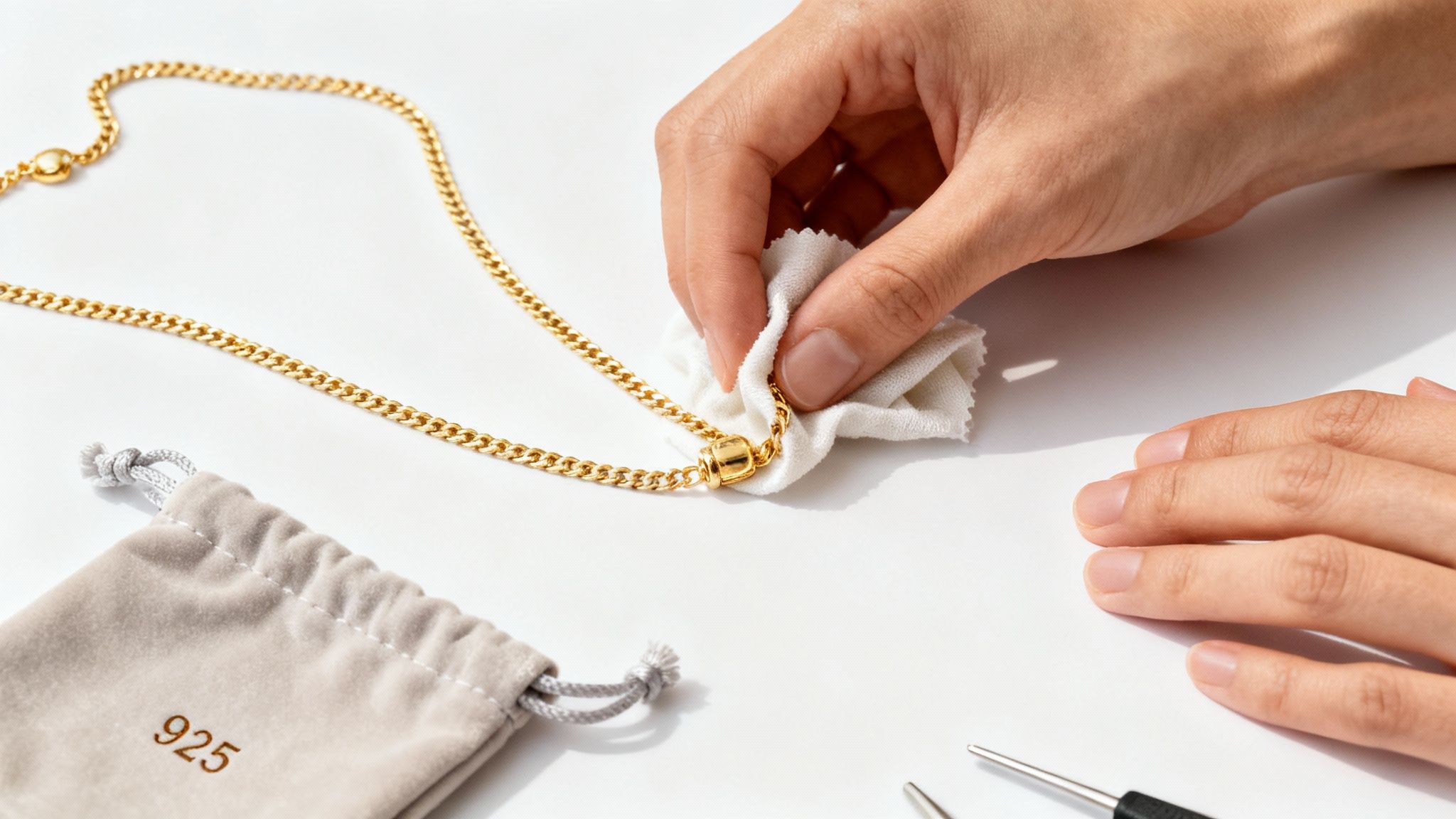
When you invest in vermeil, you choose a piece designed for lasting beauty. To get the most from it, you need to know how to spot the real deal and how to care for it. This knowledge keeps your jewelry looking rich and golden for years.
Identifying genuine vermeil is straightforward. The secret is its sterling silver core. The most reliable indicator is a small quality stamp, or hallmark, discreetly engraved on the piece—usually on a clasp, the inner band of a ring, or the back of a pendant.
This stamp—"925" or "S925"—is the universal mark for sterling silver, guaranteeing the base metal is 92.5% pure silver. While it doesn't confirm the gold's thickness, this hallmark is your crucial first confirmation. If you cannot find it, you are likely looking at standard gold-plated jewelry.
Essential Care for Lasting Luster
Once you have a genuine vermeil piece, keeping it beautiful is about preservation. The thick gold layer is durable, but not invincible. Simple habits can protect your jewelry from premature wear.
Proper care means minimizing contact with anything that could physically or chemically damage the gold surface.
Vermeil is crafted for everyday elegance, but its longevity is tied to mindful handling. Simple, consistent care is the difference between a piece that lasts for seasons and one that remains a favorite for years.
Here are the essential practices for keeping your vermeil looking its best:
- Avoid Moisture and Chemicals: Always remove jewelry before swimming, showering, or working out. Chlorine and salt can be harsh on the gold finish.
- Apply Products First: Let lotions, perfumes, and hairspray dry completely before putting on your vermeil. Direct contact can tarnish the gold over time.
- Store It Thoughtfully: Keep your jewelry in a soft pouch or a lined box when not in use. This prevents scratches and reduces exposure to air, which can cause the underlying silver to oxidize.
Gentle Cleaning Techniques
Cleaning vermeil demands a gentle touch. Harsh chemicals or aggressive polishing can strip away the gold layer. The simplest approach is always best.
For routine upkeep, gently buff the surface with a soft, dry microfiber cloth. This removes fingerprints and oils without scratching. If your piece needs more attention, our guide on how to clean gold-plated jewelry has safe methods that work perfectly for vermeil. Avoid abrasive cleaners or polishing cloths designed for solid metals.
Why Vermeil Is the Smart Choice for Modern Jewelry
Vermeil holds a unique place in the jewelry world. It is the answer for the modern shopper who wants high quality and great design without the price of solid gold. It hits the sweet spot, offering a genuine luxury feel that remains accessible.
This balance is crucial. Over the past two decades, gold prices have skyrocketed—spot gold has more than tripled since the early 2000s. In response, jewelry brands have embraced vermeil. It allows them to offer substantial pieces while keeping prices reasonable, a topic explored in this vermeil market analysis on deeve.ca.
This makes vermeil a brilliant choice for designers, whether creating minimalist staples or trend-focused pieces. It bridges the gap between flimsy costume jewelry and "special occasion only" heirlooms.
The Rise of Mindful Accessorizing
Vermeil’s appeal extends beyond cost. It aligns with a more thoughtful way of building a wardrobe. People are tired of disposable, fast-fashion accessories that tarnish after a week. There is a shift toward pieces with staying power and timeless style.
Vermeil nails this. It's a durable, high-quality option that feels like a conscious choice. It is the go-to for anyone who values clean aesthetics and material integrity in the pieces they wear daily.
This is part of a larger move toward curating a collection of accessories meant to last. Choosing vermeil is an investment in your style and quality craftsmanship. To learn more about this approach, read our guide on what is sustainable fashion.
A Perfect Match for Modern Lifestyles
At its core, vermeil is a thick layer of real gold over a solid sterling silver base. This simple construction is ideal for the way we live today, ticking all the right boxes for the modern jewelry buyer.
- Design-Forward: More affordable than solid gold, it gives designers freedom to be creative. They can craft bold, contemporary, and minimalist styles without a huge cost to you.
- Everyday Durability: The required gold thickness makes it tough enough for daily wear. It is a practical choice for your signature rings, necklaces, and earrings.
- Hypoallergenic Comfort: With its S925 sterling silver core, vermeil is a safe bet for most people, including those with sensitive skin.
Vermeil is the smart choice for anyone who loves the look of gold but values versatile, modern design. It gives you the best of both worlds: the beauty of gold, the integrity of silver, and a piece crafted for a life well-lived.
Common Questions About Vermeil, Answered
Exploring fine jewelry naturally brings questions. Here are answers to common queries about gold vermeil so you can feel confident in your purchase.
Is Gold Vermeil Actually Real Gold?
Yes, absolutely. The "gold" in gold vermeil is 100% real gold.
Its structure is what sets it apart. It is a solid sterling silver piece with a thick, luxurious coat of real gold. Regulations require this gold layer to be at least 10 karats and a minimum of 2.5 microns thick, bonded over a sterling silver base. While not solid gold, the part you see and touch is genuine gold.
How Long Can I Expect Gold Vermeil to Last?
With proper care, gold vermeil jewelry can last for many years.
Its longevity comes from the required 2.5-micron thickness of the gold layer. This is a substantial coating designed for regular wear, far more durable than standard gold plating. Keep it away from harsh chemicals and moisture, and you will preserve its beauty for years.
Is Vermeil Suitable for Everyday Wear?
Definitely. Vermeil is a fantastic option for daily jewelry.
The core of every vermeil piece is sterling silver, which is hypoallergenic and ideal for sensitive skin. The robust gold layer can stand up to daily life, making it a practical and beautiful choice. Just remember that mindful care goes a long way, especially for items like rings that see more wear.
At Taton.shop, we believe in accessible luxury. We craft our minimalist pieces from premium S925 silver with a durable 18K gold plating, designed for you to wear and love every day. Discover your next favorite piece at Taton.shop.
