
What is 925 Sterling Silver: A Guide to Value and Care
The "925" stamp on jewelry signifies a standard of quality. It indicates the piece is made from sterling silver, a premium alloy valued for both its luster and resilience.
925 sterling silver is a precise blend: 92.5% pure silver and 7.5% other metals, typically copper. This composition enhances the metal's strength, making it ideal for daily wear while retaining the bright, cool tone of pure silver.
The Balance of Beauty and Durability
Pure silver, also known as fine silver, is exceptionally soft. A piece of jewelry made from it would easily bend, scratch, and lose its shape. It is impractical for items intended for everyday life.
The addition of a stronger metal transforms pure silver into a durable material fit for constant wear. This intelligent alloy maintains the aesthetic of silver while dramatically increasing its hardness, enabling the creation of intricate, lasting designs.
Why the 925 Standard Matters
The 92.5% to 7.5% ratio is the internationally recognized standard for quality silver. This formulation has been trusted for centuries, ensuring any item marked "925" meets a consistent measure of purity and value.
The "925" or "S925" stamp is a hallmark of authenticity. It assures the buyer of the metal's composition and quality.
This blend strikes the ideal compromise, delivering the premium look of silver with the robust performance needed for rings, bracelets, and necklaces you can wear daily.
This engineered metal is fundamental to modern jewelry design. The balance of elegance and strength is evident in the work of brands like Petite Grand Jewellery. Sterling silver makes fine jewelry accessible and practical for real life.
How to Identify Authentic Sterling Silver
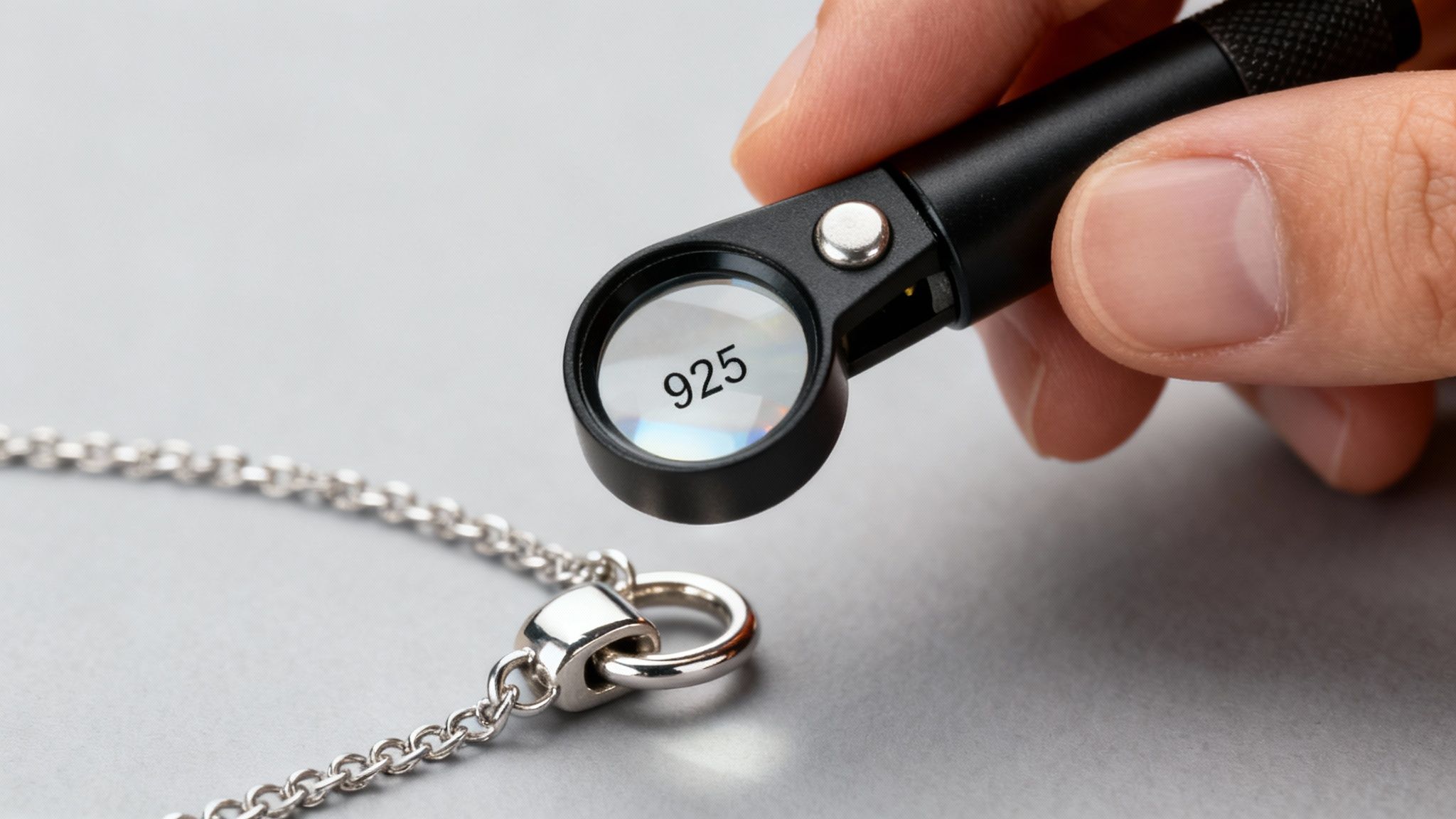
Identifying genuine sterling silver begins with the hallmark. This small stamp is a legally recognized guarantee of the metal's purity, discreetly placed to preserve the design.
Typical locations for hallmarks:
- Rings: Inside the band.
- Necklaces & Bracelets: On or near the clasp.
- Pendants: On the back or side edge.
- Earrings: On the post or backing.
This mark is the primary indicator of authenticity. You can learn more about its role in protecting consumers by reading about sterling silver's international standards on heliosglobalbrand.com.
Decoding the Stamps
Hallmarks are universal. Each confirms the piece meets the 92.5% pure silver standard.
- 925: The most common international stamp.
- S925: A variation where "S" stands for Sterling.
- Sterling or STER: Often found on older American or British pieces.
These regulated marks create a language of trust understood globally by jewelers and consumers.
An absence of a stamp does not automatically indicate a fake. Vintage, custom, or delicate items may lack a hallmark to avoid damaging the piece.
Simple At-Home Verification Tests
If a piece is unmarked, a simple test can provide reassurance.
Sterling silver is non-magnetic. Hold a strong magnet to your jewelry. If it attracts the magnet strongly, the piece likely contains high levels of iron or nickel and is not sterling silver. A very faint pull is possible due to the alloy metals, but a strong attraction is a definitive sign.
Sterling Silver vs. Fine Silver and Silver Plating
To appreciate 925 sterling silver, it's useful to compare it against other "silver" options. Terms like fine silver and silver-plated may seem similar, but they differ significantly in quality, durability, and value.
Understanding these differences is key to making an informed purchase. They directly impact a piece's longevity and the care it requires.
Fine Silver: Pure but Impractical
Fine silver (999 silver) is the purest form available. It possesses an unmatched bright, white luster. However, this purity makes it extremely soft.
A ring made from fine silver would scratch and deform with minimal contact, making it unsuitable for most jewelry. Its use is typically reserved for delicate items like earrings or pendants that are less exposed to wear.
While its 99.9% purity is notable, fine silver's softness is a significant drawback for creating durable, everyday accessories.
Silver Plating: A Temporary Finish
Silver-plated jewelry consists of a base metal (like brass or copper) coated with a microscopic layer of silver. This offers the look of silver at a lower cost, but it is not a lasting solution.
The thin silver layer inevitably wears away with friction and exposure to skin oils or chemicals. This reveals the base metal underneath, which may tarnish, corrode, or cause skin irritation.
Silver Jewelry Comparison Guide
This table outlines the key differences between the three main types of silver jewelry.
| Attribute | 925 Sterling Silver | Fine Silver (999) | Silver-Plated |
|---|---|---|---|
| Composition | 92.5% silver, 7.5% alloy | 99.9% pure silver | Base metal with a thin silver coating |
| Durability | Excellent for everyday wear | Poor; very soft, easily damaged | Poor; coating wears off |
| Value | High intrinsic value | Highest intrinsic value | Low value |
| Longevity | Lasts a lifetime with proper care | Prone to damage | Short-lived appearance |
In summary, what is 925 sterling silver? It is the optimal choice for fine jewelry. It provides the beauty of high-purity silver with the essential strength required for lasting, wearable pieces.
Understanding Tarnish and Allergies
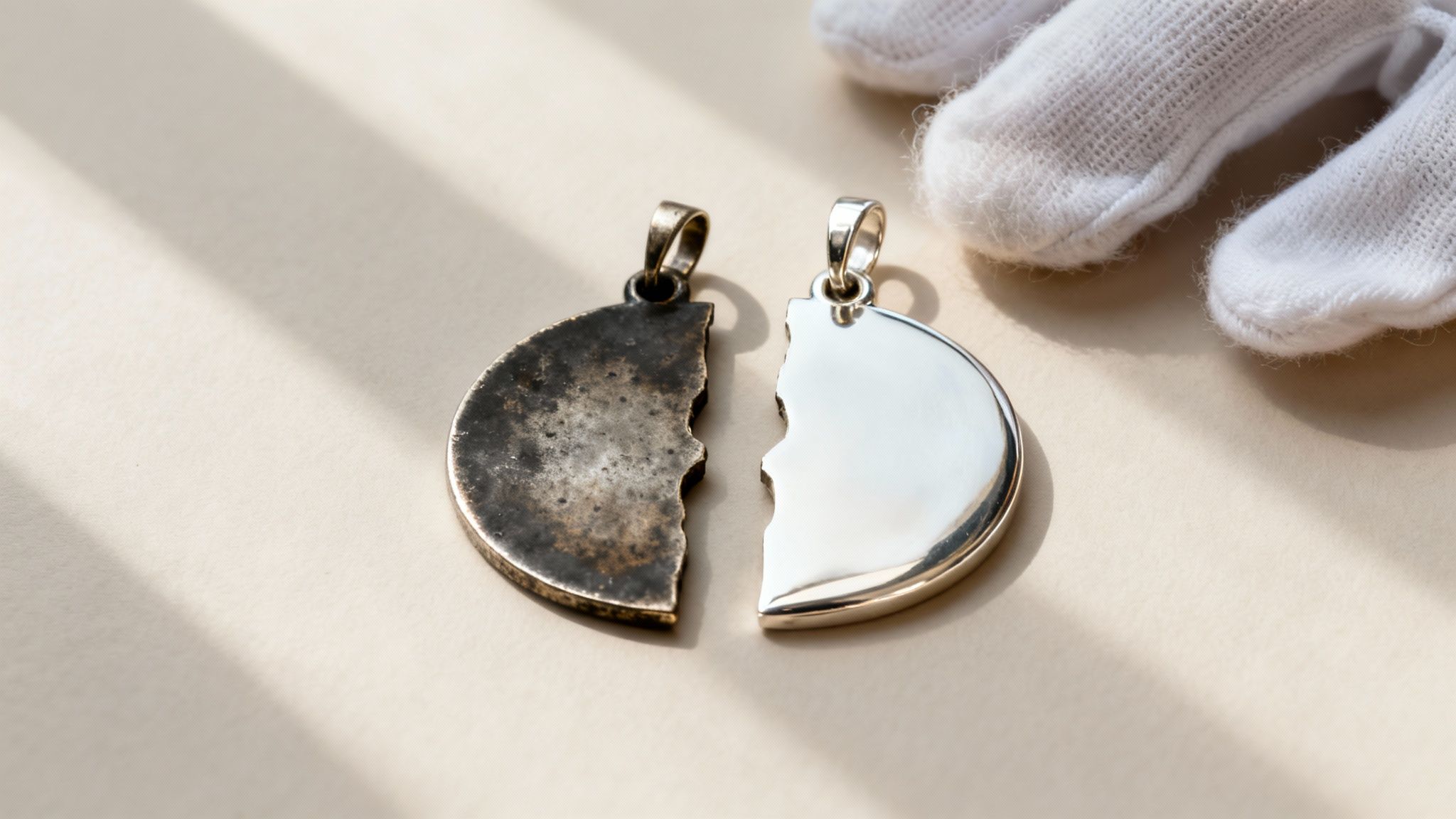
Tarnish and skin sensitivity are natural characteristics of sterling silver, not flaws. Understanding them is part of appreciating the metal.
Tarnish is not a sign of low quality; it is proof of authenticity. The dark layer is a chemical reaction between the 7.5% copper in the alloy and sulfur compounds in the air. This is a surface-level change that does not damage the metal itself.
Why Tarnish Happens and How to Manage It
The copper that provides strength is also the element that causes tarnish. Exposure to humidity and air triggers oxidation. This process does not affect the metal's integrity. For more detail, you can explore information on 925 sterling silver maintenance on kyotopearl.com.
Managing tarnish is simple. A quick polish is usually sufficient to restore the original luster. Many modern pieces, such as those from Taton.shop, feature a protective finish to slow this process.
These finishes create a barrier against the elements:
- Rhodium Plating: A premium, silvery-white finish that resists tarnish and scratches.
- 18K Gold Plating: A luxurious, warm coating that seals the silver, preventing discoloration.
These layers significantly reduce the need for polishing, keeping jewelry brilliant for longer.
Note that these coatings may require reapplication over many years, particularly on high-contact items like rings.
Sterling Silver and Skin Allergies
Skin sensitivity to sterling silver is rare. When it occurs, it is typically a reaction to the alloy metals, not the silver itself. The most common allergen in jewelry is nickel.
Quality 925 sterling silver uses copper instead of nickel. While a copper allergy is possible, it is far less common. Protective platings like rhodium or 18K gold also create a hypoallergenic barrier, making the jewelry suitable for most people with sensitive skin.
Simple and Effective Sterling Silver Care
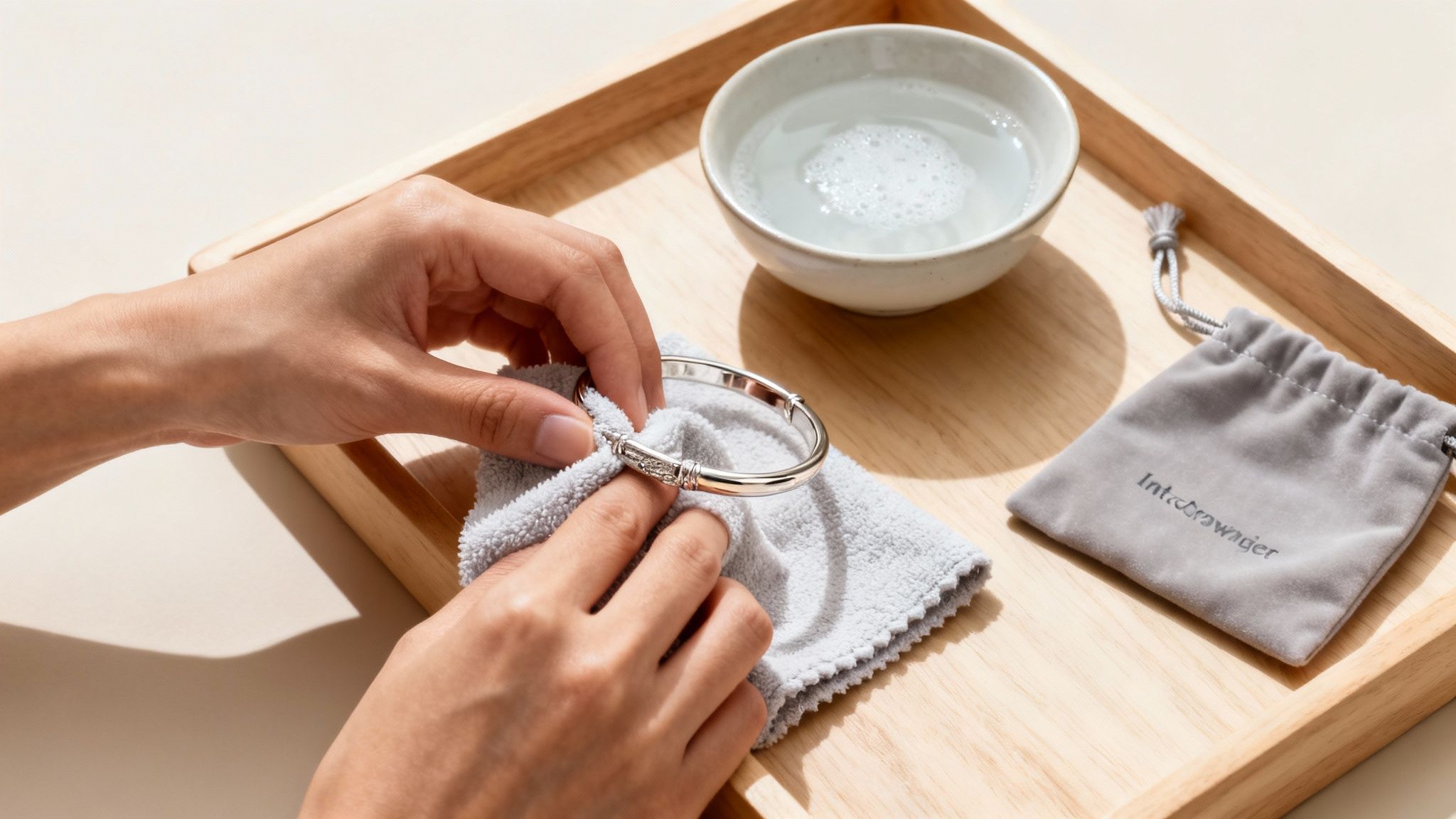
Maintaining the brilliance of your sterling silver requires a simple, consistent routine. Proactive care prevents tarnish buildup and preserves the finish.
Regular cleaning is the most effective strategy. It removes oils and grime before they can cause discoloration, extending the life and beauty of your collection.
Safe At-Home Cleaning Methods
Avoid harsh chemicals. The best cleaning method uses simple, household items.
For a routine clean:
- Mix a few drops of mild, phosphate-free dish soap into a bowl of warm water.
- Soak the jewelry for several minutes to loosen dirt.
- Gently clean with a soft cloth or a soft-bristled baby toothbrush.
- Rinse thoroughly under clean, running water.
- Pat completely dry with a soft, lint-free cloth to prevent moisture spots.
For light tarnish, use a dedicated silver polishing cloth. These are treated to remove discoloration without scratching the metal.
Avoid using toothpaste or baking soda. These materials are abrasive and will create microscopic scratches, permanently dulling the jewelry's finish over time.
What to Avoid to Protect Your Silver
Knowing what to avoid is crucial. While sterling silver is durable, it is vulnerable to certain substances, especially when plated with rhodium or gold, like the pieces from Taton.shop.
To prevent damage, avoid:
- Harsh Chemicals: Chlorine, bleach, lotions, and perfumes can damage the metal. Apply jewelry after cosmetics.
- Abrasive Materials: Use only soft cloths. Paper towels and tissues can scratch the surface.
- Prolonged Water Exposure: Remove jewelry before swimming in pools or hot tubs due to chlorine.
Proper Storage to Slow Oxidation
Storage significantly impacts your jewelry's condition. The goal is to limit exposure to air and humidity, which cause tarnish.
Store each piece separately in an anti-tarnish pouch or a small, airtight plastic bag. This prevents scratching and slows the oxidation process, keeping your silver ready to wear.
Your 925 Sterling Silver Questions, Answered
Here are answers to the most common questions about wearing and living with sterling silver jewelry.
Can 925 Sterling Silver Get Wet?
Yes, but with caution. Pure water is not harmful, but chemicals within it, like chlorine in pools or minerals in tap water, can accelerate tarnishing.
It is best practice to remove jewelry before swimming or cleaning. If your jewelry does get wet, pat it completely dry with a soft cloth to prevent water spots and oxidation.
Does 925 Sterling Silver Turn Skin Green?
This is a normal chemical reaction, not a sign of fake silver. The copper in the alloy can react with your skin's chemistry, sweat, or lotions, sometimes leaving a green or dark mark.
This reaction is highly individual. Protective platings like rhodium or 18K gold create a barrier between the metal and your skin, effectively preventing this discoloration.
Is 925 Sterling Silver Good for Everyday Wear?
Absolutely. It was designed for this purpose. The 7.5% alloy transforms soft silver into a durable material ready for daily life, making it significantly tougher than fine silver.
With proper care, 925 sterling silver jewelry can last a lifetime. It is a reliable and elegant choice for pieces you wear every day.
At Taton.shop, we create jewelry that integrates timeless style with everyday practicality. Our S925 sterling silver collection, finished with premium rhodium or 18K gold plating, is designed for exactly that. Discover durable, minimalist pieces at Taton.shop.
