
Cartilage Earrings: A Complete Guide to Choosing, Care, and Styling
Cartilage earrings are more than just a piece of jewelry, they are a key element of modern style and a quiet but confident way to express yourself. What was once a subculture staple has now become a real jewelry trend thanks to its flexibility and the ability to create completely unique compositions. This guide is your guide to the world of cartilage piercing, from choosing your first earring to adding the finishing touch to your perfect look.
- Safety first: For a fresh piercing, choose only hypoallergenic materials, such as implant-grade titanium. Silver and gold should only be used after they have fully healed.
- Proper care is the key to success: Regular saline treatment, minimal touching, and no twisting of the earring are the basis for quick and trouble-free healing that lasts 6–12 months.
- Style is in the details: Create harmonious compositions ("constellations") by combining minimalistic push-ups, elegant hoops and accent cuffs. Don't be afraid to experiment with asymmetry and a combination of metals.
What is cartilage piercing and why is it a major trend?
Once a symbol of rebellion, cartilage piercings have become a staple of everyday fashion. Cartilage earrings have become a sophisticated tool for self-expression that is accessible to everyone. Unlike the classic earlobe piercing, piercings in the upper or inner ear open up endless possibilities for experimentation and creating unique sets, often called “constellations.”
What is behind such popularity?
- Space for individuality: The ability to mix different types of jewelry — from miniature studs to eye-catching hoops and cuffs — allows you to create a style that reflects your personality.
- Absolute versatility: Laconic earrings easily fit into both a strict office look and a relaxed streetwear look. These are jewelry that are always appropriate.
- Celebrity influence: Stars and influencers actively show off their stylish piercing combinations, inspiring millions of people to try something new.
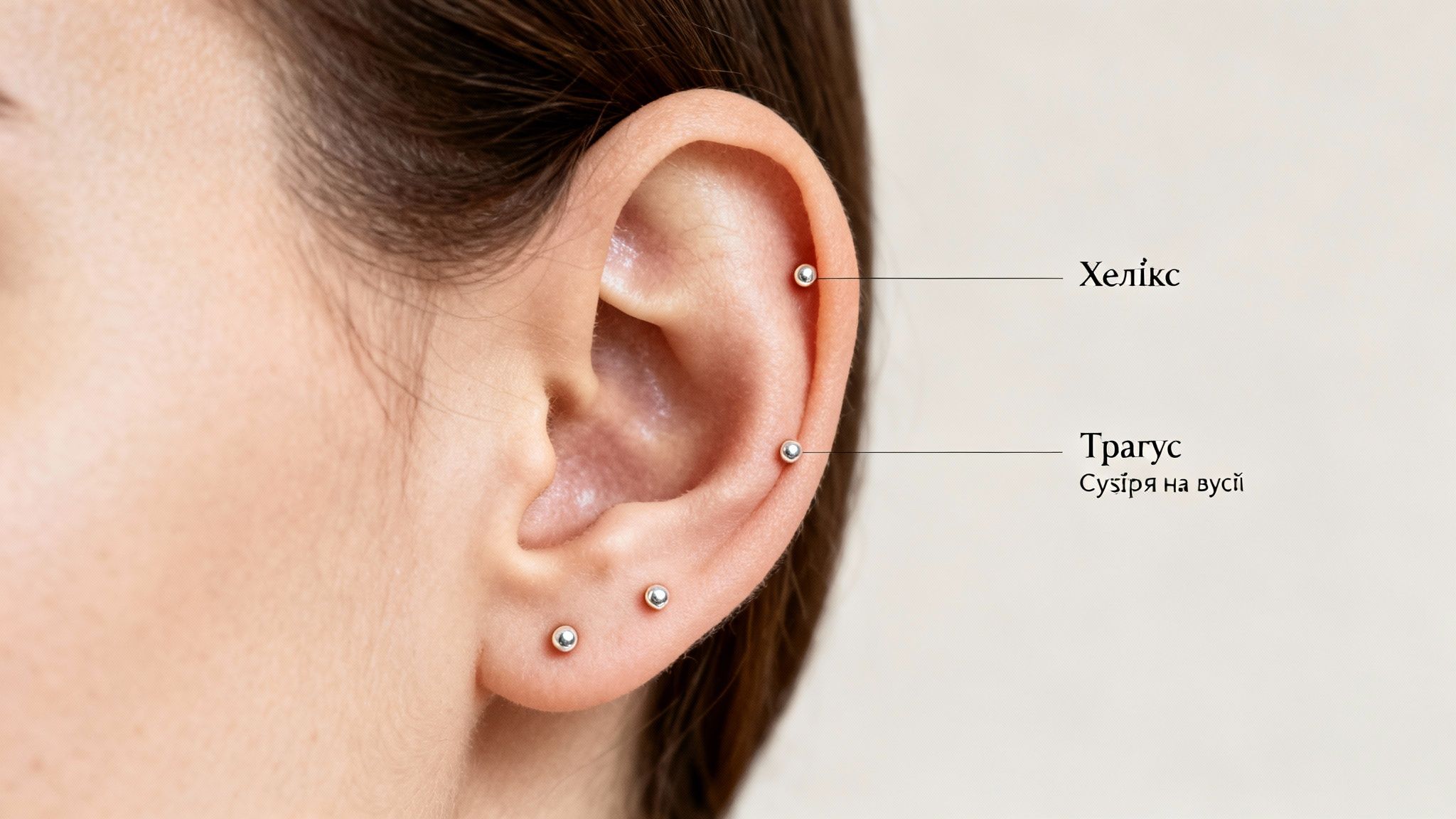
The importance of the right approach
Cartilage piercings require significantly more care than a regular earlobe piercing. Cartilage tissue has fewer blood vessels, so healing takes much longer—an average of 6 to 12 months .
Choosing the right first earring and careful daily care are not just recommendations, but the key to the health and beauty of your piercing. Poor-quality material or negligence can easily lead to complications.
That's why you should approach the process consciously: choose only high-quality jewelry and strictly follow the advice of the master. You can learn more about how to care for a fresh piercing from the resources of piercing experts .
How to choose earrings: step by step
Choosing a cartilage piercing is not just about looks, but also about design and material. The right style can significantly improve healing and ensure comfort.
Step 1: Determine the type of earring
The design affects whether the jewelry will catch on your hair, cause pressure while you sleep, or interfere with your headphones. Let's look at the four main types.
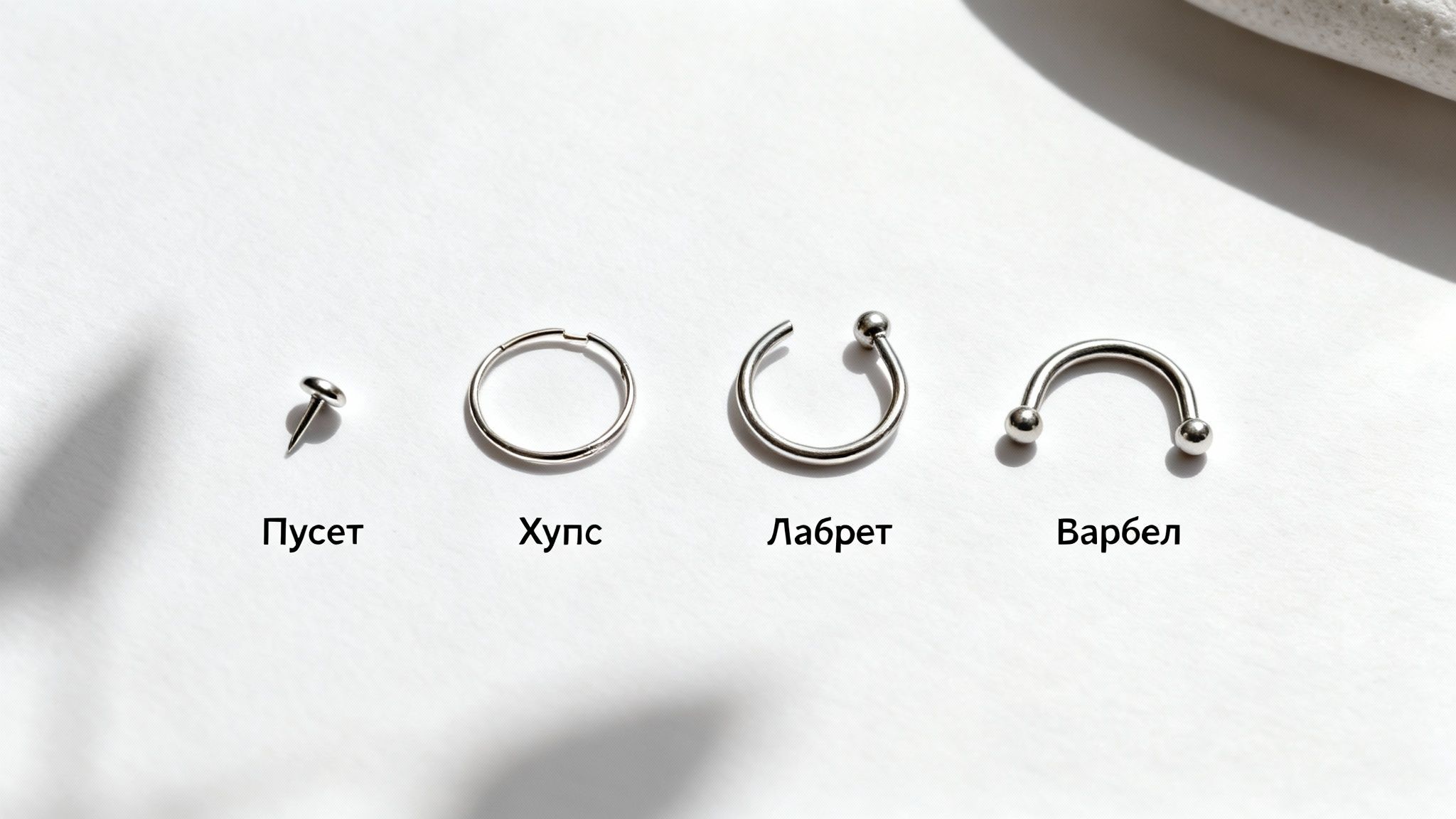
- Studs: A versatile option for creating "constellations" in helix, tragus, or flat piercings. Ideal for healed piercings, but can be uncomfortable for sleeping.
- Hoops (Rings): An elegant solution for helix and daith piercings. Important: Hoops should not be placed in a fresh piercing as their mobility interferes with healing.
- Labrets: The best choice for primary tragus, conch and helix piercings. The flat base provides maximum comfort while sleeping and wearing headphones.
- Barbells: Specialized jewelry. A straight barbell is used for industrial purposes, while a curved (banana) barbell is used for arm piercings.
To better understand which piercing jewelry is right for you, it's worth considering all of these features.
Step 2: Choose a safe material
An incorrectly selected alloy can cause irritation and allergies. Only biocompatible, hypoallergenic metals are suitable for a fresh piercing.
- For a fresh piercing: Choose only implant-grade titanium (ASTM F-136) or medical grade steel (316L) . They do not cause allergies and create ideal conditions for healing.
- For healed piercings: Once fully healed (6-12 months), you can switch to sterling silver or gold (14K and above) . These metals combine safety with a sophisticated look. For more on silver care, read our guide to caring for sterling silver jewelry .
- What to avoid: Never put silver or jewelry alloys into a fresh piercing. This can lead to oxidation, inflammation, and even permanent darkening of the skin.

Step 3: Proper care
Cartilage healing is a marathon, not a sprint. Following simple rules will ensure that your piercing is healthy and beautiful.
Cartilage Piercing Care Checklist
| Action | Frequency | What to use | Important tips |
|---|---|---|---|
| Cleaning | 2-3 times a day | Sterile saline solution | Gently apply a moistened cotton pad, do not rub. |
| Hygiene | Always before touching | Antibacterial soap | Wash your hands to avoid infection. |
| Drying | After cleaning and showering | Clean paper towel | Soak, not wipe. Moisture is a breeding ground for bacteria. |
| What not to do | Constantly | Alcohol, peroxide, ointments | Do not twist the earring, do not sleep on the piercing, do not change the jewelry until it is completely healed. |
According to experts, up to 80% of infections after cartilage piercing are caused by improper care. More detailed care recommendations can be found from professionals.
Examples of looks: how to stylishly combine earrings
The right earrings can transform even the simplest look into something elegant. The main rule is to create a coherent, not chaotic, composition.
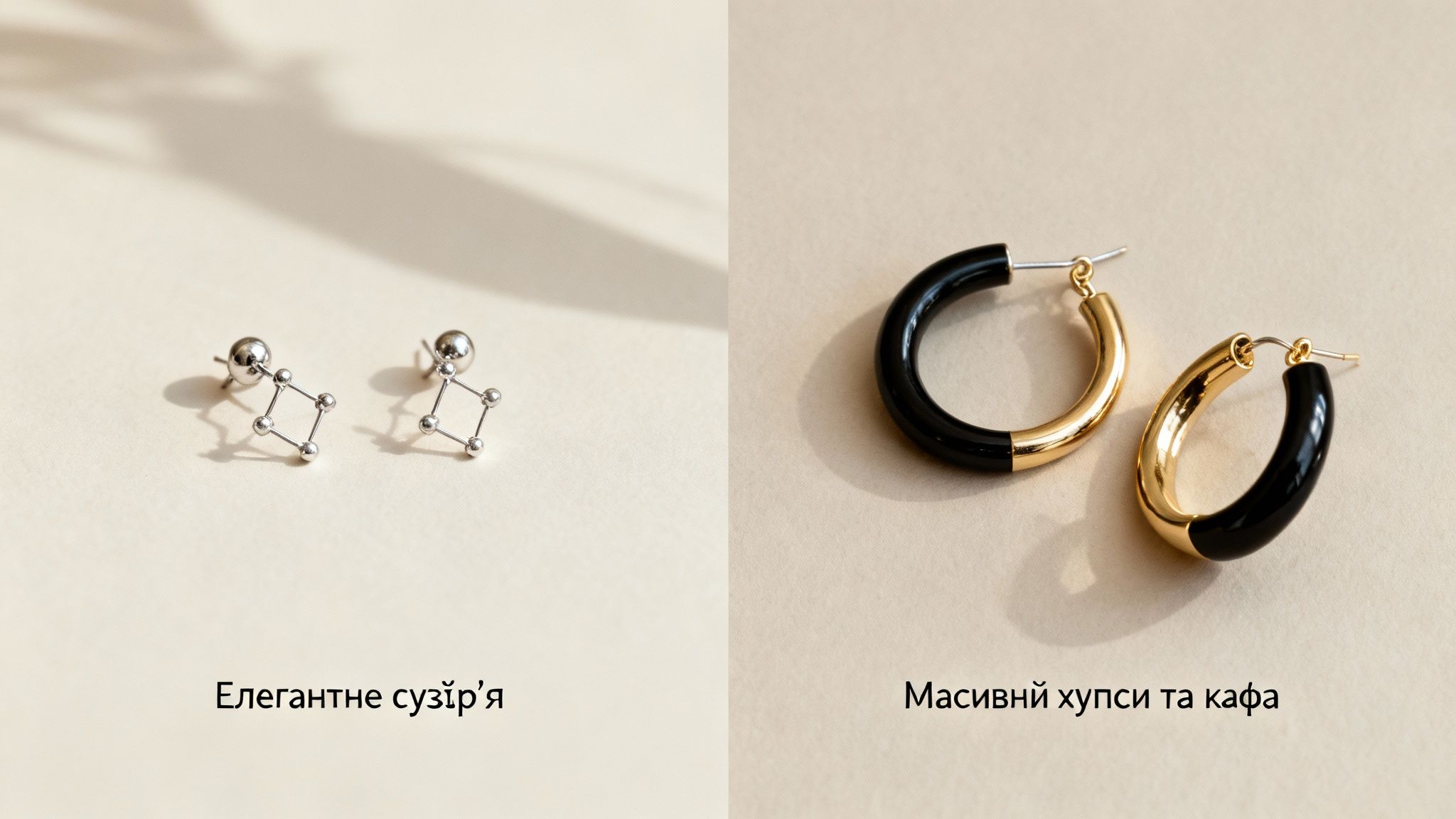
- Minimalism for the office: Create a constellation of a few tiny studs or labrets in your helix and tragus piercings. Finish the look with a thin cuff that doesn't require a piercing.
- Streetwear experiments: Combine massive hoop earrings in the earlobe with a cascade of thin hoops of different diameters along the cartilage. Play on the contrast of shapes and sizes. To better understand how to style rings, we recommend taking a look at our guide to combining gold hoop earrings .
- Metal balance and asymmetry: Don’t be afraid to mix gold and silver. Choose one dominant metal (70%) and complement it with another (30%). Try asymmetrical sets: on one ear - a expressive composition, on the other - just one bright accent.
What to choose at Taton.shop
At Taton.shop, we create jewelry for self-expression, adhering to the philosophy of "quiet luxury." Our collection is minimalist design and impeccable quality. We rely on hypoallergenic 925 silver and durable gold plating, guaranteeing comfort even with daily wear.
- Laconic push-ups and cuffs: The perfect base for creating sophisticated "constellations" and adding accents without new piercings.
- Elegant hoop earrings: A classic that adds dynamics to the look, looking especially impressive in helix or daise piercings.
- Entire collection: We invite you to browse the full range of Taton.shop earrings and find the jewelry that will tell your story.
If you have any questions, our team is always ready to help via the contact page .
FAQ: Short answers to the main questions
How painful is it to pierce cartilage?
It's a quick, sharp shot that lasts a moment. Most people rate it a 4–5 out of 10. Mild discomfort in the first few days after the procedure is normal.
When can I change my first earring?
Not earlier than 6–9 months. Even if the puncture looks healed on the outside, the internal canal is still forming and very vulnerable.
Can I wear headphones after a cartilage piercing?
Avoid large, over-the-ear headphones that put pressure on your ear for the first few months. Vacuum-molded earplugs are usually safer, but can be uncomfortable for tragus or daith piercings.
What to do if a lump appears near the puncture?
This is most often a granuloma from mechanical irritation. Do not try to squeeze it out. Continue standard care with saline solution and eliminate the irritant (for example, stop sleeping on that side). If the situation does not improve, contact your master.
Conclusion
Cartilage earrings are an elegant way to emphasize your individuality. The main thing is to approach the process consciously: choose an experienced craftsman, high-quality jewelry made of safe material, and conscientiously follow the care rules.
Experiment, create unique combinations and express yourself. And we at Taton.shop will always help you find the jewelry that will be the perfect complement to your style.
Browse our new arrivals to find your inspiration.
